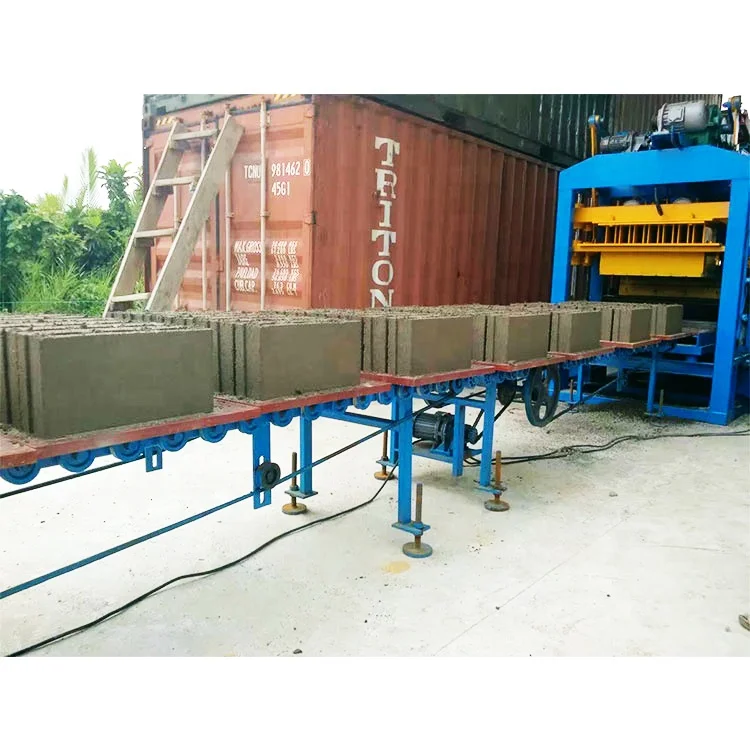
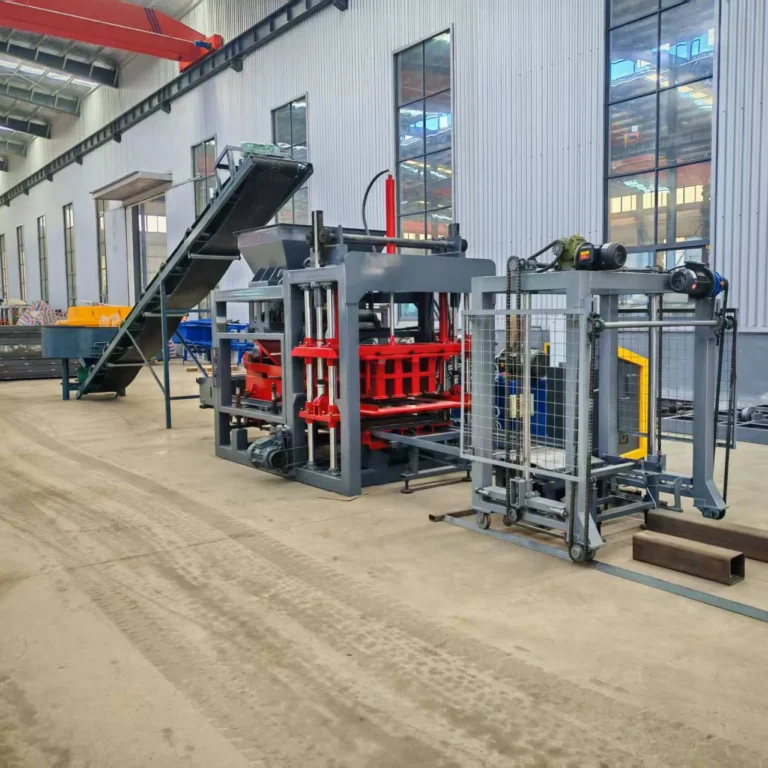
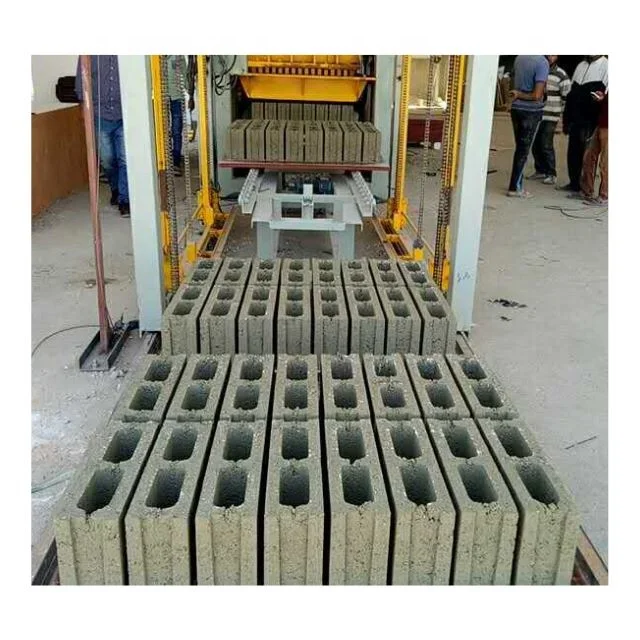
Matched System Configuration — Every QT4-15A block machine ships with its mould, pallet, and handling equipment specified together against your local mix design, not assembled from separate suppliers.
Technical Specifications
| Parameter |
Value |
| Model |
QT4-15A |
| Product Type |
Fully Automatic Concrete Block Making Machine |
| Overall Dimensions (L×W×H) |
4100×1600×2600 mm |
| Rated Pressure |
16–21 MPa |
| Main Vibration Form |
Platform Vibration |
| Vibration Frequency |
4200 r/min |
| Vibration Force |
55 kN |
| Pallet Size |
880×550 mm |
| Molding Cycle |
25–30 s (basis not stated in source — confirm block format and material) |
| Overall Power |
18.45 kW |
| Total Mass |
4 T |
| Demolding Method |
Hydraulic |
| Factory Area Required |
300 m² |
| Applied Products |
Hollow blocks, solid blocks, pavers, interlocking blocks, curbstone |
| Raw Materials |
Crushed stone, sand, cement, fly ash, gravel, slag |
| Automation Level |
Fully automatic |
| Warranty |
1 year |
Application Suitability
| Application |
Material or Output |
| Hollow block production for wall systems |
Crushed stone, sand, cement blends |
| Solid block manufacturing for load-bearing structures |
Gravel and cement mixes |
| Paving block runs for roads and walkways |
Fine aggregate with cement and pigments |
| Interlocking brick production for housing projects |
Fly ash, sand, and cement composites |
| Curbstone forming for infrastructure |
Coarse aggregate with high cement content |
| On-site production by construction contractors |
Locally sourced sand, gravel, and slag |
What "25–30 Seconds per Cycle" Actually Means for Your Output
Cycle time only tells you the press speed — it says nothing about how many blocks of your target format you will produce per shift.
A concrete block making machine manufacturer quoting cycles per hour without naming the block format is quoting a number that means different things to different buyers. A 25-second cycle on a standard hollow block is not the same throughput as a 25-second cycle on a thinner paving block [NEED_CITE: block format effect on cycle time and daily output]. The vibration settling time, hydraulic press stroke, and mould fill volume all shift depending on what you are actually pressing. I have watched plants receive equipment that met every cycle time claim on paper but could not reach the expected pallet count by the end of the first week because the format assumption was never written down.

Where the QT4-15A Sits Across the Full Machine Range
Buyers comparing options for a first or replacement press need to understand the tier structure before committing. The QT4-15A occupies the mid-tier of the fully automatic range, positioned above semi-automatic workshop machines and below the high-capacity lines that require dedicated curing chambers and automatic cubing systems. For a concrete block making machine manufacturer, placing a buyer correctly on this range prevents overspending on capacity that the rest of the plant cannot support.
Matching the Machine Tier to Your Plant Footprint and Investment Level
The 300 m² factory area requirement for the QT4-15A sets a floor for your site planning. Semi-automatic models demand less space but require manual pallet handling, while higher tiers need room for automatic stackers and curing rack conveyors. Choosing a tier without confirming your available footprint — including ceiling height for the 2600 mm machine clearance — leads to cramped layouts where forklifts cannot turn [NEED_CITE: plant layout constraints for block production lines]. The right tier balances what the press can do with what the surrounding space allows.
Reading the Specifications That Matter for Daily Production
The 16–21 MPa rated pressure and 55 kN vibration force work together to determine block density and compressive strength. Higher pressure alone will not compensate for weak vibration if your aggregate is angular and poorly graded, and strong vibration without sufficient hydraulic pressure produces blocks that crumble at the edges. The 4200 r/min platform vibration frequency suits a wide range of concrete mix designs, but the actual performance depends on how well your local sand and crushed stone match the machine’s energy input. The 880×550 mm pallet size must align with your existing curing racks and forklift tine width — a mismatch here means either replacing your handling equipment or running a custom pallet order before the press arrives.
The Hidden Cost of Skipping Configuration Verification
When a plant orders a block machine based on a catalogue page without confirming voltage, frequency, and PLC display language, the machine arrives and sits idle while an electrician rewires the control panel. Commissioning delays from unconfirmed electrical specifications are among the most common reasons new plants miss their first delivery deadline [NEED_CITE: electrical specification mismatches in exported machinery]. A machine configured for a mix design the buyer cannot source locally creates a second layer of delay — reformulating the mix and retesting block strength can consume an entire production month before the first saleable pallet leaves the yard.
Why This Range Is Specified as One Matched System
Block machinery is the single production focus here, so the QT4-15A is never treated as a standalone press. The mould is designed around the formats your local market actually buys, including custom drawings when standard formats do not match. Automation level is selectable — a buyer can begin semi-automatic and move to full automation as demand grows, without replacing the core press. Configuration is set against the buyer’s submitted aggregate sample, not a default catalogue mix. Installation support includes operator training on the specific mould change procedure for your format list, and wear parts availability is confirmed before the first replacement cycle is due.
Documentation & Verification
- Line layout with capacity calculation stating the block format assumed for cycle time
- Machine specification sheet confirming voltage, frequency, and control language
- Mould drawing and format list matching your local market product range
- Pallet specification matched to your curing area dimensions and forklift setup
- Factory test record on your submitted raw material sample before dispatch
- Hydraulic and electrical schematic for your maintenance team reference
Installation, Commissioning & Support
- Foundation must support 4 T total mass with level tolerance for the 4100 mm frame length
- Power supply must match confirmed voltage and frequency for the 18.45 kW total load
- Machine arrives partially assembled with vibration platform and hydraulic unit pre-mounted
- First production run includes parameter tuning against your local aggregate sample
- Operator training covers mould change sequence for your specific format list
- Wear parts list provided with reorder intervals for hydraulic seals and vibration components
What to Prepare Before Requesting a Quote
To configure the QT4-15A correctly, share your target block formats with dimensions, the daily pallet output you need, and a sample of the sand or crushed stone you plan to use. Confirm your site’s available voltage and frequency, the language you need on the control display, and whether your existing curing area and forklifts are compatible with an 880×550 mm pallet. If you are comparing this tier against semi-automatic or higher-capacity options, note your available floor space and ceiling height so the right range position can be recommended.
Frequently Asked Questions
Q: How is the QT4-15A cycle time calculated, and which block format does it assume?
A: The 25–30 second molding cycle is listed without a stated block format basis. Actual cycle time varies with block thickness, mould cavity count, and material composition. We confirm the cycle time against your specific target format during configuration, so the capacity calculation reflects what you will actually produce rather than a generic catalogue figure.
Q: Where does the QT4-15A sit compared to semi-automatic and higher-capacity models?
A: The QT4-15A occupies the mid-tier of the fully automatic range. Semi-automatic models below it require manual pallet handling and suit smaller workshops. Higher tiers above it add automatic stacking, curing rack conveyors, and cubing systems for large-volume plants. The right tier depends on your daily output target and available floor space.
Q: What voltage, frequency, and PLC language options can be configured?
A: Voltage and frequency are confirmed during the quotation stage to match your local grid standards. The PLC display language is set before production so operators can read controls in their working language from the first day. These details are documented in the specification sheet before shipment.
Q: What factory area does the QT4-15A require compared to other tiers?
A: The QT4-15A requires approximately 300 m² of factory area. Semi-automatic models in the range need less space since they omit automatic pallet feeders and stackers. Higher-capacity lines require additional room for curing rack systems and cubing stations. Your available footprint determines which tier fits without compromising material flow.
Q: Can I start with the QT4-15A and upgrade automation or add formats later?
A: The automation level is selectable, allowing you to begin with a simpler configuration and add automatic stacking or pallet handling as demand grows. Additional moulds for new block formats can be designed and supplied to match the existing press, so your product range can expand without replacing the core machine.

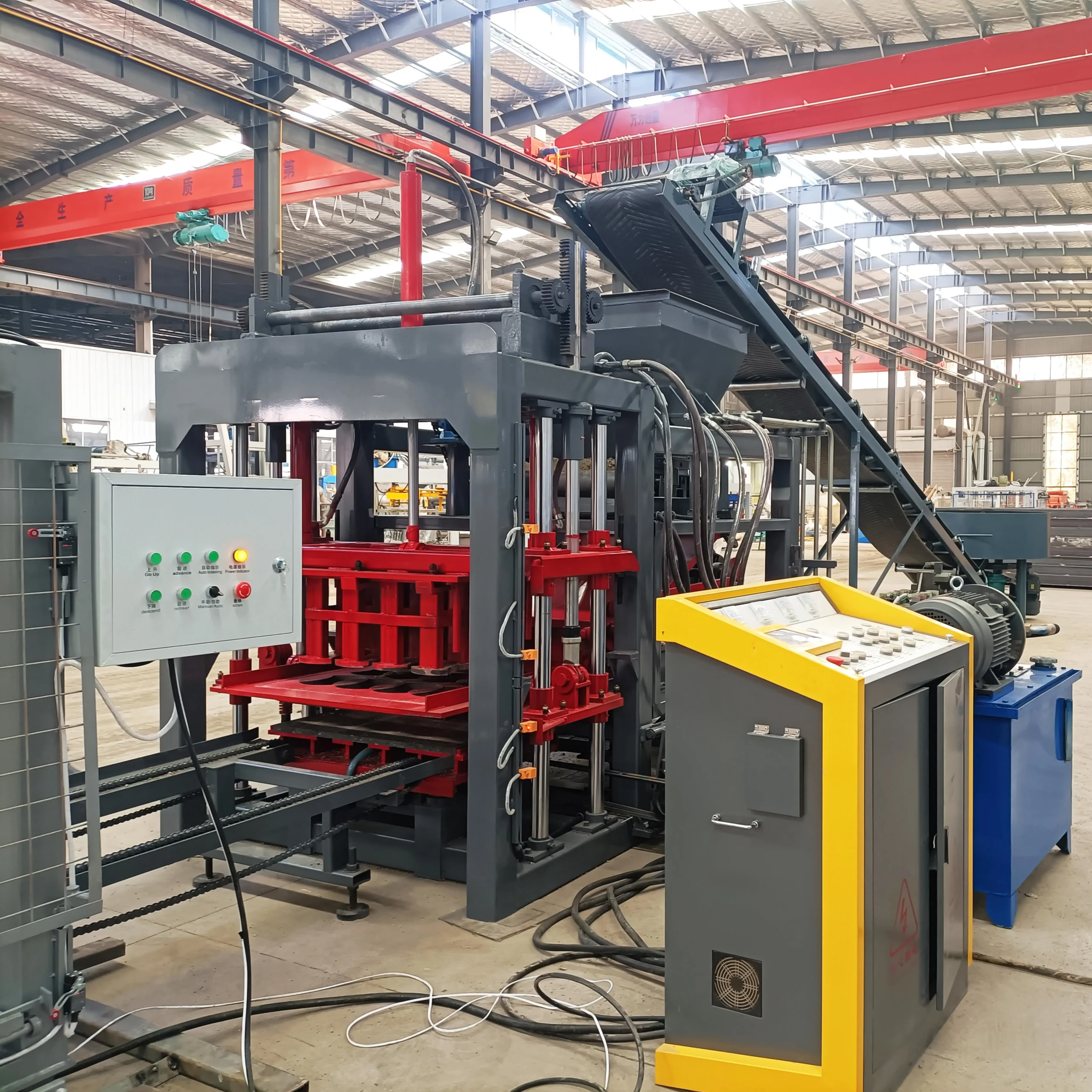
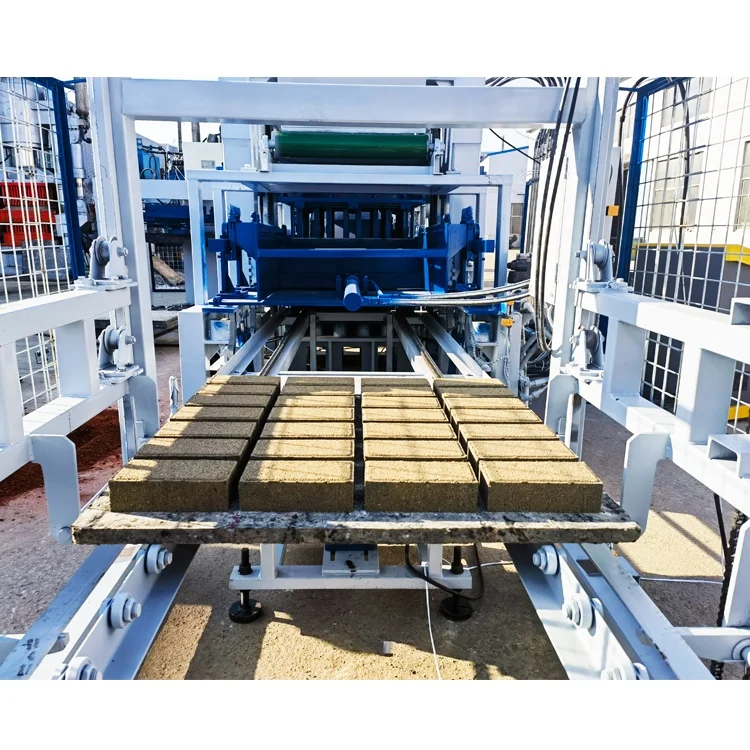 High quality block machine