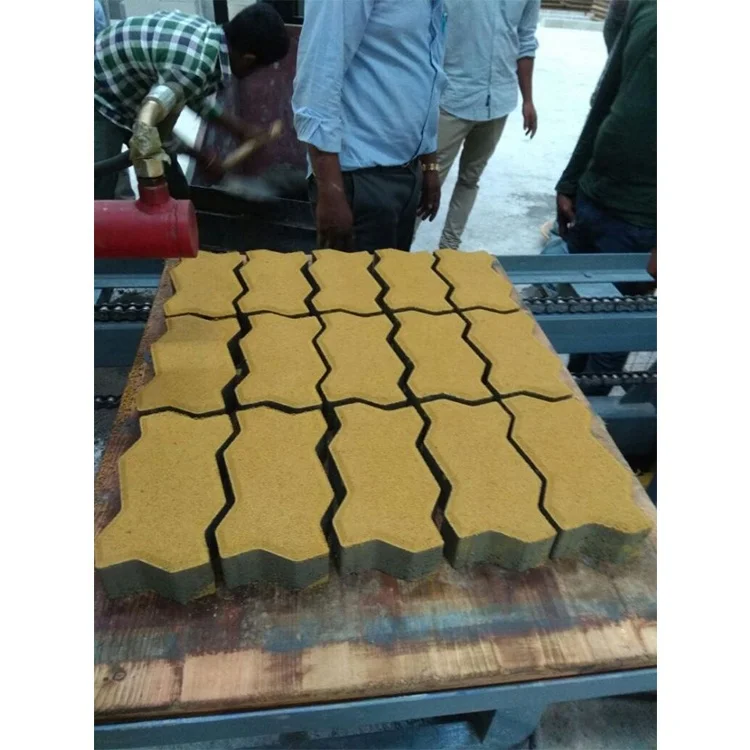
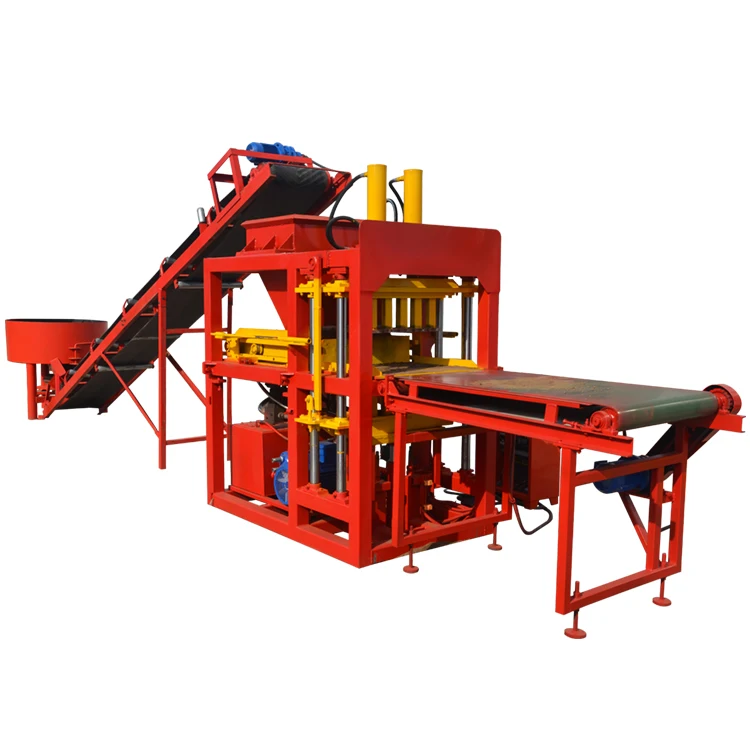
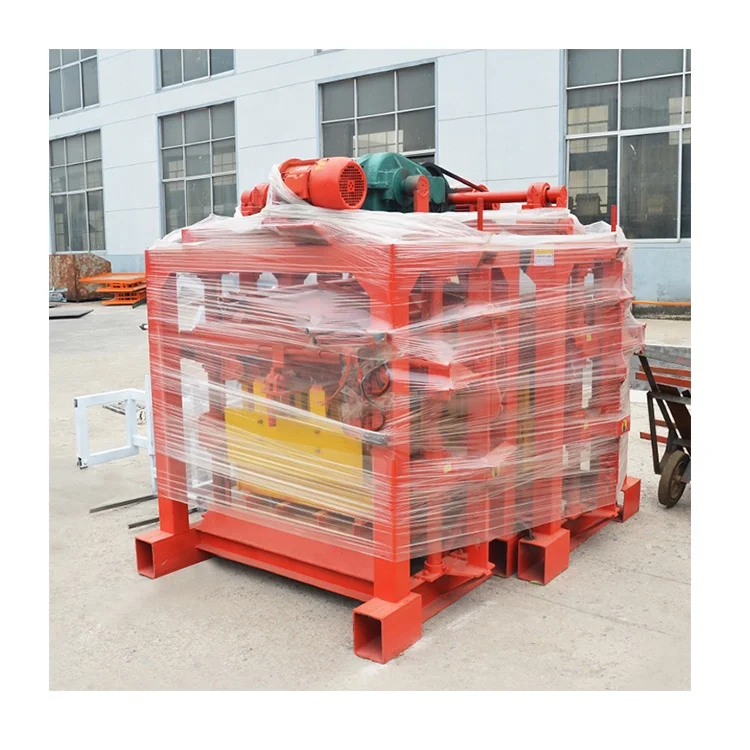
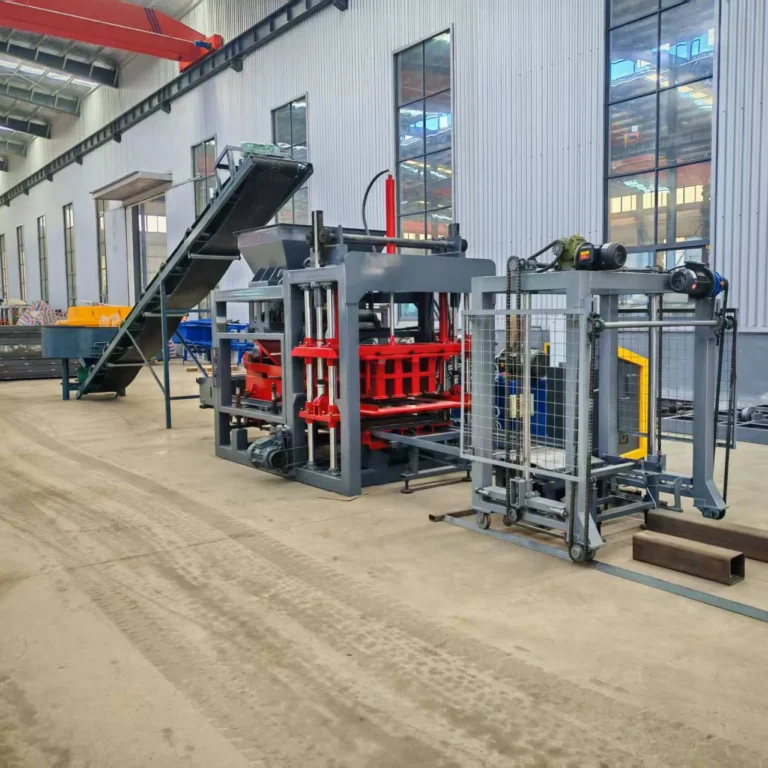
Matched System Supply — the QT4-15A block machine, moulds, pallets and handling stations are specified as one coordinated line rather than sourced separately, keeping cycle times and curing logistics aligned from the first day of production.
Technical Specifications
| Parameter |
Value |
| Model |
QT4-15A |
| Product Type |
Fully Automatic Concrete Block Making Machine |
| Overall Dimensions (L×W×H) |
4100×1600×2600 mm |
| Total Mass |
4 T |
| Rated Pressure |
16–21 MPa |
| Main Vibration Form |
Platform Vibration |
| Vibration Frequency |
4200 r/min |
| Vibration Force |
55 kN |
| Pallet Size |
880×550 mm |
| Molding Cycle |
25–30 s (basis to be confirmed by block format and material) |
| Overall Power |
18.45 kW |
| Demolding Method |
Hydraulic |
| Factory Area |
300 m² |
| Control System |
PLC / MCC configuration to be confirmed |
| Voltage & Frequency |
Configurable, to be confirmed before order |
| Warranty |
1 year for the whole machine (excluding spare parts) |
Application Suitability
| Application |
Material or Output |
| Hollow block production plants |
Crushed stone, sand, cement, fly ash |
| Paver and interlocking brick lines |
Colored concrete mixes, gravel, slag |
| On-site construction block making |
Local aggregate, dust, cement |
| Solid block manufacturing |
Standard concrete mixes with local sand |
| Kerbstone and curb production |
High-strength concrete with coarse aggregate |
Why "Cycles Per Hour" Misleads First-Time Buyers
A fully automatic concrete block making machine manufacturer must state which block format sits behind every output claim. Real daily throughput depends entirely on the block dimensions, mix design, and local aggregate being used.
I once saw a Middle East project where the quoted cycle time assumed a clean, graded sand that the buyer simply could not source locally. The high clay content in their available material slowed the vibration compaction, cutting actual daily output sharply. Before committing to any tier in the range, buyers should demand a capacity table that names the exact block format, wall thickness, and aggregate type for each row [NEED_CITE: importance of aggregate testing in block production].

Where the QT4-15A Sits in the Full Machine Range
Shiyue’s lineup spans mobile egg-laying units for small on-site jobs, semi-automatic presses for lower-investment startups, and high-capacity automatic lines for established plants. The QT4-15A occupies the mid-tier fully automatic concrete block making machine position, offering hydraulic demolding and platform vibration without the footprint or utility demands of the largest models. Buyers comparing tiers should weigh their daily volume target against the automation level they are ready to staff and maintain.
Matching the Automation Tier to Your Actual Workforce
A fully automatic line reduces manual pallet handling and stacking, but it still requires operators who understand PLC prompts and hydraulic sequences. If your local workforce has limited experience with automated block plants, starting at the semi-automatic tier and planning an upgrade path can be a more practical entry point. The QT4-15A range allows buyers to add stacking and cubing stations later, protecting the initial press investment while the team builds operational confidence [NEED_CITE: automation upgrade paths in block machinery].
Reading the Pressure and Vibration Specs Correctly
The rated pressure band of 16–21 MPa works together with 55 kN vibration force at 4200 r/min to compact the concrete mix inside the mould. Higher vibration frequency reduces the time needed for particles to settle, but only if the hydraulic clamp pressure is sufficient to hold the mould rigid during that vibration. When these two values are mismatched to the buyer’s aggregate gradation, blocks emerge with inconsistent density and weak corners. The 880×550 mm pallet size must also match the curing rack spacing and the forklift tine width already in use at the plant, otherwise pallets will not stack or transport correctly after demolding.
The Hidden Cost of Skipping the Voltage Conversation
Voltage, frequency, and PLC display language are often left until the machine is already on the water. When a 380 V / 50 Hz press arrives at a site wired for 440 V / 60 Hz, the motor runs hotter and the vibration frequency drops, producing weaker blocks and shortening motor life. Confirming these electrical parameters in writing before production begins avoids a costly rewiring exercise and weeks of commissioning delay [NEED_CITE: voltage and frequency standards by export market].
Why Buyers Specify the Full Line Here
Block machinery is the sole focus, so the QT4-15A press, its moulds, pallets, and handling equipment are configured as one matched system. The capacity calculation states the block format assumed, not a generic catalogue figure. Mould designs follow the formats the buyer’s market actually sells, with custom drawings available. Automation level is selectable, allowing a semi-automatic start with a defined upgrade route. Installation support includes operator training so the team can run the line independently after handover.
Documentation & Verification
- Line layout drawing with capacity table stating the block format for each output figure
- Machine specification sheet covering hydraulic pressure, vibration force, and pallet size
- Mould drawing pack listing every confirmed block format and cavity count
- Voltage, frequency, and PLC language confirmation document signed before production
- Factory test record run on the buyer’s target mix design before dispatch
Installation, Commissioning & Support
- Foundation plan sized to the 4100×1600 mm machine footprint and 4 T operating mass
- Dedicated power circuit matching confirmed voltage and 18.45 kW total load
- Hydraulic and vibration parameters tuned on-site against the buyer’s local aggregate sample
- PLC display language set and operator training delivered during first-week commissioning
- Mould change procedure demonstrated with the buyer’s confirmed format set and spare parts list reviewed
What to Include in Your Inquiry
Provide the exact block formats you intend to produce, including dimensions and daily volume targets for each. Share a local aggregate sieve analysis or sand source description so the vibration and pressure settings can be matched to your material. Confirm the available plant voltage, frequency, and any existing curing racks or forklifts so pallet size and handling stations are specified correctly from the start.
Frequently Asked Questions
Q: How is output capacity calculated for the QT4-15A, and which block format is assumed?
A: Capacity is calculated by multiplying the confirmed molding cycle by the number of cavities in a specific mould, then adjusting for pallet return time and stacking speed. Every output figure must name the block dimensions, wall thickness, and mix design it assumes. Request a format-by-format table rather than a single headline number.
Q: Where does the QT4-15A sit compared to semi-automatic and high-capacity automatic tiers?
A: It occupies the mid-tier fully automatic position, offering hydraulic demolding and platform vibration with a smaller footprint than the largest lines. Buyers moving up from semi-automatic gain consistent cycle times and reduced manual handling, while those needing higher daily volumes should review the next tier up in the range.
Q: What plant footprint and utility requirements should a first-time buyer plan for?
A: The press itself needs a 4100×1600 mm foundation with headroom above 2600 mm. Total factory area reference is 300 m² to include raw material storage, curing racks, and pallet circulation. Power supply must match the confirmed voltage and handle the 18.45 kW total load on a dedicated circuit.
Q: Can I start with semi-automatic and upgrade to fully automatic later within the same range?
A: Yes. The QT4-15A platform supports adding automatic pallet feeding, stacking, and cubing stations after the initial installation. Planning the upgrade path at the inquiry stage ensures the press foundation and PLC capacity are ready for future expansion without major rework.
Q: Which mould formats are available for this tier, and how does that affect my product range?
A: Standard options include hollow blocks, solid blocks, pavers, interlocking bricks, and kerbstones. Custom mould designs can be produced to buyer drawings. The pallet size of 880×550 mm sets the maximum mould footprint, so format selection should align with the products your local market actually purchases.

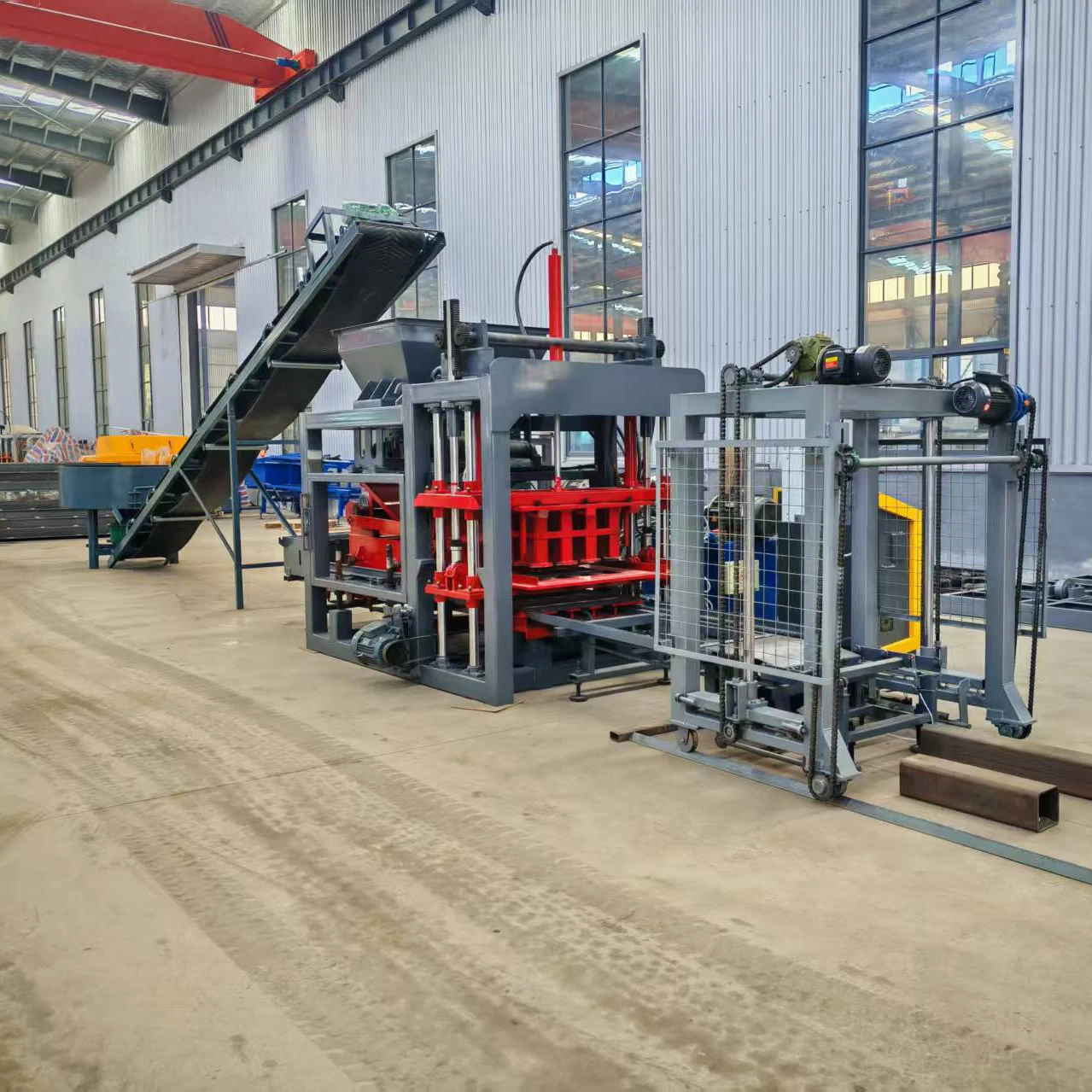
 High quality block machine