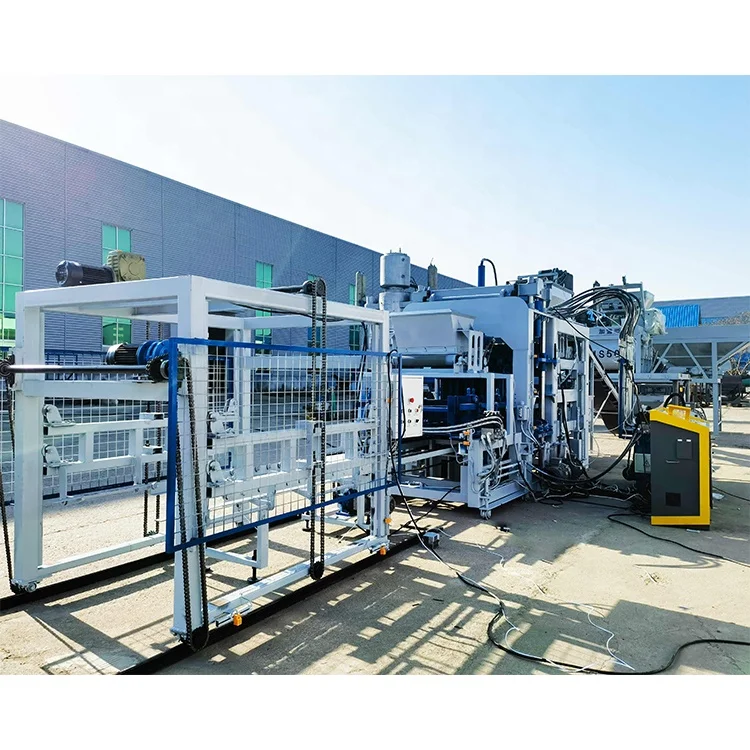
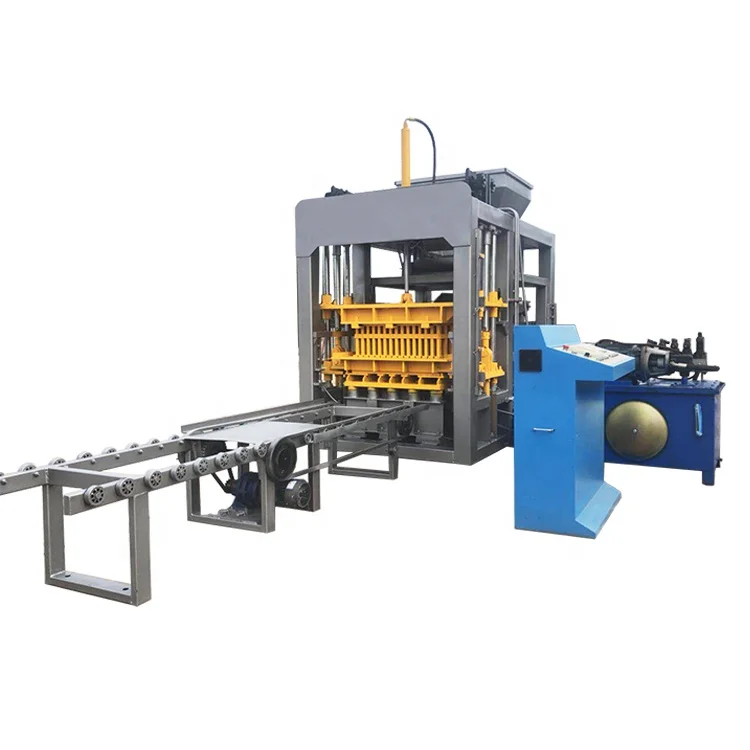
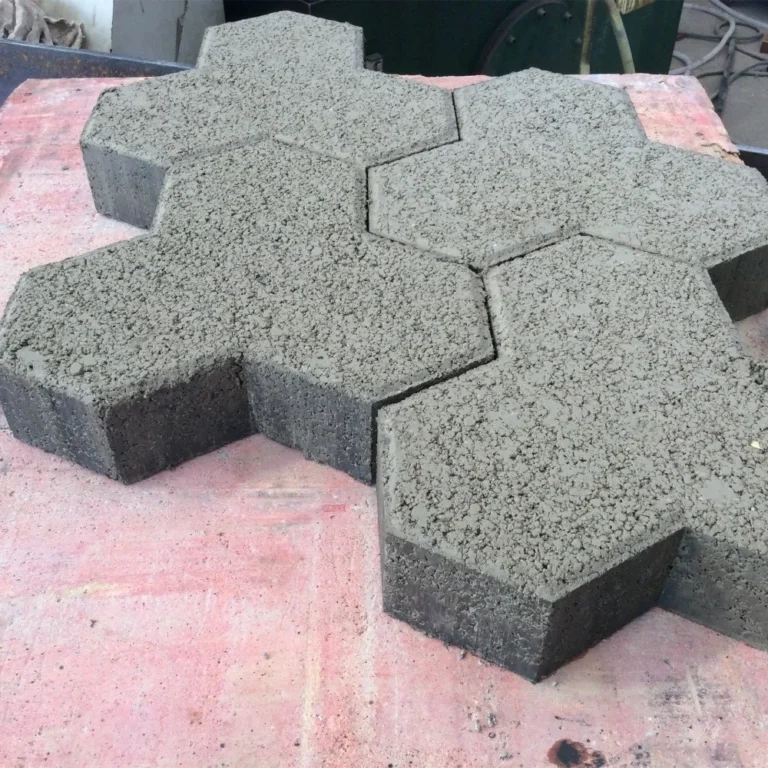
Pallet-Free Stacking — The QT18-25 stacks blocks up to 1200 mm directly after moulding, removing the pallet investment that typically inflates a first plant budget.
Technical Specifications
| Parameter |
Value |
| Model |
QT18-25 |
| Product Type |
Fully Automatic Pallet-free Block Making Machine |
| Brick Height Range |
50–300 mm |
| Stacking Height |
0–1200 mm |
| Main Vibration Form |
Platform Vibration |
| Vibration Frequency |
2800–4500 r/min |
| Vibration Power |
60 kW |
| Hydraulic System Power |
59 kW |
| Driving Method |
Hydraulic |
| Demolding Method |
Vibration and Hydraulic |
| Molding Cycle |
15–25 s (basis not stated in source — confirm block format) |
| General Water Consumption |
8 T/Day |
| Factory Area |
2000 m² |
| Control System |
PLC with person-machine conversation interface |
| Automation Level |
Fully automatic, pallet-free |
Application Suitability
| Application |
Material or Output |
| Hollow and solid concrete blocks |
Crushed stone, sand, cement |
| Interlocking pavers and colored pavers |
Crushed stone, sand, cement, pigments |
| Kerbstone and curb units |
Gravel, sand, cement |
| Blocks from industrial by-products |
Fly ash, slag, dust, cement |
What "Molding Cycle 15–25 s" Actually Means for Your Output
Cycle time only translates to daily capacity when the block format and material mix are defined first.
A fully automatic block machine manufacturer quoting cycles per hour without naming the block format leaves buyers guessing at real daily output. A 15-second cycle on a small paver is not the same throughput as a 15-second cycle on a 400 mm hollow block, because demolding height, vibration duration, and hydraulic return all shift with format. Before comparing machines, confirm which block size the cycle time assumes — then calculate daily shifts around that number, not around a generic hourly peak. [NEED_CITE:]

Positioning the QT18-25 Across the Range
The QT18-25 occupies the high-capacity tier of the SHIYUE stationary block machine lineup. It is built for buyers who have already ruled out mobile egg-laying machines and are choosing between semi-automatic and fully automatic configurations. The pallet-free design distinguishes it from conventional automatic presses: instead of ferrying green blocks on pallets to a curing rack, the stacker lifts blocks directly from the mould table. This removes pallet procurement, pallet return conveyors, and the curing-rack handling stations that normally sit downstream.
What Pallet-Free Stacking Changes on the Plant Floor
On a conventional block line, pallets represent a recurring capital outlay — wood or PVC pallets wear, split, and must be replaced in rotation. A pallet-free system eliminates that consumable entirely and compresses the line footprint because no pallet return loop is needed. The trade-off is that the stacking height and block strength at demolding must be sufficient to bear the weight of blocks stacked on top. The QT18-25 achieves stacking heights up to 1200 mm using hydraulic demolding combined with platform vibration, which produces a denser green block at release. [NEED_CITE:]
Reading the Vibration and Hydraulic Numbers
Platform vibration at 2800–4500 r/min paired with 60 kW of vibration power determines how thoroughly the mix consolidates inside the mould cavity. Higher frequency with adequate power produces a denser block face and sharper arris on pavers and interlocking units. The 59 kW hydraulic system controls both the pressing force during compaction and the demolding stroke. In pallet-free operation the hydraulic system also powers the stacker gripper, so its rated pressure must cover three tasks — press, release, and lift — within one cycle. The vibration frequency range allows adjustment for different aggregate gradations: coarser crushed stone generally needs higher amplitude at lower frequency, while finer sand-fly ash mixes consolidate better at the upper end of the frequency band.
When the Wrong Pallet Assumption Costs You Weeks
Buyers who size their curing area and forklift fleet around a pallet-based layout can face an awkward surprise when a pallet-free machine arrives: the forklift they specified for pallet retrieval now has no pallets to carry, and the racking system ordered for pallet storage becomes redundant capital. Conversely, buyers switching from pallet-free to a pallet-based line without updating the plant drawing discover that the curing floor is too small for the pallet circulation loop. Either mismatch delays commissioning and forces unplanned procurement. [NEED_CITE:]
Why Source This Tier Here
Block machinery is the single focus of SHIYUE, so the QT18-25 is specified alongside its moulds, stacker, and hydraulic power unit as one matched system rather than assembled from separate vendors. Configuration starts from the buyer’s actual mix design and local aggregate, not a catalogue default — this matters because fly ash content, sand fineness, and cement grade all shift the vibration setting the PLC should run. Mould design covers the formats the buyer’s market actually sells, with custom drawings available when a project specifies a non-standard kerb profile or interlocking geometry. Automation level is selectable: a buyer can commission the press in semi-automatic mode with manual pallet handling for the first year, then retrofit the stacker and PLC upgrade later. Installation support includes operator training on the PLC interface and a factory test record showing cycle performance on the buyer’s target block format before shipment.
Documentation & Verification
- Line layout showing QT18-25 stations with capacity calculation per confirmed block format
- Machine specification sheet covering vibration force, hydraulic pressure, and PLC brand
- Mould drawing and format list matching buyer’s agreed product range
- Voltage, frequency, and PLC display language confirmation sheet signed before production
- Factory test record on buyer’s target block format with video and packing photographs
Installation, Commissioning & Support
- Floor plan confirms 2000 m² minimum with level slab rated for 60 kW vibration load
- Dedicated circuit sized for combined 119 kW peak draw across vibration and hydraulic motors
- Machine shipped in dismantled modules; reassembly sequence documented with torque specs
- PLC interface language set to operator preference before first power-on
- Operator training covers mould change procedure, vibration frequency adjustment, and daily greasing points
- Wear parts list identifies vibration springs, hydraulic seals, and mould liner replacement intervals
What to Send with Your Inquiry
Provide the block format you sell in highest volume along with your target daily output so the capacity calculation reflects real production rather than a generic hourly figure. State the local raw materials available — particularly sand gradation and whether fly ash or slag is an option — so the mix can be configured before the vibration settings are locked in. Confirm your site voltage, frequency, and preferred PLC display language to avoid the transformer delay that can hold up commissioning by weeks.
Frequently Asked Questions
Q: Where does the QT18-25 sit compared to semi-automatic and mobile models in the range?
A: The QT18-25 is the high-capacity fully automatic tier, designed for stationary plants with continuous production targets. Semi-automatic models reduce initial investment by replacing the stacker and some conveyors with manual handling, while mobile egg-laying machines suit on-site production without a fixed plant. Each tier has a different footprint and labour requirement.
Q: How is daily output calculated per block format on this machine?
A: Output is derived from the molding cycle applied to a specific block size, multiplied by shifts and factored for changeover and maintenance stops. Because the QT18-25 cycle ranges from 15 to 25 seconds depending on format and mix, a capacity calculation must state which block is assumed. We provide that breakdown before order confirmation.
Q: What voltage and control language options are available?
A: The electrical system is configured to the buyer’s site voltage and frequency, confirmed in writing before production starts. The PLC person-machine conversation interface can be set to the operator’s language. Both items are locked in the purchase contract to prevent commissioning delays on arrival.
Q: How does pallet-free stacking affect the curing area layout?
A: Pallet-free stacking removes the need for pallet circulation conveyors and pallet storage racks, compressing the line footprint. However, the curing area must still accommodate the stacked block columns up to 1200 mm high with forklift access between rows. We provide a layout drawing showing spacing and traffic flow for your confirmed block formats.

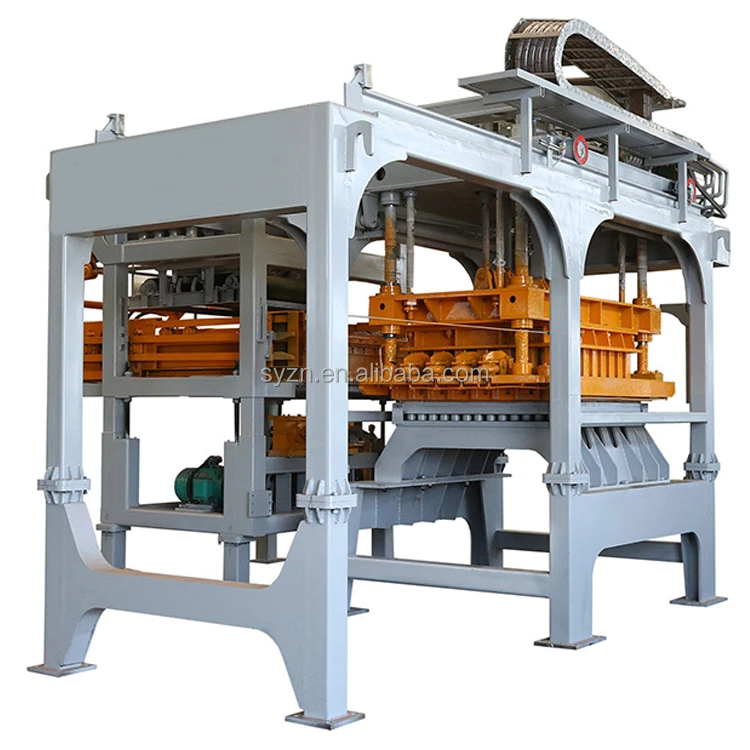
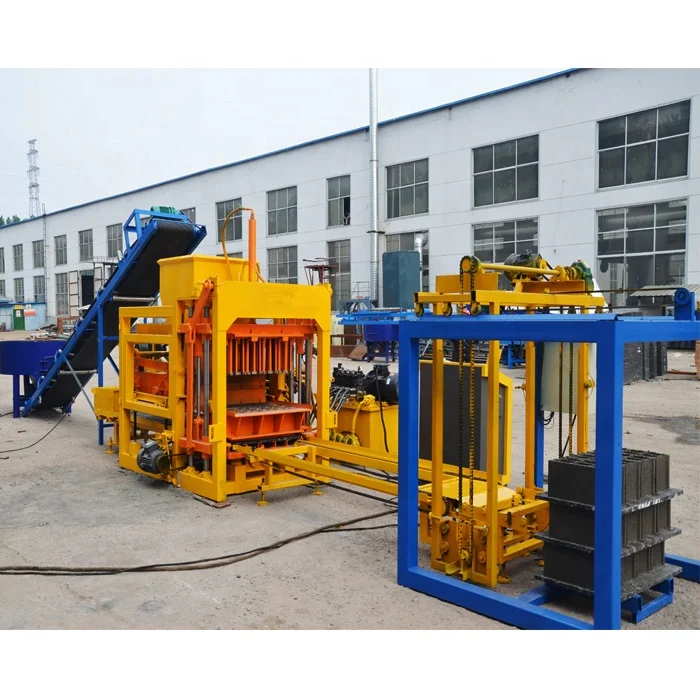 Stationary block machine