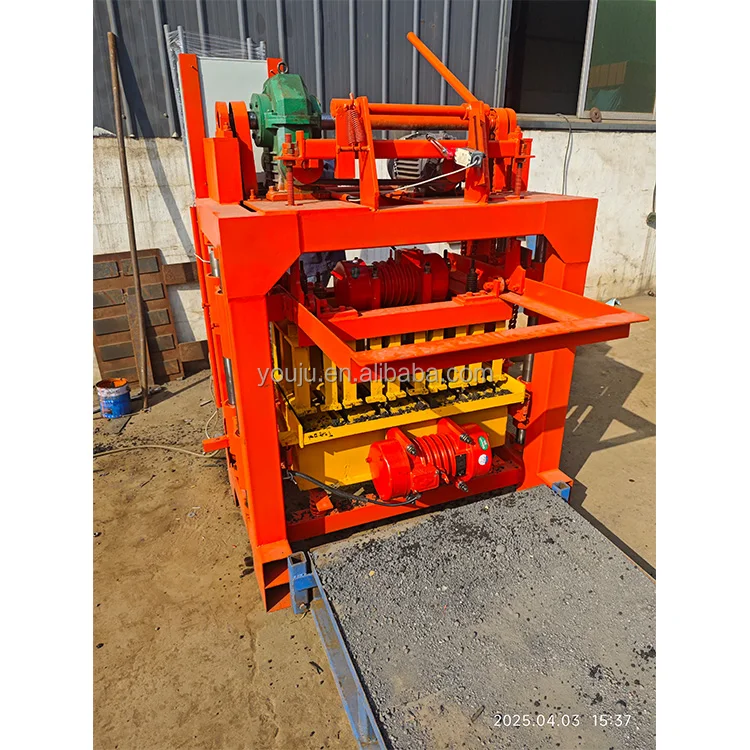
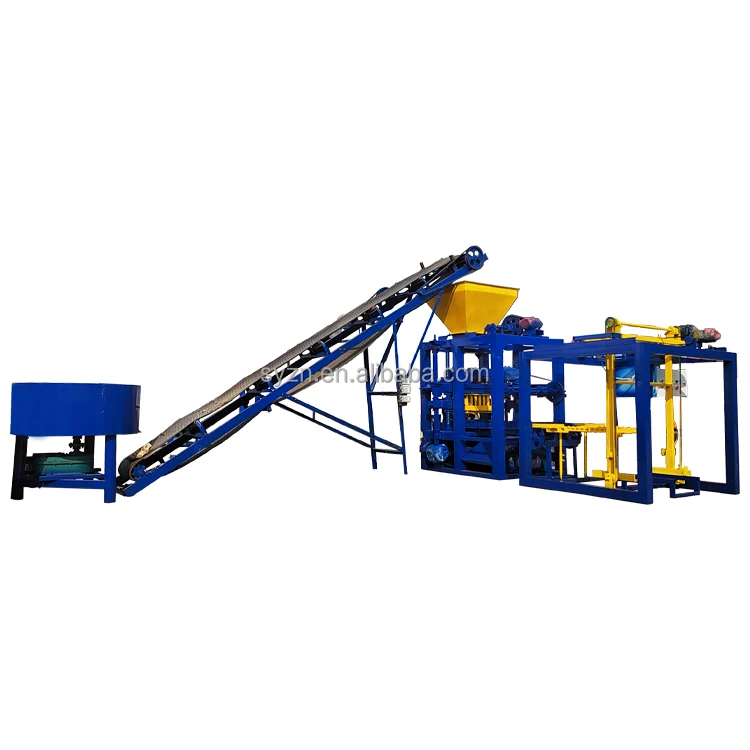
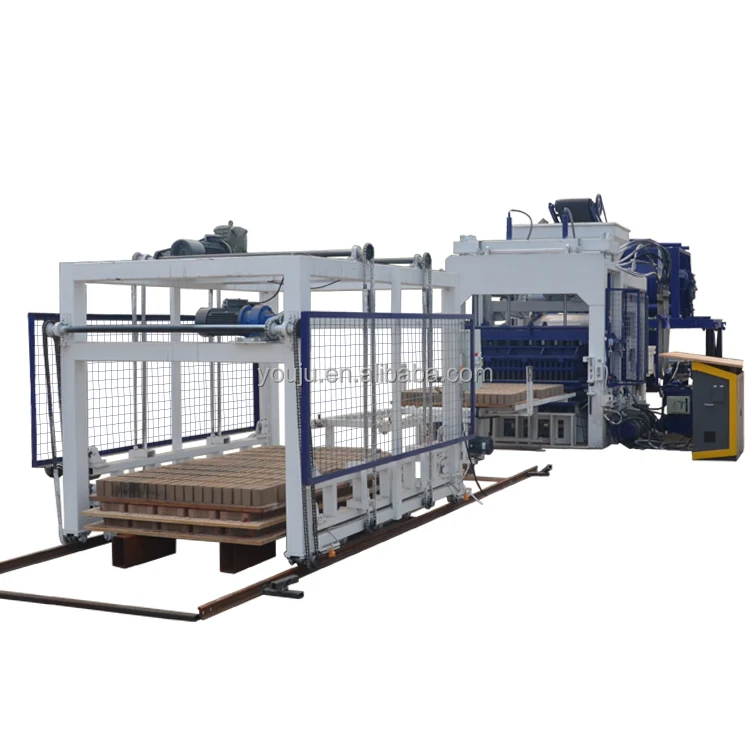
Matched System Configuration — the QT12-15 fully automatic block making machine manufacturer delivers press, mould, pallet, and handling as one engineered line rather than separate components forced to work together.
Technical Specifications
| Parameter |
Value |
| Model |
QT12-15 |
| Product Type |
Fully Automatic Stationary Block Making Machine |
| Rated Power |
44.58 kW |
| Voltage & Frequency |
Customized to buyer’s local standard |
| Control System |
PLC with fault diagnosis and warning signal |
| Overall Dimensions |
9350 × 2520 × 2950 mm |
| Net Weight |
11000 kg |
| Moulding Cycle |
15–25 seconds (varies by block format) |
| Hydraulic Pressure |
16–21 MPa |
| Main Vibration Form |
Platform vibration (synchronization vibration, adjustable frequency) |
| Pallet Size |
1300 × 900 mm |
| Output Capacity |
Hollow Block 400×200×200 mm — 12 pcs/mould, 20–25 s cycle, approx. 21600 pcs/day; Porous Block 240×115×90 mm — 30 pcs/mould, 15–20 s cycle, approx. 72000 pcs/day; Standard Solid Block 240×115×53 mm — 60 pcs/mould, 15–17 s cycle, approx. 144000 pcs/day |
| Applied Products |
Concrete hollow blocks, solid blocks, pavers, interlocking blocks, kerbstones, colored pavers, porous bricks |
| Raw Materials |
Crushed stone, sand, cement, fly ash, gravel, slag, dust |
| Standards |
CE, ISO |
| Warranty |
1 year (excluding wearing parts) |
Application Suitability
| Application |
Material or Output |
| High-capacity stationary block plants |
Hollow blocks, solid blocks, and pavers from crushed stone, sand, and cement |
| Concrete product manufacturers expanding format range |
Interlocking blocks, kerbstones, and colored pavers using fly ash, gravel, and slag |
| Large-scale building material suppliers |
Porous bricks and standard solid blocks for housing and infrastructure projects |
Why "21,600 Blocks per Day" Means Nothing Without the Format
Every daily output figure tied to a specific block size, mould cavity count, and cycle time — never a standalone number.
Capacity claims in this industry are often detached from the actual product the buyer intends to sell. A QT12-15 fully automatic block making machine manufacturer might advertise a single peak number based on the smallest, fastest solid brick, while the buyer’s market primarily demands large hollow blocks with a longer cycle. When the machine arrives and the real production begins on the intended format, daily throughput can fall noticeably short of what was discussed during negotiation. This mismatch disrupts the entire line rhythm, from raw material batching through to curing and dispatch, leaving the plant owner to explain the shortfall to their own customers [NEED_CITE: capacity calculation transparency in block machinery procurement].

Where the QT12-15 Sits in the Stationary Range
The Shiyue stationary range spans from semi-automatic models suited to smaller plants and lower initial investment, through mid-tier machines, up to the QT12-15 at the high-capacity end. Buyers surveying options for a first or replacement machine can use this model to understand the ceiling of what a stationary platform delivers before considering multiple parallel lines. The 1300 × 900 mm pallet size and multi-cavity mould capability mean this QT12-15 fully automatic block making machine manufacturer tier is designed for operations where volume justifies the automation investment.
Matching Automation Level to Plant Ambition
A buyer setting up a first large-capacity plant may not need every automation station on day one. The configuration allows starting with the press and essential handling, then adding automatic stacking and cubing as production volume stabilizes and labor becomes the constraint. This staged approach keeps initial capital focused on the press, mould, and pallet system where quality is determined, while leaving a clear upgrade path that does not require replacing the core machine. Existing plant owners evaluating a replacement will find the QT12-15 fully automatic block making machine manufacturer specification covers the automation features that mid-range models leave optional [NEED_CITE: automation upgrade paths in concrete block production].
Reading the Specs That Actually Determine Output
The 16–21 MPa hydraulic pressure range works in concert with the platform vibration system to compact the mix into a dense, consistent block. Low-frequency vibration during material feeding ensures even distribution across the mould cavity, while high-frequency vibration during compaction drives out air voids. The moulding cycle of 15–25 seconds varies by format because a large hollow block requires longer compaction and settling than a small solid brick. The 1300 × 900 mm pallet size directly determines how many cavities each mould can contain — a 400×200×200 mm hollow block fits 12 per mould, while a 240×115×53 mm solid brick fits 60. Understanding this relationship between pallet area, mould cavity count, and cycle time is what allows a buyer to calculate realistic daily output for the specific format their market demands, rather than relying on a catalogue headline figure.
The Hidden Cost of Skipping the Mix Design Step
When a machine is configured for a standard mix that the buyer cannot source locally, the result is either a costly material substitution or blocks that fail strength tests. I once saw a high-capacity stationary press shipped to a region where the local sand carried a high clay content, which absorbed water differently than the clean silica sand the machine was tuned for. The blocks cracked during curing, and the plant spent weeks adjusting water ratios and cement percentages before achieving consistent quality. A QT12-15 fully automatic block making machine manufacturer that requests an aggregate report and runs trial batches before finalizing the vibration frequency and hydraulic pressure settings avoids this costly on-site troubleshooting phase [NEED_CITE: impact of local aggregate properties on block compressive strength].
Why Buyers Source This Machine Here
Block machinery is the single focus of this manufacturing operation, meaning the press, mould, pallet, and handling equipment are specified as one matched system rather than assembled from unrelated suppliers. Configuration is set against the buyer’s actual mix design, local aggregate, and target block format instead of defaulting to a catalogue standard. Mould design and supply cover the formats the buyer’s market sells, with custom drawings accepted for non-standard shapes. The automation level is selectable, allowing a semi-automatic start with a defined upgrade path. Installation and commissioning support includes operator training so the team running the line understands the PLC fault diagnosis system and mould change procedures from the first shift.
Documentation & Verification
- Line layout and capacity calculation stating the block format assumed for each output tier
- Machine specification sheet confirming hydraulic pressure, vibration force, pallet size, and dimensions
- Mould drawing and format list with custom mould options to buyer’s market requirements
- Voltage, frequency, and PLC display language confirmation documented before production begins
- Factory test record on the buyer’s specified block format before dispatch
Installation, Commissioning & Support
- Foundation plan accounts for 11000 kg net weight and 9350 mm overall length of the QT12-15
- Electrical supply sized for 44.58 kW rated power with dedicated circuit and correct voltage confirmed
- Machine dismantled into container-load sections with reassembly sequence documented for site
- PLC fault diagnosis and warning signal system calibrated during on-site commissioning
- Mould change procedure trained with operators, including tools and time expectation per format
- Wear parts and hydraulic seal list provided with recommended reorder intervals
What to Include in Your Inquiry
To configure the QT12-15 correctly for your plant, the most useful starting information includes the primary block formats you intend to produce and their target daily volumes. Details on your local raw materials — particularly aggregate type and any known clay or moisture content — allow the mix design and vibration settings to be matched before the machine is built. Confirming your site’s voltage, frequency, and the preferred PLC display language avoids commissioning delays once the line arrives.
Frequently Asked Questions
Q: How is daily output calculated, and which block format is each figure based on?
A: Each output figure is tied to a specific block size, mould cavity count, and cycle time. For example, approximately 21,600 pieces per day is based on a 400×200×200 mm hollow block with 12 cavities per mould and a 20–25 second cycle. Different formats yield different daily volumes, so the calculation must reflect the block you actually plan to sell.
Q: Where does the QT12-15 sit compared to semi-automatic and mid-tier models?
A: It occupies the high-capacity end of the Shiyue stationary range. Semi-automatic models suit smaller plants with lower investment, while mid-tier models bridge the gap. The QT12-15 is positioned for buyers whose volume targets justify full automation, larger pallet size, and multi-cavity mould capability.
Q: What plant footprint and supporting equipment does the QT12-15 require?
A: The press itself measures 9350 × 2520 × 2950 mm, but the full line includes raw material feeding, mixing, pallet handling, stacking, and curing rack systems. A complete line layout with footprint dimensions is provided during the proposal stage, accounting for your site conditions and curing area.
Q: Can voltage, frequency, and control language be matched to my market before shipment?
A: Yes. Voltage and frequency are customized to the buyer’s local standard, and the PLC display language is confirmed before production begins. This is documented in the specification sheet so commissioning is not delayed by electrical or interface mismatches after arrival.

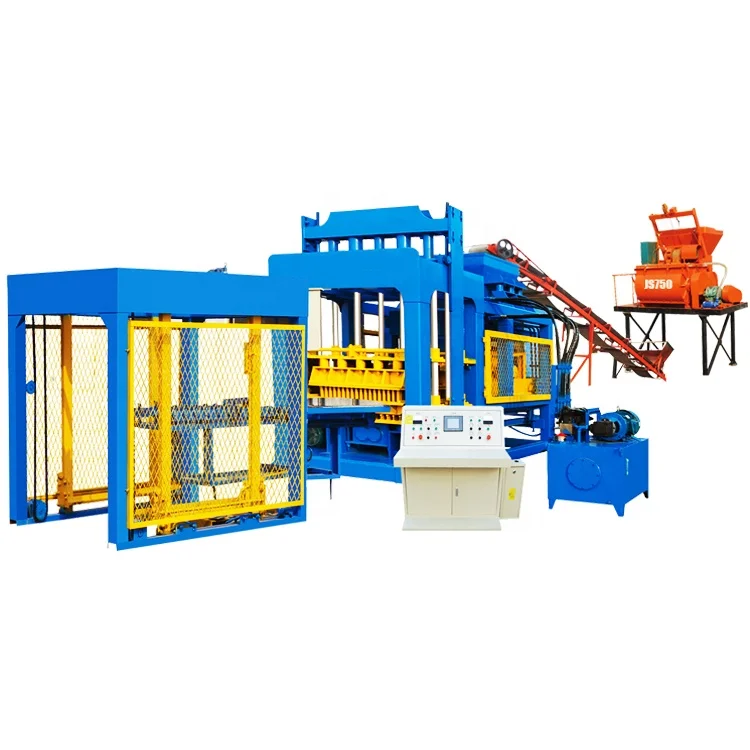
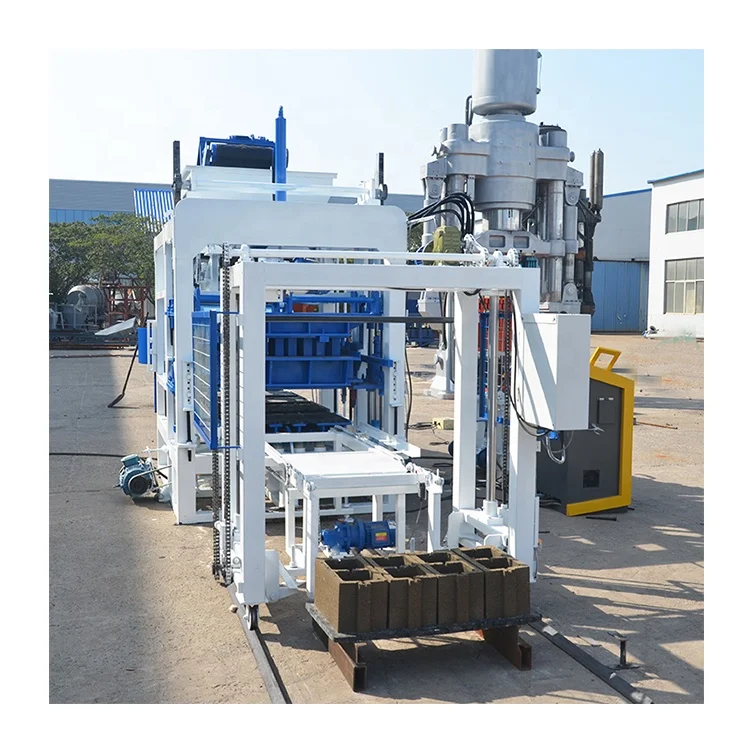 Stationary block machine