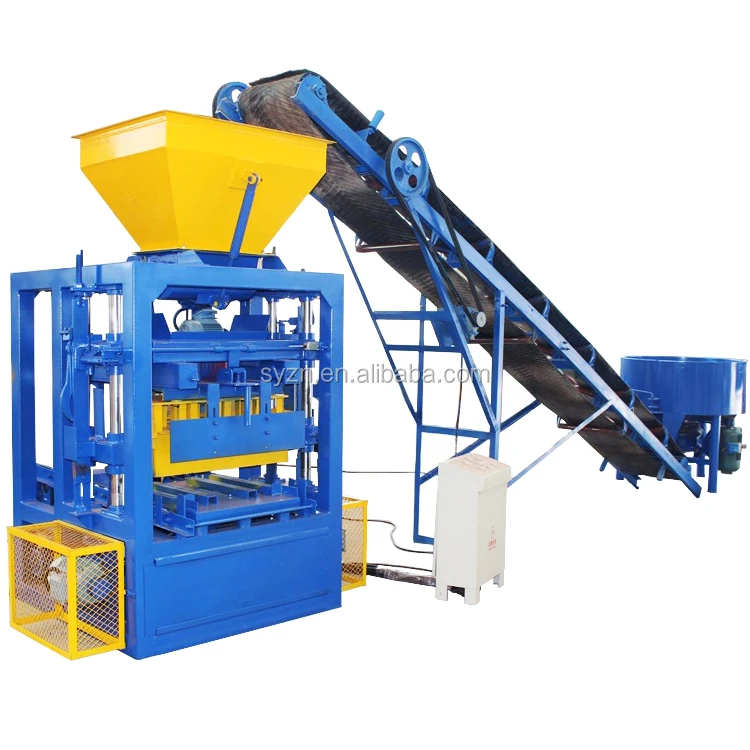
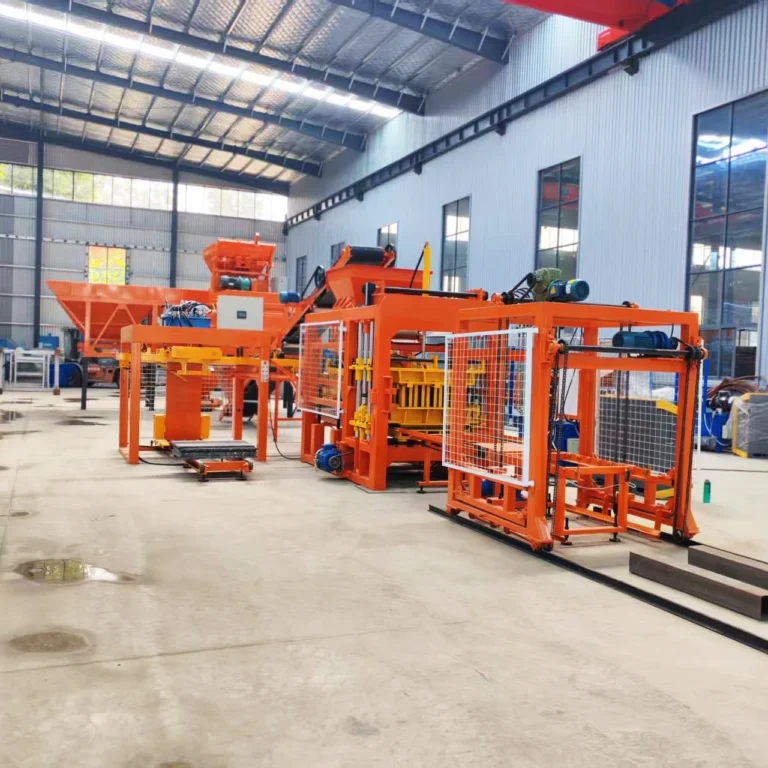
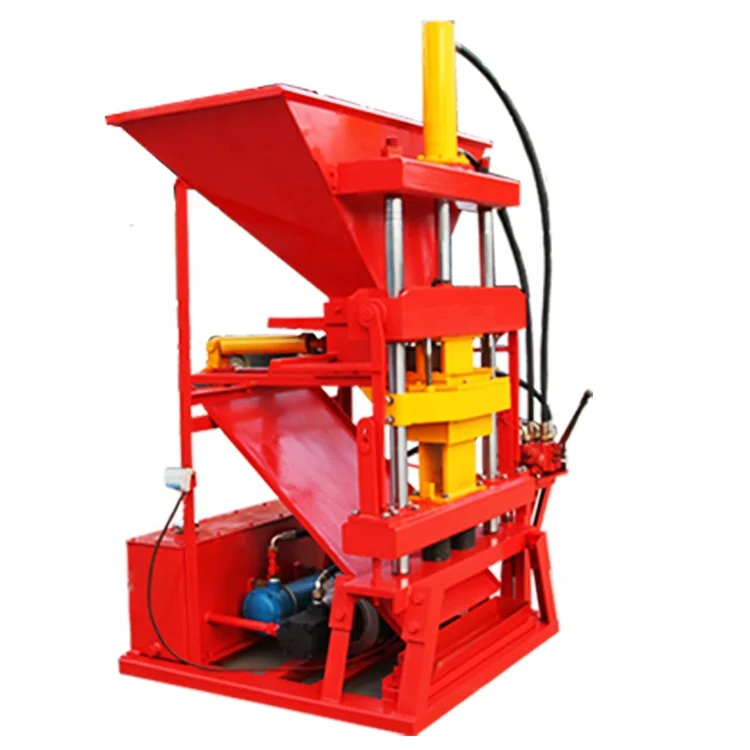
Matched system design — the QMY12-15 mobile block making machine ships with mixer, power unit and travel mechanism specified as one tested set, not assembled from separate catalogue pages.
Technical Specifications
| Parameter |
Value |
| Model |
QMY12-15 |
| Product Type |
Mobile Concrete Block Making Machine |
| Molding Capacity |
12 pcs/mold |
| Molding Cycle |
10s–15s (basis not stated in source — confirm block format / material / thickness) |
| Output Capacity |
13,000 pcs/day (8 hours) (basis not stated in source — confirm block format) |
| Vibration System |
Dual vibration motors |
| Hydraulic System |
Controls upper press and demoulding |
| Travel System |
Electric motor (forward/backward); hydraulic (turning) |
| Total Power |
16 kW |
| Heat Dissipator |
Equipped for hydraulic oil cooling |
| Pallet Requirement |
Not applicable (egg-laying type) |
| Mould Formats |
Hollow block, multi-hole block, solid block, curbstone, paver, interlocking block (mould-dependent) |
| Automation Level |
Semi-automatic (mobile type) |
| Basic Equipment Included |
QMY12-15 host machine, JS7500 concrete mixer, dump truck |
| Optional Equipment |
PL1200 batching machine, cement silo, screw conveyor, loader |
| Voltage & Frequency |
Not stated in source (confirm before order) |
| Control System |
Not stated in source (confirm PLC / relay / manual) |
Application Suitability
| Application |
Material or Output |
| On-site hollow block production at building projects |
Crushed stone, river sand and cement blends |
| Solid block manufacturing for housing developments |
Local aggregate with cement binder |
| Curbstone and paver laying for site infrastructure |
Dense aggregate mixes for load-bearing formats |
| First-plant block production for new entrepreneurs |
Standard concrete mixes without fixed-plant investment |
| Interlocking block production for retaining walls |
Graded aggregate with controlled moisture content |
What "13,000 Pieces per Day" Actually Means for a Mobile Block Making Machine
Daily output figures only hold weight when the block format behind them is named.
Many quotations for mobile block machines quote a single daily number without stating which mould, block size or mix design that figure assumes. A 13,000-piece day on a small solid block is a very different reality from the same claim on a large hollow block. I have seen buyers receive machines that could not reach half the quoted throughput once their actual mould was installed. The QMY12-15 mobile block making machine manufacturer should state the format, cycle time and shift length behind every capacity number [NEED_CITE: capacity calculation transparency standards for concrete block machinery].

Where the QMY12-15 Sits in the Full Machine Range
The SHIYUE range spans mobile egg-laying machines, semi-automatic stationary lines and fully automatic plants with pallet circuits and cubing systems. The QMY12-15 occupies the upper tier of the mobile segment — it delivers higher mould capacity than entry-level mobile units while avoiding the fixed infrastructure of a stationary plant. For buyers comparing options, this mobile concrete block machine for sale represents the point where on-site flexibility meets serious output volume.
The Trade-off Between Mobility and Automation
Mobile machines eliminate pallets, curing racks and fixed conveyors, which keeps capital outlay lower and allows production to follow the building site. The trade-off is that stacking, curing and material feeding remain partly manual. The QMY12-15 addresses this with an included JS7500 mixer and dump truck in the basic package, so the mixing and transport legs of the cycle are covered. Buyers moving up from hand-moulding will notice a clear step up in consistency; buyers stepping down from a fully automatic line should expect to supply more labour per shift [NEED_CITE: labour allocation differences between mobile and automatic block production].
Reading the Specs That Matter for Block Density
The dual vibration motor system on the QMY12-15 works together with the hydraulic upper press to compact concrete into the mould. Vibration alone settles the mix; hydraulic pressure applied from above increases density and reduces void ratio, which directly affects block compressive strength. The 10s–15s moulding cycle range reflects variation across block formats — a thin paver cycles faster than a tall hollow block. The integrated heat dissipator keeps hydraulic oil temperature within operating range during continuous summer shifts, preventing the pressure drop that causes weak blocks toward the end of a production day. Total installed power of 16 kW covers vibration, hydraulic pump and travel motor simultaneously.
The Cost of Skipping the Mix Trial Before Shipment
When a mobile block machine is configured for one aggregate and then fed a different material on site, vibration force and hydraulic pressure no longer match the mix. Blocks come out under-compacted or over-pressed, and the machine gets blamed. I once watched an entire trial batch crumble because the volcanic ash the customer used absorbed water differently from the river sand we tested with. Now every order starts with the buyer sending a sample of their actual aggregate so the vibration frequency, press pressure and cycle time are adjusted before the machine leaves the factory [NEED_CITE: aggregate moisture absorption effects on concrete block compressive strength].
Why Buyers Source This Mobile Machine Here
Block machinery is the single focus of this factory — the QMY12-15 is not one item in a mixed catalogue of unrelated equipment. Machine, mould and travel system are specified as a matched set, so cycle times and power loads are balanced before assembly. Mould design covers the formats the buyer’s market actually sells, and custom moulds can be built from buyer-supplied drawings. Configuration is set against the buyer’s local aggregate and target block strength, not pulled from a default table. Installation support includes on-site commissioning and operator training so the crew understands mould changes, hydraulic pressure settings and daily maintenance routines from day one.
Documentation & Verification
- Line layout and capacity calculation stating the exact block format behind the daily output figure
- Mould drawing and format list confirming which sizes the quoted cycle time covers
- Hydraulic and electrical schematic matching the installed components
- Voltage, frequency and control language confirmation record before production begins
- Factory test record with block samples from the buyer’s approved mix design
Installation, Commissioning & Support
- Site ground must be level and compacted to support the QMY12-15 travel system and 16 kW power draw
- Dedicated electrical circuit sized for the total power rating and confirmed voltage before machine arrival
- Machine ships assembled; on-site setup covers mixer positioning, hydraulic line check and travel test
- First production run includes mould change practice and hydraulic pressure calibration per block format
- Operator training covers dual vibration motor maintenance, heat dissipator cleaning and daily greasing points
- Wear parts list and mould inventory provided for the buyer’s first reorder planning
What to Prepare Before Requesting a Quote
To size the QMY12-15 correctly, share the block formats your market demands, the daily volume you need per format and a sample or description of your local aggregate. Confirm your site voltage, frequency and the control language your operators read. If you already own a mixer, loader or cement silo, list those so the optional equipment can be adjusted rather than duplicated.
Frequently Asked Questions
Q: How is the 13,000 pcs/day capacity calculated, and which block format does it assume?
A: That figure is based on an eight-hour shift, but the block format and mix design behind it must be confirmed for your specific order. A small solid block will reach higher piece counts than a large hollow block on the same machine. We provide a capacity table per format with the quotation so you can match the number to your actual product.
Q: What voltage, frequency and control options are available for the QMY12-15?
A: Voltage and frequency are configured to your site supply before production begins — common ranges include 220V, 380V and 440V at 50Hz or 60Hz. The control system can be specified as PLC or relay-based, and the display language is confirmed to match your operators. These details are locked in before manufacturing starts.
Q: How does the QMY12-15 compare to semi-automatic and fully automatic lines in output and investment?
A: The QMY12-15 sits at the top of the mobile range, offering higher mould capacity than entry-level mobile units without the fixed-plant investment of a stationary line. Fully automatic lines add pallet circuits, stackers and cubing for higher throughput but require more capital and floor space. The right choice depends on your daily volume target and site conditions.
Q: What mould formats are available, and can custom moulds be designed to buyer drawings?
A: Standard moulds cover hollow block, multi-hole block, solid block, curbstone, paver and interlocking block formats. Custom moulds can be designed and manufactured from buyer-supplied drawings to match local market dimensions. Each mould comes with a format-specific cycle time so you know the realistic output before ordering.
Q: What supporting equipment is included, and what is optional?
A: The basic package includes the QMY12-15 host machine, a JS7500 concrete mixer and a dump truck for material transport. Optional additions are a PL1200 batching machine, cement silo, screw conveyor and loader. If you already own some of these, the quotation adjusts accordingly.

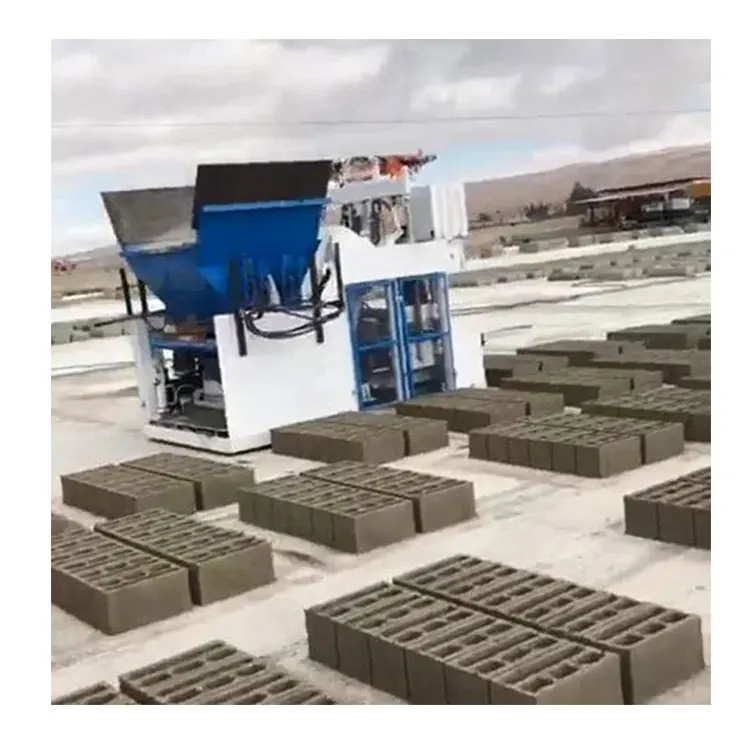
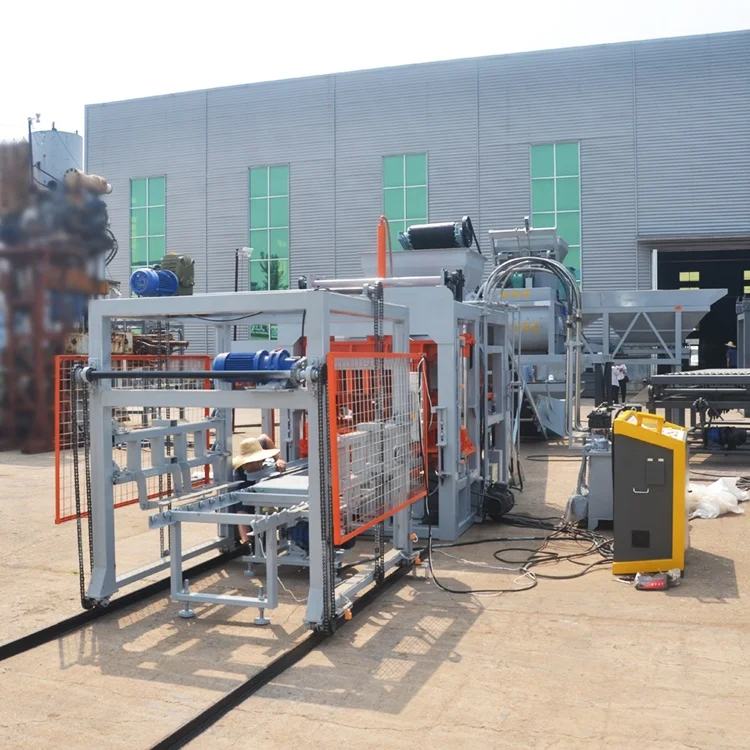 Automatic block machine