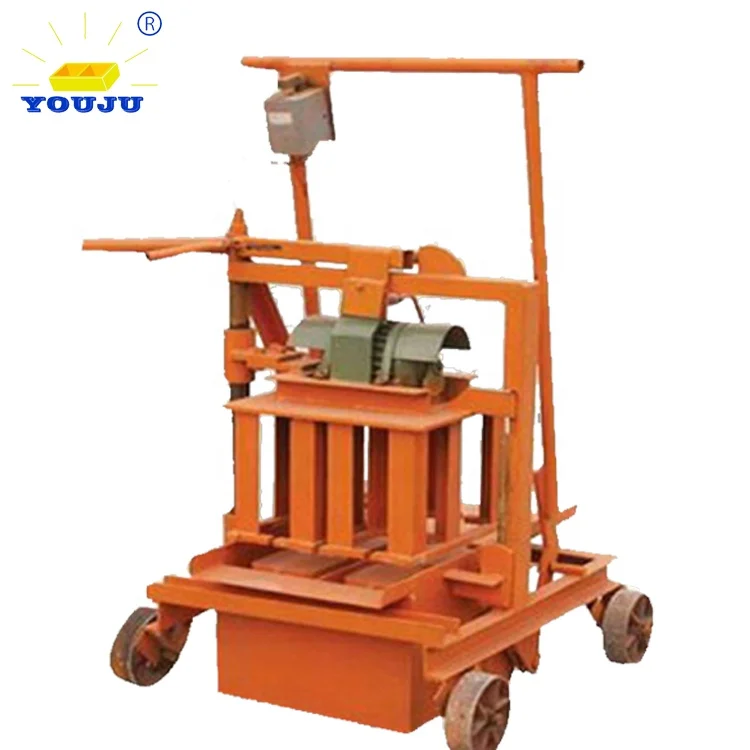
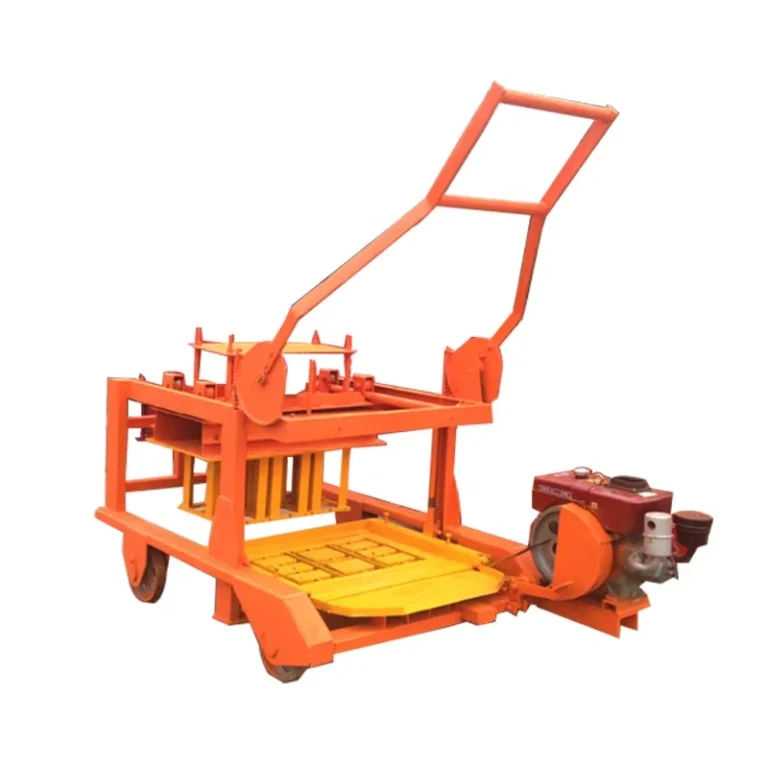
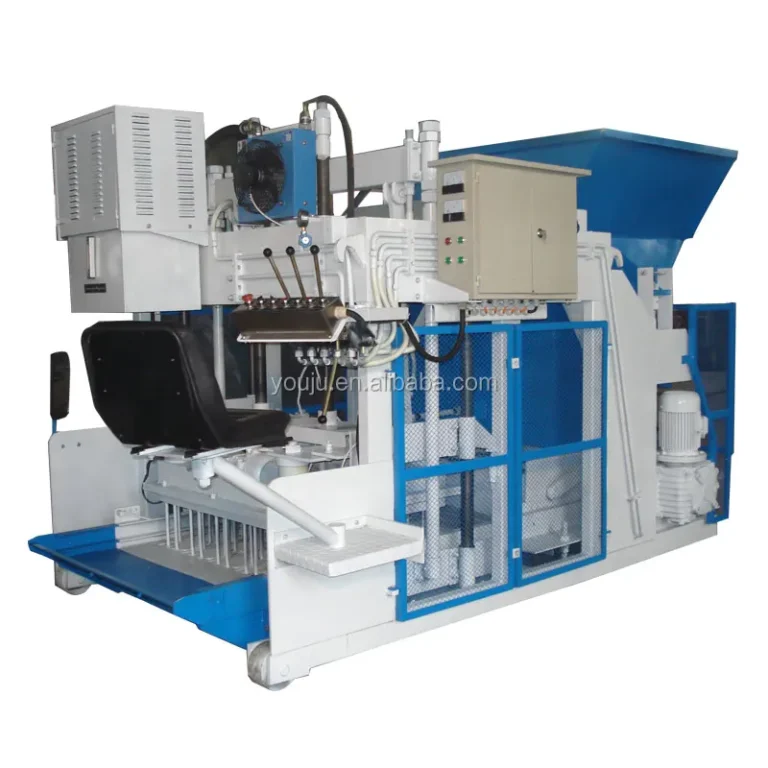
Matched System Design — machine, mould and diesel power unit specified as one integrated block line rather than assembled from separate suppliers, so the QMR4-45 arrives ready to produce on your existing cement floor.
Technical Specifications
| Parameter |
Value |
| Model |
QMR4-45 |
| Product Type |
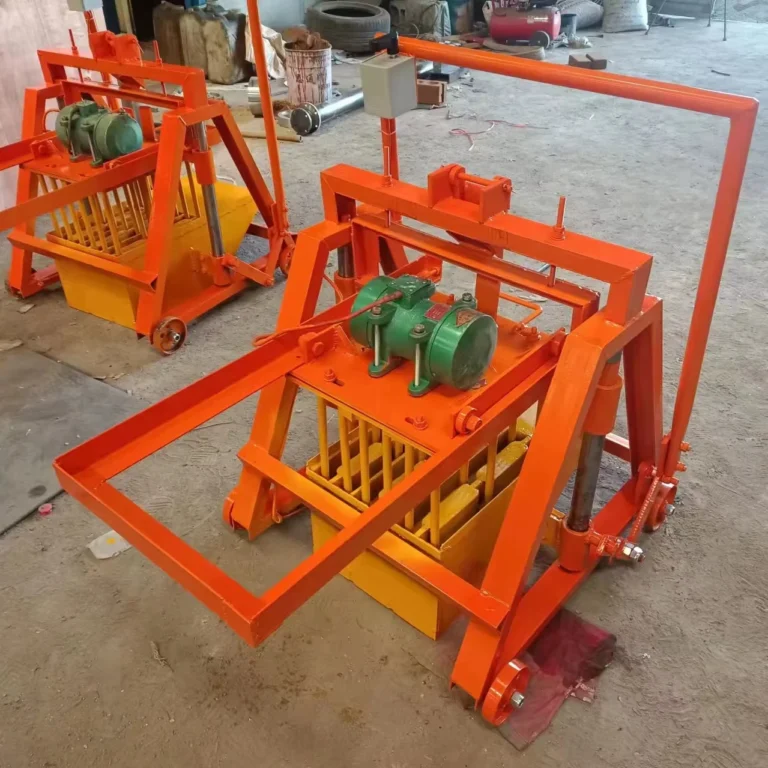
Diesel Mobile Egg-Laying Block Making Machine |
| Overall Dimensions (L×W×H) |
2420 × 1320 × 1650 mm |
| Net Weight |
810 kg |
| Moulding Cycle |
40–45 s |
| Pallet Requirement |
None (egg-laying type) |
| Diesel Engine |
6 kW / 6–8 HP |
| Rated Power |
6 kW |
| Voltage & Frequency |
220 V / 380 V or configurable to local supply |
| Control System |
Hydraulic pressure supplied by diesel engine |
| Output: 400×200×200 mm Hollow Block |
3,000 pcs / 8 h (4 pcs per mould) |
| Output: 400×150×200 mm Hollow Block |
3,500 pcs / 8 h (5 pcs per mould) |
| Output: 400×120×200 mm Hollow Block |
4,500 pcs / 8 h (6 pcs per mould) |
| Mould Format Options |
Hollow block in multiple thicknesses |
| Automation Level |
Manual / semi-manual |
| Warranty |
1 year for the whole machine |
Application Suitability
| Application |
Material or Output |
| Housing project site production |
Hollow blocks from local crushed stone, river sand and cement |
| Remote infrastructure sites with unreliable grid |
Diesel-powered multicellular bricks and standard bricks |
| Small-scale block entrepreneurship |
Hollow and solid blocks on existing cement floors |
| Seasonal or satellite yard top-up |
Paving bricks laid directly on flat ground |
Why Cycle Time Without Block Size Is Meaningless
Daily output only matters when tied to a specific block format and mould cavity count.
Catalogues often quote "pieces per hour" without stating the block dimensions behind that figure. A mobile block making machine running 400×200×200 mm hollow blocks with four cavities will never match a headline number based on smaller solid bricks. [NEED_CITE: capacity calculation standards for concrete block machinery] Buyers discover the gap on their first shift when actual counts fall short of the plant’s financial model. The QMR4-45 figures above are each locked to a named block size so you can plan labour, cement deliveries and curing space around a real eight-hour day.

Where This Model Sits in the Full Range
The QMR4-45 anchors the entry end of our mobile block making machine lineup. Contractors who need blocks directly on a job site without building a fixed plant start here, then step up through semi-automatic stationary presses and eventually to fully automatic lines with stackers as market volume grows. Each tier adds automation while keeping the same mould and pallet logic, so lessons learned on this diesel egg-laying unit carry forward.
Diesel Independence on Unreliable Grids
Many project sites across rural Africa and South Asia face daily power cuts or no grid connection at all. The QMR4-45 runs its hydraulic pump from an onboard 6–8 HP diesel engine, so production continues regardless of electricity availability. Fuel consumption is modest compared to running a full stationary batching plant on a generator, and the 810 kg weight keeps the unit towable between locations. [NEED_CITE: diesel versus electric power trade-offs in mobile concrete equipment]
Reading the Numbers That Actually Matter
Moulding cycle of 40–45 seconds determines how many blocks leave the press each minute; it is governed by vibration duration and hydraulic dwell rather than operator speed. Output figures are each tied to a mould cavity count — four, five or six cavities depending on block thickness — so the jump from 3,000 to 4,500 pieces per day reflects more cavities, not a faster press. The egg-laying design removes pallet cost entirely, but it also means the floor must be level, cured and strong enough to receive fresh blocks without cracking. Voltage options of 220 V or 380 V cover the auxiliary mixer and water pump; confirm your local frequency in writing before production begins so motors arrive wound for your grid.
The Hidden Cost of Choosing the Wrong Mould First
Specifying a single mould size to keep the initial order small can lock a buyer into a product the local market does not buy in volume. When demand shifts to a different hollow block thickness, the machine sits idle while a new mould is manufactured and shipped. [NEED_CITE: lead times for custom concrete block moulds ordered post-delivery] Selecting the full set of cavity plates up front and confirming cycle times for each format avoids this dead period and keeps the mobile block making machine earning from day one.
Why Procurement Starts Here
Block machinery is the only product category we build, so the QMR4-45 is treated as part of a matched system — diesel engine, hydraulic pump, mould and egg-laying mechanism are tuned together, not sourced separately. Every capacity figure we quote states the block format and cavity count behind it, removing the guesswork from your shift planning. Moulds are designed for the formats your local market actually sells, with cavity plates cut to your drawings when standard sizes do not fit. The automation level is selectable, so a buyer can begin with this manual egg-laying unit and add a stationary line later without replacing the knowledge base. Installation support includes operator training on your own mix design, not a generic factory aggregate. [NEED_CITE: importance of matching vibration force to local aggregate density]
Documentation & Verification
- Line layout and capacity sheet stating block format and cavity count for every output figure
- Machine specification with diesel engine rating separated from auxiliary electrical load
- Mould drawing and format list matching your local block dimensions
- Voltage, frequency and control language confirmation signed before production
- Factory test record on your target block thickness before dispatch
- Packing photographs showing dismantling state for container loading
Installation, Commissioning & Support
- Requires a level, cured cement floor of at least 150 mm thickness to accept egg-laying output without surface damage
- Confirm local voltage and frequency so the auxiliary mixer motor arrives wound correctly
- Shipped as a complete unit; diesel engine and hydraulic pump are pre-mounted for rapid on-site start-up
- First-run commissioning includes vibration and hydraulic pressure tuning to your actual mix and aggregate
- Operator training covers mould change procedure and daily greasing points on the QMR4-45 frame
- Wear parts and spare mould plates listed with the manual for first-year replacement planning
Before You Send the Inquiry
Tell us which hollow block dimensions your local market sells in volume, the daily piece count you need on an eight-hour shift, and whether your site has grid power or must rely on diesel. Share your available aggregate type — river sand, crushed stone, laterite — so we can set vibration force and hydraulic pressure before the QMR4-45 leaves the factory. Finally, confirm your local voltage and frequency so auxiliary equipment matches on arrival.
Frequently Asked Questions
Q: How is daily output calculated and which block format does each figure assume?
A: Each output number is tied to a specific hollow block size and mould cavity count, measured over an eight-hour shift with a 40–45 second moulding cycle. For example, 3,000 pieces assumes a 400×200×200 mm block with four cavities per mould. If your market needs a different dimension, the cycle stays the same but the piece count changes with the cavity layout.
Q: Can this mobile unit be replaced by a stationary line later?
A: Yes. The QMR4-45 serves as a first-step mobile block making machine for site production. When demand grows, buyers typically move to a semi-automatic stationary press on pallets, then to a fully automatic line with stacking. Mould format knowledge and mix design work carry forward across each tier.
Q: What diesel engine options exist and how does fuel use compare?
A: The standard diesel engine is rated 6 kW / 6–8 HP, sufficient for the hydraulic pump and vibration motor on the QMR4-45. Fuel consumption is lower than running an entire stationary batching plant on a generator because only the press hydraulics are diesel-driven; the auxiliary mixer and water pump can use grid or site power where available.
Q: Which block formats fit and what is the mould change time?
A: The QMR4-45 accepts moulds for hollow blocks in several standard thicknesses, and custom cavity plates can be made to your drawings. Mould change is a manual bolt-off procedure that a trained operator completes within a shift, allowing format switches same-day when multiple plates are on site.
Q: Where does this model sit in the range and what footprint does it need?
A: The QMR4-45 is the entry mobile and egg-laying tier, requiring only a flat cement floor and roughly 2.4 × 1.3 metres of operating space plus room for fresh block curing. Higher tiers add stationary frames, pallet systems and stacking equipment, each demanding a larger fixed footprint and a prepared foundation.

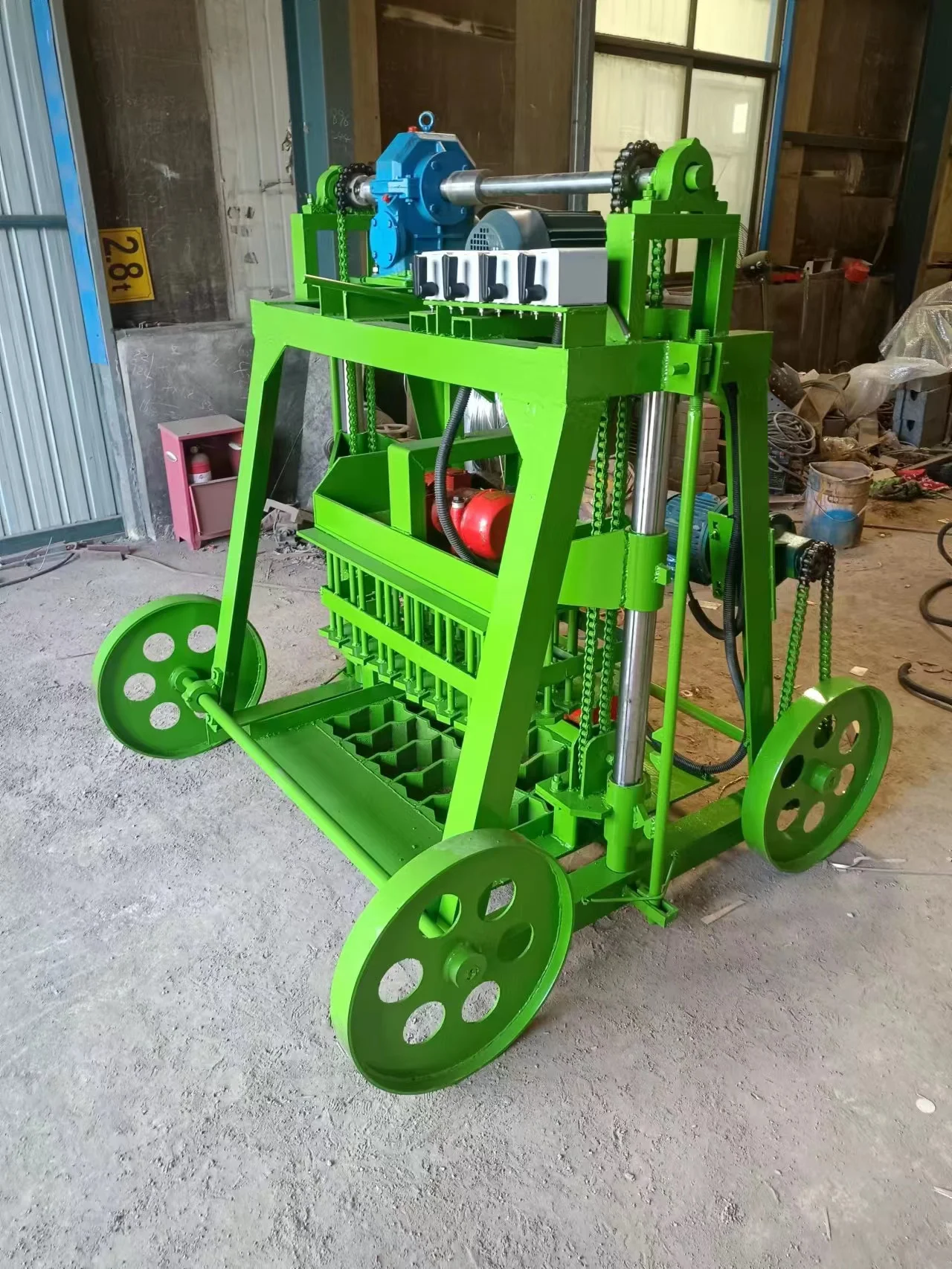
 Mobile block machine