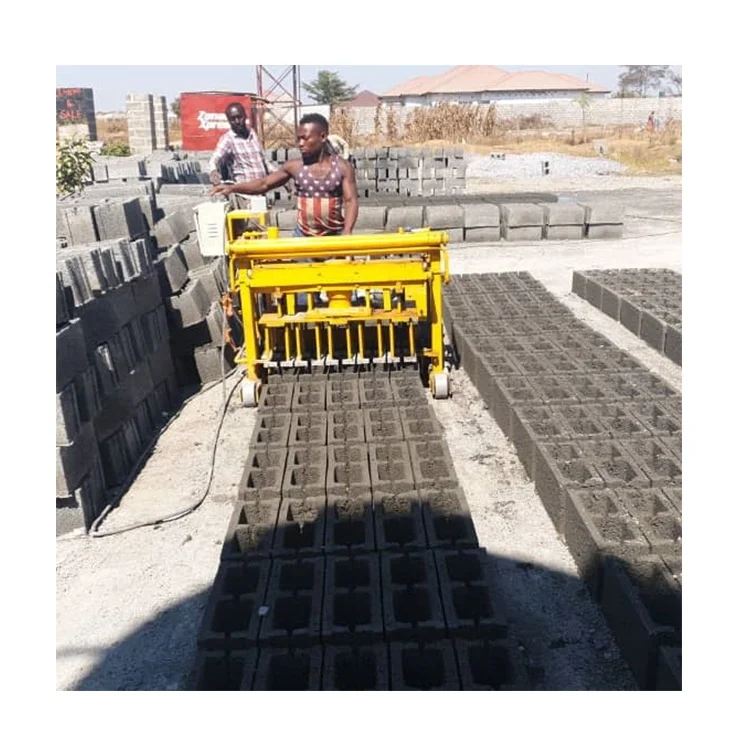
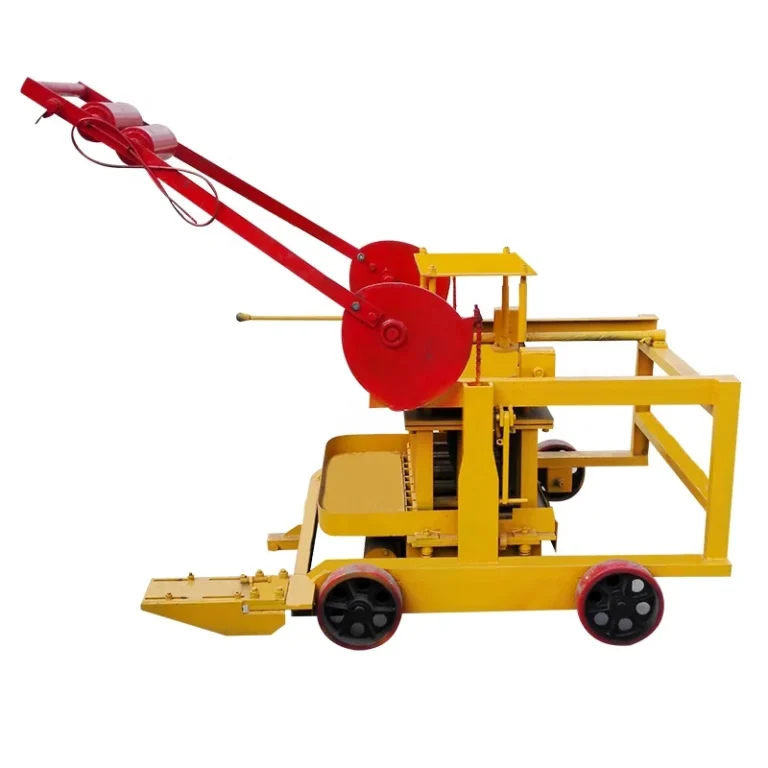
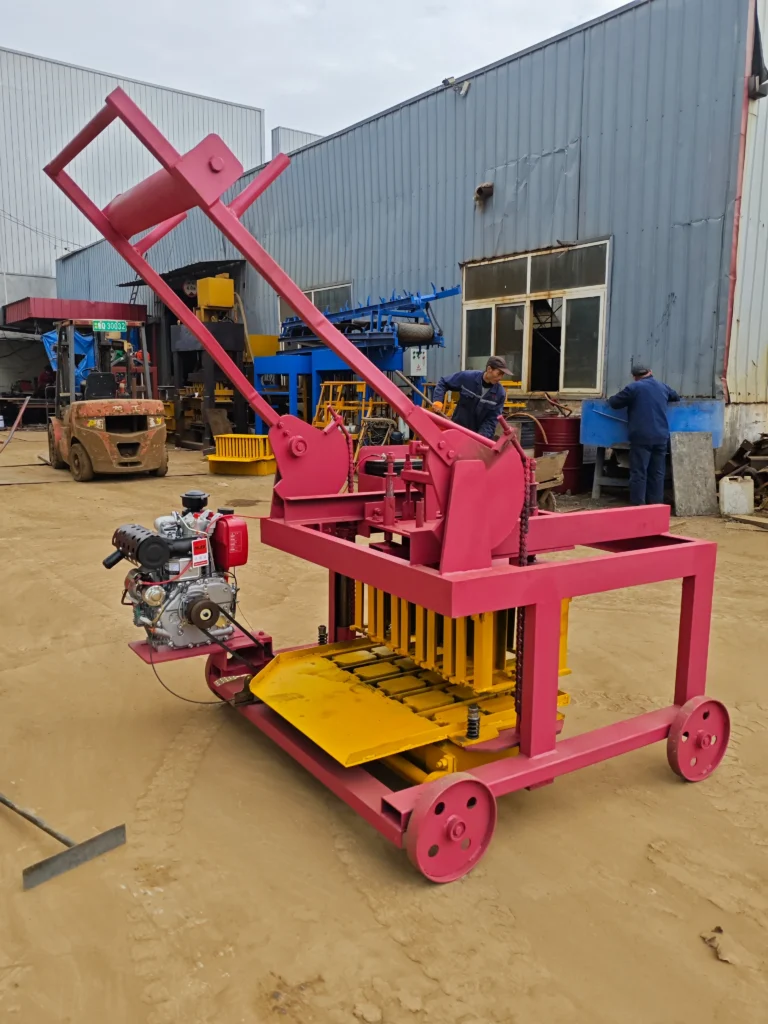
Matched System Design — machine, mould, and power source specified as one integrated unit rather than sourced from separate suppliers, ensuring the QMR4-45 mobile block making machine performs reliably on your site from day one.
Technical Specifications
| Parameter |
Value |
| Model |
QMR4-45 |
| Product Type |
Mobile Block Making Machine |
| Power Source |
Diesel or Electric (optional) |
| Rated Power |
8 hp (basis to be confirmed with buyer’s power preference) |
| Molding Cycle |
45 s (basis not stated in source — confirm block format and material) |
| Vibration Force |
60 kN |
| Molding Form |
Vibration and Pressure |
| Total Weight |
800 kg |
| Overall Dimensions (L×W×H) |
2420 × 1320 × 1650 mm |
| Pallet Requirement |
None (egg-laying type) |
| Mobility |
Mobile on-site, movable between production points |
| Compatible Block Formats |
Paver brick, hollow block, concrete block, solid brick, fly ash brick |
| Included Equipment |
JZC350 or JQ350 Diesel Concrete Mixer; Trolley |
| Automation Level |
Manual / semi-manual operation |
Application Suitability
| Application |
Material or Output |
| Housing project site production |
Hollow and solid blocks from local crushed stone, sand, and cement |
| Remote infrastructure sites |
Fly ash bricks using available fly ash and binder without grid electricity |
| Small-scale entrepreneur plant |
Paver and interlocking blocks from standard concrete mixes |
| On-site contractor block making |
Solid and hollow concrete blocks produced directly at the building footprint |
What "45-Second Cycle" Actually Means for Your Daily Output
Cycle time is only meaningful when tied to a specific block format and mix design.
Many mobile block making machine manufacturer quotations list a single cycle time figure without specifying which block size, wall thickness, or aggregate blend that number assumes. When the machine arrives and the operator runs a different format, the actual cycle stretches well beyond the quoted figure, and daily output drops accordingly. I have seen contractors plan their entire masonry schedule around a number that was never valid for the blocks they intended to produce [NEED_CITE: block format and cycle time correlation standards]. The QMR4-45 documentation states the assumed format alongside every cycle time figure so your production planning starts from a realistic baseline.

Eliminating Pallet Infrastructure From Day One
The QMR4-45 operates as an egg-laying mobile block making machine, meaning freshly pressed blocks are deposited directly onto the ground or a prepared flat surface. This design removes the need for pallets, curing racks, and the forklift infrastructure that a stationary plant demands. For a first-time producer or a contractor working a remote housing project, the capital saved on pallet inventory and handling equipment is substantial. Every mobile block making machine manufacturer should clarify whether their quoted system includes pallets and handling — with this machine, that question disappears entirely.
Dual Power for Sites Beyond the Grid
The diesel engine option makes the QMR4-45 deployable where grid electricity is unreliable or entirely absent. I recall a buyer in West Africa who had to delay production for weeks because a diesel-driven mixer arrived with a pulley size that did not match locally available belts. Since then, we cross-check every wear part and belt specification against the buyer’s local supplier catalog before dispatch [NEED_CITE: diesel engine spare parts compatibility across regions]. The electric variant suits sites with stable three-phase supply and lower fuel costs. The choice between diesel and electric should be driven by your site conditions, not by whichever variant happens to be in stock.
How Vibration Force and Pressure Shape Block Density
The 60 kN vibration force, combined with mechanical pressure, compacts the concrete mix into the mould cavity. Higher vibration frequency reduces air voids, while adequate pressure ensures the block holds its shape upon demoulding. For lightweight aggregates or fly ash blends, the mix may require adjusted vibration duration to achieve target density without segregation. The 800 kg machine weight provides the necessary ground reaction force during the vibration cycle — a lighter frame would transmit energy into the subsoil rather than into the block. The 2420 × 1320 mm footprint keeps the machine stable on compacted earth while remaining narrow enough to maneuver through standard site access points [NEED_CITE: vibration compaction principles in concrete block molding].
The Real Cost of Skipping Voltage and Language Confirmation
When electrical specifications are left unconfirmed until the machine arrives, the local electrician may find the motor rated for a frequency or voltage that does not match the site transformer. Commissioning stalls while a step-down transformer is sourced or the motor is rewound. Control panel labels in an unfamiliar language slow operator training and increase the chance of incorrect parameter adjustments during early production runs. These delays are entirely preventable if voltage, frequency, and display language are documented and confirmed before the machine leaves the factory.
Why Source This Machine Through Shiyue
Block machinery is our single focus, so the QMR4-45 arrives with its mixer, trolley, and mould set specified as a matched system. Capacity calculations state the block format assumed for every cycle time figure. Mould drawings and format lists are provided before shipment so you know exactly which products are achievable. Automation level is selectable, meaning you can begin with manual operation and add handling equipment as your output grows. Installation guidance covers the specific ground preparation and power connection requirements of this machine class.
Documentation & Verification
- Capacity calculation sheet stating the block format assumed for the 45 s cycle
- Machine specification sheet confirming 60 kN vibration force and 800 kg weight
- Mould drawing and format list covering paver, hollow, solid, and fly ash brick
- Voltage and frequency confirmation document before shipment for electric variant
- Factory test record on your specified block format prior to dispatch
- Operation and maintenance manual with wear parts identification list
Installation, Commissioning & Support
- Ground must be level and compacted to support the 800 kg operating weight without settlement
- Diesel variant requires clearance for exhaust routing and fuel storage away from the 2420 mm machine length
- Electric variant requires confirmed three-phase supply matching the motor rating before connection
- First production run supervised to verify vibration duration suits your local aggregate blend
- Operator training covers mould change procedure across paver, hollow, and solid formats
- Wear parts list cross-referenced against your local supplier inventory before shipment
Before You Request a Quote
To match the QMR4-45 to your project, share the block formats your market requires and the daily volume you need to sustain. Confirm whether your site has reliable grid electricity or if diesel is the practical choice. Let us know your local aggregate type so the mixer and vibration settings can be configured for your mix design, and specify your preferred control panel language if choosing the electric variant.
Frequently Asked Questions
Q: How is daily output calculated and which block format does the cycle time assume?
A: The 45-second molding cycle is a baseline figure that varies by block format, wall thickness, and aggregate density. Our capacity calculation sheet states the assumed format for every output number, so you can plan production schedules around realistic daily volumes rather than a single optimistic figure that only applies to one specific product.
Q: Diesel versus electric power — how do I choose for my site?
A: Diesel suits remote sites without stable grid access or where electricity costs are high relative to fuel. Electric is preferable where three-phase supply is reliable and lower running costs matter. We confirm your site voltage and frequency before shipment to prevent commissioning delays on arrival.
Q: What block formats can the QMR4-45 produce and how long does a mould change take?
A: The machine handles paver brick, hollow block, solid brick, and fly ash brick through mould swaps. Mould drawings and the complete format list are provided before order confirmation so you know which products are included and which require additional mould investment.
Q: What supporting equipment is included and what must I source locally?
A: The package includes a JZC350 or JQ350 diesel concrete mixer and a transport trolley. You will need to supply raw materials, water, and a prepared flat production surface. We verify that included wear parts and belts match your local supplier catalog before dispatch.
Q: How are voltage, frequency, and control language confirmed before shipment?
A: For the electric variant, we require your site voltage and frequency specification at the order stage. Control panel labeling and display language are confirmed in writing so operators can read settings in their working language from the first production day.

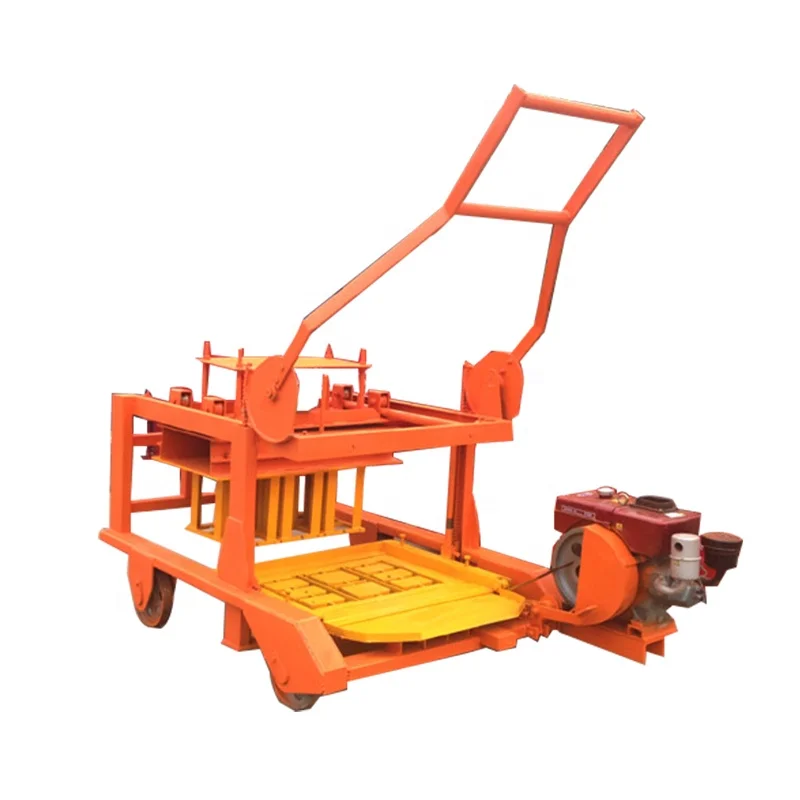
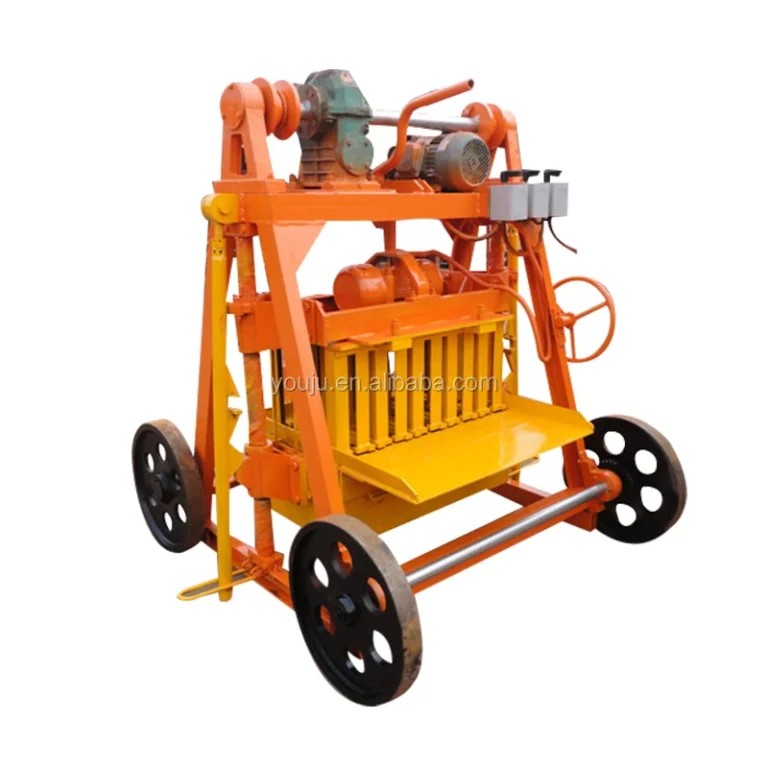 Mobile block machine