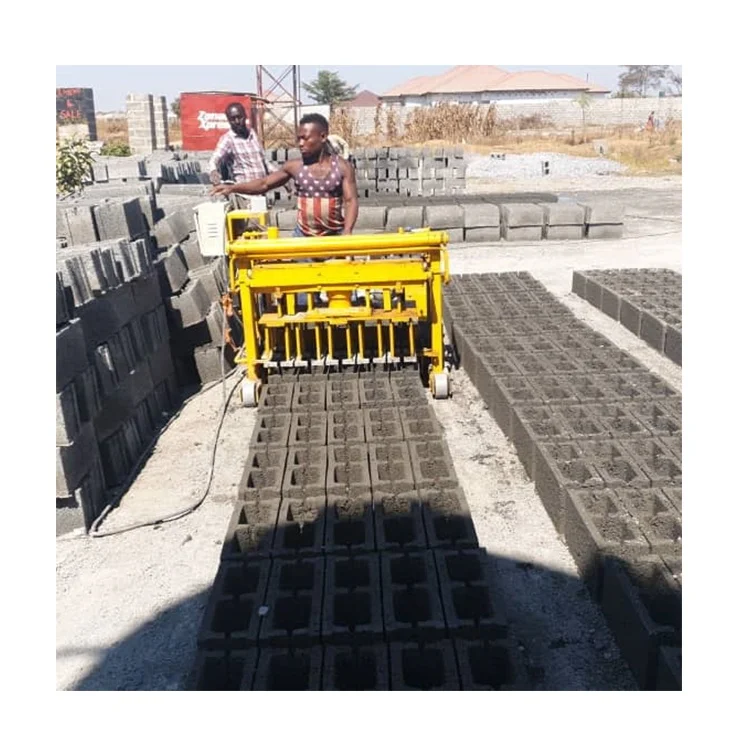
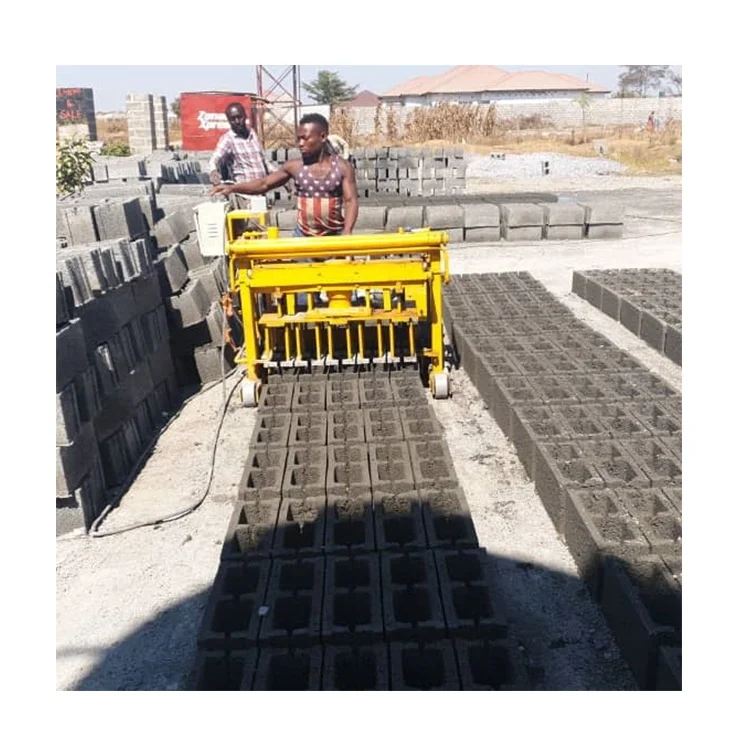
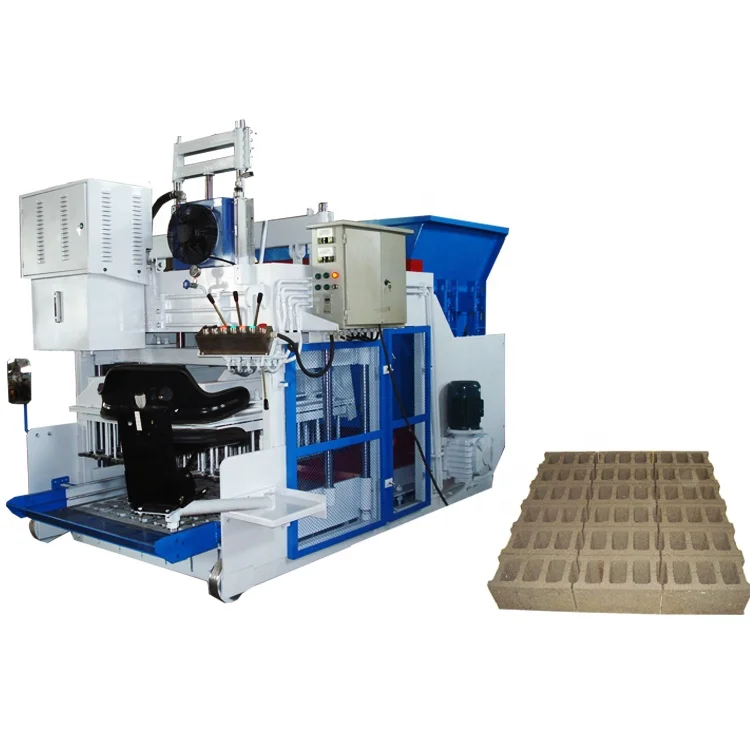
Pallet-Free Operation — the QMJ2-45 lays hollow blocks directly on the ground, removing pallet purchase, handling, and curing-area dependency from your first day of production.
Technical Specifications
| Parameter |
Value |
| Model |
QMJ2-45 |
| Product Type |
Mobile Concrete Block Making Machine |
| Machine Operation |
Hand-pushed, motorized vibration |
| Pallet Requirement |
None — egg-laying on ground |
| Power Source |
Electric motor |
| Labor Requirement |
1 to 3 workers |
| Mould Interchangeability |
Moulds interchangeable for hollow brick formats |
| Cycle Time |
25–30 s per mould (basis not stated in source — confirm block format / material / thickness) |
| Output Capacity (400×200×200 mm hollow block) |
2 pcs/mould, 160 pcs/h, 1280 pcs/8 hr |
| Output Capacity (400×150×200 mm hollow block) |
3 pcs/mould (basis to be confirmed) |
| Output Capacity (400×100×200 mm hollow block) |
4 pcs/mould, 320 pcs/h, 2560 pcs/8 hr |
| Interlocking Brick Capability |
Yes |
| Operating Space |
Small-footprint, no fixed plant required |
| Mobility |
Free movement across site |
| Standards |
ISO 9001:2000, CE |
Application Suitability
| Application |
Material or Output |
| On-site hollow block production for small contractors |
Crushed stone, river sand, cement blends |
| First block plant setup by entrepreneurs |
Locally available aggregate and cement |
| Remote or temporary housing project sites |
Site-sourced red soil, laterite, sand |
| Interlocking brick runs for paving or walling |
Graded aggregate with cement binder |
Why "160 Pieces per Hour" Needs the Block Size Attached
Output figures only mean something when the block format is stated alongside them.
Buyers often receive a single capacity number and assume it applies to every mould they plan to run. On a mobile block machine manufacturer offering like the QMJ2-45, switching from a 400×200×200 mm hollow block to a 400×100×200 mm unit doubles the piece count per mould — yet the cycle time, vibration setting, and mix consistency remain the variables that decide whether those pieces survive curing [NEED_CITE: capacity claims without format assumptions in mobile block machine quotations]. I have watched crews in West Africa celebrate a machine’s rated hourly number, then discover their primary market format yields noticeably less. Asking the supplier which block size the capacity figure assumes is the fastest way to close that gap before the machine ships.

Where the QMJ2-45 Sits in the Mobile Range
The QMJ2-45 occupies the entry tier of our mobile block machine lineup, aimed at buyers who need production capability without a fixed plant. Its hand-pushed, pallet-free design means a crew of one to three workers can start laying hollow blocks on any reasonably level ground. This is the tier where capital outlay stays low and the machine moves to where the work is, rather than the other way around.
What Pallet-Free Actually Removes from Your Setup
Running without pallets eliminates three cost layers at once: the pallet inventory itself, the forklift or labour needed to move loaded pallets to a curing rack, and the covered curing area sized for pallet stacking [NEED_CITE: pallet handling costs in small-scale block production]. For a contractor producing blocks on a housing site, that difference often decides whether block making happens on-site at all. The trade-off is ground preparation — the laying surface must be firm and level enough that freshly formed blocks do not distort before initial set.
Vibration Force, Mould Change, and What They Mean on Site
The QMJ2-45 relies on motorized vibration to consolidate concrete into the mould cavity. Vibration force and cycle time together determine whether the block holds its shape when the mould lifts — too little force leaves a weak, crumbly block; too much can segregate the mix, especially with high-sand local aggregates. Mould interchangeability across 400×200×200 mm, 400×150×200 mm, and 400×100×200 mm hollow formats lets one machine cover the most common walling sizes, though the actual mould change procedure and duration should be confirmed before planning a multi-format production day. Cycle time of 25–30 seconds per mould gives a predictable rhythm, provided the mix is consistent and the crew is practiced [NEED_CITE: vibration consolidation principles in egg-laying block machines].
The Hidden Cost of Skipping Ground Preparation
A pallet-free machine puts every block directly on the earth below it. If the ground is soft, uneven, or poorly drained, blocks laid in the morning can slump or crack before they gain enough green strength to handle. I have seen entire morning runs scrapped because the site crew assumed any flat patch of dirt would work. Proper compaction of the laying surface, and in some cases a thin sand bed, is the cheapest insurance against that kind of loss.
What Sets This Machine Apart in Its Tier
Block machinery is our single focus, so the QMJ2-45 is supplied as a matched system — machine, mould, and handling specified together rather than assembled from separate sources. Configuration is set against your actual mix design and local aggregate, not a catalogue default. Moulds are designed for the hollow block formats your market sells, including custom drawings if your region requires a non-standard size. The automation level is selectable across our wider range, so you can start with the QMJ2-45 and step up to a semi-automatic or fully automatic line when demand grows. Installation and commissioning support includes operator training on mould change and cycle rhythm.
Documentation & Verification
- Capacity calculation sheet stating output per specific hollow block format
- Mould drawing and format list for each supplied hollow brick mould
- Voltage and frequency confirmation matched to your local supply before dispatch
- Machine specification sheet covering mould change procedure and cycle time
- Operation and maintenance manual for the QMJ2-45
Installation, Commissioning & Support
- Firm, level ground preparation across the block-laying path before first use
- Electric motor wiring confirmed against local voltage and frequency before connection
- Machine delivered assembled; hand-push mobility requires no fixed foundation
- First-run vibration adjustment based on your local aggregate sample and mix design
- Operator training on mould change sequence and cycle pacing for each block format
- Wear parts list covering vibration components and mould liners for planned replacement
Before You Send an Inquiry
Tell us the hollow block format your market buys most, your daily output target, and the aggregate you can source locally. Include your site voltage and frequency so the motor is configured before the machine leaves the factory. If you already have ground conditions or a curing area in mind, share those details as well — it helps us confirm the QMJ2-45 is the right tier for your project.
Frequently Asked Questions
Q: How is daily output verified for each block format on the QMJ2-45?
A: Every capacity figure we provide is tied to a specific hollow block dimension and a stated cycle time range. When you tell us your primary format, we return a calculation sheet showing pieces per mould, pieces per hour, and pieces per eight-hour shift for that format — not a single blanket number.
Q: Can the motor voltage and frequency be matched to my local grid before dispatch?
A: Yes. We confirm your local voltage, frequency, and plug standard during the quotation stage. The motor is then configured and tested at those values before packing, so there is no rewiring delay when the machine arrives on site.
Q: When should I consider moving from the QMJ2-45 to a semi-automatic machine?
A: When your daily volume grows beyond what a one-to-three-person crew can sustain, or when you need pallet-based stacking for consistent curing. The QMJ2-45 is the entry point; stepping up adds pallet feeding, automatic stacking, and higher cycle rates.
Q: What ground conditions does the QMJ2-45 need since it uses no pallets?
A: The laying surface must be firm, level, and well-drained so freshly formed blocks do not distort before initial set. Compacted earth or a thin sand bed is usually sufficient; no concrete slab or fixed foundation is required.
Q: How long does a mould change take on site?
A: Moulds are interchangeable across the hollow brick formats the machine supports. The exact change duration depends on crew familiarity and the specific format switch. We include the mould change procedure in the operation manual and cover it during operator training.

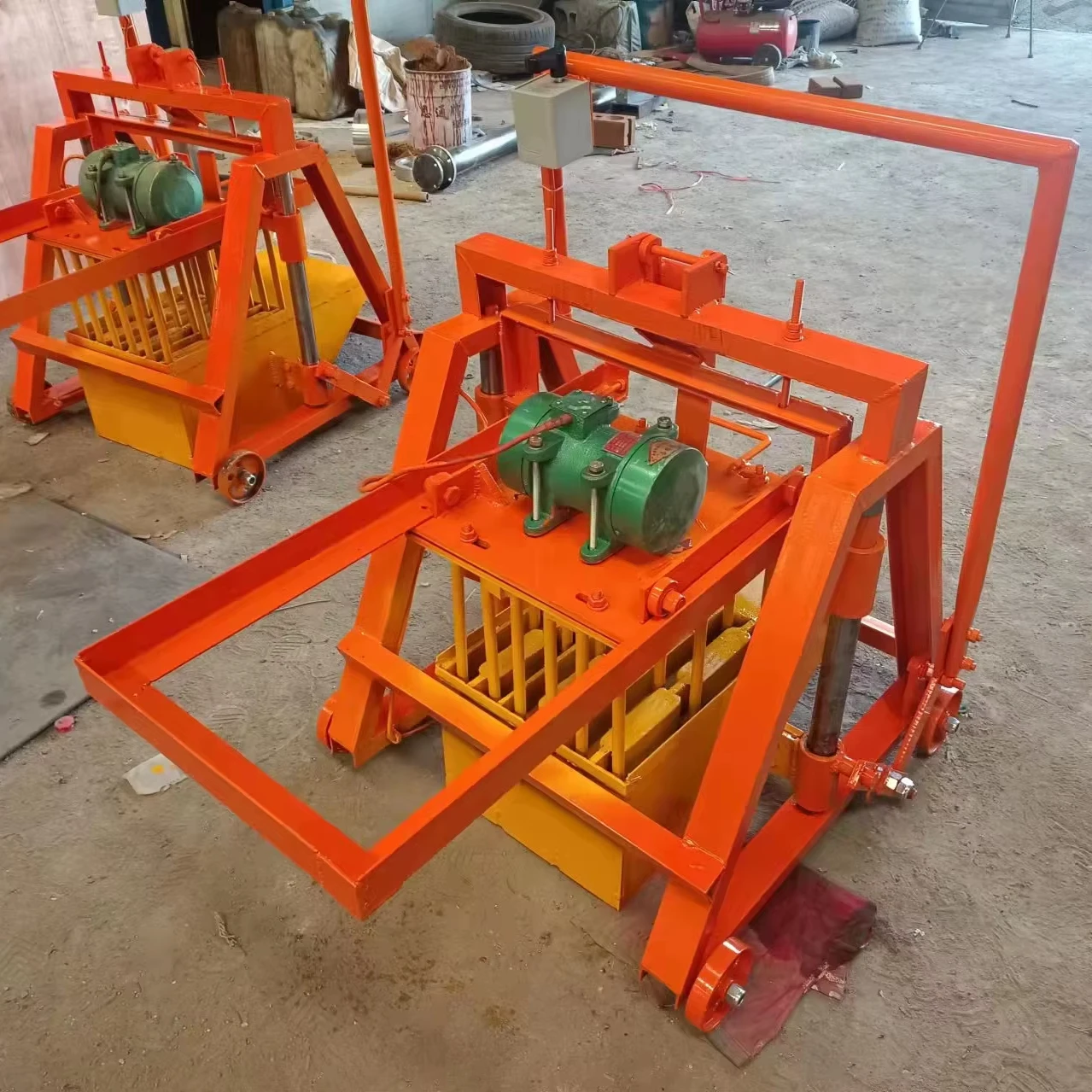
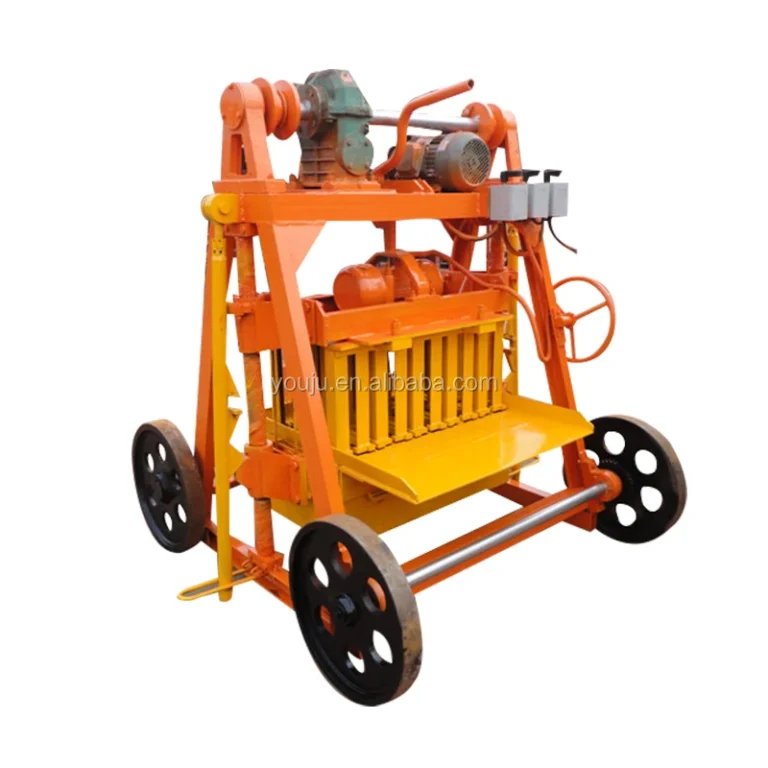 Mobile block machine