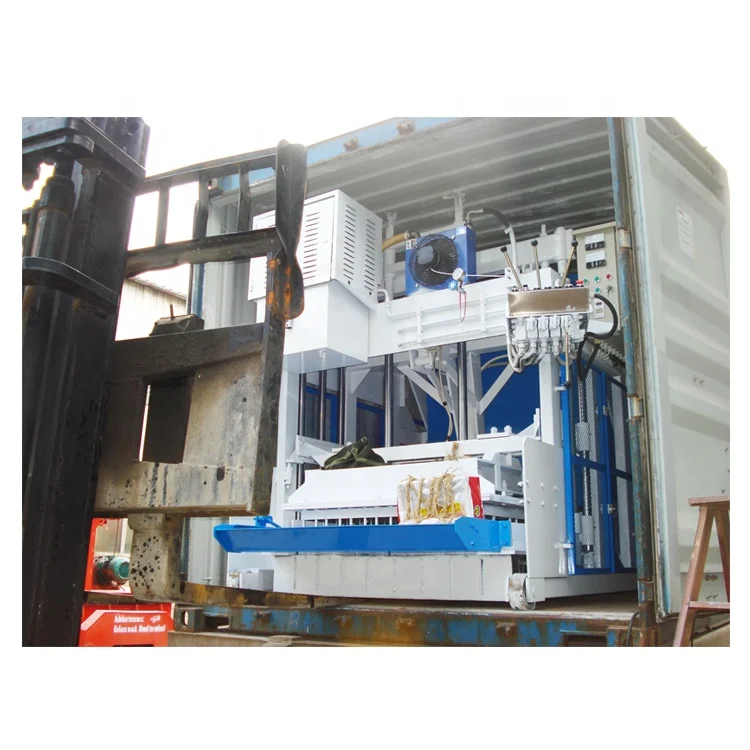
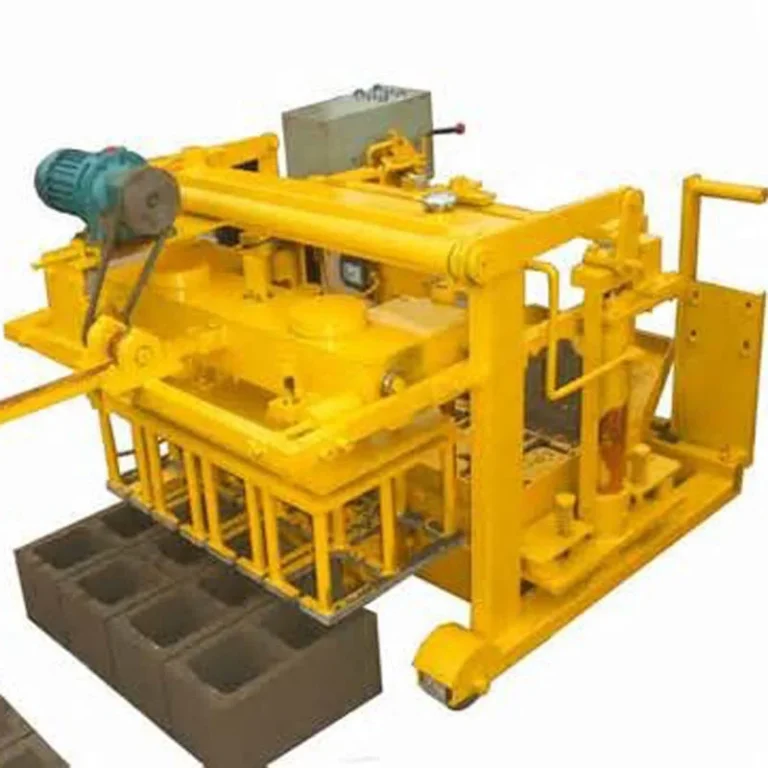
Matched system design — machine, mould, pallet and handling specified together so cycle times align with your curing area and block format.
Technical Specifications
| Parameter |
Value |
| Product Type |
Mobile Concrete Block Making Machine |
| Model |
QMY4-30 |
| Rated Power |
5 kW |
| Overall Dimensions |
1200 × 1200 × 1100 mm |
| Net Weight |
950 kg |
| Molding Cycle Time |
30 seconds |
| Raw Materials |
Cement, sand, crushed stones, slag |
| Mould Format |
Changeable for hollow block and solid brick |
| Automation Level |
Manual / mobile egg-laying type |
| Output Capacity (400×200×200 mm hollow block) |
480 pcs/h, 3840 pcs per 8-hour shift |
| Output Capacity (400×150×200 mm hollow block) |
600 pcs/h, 4800 pcs per 8-hour shift |
| Output Capacity (400×100×200 mm hollow block) |
840 pcs/h, 6720 pcs per 8-hour shift |
| Pallet Size |
(basis to be confirmed) |
| Hydraulic Pressure |
(basis to be confirmed) |
| Vibration Force |
(basis to be confirmed) |
| Voltage & Frequency |
(basis to be confirmed) |
| Control System |
(basis to be confirmed) |
| Assembly State |
Mobile, no fixed plant required |
Application Suitability
| Application |
Material or Output |
| On-site concrete block production |
Cement, sand, crushed stones without a fixed plant footprint |
| Small-scale hollow block manufacturing |
400×200×200, 400×150×200, 400×100×200 mm formats |
| Solid brick production for local markets |
Interchangeable mould setups on a single mobile unit |
| Contractor job-site block making |
Low-volume runs where a stationary line is not justified |
Why Quoted Output Rarely Survives the First Week on Site
Every capacity figure here is tied to a specific block size and a 30-second molding cycle.
Capacity brochures often list a single hourly number without naming the block format behind it. When the machine arrives and the operator loads a different mould, the daily count drops sharply because the cycle time and vibration profile were matched to a format the buyer never intended to produce. I have watched crews in East Africa run a mobile block making machine for sale at half the quoted shift output simply because the local aggregate had a higher clay content than the factory test assumed [NEED_CITE: aggregate testing standards for concrete block production].

Placing the Mobile Tier Inside a Wider Machine Range
The QMY4-30 occupies the entry-mobile position in a lineup that extends through semi-automatic stationary presses and fully automatic stacking lines. Buyers who need less than 5,000 hollow blocks per shift and have no fixed plant infrastructure typically land here. Those targeting higher daily volumes or multiple block formats in a single shift usually move up to a stationary press with pallet handling.
Where the Egg-Laying Concept Fits the Job Site
An egg-laying mobile block making machine for sale deposits wet blocks directly onto the ground and moves forward on wheels. This removes the need for pallets and curing racks but demands a smooth, level concrete floor. If the ground is uneven, block height varies and wall thickness drifts outside tolerance. The trade-off is lower capital outlay and zero pallet inventory, which suits contractors running a single housing project [NEED_CITE: mobile egg-laying block machine ground preparation requirements].
Reading the Numbers Behind the 30-Second Cycle
The 30-second molding cycle applies across all three hollow block formats, but the piece count per cycle changes with cavity count. The 400×200×200 mm mould produces fewer cavities per drop than the 400×100×200 mm mould, so hourly output scales accordingly. The 5 kW rated power keeps the machine within reach of a standard site generator, avoiding the cost of a dedicated transformer. At 950 kg, the unit can be loaded onto a flatbed truck with a site forklift, which matters when the next project is across town.
What Happens When Ground Prep Is Skipped
Skipping the concrete floor slab is the most common reason mobile egg-laying machines underperform. Without a level surface, the machine frame twists slightly during vibration, causing uneven compaction inside the mould cavity. Blocks come out with one corner lower than the rest, and rejection rates climb. The operator compensates by slowing the travel speed, which erodes the shift output the buyer counted on [NEED_CITE: mobile block machine floor tolerance specifications].
Why Buyers Choose This Tier Over a Stationary Line
Block machinery is the single focus here, so the QMY4-30 is specified alongside its moulds and handling needs rather than sourced from separate catalogues. Configuration is set against your actual mix design and local aggregate, not a factory default. Mould design covers the hollow block formats your market sells, with custom drawings available for sizes outside the standard range. The automation level is selectable — a buyer can start with the manual egg-laying setup and move to a semi-automatic stationary line later without replacing the entire investment. Installation and commissioning support includes operator training on your site, so the crew knows the vibration adjustment procedure before the first production day ends.
Documentation & Verification
- Line layout and capacity calculation stating the exact hollow block format assumed
- Machine specification sheet confirming 5 kW power, dimensions, and 30-second cycle
- Mould drawing and format list showing included and custom-available block sizes
- Voltage and control language confirmation document before production begins
- Factory test record on your target block format before dispatch
Installation, Commissioning & Support
- Level concrete floor slab required to maintain block height tolerance across the 1200 × 1200 mm footprint
- Dedicated 5 kW power circuit with correct voltage and frequency confirmed before commissioning
- Machine arrives assembled; wheels and vibration motor checked on site before first run
- Mould change procedure trained with operator, including cavity alignment for each block format
- Wear parts list supplied with first-order shipment, covering vibration springs and mould liners
What to Include in Your First Inquiry
Tell us which hollow block dimensions your market actually buys, the daily shift volume you need to hit, and the aggregate sources available near your site. Include your local voltage and frequency so the electrical panel is built correctly before shipping. If you already have a curing area or forklift, mention the dimensions so the mobile block making machine for sale can be matched to your existing setup.
Frequently Asked Questions
Q: How is the capacity figure calculated and which block format does it assume?
A: Every output number is based on a 30-second molding cycle and a specific hollow block dimension — 400×200×200, 400×150×200, or 400×100×200 mm. The per-shift figure assumes eight continuous hours of production with no unplanned stops.
Q: Where does this mobile tier sit compared to semi-automatic and automatic lines?
A: The QMY4-30 targets buyers who need under 7,000 blocks per shift and have no fixed plant. Semi-automatic lines add pallet handling and higher output, while automatic lines include stacking and cubing for volumes well above this tier.
Q: What voltage and frequency options are available?
A: Voltage and frequency are configured to match your local grid before production begins. The control panel language is also confirmed at the order stage to avoid commissioning delays when the machine arrives on site.
Q: Which block formats can the changeable moulds produce?
A: Standard moulds cover 400×200×200, 400×150×200, and 400×100×200 mm hollow blocks plus solid brick. Custom mould designs are available for other formats based on buyer drawings and market requirements.
Q: What ground preparation does the egg-laying setup require?
A: A smooth, level concrete floor slab is necessary so the machine travels evenly and block height stays within tolerance. Uneven ground causes frame twist during vibration, leading to uneven compaction and higher rejection rates.

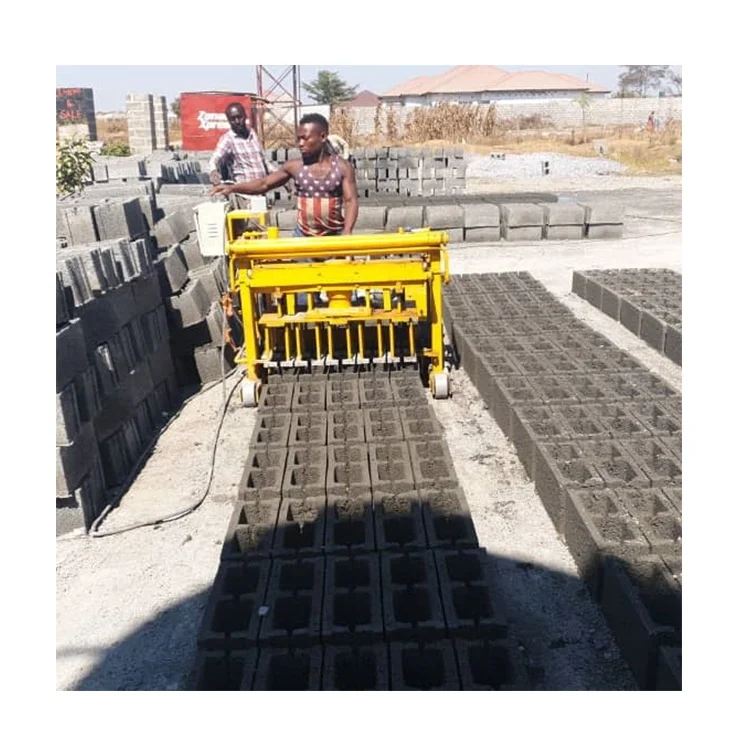
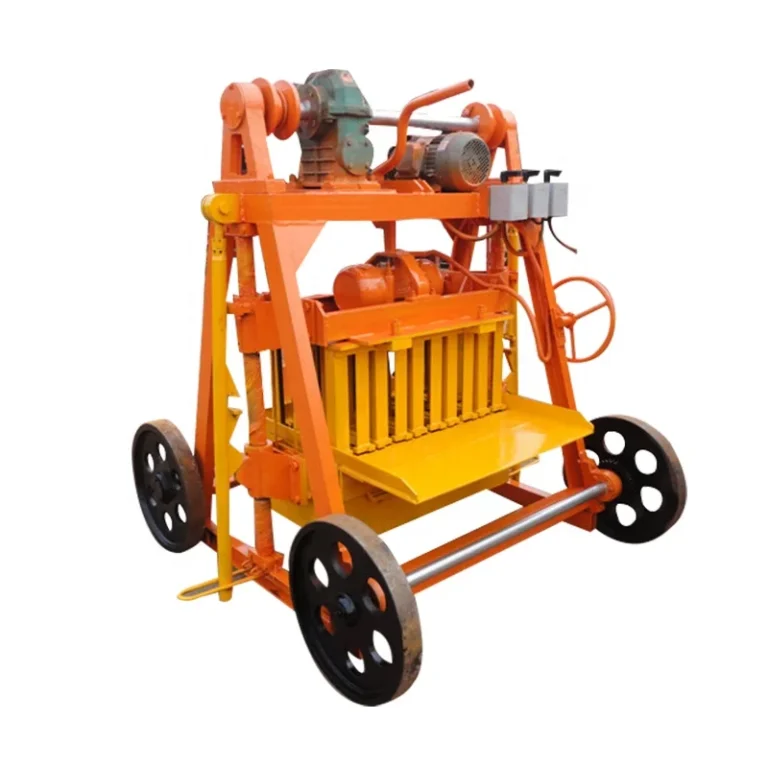 Mobile block machine