Ground-Level Output Matching — capacity figures stated per block format with cycle time, not a single headline number disconnected from your actual product mix.
Technical Specifications
| Parameter |
Value |
| Model |
QMJ2-45 |
| Product Type |
Mobile Block Making Machine |
| Machine Category |
Manual mobile egg-laying block machine |
| Mould Format Support |
Hollow brick, multiple sizes via mould change |
| Cycle Time |
25–30 seconds per mould |
| Output — 400×200×200mm Hollow Block |
160 pcs/h, 1280 pcs/8hr (2 pcs/mould) |
| Output — 400×150×200mm Hollow Block |
240 pcs/h stated (basis to be confirmed — theoretical ~360–432 pcs/h at 25–30s cycle with 3 pcs/mould) |
| Output — 400×100×200mm Hollow Block |
320 pcs/h stated (basis to be confirmed — theoretical ~480–576 pcs/h at 25–30s cycle with 4 pcs/mould) |
| Pallet Requirement |
None — egg-laying directly on ground |
| Labor Requirement |
1–3 workers |
| Mould Change Method |
Manual |
| Automation Level |
Manual |
| Vibration Type |
Mechanical vibration |
| Certification |
ISO9001:2000, CE |
Application Suitability
| Application |
Material or Output |
| On-site hollow block production at construction project locations |
Crushed stone, sand, cement, water — no fixed plant infrastructure needed |
| First block plant with minimal capital |
Standard concrete mix with locally sourced aggregate |
| Remote or rural block supply |
Hollow brick in 400×200×200, 400×150×200, 400×100×200mm formats |
| Contractor self-production for housing projects |
Egg-laying on prepared ground, curing in open yard |
Why "Pieces per Hour" Means Nothing Without the Block Format
Every capacity number on this page is tied to a specific block dimension and mould cavity count.
I once watched a buyer receive a mobile block making machine for sale and immediately call the supplier because daily output was barely half the brochure claim. The brochure quoted the highest-cavity mould running the smallest block. The buyer’s market only bought the large 400×200×200 hollow block, which uses a two-cavity mould. Same machine, same cycle time — completely different daily tally. When you compare machines, the only honest basis is output per format, per shift, at a stated cycle time [NEED_CITE: block machine capacity calculation standards by format]. The QMJ2-45 mobile block making machine for sale lists each format separately so your purchasing decision starts from reality, not a catalogue peak.

Where the QMJ2-45 Fits in the Full Range
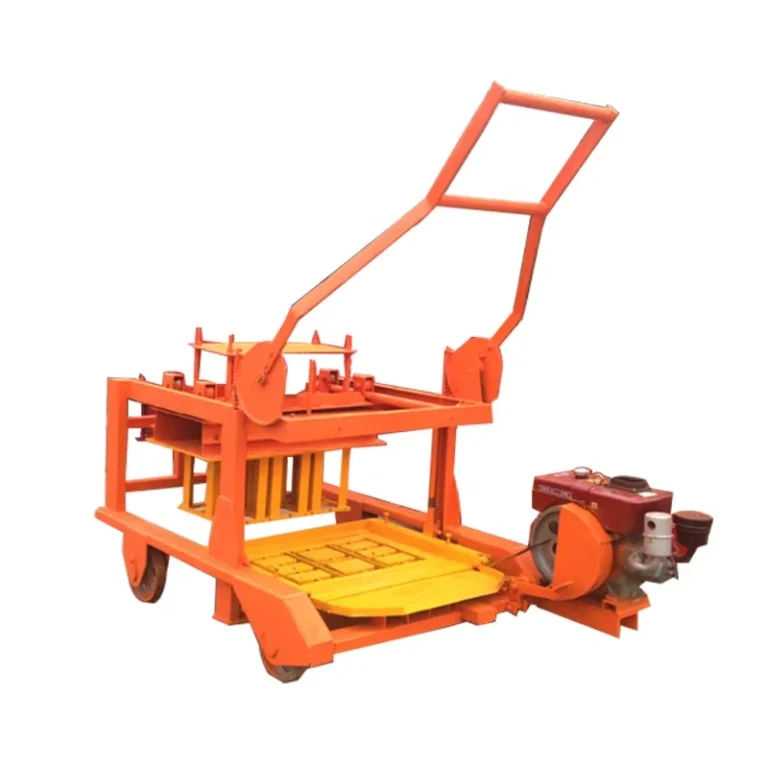
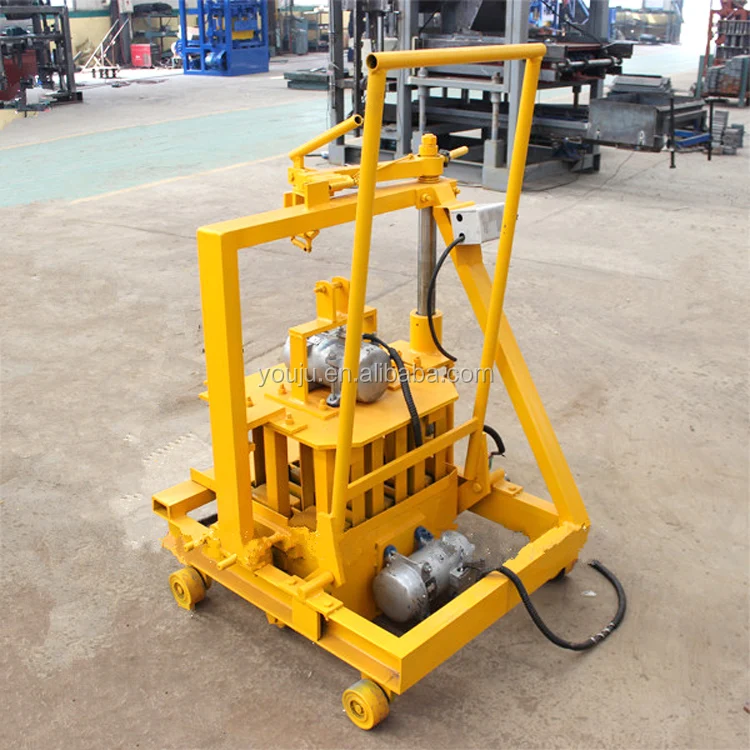
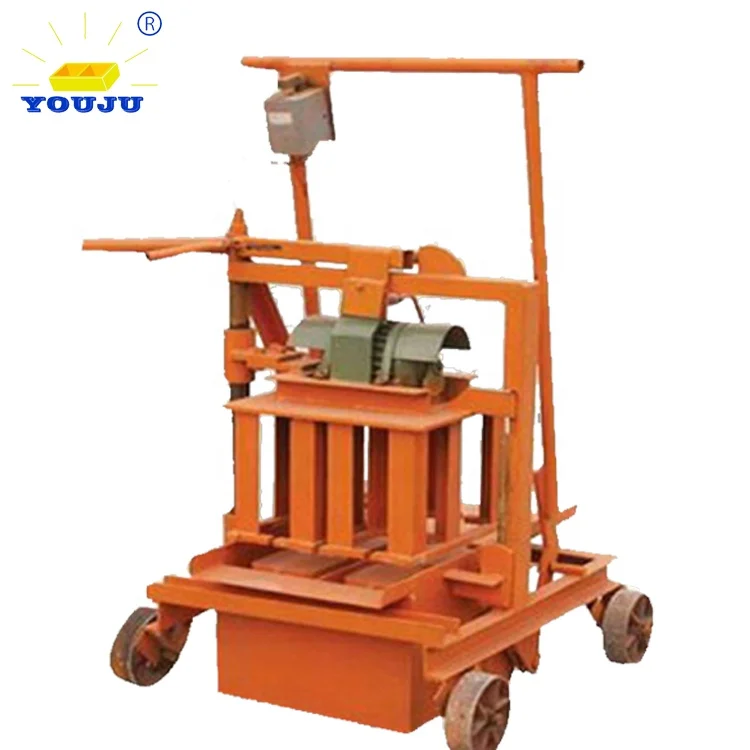
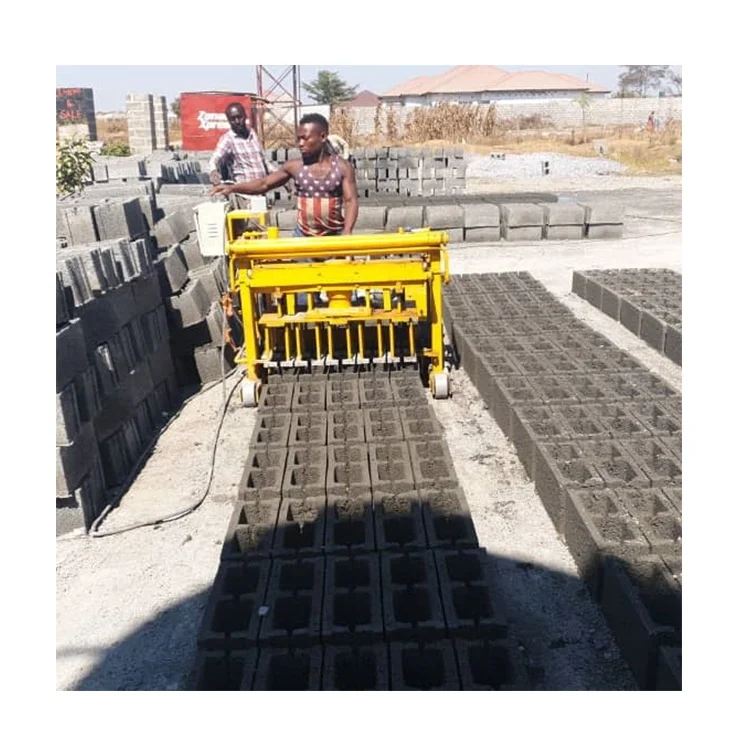
The QMJ2-45 anchors the entry tier of our mobile block machine lineup. It is a no-pallet, egg-laying unit — the machine lays blocks directly on a prepared ground surface and moves forward under its own power or with operator assistance. Buyers who have no fixed plant, no curing racks, and no forklifts start here. The investment is low, the footprint is the ground you already have, and the format flexibility comes through manual mould swaps rather than hydraulic quick-change systems.
When Buyers Move Beyond This Tier
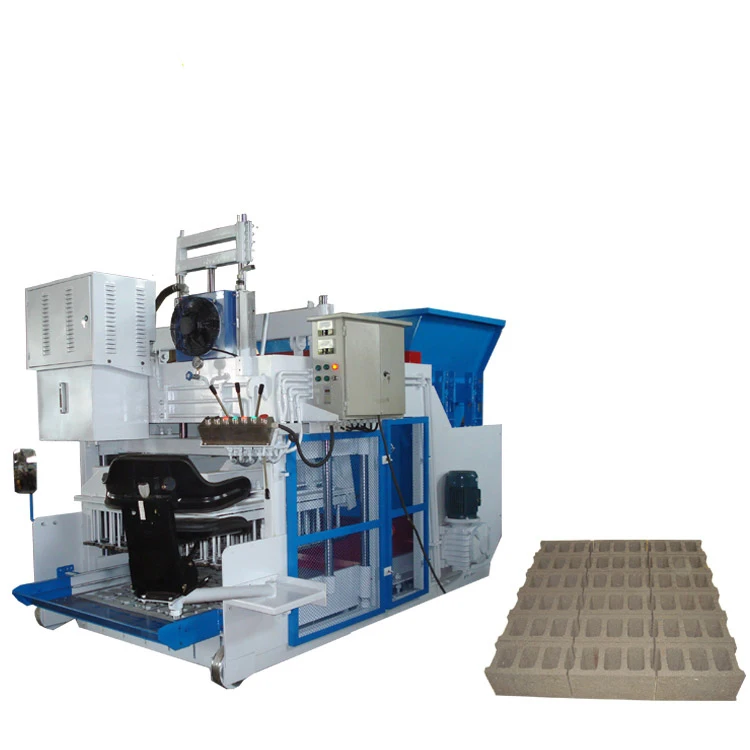
Once daily demand exceeds what two or three workers can sustain on a manual cycle, or when block strength consistency becomes critical for structural certification, the step up is to a semi-automatic stationary press with pallet circulation. That tier adds pallet feeding, mechanical vibration matched to hydraulic pressure, and stacking automation. The QMJ2-45 mobile block making machine for sale does not pretend to replace that class — it serves a different buyer entirely: the contractor or entrepreneur whose priority is getting production running this week, not building a permanent factory.
Reading the Specs That Actually Matter
Cycle time of 25–30 seconds governs every output figure. At two cavities per mould for the 400×200×200mm block, each cycle produces two blocks — that arithmetic is where the 160 pcs/h comes from. The 400×150×200mm format uses a three-cavity mould, and the 400×100×200mm uses four cavities, which is why raw piece counts rise even though the machine speed stays the same. Mechanical vibration on a manual machine means the operator controls compaction rhythm; consistency depends on training, not PLC logic. No pallets are required — blocks cure on the ground, which eliminates pallet investment and rack handling but demands a flat, compacted surface and adequate yard space for the curing area [NEED_CITE: ground preparation requirements for egg-laying block machines]. Voltage and motor specification must be confirmed before production, as the source documentation does not state a default electrical configuration.
The Cost of Skipping the Format Conversation
I have stood on project sites where the machine arrived, the moulds were wrong for the local market, and production stalled for weeks while replacement tooling shipped. The QMJ2-45 supports multiple hollow brick formats, but only if those formats are specified before the machine leaves the factory. A buyer who orders based on a single headline capacity number, without confirming which block sizes the moulds produce, faces a machine that technically works but commercially fails. Ground conditions are another silent cost — an egg-laying machine on soft or uneven soil produces blocks with cracked corners and inconsistent density, and no amount of vibration adjustment compensates for a bad floor [NEED_CITE: effect of ground conditions on egg-laying block quality].
What Procurement Looks Like From This Side
Block machinery is our single focus, so the QMJ2-45 is not bundled from separate press, mould, and handling suppliers — it ships as one matched unit. Configuration is set against your target block format and local aggregate, not a catalogue default. Mould design covers the hollow brick sizes your market actually sells, and custom mould drawings are available if your specification falls outside the standard range. The automation level is honest: manual operation, 1–3 workers, no pretence of PLC control on a machine that does not have it. Documentation includes capacity calculations stated per format, not a single optimistic number.
Documentation & Verification
- Line layout and capacity calculation stating each hollow block format assumed
- Mould drawing and format list confirming accepted cavity sizes
- Machine specification sheet with overall dimensions for transport planning
- Voltage and control language confirmation sheet before dispatch
- Factory test record on your specified mould format
- Operation and maintenance manual with wear parts list
Installation, Commissioning & Support
- Ground must be flat and compacted — no pallet system to install, but surface preparation is critical for the egg-laying cycle
- Electrical supply confirmed to local voltage and frequency before motor wiring at site
- Machine arrives assembled; mould change procedure demonstrated during operator training
- First production run supervised to match vibration rhythm to your concrete mix design
- Manual mould swap training covers all ordered formats and cavity alignment checks
- Wear parts list supplied with recommended replacement intervals for vibration components
What to Include With Your Inquiry
Send your target hollow block dimensions and the daily output you need per format. Include the local aggregate type — river sand, crushed stone, or recycled material — and its typical moisture content. State your site voltage and frequency, and confirm whether your operators need documentation in English or another language. If you have an existing curing yard, share its dimensions so we can calculate how many blocks can be laid per day within your available space.
Frequently Asked Questions
Q: How is output capacity verified and what block format does each figure assume?
A: Every output number listed for the QMJ2-45 is paired with a specific block dimension and mould cavity count. The 160 pcs/h figure, for example, applies to the 400×200×200mm hollow block on a two-cavity mould at a 25–30 second cycle. We do not quote a single peak capacity without stating which format it represents.
Q: Where does the QMJ2-45 sit in the full machine range?
A: It anchors the entry tier — a manual, no-pallet egg-laying machine for buyers who need production without building a fixed plant. When daily volume or block strength certification requirements exceed what manual operation can deliver consistently, the next step is a semi-automatic stationary press with pallet handling.
Q: What voltage and frequency options are available?
A: The electrical configuration is confirmed during the sales process to match your local grid. We need your voltage, phase, and frequency before production begins so the motor and wiring arrive correct for your site, avoiding commissioning delays.
Q: What ground conditions does an egg-laying machine require?
A: The surface must be flat, compacted, and free of standing water. Blocks are laid directly on the ground, so uneven soil causes cracking and density variation. A concrete slab or well-graded compacted earth works; soft or muddy ground does not.
Q: How long does mould change take and what formats can I add later?
A: Mould change is manual and typically completed within one shift once operators are trained. Additional hollow brick formats can be ordered as separate moulds if they fall within the machine’s physical mould envelope, and custom mould drawings are available for non-standard sizes.

 Mobile block machine