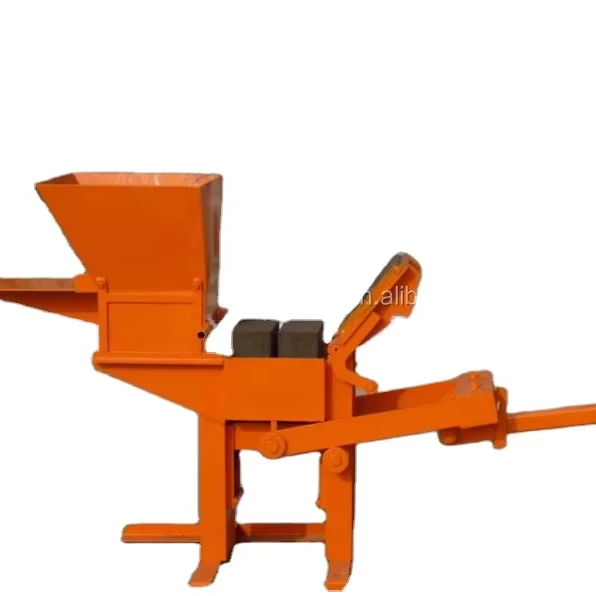
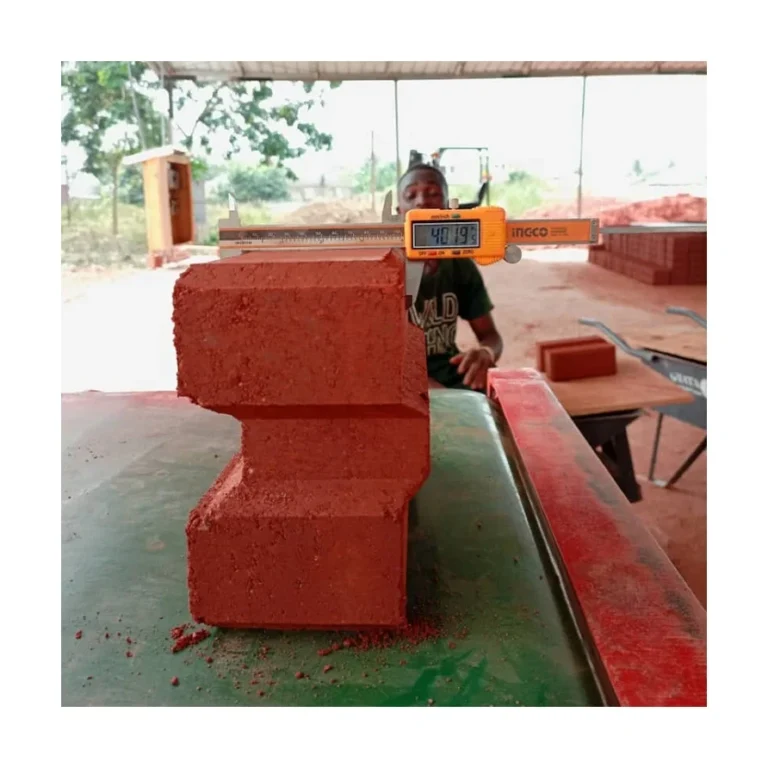
Matched System Sizing — every LY2-40 manual clay interlocking brick machine leaves our Linyi workshop with moulds and mixer rated against your actual soil sample, not a generic catalogue assumption.
Technical Specifications
| Parameter |
Value |
| Model |
LY2-40 |
| Product Type |
Manual Clay Interlocking Brick Making Machine |
| Operation Mode |
Completely Manual (No Power Required) |
| Lifting System |
Manual mechanical lever |
| Mobility |
Steel wheels for site repositioning |
| Molding Cycle |
30–40s per press |
| Daily Capacity |
400–1,000 pcs/day (basis not stated in source — confirm block format, material, and thickness) |
| Overall Dimensions (L×W×H) |
1600 × 700 × 1200 mm |
| Net Weight |
200–240 kg |
| Mould System |
Changeable moulds for various interlocking formats |
| Standard Mixer Option |
JFA-1 or JQ350 pan mixer |
| Warranty |
1 Year |
Application Suitability
| Application |
Material or Output |
| Rural housing projects |
Soil-cement interlocking bricks produced on-site |
| Off-grid community development |
Clay bricks formed without electrical dependency |
| Small-scale contractor yards |
Multiple interlocking formats from a single manual press |
| Remote infrastructure camps |
Stabilized earth blocks using locally excavated soil |
| First-time brick enterprises |
Low-capital entry into masonry product supply |
What "1,000 Bricks a Day" Actually Means on the Ground
Capacity figures only hold water when the block format and soil condition are defined upfront.
When a buyer reads a daily output range on a manual clay interlocking brick machine, the assumption is often a standard interlocking brick in well-graded laterite soil with an experienced two-person crew maintaining rhythm. In practice, a high-clay soil that retains moisture will slow demoulding, and a larger-format interlocking block will cut the count substantially below the upper figure. I have seen crews in West Africa lose entire afternoons because the soil stuck to the mould walls in humid conditions, dropping usable output to less than half the expected count [NEED_CITE: soil moisture impact on manual brick demoulding cycle]. We now ask for a soil sample before confirming any capacity projection.

Placing the LY2-40 Within the Block Machine Range
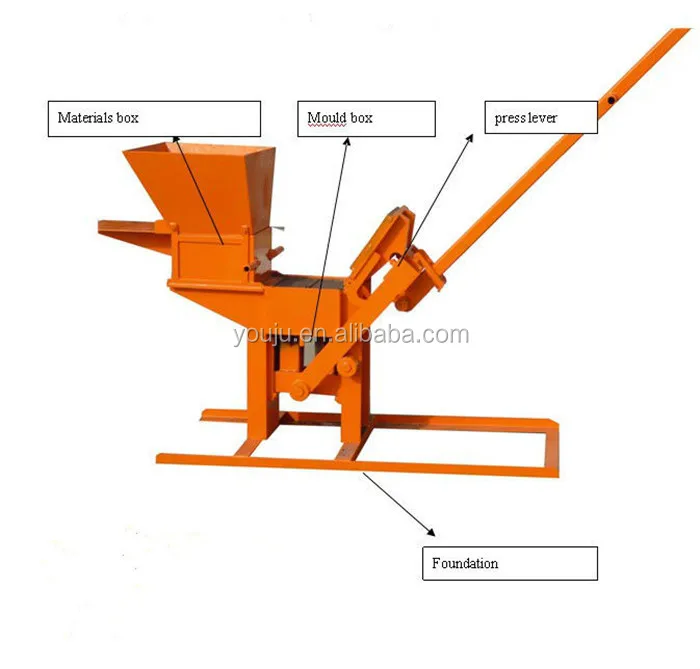
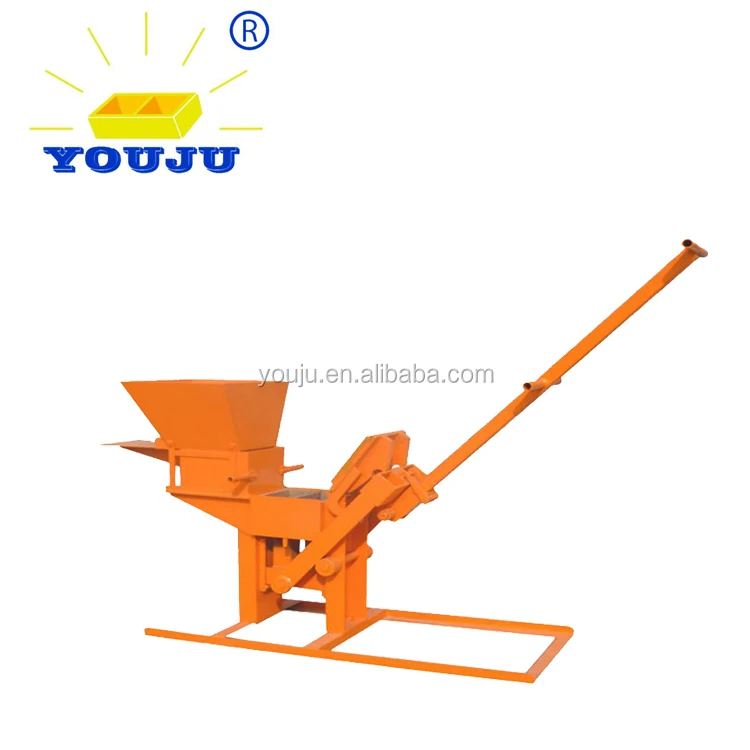
The LY2-40 occupies the entry tier of our manual clay interlocking brick machine lineup, built for buyers who need production capability without grid power or diesel generators. It sits below our semi-automatic hydraulic presses in output volume but matches them in format flexibility through the same changeable mould mounting system. For a buyer surveying options, this tier is where capital outlay stays minimal and site infrastructure requirements drop to near zero — a flat concrete pad, a water source, and raw material stockpile are all that is needed to start pressing.
Where Manual Operation Makes Strategic Sense
Not every project site has reliable three-phase power, and not every contractor wants to commit to a fixed plant before proving local demand for interlocking bricks. The completely manual operation of the LY2-40 removes electrical dependency entirely, which matters on rural development projects, disaster-recovery construction, and mining camp housing where grid extension is years away [NEED_CITE: off-grid construction material production in developing regions]. The steel-wheel chassis lets a crew relocate the press closer to where bricks are being laid, cutting wheelbarrow distance and reducing handling damage to green bricks.
Reading the Specifications That Actually Matter
The 30–40 second molding cycle is governed by human rhythm rather than a hydraulic valve timer, so crew fitness and soil workability set the real pace. A stiff soil-cement mix with low moisture will demand more lever force and slower compression but yield a denser brick that cures faster. The 200–240 kg net weight keeps the machine heavy enough to resist shifting during pressing yet light enough for two people to reposition on its steel wheels across a yard. Mould changeability is the specification that unlocks long-term value — a single LY2-40 can produce standard interlocking wall blocks, half-blocks for corners, and channel blocks for lintels simply by swapping the mould cassette, provided the mould drawings match the press platen dimensions.
The Cost of Skipping the Soil Test
Ordering a manual press based on a brochure capacity figure, then discovering your local clay has too high a plasticity index for clean demoulding, turns a productive machine into a frustrating liability. We have seen buyers receive equipment configured for sandy laterite only to find their red earth clings to every mould surface, requiring constant scraping and oiling that destroys cycle time [NEED_CITE: clay plasticity index and mould release behavior]. The mixer selection compounds this — a JFA-1 may handle low-moisture blends adequately but will struggle with the heavier, wetter mixes that high-clay soils demand, where a JQ350 pan mixer provides the torque and blade geometry needed.
Why Buyers Specify Through Our Workshop
Every manual clay interlocking brick machine we ship is assembled, pressed with the buyer’s soil sample, and photographed before crating. Mould formats are selected against the buyer’s local market demand rather than defaulted to a standard set. The mixer recommendation follows from actual mix trials, not catalogue pairing. Capacity calculations state the exact block format and mix ratio assumed, so there is no ambiguity between quoted and achievable output. And because block machinery is our single focus, the mould, press, and mixer arrive as a matched system rather than components sourced from separate vendors hoping they will work together.
Documentation & Verification
- Line layout showing curing area sized to your daily brick count and local climate
- Mould drawing and format list covering every interlocking profile available for the LY2-40
- Factory test record with your soil sample showing actual cycle time and demoulding quality
- Machine specification sheet with dimensional and weight data confirmed at dispatch
- Operation manual covering mould change procedure and lever maintenance intervals
Installation, Commissioning & Support
- Level concrete pad at least 2000 × 1000 mm to accommodate the 1600 × 700 mm footprint with workspace clearance
- No electrical supply required at the press station; mixer requires single-phase or three-phase depending on motor option
- Machine arrives fully assembled on steel wheels; position, lock wheels, and begin pressing after bolt check
- First-day production run supervised remotely with soil-moisture and mix-ratio adjustments documented
- Mould wear surfaces and lever pivot bushings listed with reorder part numbers in the maintenance manual
- Mixer blade and pan liner replacement intervals tied to your specific soil abrasiveness
What We Need to Size Your Setup
Before we confirm a configuration, share your target interlocking brick dimensions, the soil type available at your project site, and whether you have access to Portland cement for stabilization. Let us know your daily brick requirement and whether the site has power for a mixer or needs a fully manual mixing arrangement. If you can send a soil sample to our Linyi workshop, we will run trial presses and return a capacity figure you can actually plan around.
Frequently Asked Questions
Q: How is the 400–1,000 pcs/day capacity verified for the LY2-40?
A: That range assumes a standard interlocking brick format with a specific soil-cement mix and a trained two-person crew maintaining a 30–40 second cycle. We verify it by pressing your actual soil sample in our workshop and recording the real cycle time, demoulding quality, and daily count achievable with your mix. The capacity figure we quote names the exact block format and material assumption behind it.
Q: What is the investment difference between the LY2-40 and semi-automatic tiers?
A: The manual tier eliminates hydraulic systems, PLC controls, and electrical infrastructure entirely, which reduces both purchase cost and site preparation requirements. Semi-automatic presses add hydraulic compression and powered pallet feeding, increasing output volume and consistency but requiring a power supply, a larger curing area, and a higher capital outlay. The right tier depends on your daily brick demand and site conditions.
Q: Which mould formats can the LY2-40 produce?
A: The press accepts changeable mould cassettes, allowing production of standard interlocking wall blocks, half-blocks for corners and openings, and channel blocks for lintels or ring beams. We provide a full format list with dimensions for every mould compatible with the LY2-40 platen. Custom mould profiles can be manufactured to your drawings if your local market demands a specific interlocking geometry.
Q: Can I start with the LY2-40 and move to a higher tier later?
A: Yes. Many buyers begin with the manual tier to prove local demand and refine their soil-cement mix before investing in semi-automatic or automatic lines. The mix design knowledge and mould format experience you gain on the LY2-40 transfers directly to larger presses, and the curing infrastructure you build can be expanded rather than replaced when you scale up.
Q: Which mixer — JFA-1 or JQ350 — suits my soil?
A: The JFA-1 handles lighter, sandier soil-cement blends at lower moisture content and is adequate for small daily volumes. The JQ350 pan mixer delivers more torque and better blending action for heavier, high-clay soils that require thorough cement distribution at slightly higher moisture. We recommend based on the soil sample trial we run before confirming your equipment package.

 Clay interlocking brick