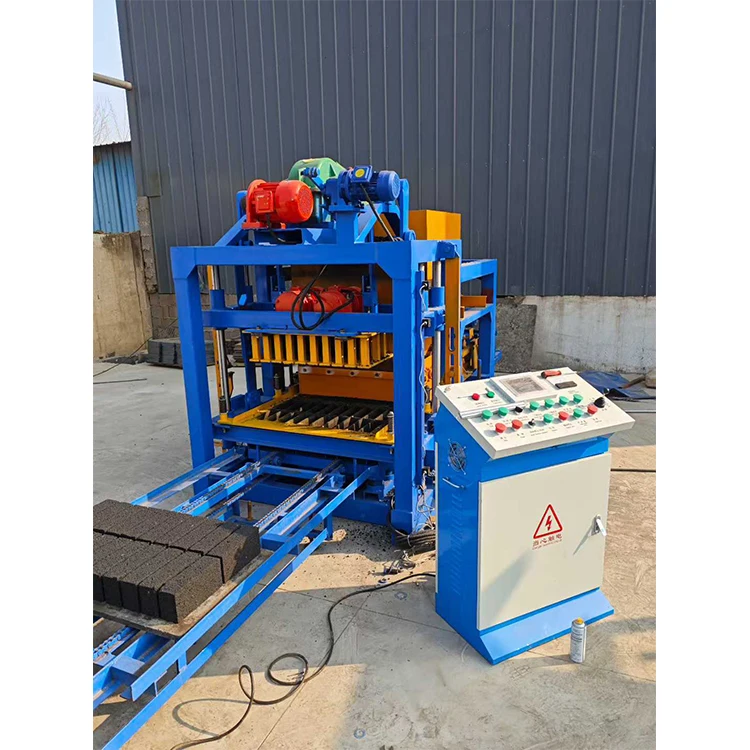
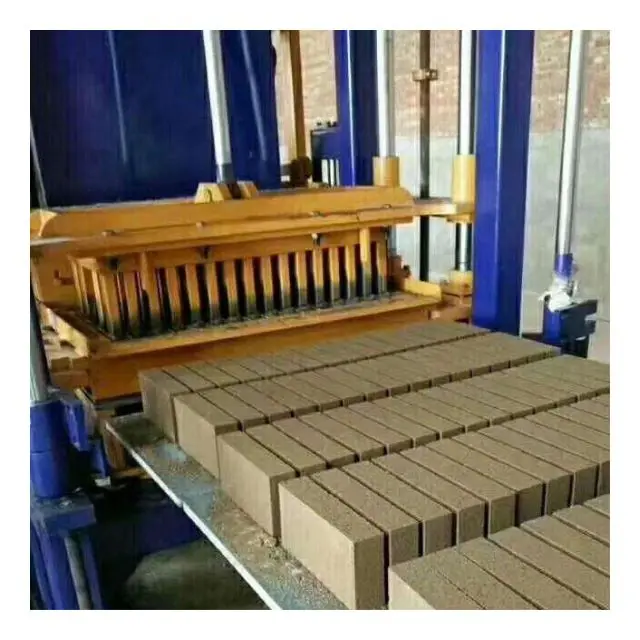
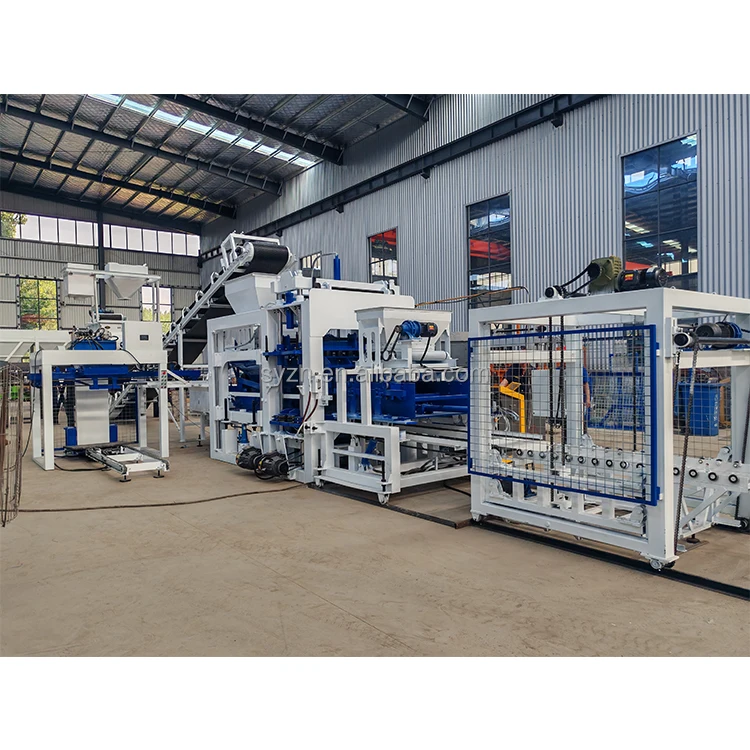
Matched System Supply — the LY4-10 automatic interlocking clay brick making machine is quoted with its mixer, conveyor, moulds and pallet handling as one verified line rather than a standalone press.
Technical Specifications
| Parameter |
Value |
| Model |
LY4-10 |
| Product Type |
Automatic Soil Clay Interlocking Brick Making Machine |
| Control System |
PLC controlled, full automatic single-person operation |
| Overall Dimensions (L×W×H) |
1600 x 1400 x 2100 mm |
| Net Weight |
1600 kgs |
| Rated Power |
11 kW |
| Molding Cycle |
10 s |
| Output Capacity |
11520 pcs/day (basis not stated in source — confirm block format, material and thickness) |
| Bricks per Cycle |
4 pcs (according to the mold) |
| Basic Equipment Included |
JQ350 Concrete Mixer, 6M Conveyor Belt |
| Raw Material |
Clay, soil, cement or other construction dregs |
| Hydraulic System |
Yes, for brick density and strength |
| Brick Height Adjustment |
Adjustable via screws |
| Mould Customization |
Available per customer requirements |
| Hydraulic Oil Capacity |
70L anti-wear hydraulic oil |
| Gearbox Oil |
15KG (mixer gearbox) |
Application Suitability
| Application |
Material or Output |
| Interlocking brick production for housing projects |
Clay, soil and cement mixes |
| On-site block production for construction contractors |
Locally available clay and soil |
| Custom interlocking formats for concrete product manufacturers |
Varied mix designs via mould change |
What "11,520 Pieces per Day" Actually Means for Your Site
Daily output figures only hold up when the block format, mix design and local aggregate are stated alongside them.
I spent years on the assembly floor before moving into technical selection, and the most common dispute I see starts with a capacity number that looks good on paper but falls apart on site. Last year a buyer in West Africa took delivery of a clay interlocking brick press rated for a specific daily volume, only to find his local red soil had a higher clay content that slowed demoulding. The output dropped significantly until we adjusted the vibration frequency and moisture content in person. When evaluating an automatic interlocking clay brick making machine manufacturer, the conversation must start with your actual soil sample and target brick profile [NEED_CITE: soil testing and mix design verification for brick production].

Where the LY4-10 Sits in the Full Machine Range
The LY4-10 occupies the entry-to-mid tier of the full automatic block machine lineup. It is designed for buyers who need PLC-controlled interlocking brick production without the footprint or investment of a high-capacity automatic line. The machine comes with a JQ350 concrete mixer and a 6M conveyor belt as standard basic equipment, which defines its position as a compact, self-contained unit for first-time plant setups or on-site contractor use.
Understanding the Range Before You Narrow Down
Buyers comparing options across the full machine range should map their daily volume requirement against the block format they actually sell. A higher-tier automatic press may offer more cycles per hour, but if your market primarily buys interlocking bricks in a specific profile, the LY4-10 with a custom mould can match that demand within a smaller plant footprint. The decision between tiers comes down to whether your volume justifies the larger pallet size, higher vibration force and expanded handling equipment of the next tier up [NEED_CITE: block plant capacity planning and tier selection].
Reading the Specs That Actually Shape Your Output
The 10-second molding cycle determines how many presses complete per hour, but the bricks per cycle figure of 4 pcs depends entirely on the mould installed. Hydraulic pressure is the force that compresses the clay-soil-cement mix into a dense interlocking profile, and without adequate pressure the bricks emerge with weak interlock tongues that chip during handling. The PLC control enables single-person operation, which matters when labour availability is tight, but the PLC display language must be confirmed before production so your operator can read fault codes on day one. Brick height adjustment via screws allows the same mould to produce different thicknesses, giving format flexibility without a full mould change. The 11 kW rated power must be matched to your site voltage and frequency before the machine leaves the factory [NEED_CITE: voltage and frequency standards by export market].
The Cost of Skipping the Configuration Conversation
When voltage and frequency are not confirmed in writing before production, the machine arrives with a motor and PLC that do not match the local grid, delaying commissioning by weeks while replacement components are shipped. If the mould is specified for a standard interlocking profile but your market sells a different tongue-and-groove design, you face a second mould order and idle production time. Pallet size chosen without regard to your existing curing area and forklift means either the pallets do not fit your racks or your forklift cannot lift a loaded stack [NEED_CITE: pallet sizing and curing layout for block plants].
Why Buyers Specify the LY4-10 From This Range
Block machinery is the single focus here, so the LY4-10 is quoted as one matched system with its mixer, conveyor, mould and pallet handling specified together. Configuration is set against your actual mix design and local aggregate rather than a catalogue default, which prevents the capacity shortfall that happens when a machine is tuned for a material you cannot source. Mould design covers the interlocking formats your market sells, including custom drawings when your profile differs from standard options. The automation level is selectable within the range, so a buyer can start with the LY4-10 and move to a higher-tier automatic press as volume grows. Installation support includes operator training so your team understands the PLC interface and hydraulic system from the first production run.
Documentation & Verification
- Line layout and capacity calculation stating the interlocking block format assumed for the quoted output
- Machine specification sheet confirming hydraulic pressure, PLC language and voltage before shipment
- Mould drawing and format list for the interlocking profile your market requires
- Factory test record on your specific clay-soil mix before dispatch
- Operation and maintenance manual covering the 70L hydraulic system and JQ350 mixer gearbox
Installation, Commissioning & Support
- Foundation must support the 1600 kg net weight and 1600 x 1400 x 2100 mm footprint with level tolerance
- Dedicated power circuit required for the 11 kW rated power at confirmed voltage and frequency
- Machine ships as a single unit with JQ350 mixer and 6M conveyor belt for on-site assembly
- First commissioning includes setting hydraulic pressure and vibration to your soil sample test results
- Operator training covers PLC fault codes, brick height screw adjustment and mould change procedure
- 70L anti-wear hydraulic oil and 15KG mixer gearbox oil specified for initial fill and first service interval
What to Include With Your Inquiry
Send your target interlocking brick drawing or profile name, the clay or soil type available on your site, and your required daily output so the capacity calculation can be built around your actual format. Confirm your local voltage, frequency and preferred PLC display language to avoid post-arrival delays.
Frequently Asked Questions
Q: How is the 11,520 pcs/day output verified, and which interlocking block format does it assume?
A: The 11,520 pcs/day figure is listed without a stated block format, material mix or thickness. Before quotation, we build a capacity calculation that names the exact interlocking profile, cycle time per format and mix design so you see the real daily number for the brick your market sells.
Q: Where does the LY4-10 sit in the full machine range compared to higher-output tiers?
A: The LY4-10 is a compact PLC-controlled press for entrepreneurs and contractors starting interlocking brick production. Higher tiers offer larger pallets, greater vibration force and expanded automatic stacking, suited for buyers whose volume exceeds what a 4-pcs-per-cycle press delivers.
Q: What voltage, frequency and PLC display language options are available?
A: Voltage and frequency are configured to your local grid specification and must be confirmed in writing before production. PLC display language is set to your operator’s preference so fault codes and cycle parameters are readable from the first day of operation.
Q: What plant footprint and supporting equipment do I need alongside the LY4-10?
A: The machine footprint is 1600 x 1400 x 2100 mm, with additional space needed for the JQ350 mixer, 6M conveyor, curing area and pallet storage. Pallet size and handling equipment should be matched to your existing forklift and curing rack layout.
Q: Can the mould be customized to my interlocking brick drawing?
A: Mould customization is available to your drawings for interlocking and other formats. We provide a mould drawing and format list for approval before production, ensuring the tongue-and-groove profile matches what your market requires.

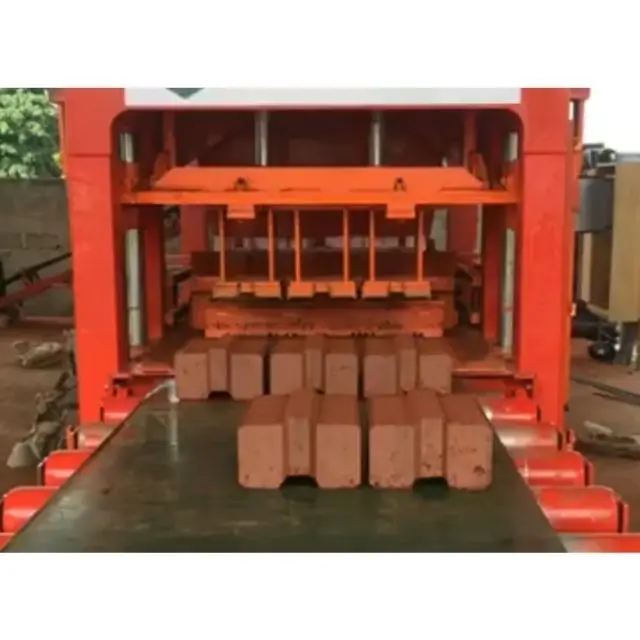
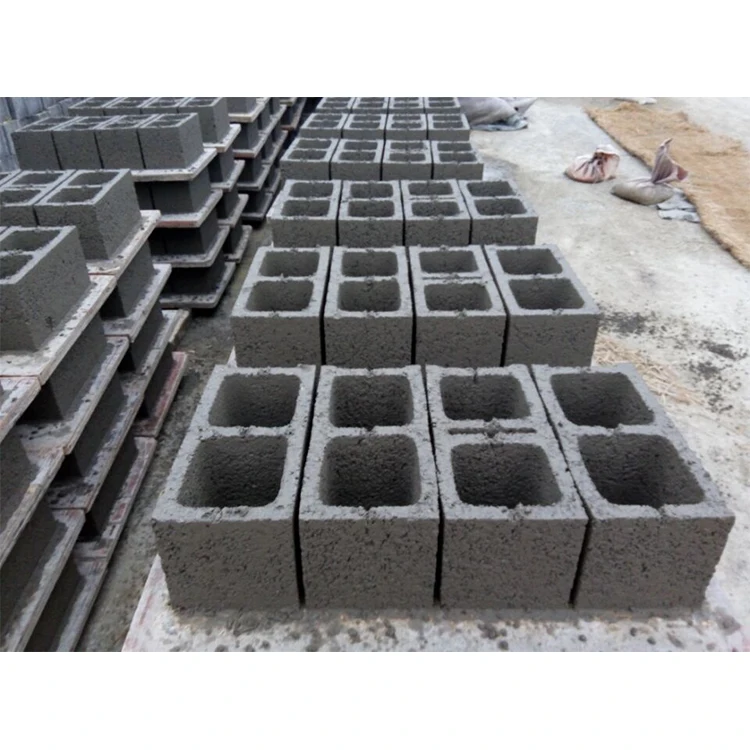 Automatic block machine