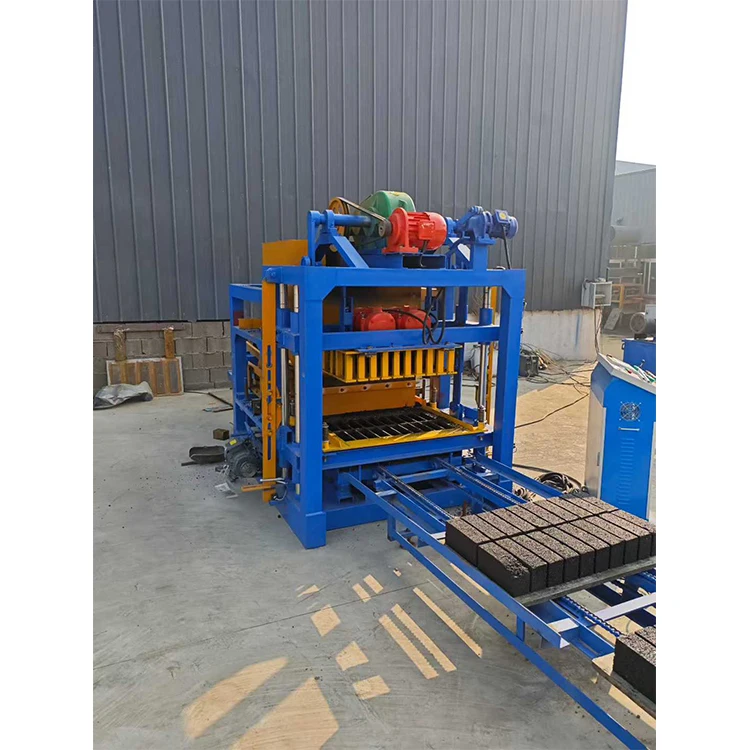
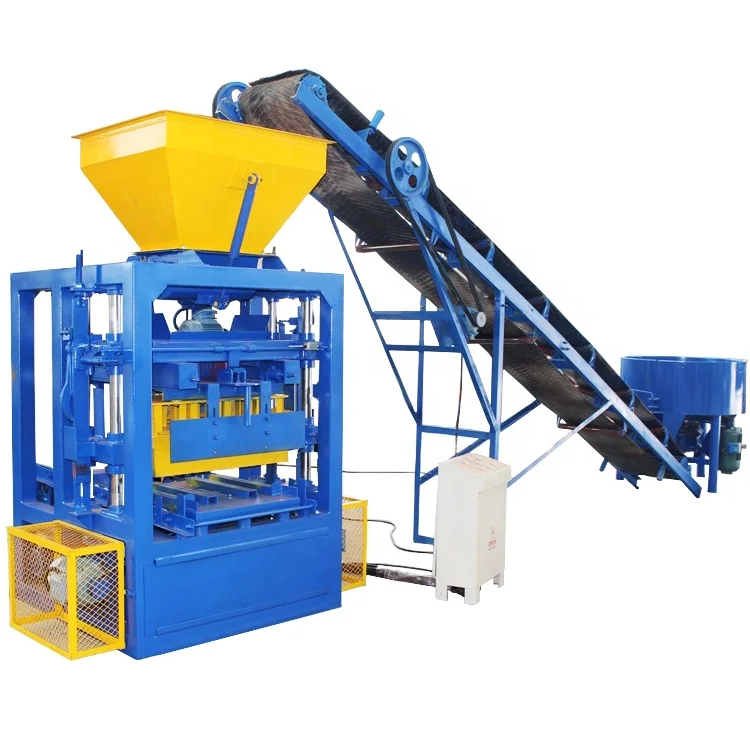
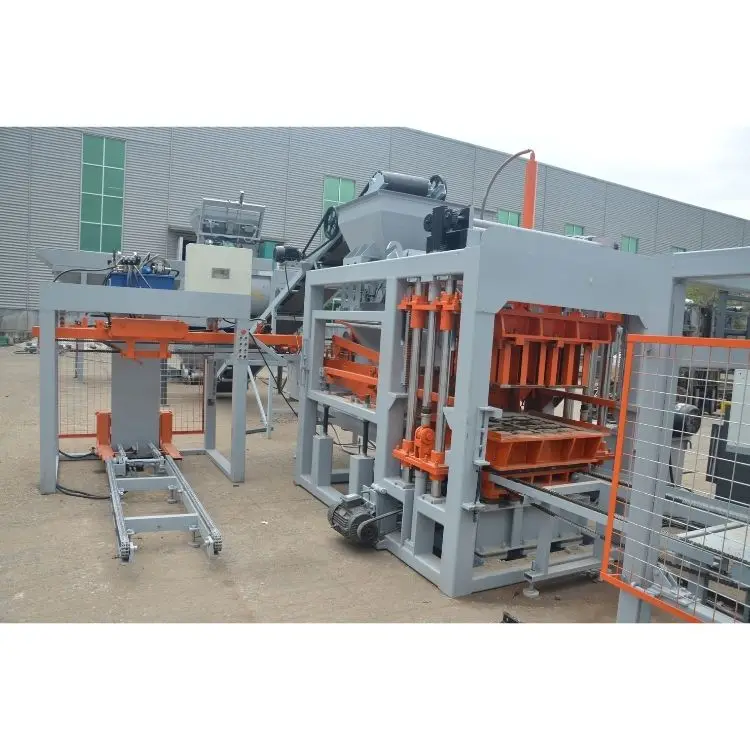
Matched System Sizing — every QT5-15 output tier we quote is tied to your actual block format, pallet size, and local aggregate rather than a catalogue default.
Technical Specifications
| Parameter |
Value |
| Model |
QT5-15 |
| Product Type |
Automatic Concrete Block Making Machine |
| Overall Dimensions (L×W×H) |
7400 x 1950 x 2800 mm |
| Vibration Form |
Platform Vibration |
| Vibration Frequency |
4500–5100 RPM |
| Brick Height Range |
50–200 mm |
| Pallet Size |
1100 x 550 mm |
| Molding Cycle |
15–20 s |
| Rated Power |
30.5 kW |
| Net Weight |
6200 kg |
| Control System |
PLC with touch screen |
| Hydraulic System |
Independent integrated hydraulic pump station |
| Output (400×200×200 mm hollow, 5 pcs/mold) |
1200 pcs/h |
| Output (400×150×200 mm block, 6 pcs/mold) |
1437 pcs/h |
| Output (240×115×90 mm block, 16 pcs/mold) |
2880 pcs/h |
| Output (240×115×53 mm solid brick, 32 pcs/mold) |
7680 pcs/h |
| Output (225×112.5×60 mm interlocking, 16 pcs/mold) |
2000 pcs/h |
| Output (200×100×60 mm paver, 20 pcs/mold) |
4800 pcs/h |
| Color Feeding |
Optional color material feeder |
| Key Features |
Quick-change mould, safety interlock logic, fault diagnosis, full intelligent electronic control |
| Voltage & Frequency |
To be confirmed before order |
| PLC Display Language |
To be confirmed before order |
Application Suitability
| Application |
Material or Output |
| Hollow block production for load-bearing walls |
Crushed stone, river sand, cement and fly ash blends |
| Interlocking paver manufacturing for municipal sidewalks |
Aggregate and cement mixes with optional color pigment layer |
| Solid brick output for partition and infill work |
Coal gangue, cinder, gravel and cement composites |
| Kerbstone and slope protection brick for infrastructure |
Dense aggregate blends requiring high vibration compaction |
| Porous and grassing bricks for permeable paving |
Open-graded aggregate with controlled cement content |
What "1200 Pieces per Hour" Actually Means for Your Plant
Capacity figures only hold weight when the block format behind them is named.
Every automatic block making machine manufacturer prints a headline throughput number on the brochure. The problem shows up on day one of production: that number assumed a specific mould, a specific block geometry, and a specific cycle time. When your market demands a different format — or your local aggregate behaves differently under vibration — the real output can fall well short of what you budgeted for. I have stood on shop floors in Colombia where the quoted capacity simply did not survive contact with volcanic aggregate. [NEED_CITE: impact of local aggregate density on block machine cycle time]

Where the QT5-15 Sits Across the Full Machine Range
The QT5-15 occupies the mid-tier of our automatic block machine lineup. Below it, semi-automatic models serve workshops that handle pallets manually and invest less upfront. Above it, higher-tier machines push pallet dimensions wider and cycle times shorter for large-scale block plants. The QT5-15 bridges the gap: a buyer can enter full PLC-controlled production without committing to a high-capacity line footprint. This automatic block making machine manufacturer positions the model where first-time entrepreneurs and upgrading producers both find practical value.
Scaling from Workshop Volume to Full-Line Operation
A first plant often starts with hollow block only, adding pavers and kerbstones as contracts require. The QT5-15 platform supports that path. Its 1100×550 mm pallet accommodates sixteen interlocking blocks or thirty-two solid bricks per cycle, so format expansion does not force a machine swap. The PLC touch screen stores parameter sets per mould, reducing the setup burden when you switch production runs. For buyers who begin with semi-automatic pallet handling, the line architecture allows stacking and cubing modules to be added later without replacing the press itself. [NEED_CITE: typical block plant automation upgrade path]
Reading the Vibration, Pressure and Cycle Data
Platform vibration at 4500–5100 RPM works with the independent hydraulic pump station to compact the mix from below the mould cavity. The vibration frequency range matters because different aggregates respond to different frequencies — finer sand consolidates at the upper end while coarser gravel needs the lower range to avoid particle fracture. The 15–20 second molding cycle is the window the machine needs to fill, vibrate, press and release one pallet. The 30.5 kW rated power feeds both the vibration motors and the hydraulic pump simultaneously, so the press does not starve one system to run the other. Pallet height tolerance directly affects block thickness consistency, which is why the 50–200 mm brick height range is governed by the mould and press stroke rather than operator adjustment.
The Cost of Skipping the Format Conversation
Buyers who select a machine on headline capacity alone often discover that the mould they actually need was never tested in the factory. Cycle times stretch, block strength drops, and pallets jam at the stacker because the handling equipment was sized for a different format. I have seen plants where the pallet size did not match the curing racks already on site, forcing a complete rack replacement before the first production run. Voltage mismatches delay commissioning for weeks when the control panel was built for a frequency the local grid does not supply. [NEED_CITE: common commissioning delays from voltage and frequency mismatch]
Why Buyers Source This Tier Here
Our single focus on block machinery means the QT5-15 is specified as a matched system — press, mould, pallet and handling — not assembled from unrelated suppliers. Configuration starts from your actual mix design and local aggregate, not a catalogue default. Mould design covers the formats your market actually sells, including custom drawings when standard formats do not apply. Automation level is selectable so you can start semi-automatic and add stacking or cubing as volume grows. Installation and commissioning include operator training on the specific PLC interface and fault diagnosis routines built into this machine.
Documentation & Verification
- Line layout with capacity calculation stating block format for each output figure
- Machine specification sheet confirming voltage, frequency and PLC language matched to your site
- Mould drawing and format list with cycle time per format before order confirmation
- Factory test record showing actual cycle time and block strength on your mix before shipment
- Packing photographs and customs documentation support for container loading
Installation, Commissioning & Support
- 7400 mm machine length requires a level concrete foundation with anchor bolt provisions
- 30.5 kW rated power demands a dedicated circuit with correct voltage and frequency confirmed pre-build
- PLC touch screen language set to operator preference before dispatch from factory
- Independent hydraulic station commissioned with pressure calibrated to your mould and mix design
- Mould change procedure trained on-site so format switches do not consume a full shift
- Wear parts list provided with first-order spares matching hydraulic and vibration components
Before You Request a Quote
Tell us which block formats your market sells today and which you plan to add within the next two years. Share your local aggregate type and source, your available curing area dimensions, and the forklift pallet handling method already on site. Confirm your grid voltage, frequency, and the language your operators need on the PLC display. With those details we can build a configuration that matches the output you actually need.
Frequently Asked Questions
Q: How is output capacity calculated and which block format does each figure assume?
A: Each output figure for the QT5-15 is tied to a specific block dimension and mould cavity count. For example, 1200 pcs/h assumes a 400×200×200 mm hollow block at five per mould, while 4800 pcs/h assumes a 200×100×60 mm paver at twenty per mould. Always confirm which format underlies any quoted capacity.
Q: Where does the QT5-15 sit in the range — how do I know if I need a higher tier?
A: The QT5-15 is our mid-tier automatic platform. If your daily target exceeds what a 1100×550 mm pallet can deliver across your required formats, or you need shorter cycle times for a single high-volume product, a higher tier with a larger pallet and faster press cycle may suit better.
Q: Can I start semi-automatic and upgrade the QT5-15 later?
A: Yes. The machine architecture allows semi-automatic pallet handling at startup, with automatic stacking and cubing modules added as volume grows. The PLC control system supports both configurations without replacing the press or hydraulic station.
Q: What voltage, frequency and PLC language options are available for my market?
A: Voltage and frequency are configured to match your local grid before production. PLC display language is set to your operator preference. Both must be confirmed before the order enters the build schedule to avoid commissioning delays on arrival.

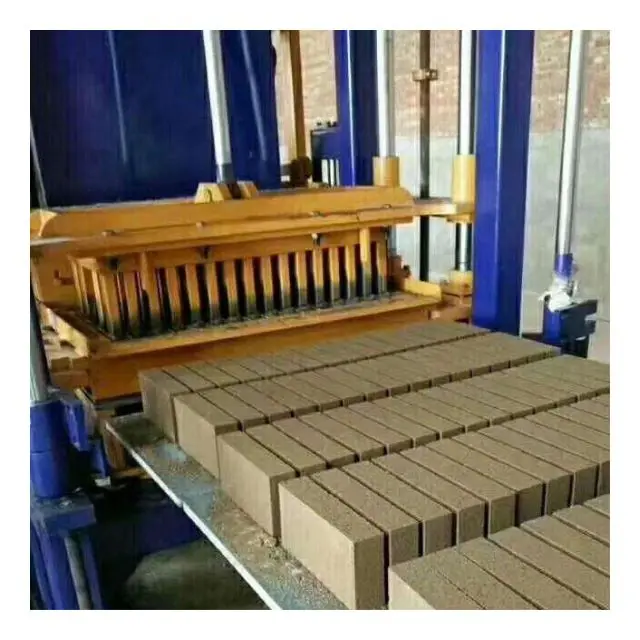
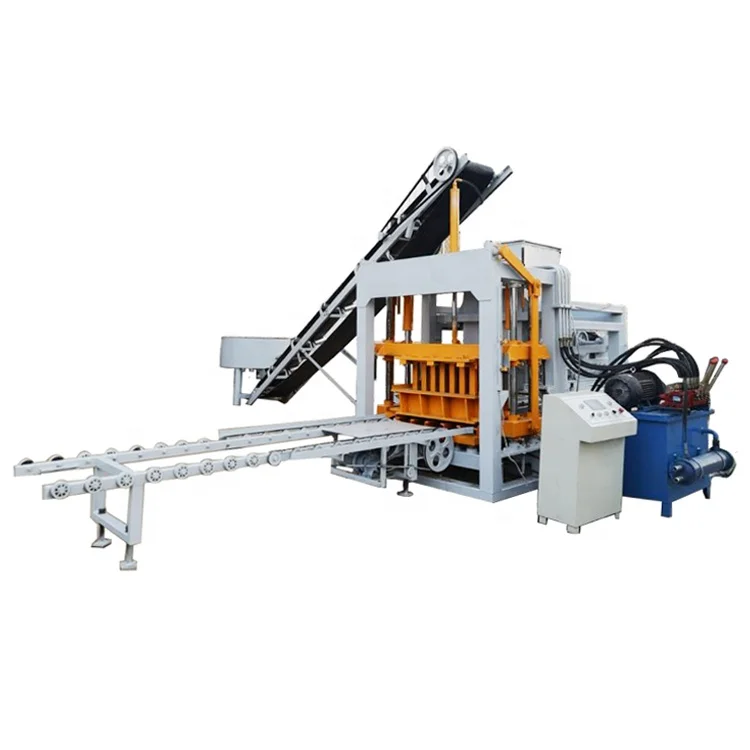 Automatic block machine