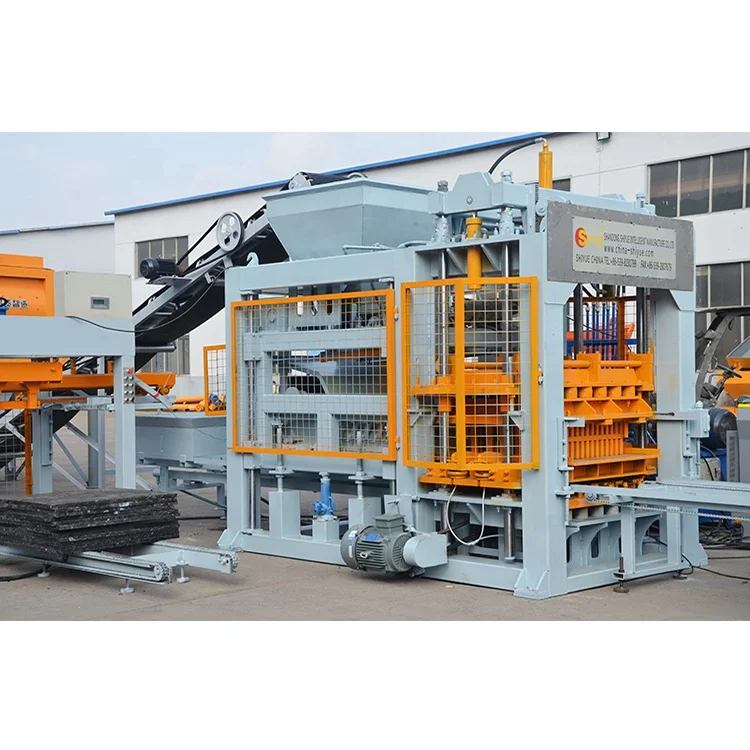
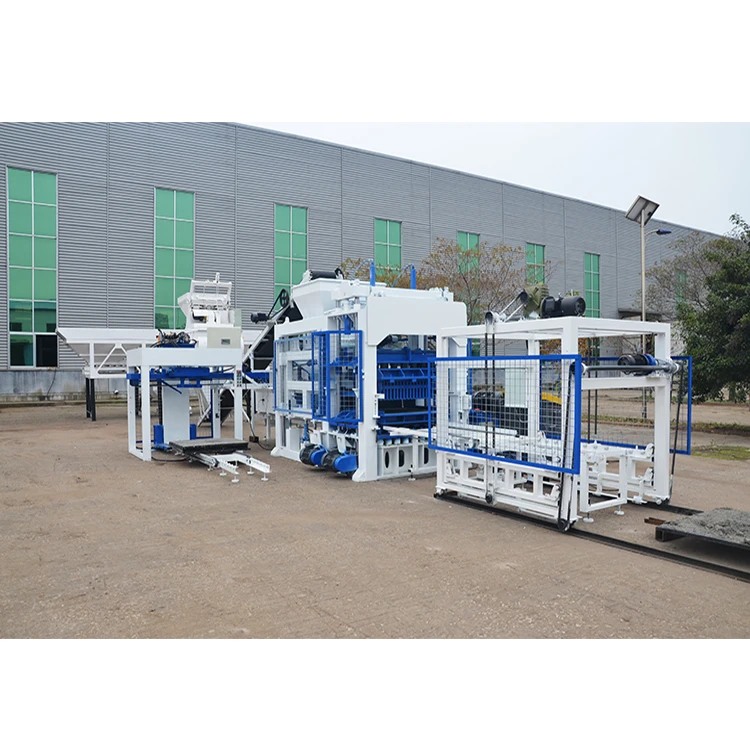
Mid-tier automatic coverage — the QT5-15 sits within a broader Shiyue block machine range where each tier is defined by plant footprint, investment level, and realistic output tied to specific block formats rather than catalogue claims.
Technical Specifications
| Parameter |
Value |
| Model |
QT5-15 |
| Product Type |
Fully Automatic Hydraulic Concrete Block Making Machine |
| Overall Dimensions |
7400 × 1950 × 2800 mm |
| Total Mass |
5000 kg |
| Overall Power |
32 kW |
| Vibration Form |
Platform Vibration |
| Vibration Frequency |
0–60 Hz |
| Vibration Force |
80 kN |
| Moulding Mode |
Automatic loading with vibration moulding |
| Demolding Method |
Hydraulic |
| Pallet Size |
1100 × 550 mm |
| Molding Cycle |
15–20 s (basis not stated in source — confirm block format / material / thickness) |
| Control System |
PLC (Programmable Logic Controller) |
| Hydraulic System |
Independent integrated hydraulic station |
| Recommended Factory Area |
1000 m² |
| Automation Level |
Fully automatic (pallet feeding, material feeding, vibrating, demoulding) |
| Raw Material Compatibility |
Fly ash (up to 70%), slag, gangue, sand, crushed stone, cement, water |
| Output Capacity (Hollow block 400×200×200 mm) |
900–1200 pcs/h, 7200–9600 pcs per 8-hour shift (based on 5 pcs/mould, 15–20 s cycle) |
| Output Capacity (Hollow block 400×150×200 mm) |
1080–1440 pcs/h, 8640–11520 pcs per 8-hour shift (based on 6 pcs/mould, 15–20 s cycle) |
| Output Capacity (Solid brick 240×115×53 mm) |
5760–7680 pcs/h, 46080–61440 pcs per 8-hour shift (based on 32 pcs/mould, 15–20 s cycle) |
| Output Capacity (Rectangular paver 200×100×60 mm) |
3600–4500 pcs/h, 28800–36000 pcs per 8-hour shift (based on 25 pcs/mould, 20–25 s cycle) |
| Output Capacity (Zigzag paver 225×112.5×60 mm) |
2304–2880 pcs/h, 18432–23040 pcs per 8-hour shift (based on 16 pcs/mould, 20–25 s cycle) |
| Standards |
CE declared |
| Warranty |
1 year (excluding spare parts) |
Application Suitability
| Application |
Material or Output |
| Hollow block production for building walls |
Fly ash, slag, sand, crushed stone with cement binder |
| Solid brick manufacturing for masonry |
Sand and cement mixes, gangue-based blends |
| Rectangular paving block production |
Crushed stone and cement for outdoor surfaces |
| Zigzag interlocking paver manufacturing |
High-density aggregate mixes for heavy-traffic areas |
| On-site block production for housing projects |
Locally sourced aggregate and cement within the 1000 m² recommended factory area |
What "900 Pieces per Hour" Leaves Out About Block Machine Capacity
Every output figure must name the block format, mould cavity count, and cycle time it assumes — otherwise the number is meaningless.
Capacity claims are the most common reason buyers feel misled after commissioning a fully automatic block machine manufacturer line. I have seen plants where the quoted throughput assumed standard sand, but the local aggregate had high clay content, cutting actual output in half and throwing the entire line rhythm off. The QT5-15 numbers above are tied to specific block dimensions and mould counts — 900–1200 hollow blocks per hour means 400×200×200 mm blocks with 5 cavities at a 15–20 second cycle, and switching to a 200×100×60 mm paver at 25 cavities changes both the cycle and the hourly figure entirely [NEED_CITE: block format impact on cycle time and daily output calculations].

Where the QT5-15 Sits Across the Shiyue Machine Range
Buyers evaluating their first plant or replacing ageing equipment need to understand how output tiers relate to investment and floor space. The QT5-15 occupies the mid-tier of the Shiyue fully automatic block machine manufacturer range, requiring approximately 1000 m² of factory area. Smaller semi-automatic models serve workshop-scale operations with lower capital outlay, while high-capacity automatic lines demand larger footprints and more extensive supporting infrastructure. Placing the QT5-15 correctly within this spectrum prevents both over-investment for modest demand and under-specifying for growth.
Comparing Tiers by Automation and Plant Footprint
Each tier in the range differs in automation depth, from manual pallet handling at entry level through to fully automatic stacking and cubing at the top. The QT5-15 covers automatic pallet feeding, material feeding, vibration, and hydraulic demoulding, but stacking and curing rack handling depend on the supporting equipment chosen. A buyer starting at this tier can plan an upgrade path, adding automatic stacking later without replacing the press itself [NEED_CITE: automation upgrade paths in block production lines]. Understanding where this model sits helps distributors recommend the right configuration to their end customers without overselling.
How Vibration Force and Hydraulic Pressure Shape Block Density
The 80 kN vibration force and independent integrated hydraulic station on the QT5-15 work together to compact the mix into consistent, dense blocks. Platform vibration at 0–60 Hz ensures the entire mould cavity receives uniform energy, while the hydraulic demoulding system applies controlled pressure to release blocks without cracking. When vibration force and hydraulic pressure are not matched to the buyer’s specific mix design and local aggregate, block strength becomes inconsistent across batches — some meet the >15 MPa target, others fall short. The 32 kW overall power supports both systems simultaneously without compromising cycle stability.
The Cost of Skipping Configuration Checks Before Ordering
Choosing a pallet size without considering the curing area and forklift already on site leads to handling bottlenecks that no amount of press speed can fix. The 1100 × 550 mm pallet on the QT5-15 must align with the buyer’s existing racking and transport equipment. Voltage, frequency, and PLC display language left unconfirmed before production delay commissioning after the machine arrives, sometimes by weeks [NEED_CITE: electrical standards and PLC language requirements for export machinery]. Mould change time also matters — if switching between hollow block and paver formats takes most of a shift, the multi-format flexibility the buyer paid for is effectively cancelled out.
Why Buyers Source the QT5-15 Through This Range
Block machinery is the single focus here, so the QT5-15 is specified as part of a matched system including mould, pallet, and handling equipment rather than assembled from separate suppliers. Configuration is set against the buyer’s actual mix design and local aggregate, not a catalogue default. Mould design covers the formats the buyer’s market actually sells, with custom drawings available. Automation level is selectable, so a buyer can start at this tier and add stacking or cubing later. Installation and commissioning support includes operator training, and mould and wear parts supply continues beyond the warranty period.
Documentation & Verification
- Line layout and capacity calculation stating the block format assumed for each QT5-15 output figure
- Machine specification sheet with voltage, frequency, and PLC language confirmed before production
- Mould drawing and format list showing every block type with corresponding 1100 × 550 mm pallet size
- Factory test record and packing photographs provided before shipment
- Operation and maintenance manual covering hydraulic station and PLC troubleshooting
Installation, Commissioning & Support
- Foundation must accommodate 7400 × 1950 mm footprint with level tolerance for platform vibration stability
- Dedicated 32 kW electrical circuit required; confirm voltage and frequency before wiring the PLC panel
- Machine arrives with hydraulic station pre-assembled; on-site connection and oil fill required
- PLC parameters set during commissioning to match buyer’s mix design and target block format
- Operator training covers mould change procedure, cycle adjustment, and daily hydraulic inspection
- Wear parts list and mould maintenance schedule provided at handover
What to Include in Your Inquiry
Specify the block formats your market demands, including dimensions and target compressive strength, so the QT5-15 can be configured with the correct mould and vibration settings. Provide your local raw material details — aggregate type, moisture content, cement grade — and your available factory area and voltage supply. If you already have curing racks, forklifts, or upstream mixers, note their specifications so the supporting equipment can be matched.
Frequently Asked Questions
Q: How do I know if the QT5-15 tier fits my daily production target?
A: Compare your required daily output for each block format against the QT5-15 capacity figures, which are tied to specific block dimensions and mould cavity counts. If your target falls between this tier and a larger model, consider whether adding shifts or selecting a higher-capacity machine makes more economic sense for your plant footprint and investment level.
Q: What block formats can the QT5-15 produce, and how does capacity change?
A: The QT5-15 produces hollow blocks, solid bricks, and paving blocks through mould changes. Capacity varies significantly — from 7200–9600 hollow blocks per 8-hour shift at 400×200×200 mm to 28800–36000 rectangular pavers per shift at 200×100×60 mm — because mould cavity count and cycle time differ across formats.
Q: What voltage and PLC language options are available?
A: Voltage, frequency, and PLC display language must be confirmed before production begins to avoid commissioning delays. Specify your local electrical standards and preferred operator language during the inquiry stage so the control system is configured correctly at the factory.
Q: Can I start semi-automatic and upgrade to full automation later?
A: The Shiyue range is designed so automation level is selectable. You can begin with the QT5-15 press in a semi-automatic configuration and add automatic stacking or cubing equipment as your production volume grows, without replacing the core machine.
Q: What plant footprint does the QT5-15 require compared to other tiers?
A: The QT5-15 requires approximately 1000 m² of recommended factory area including space for curing and handling. Smaller semi-automatic models need less, while high-capacity automatic lines demand more. Confirm your available area and ceiling height early in the selection process.

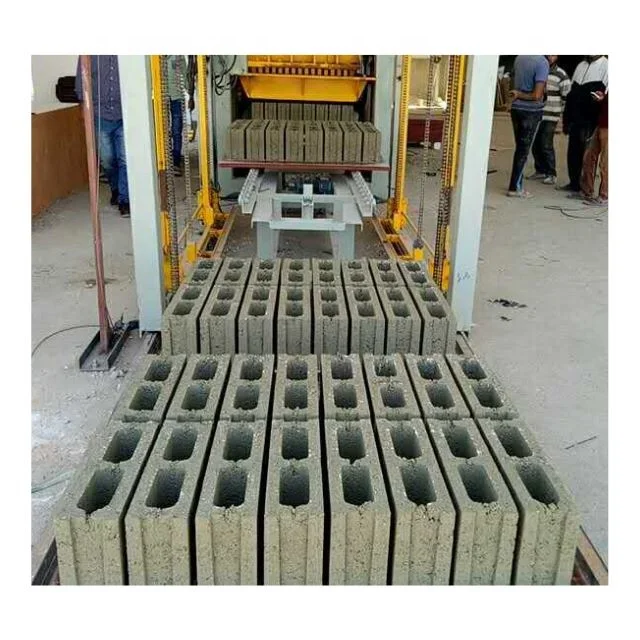
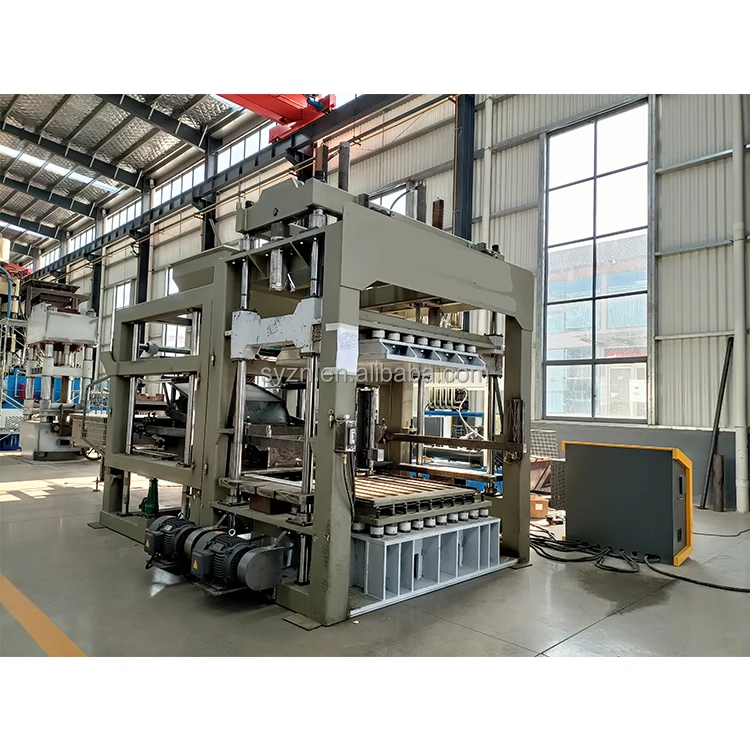 High quality block machine