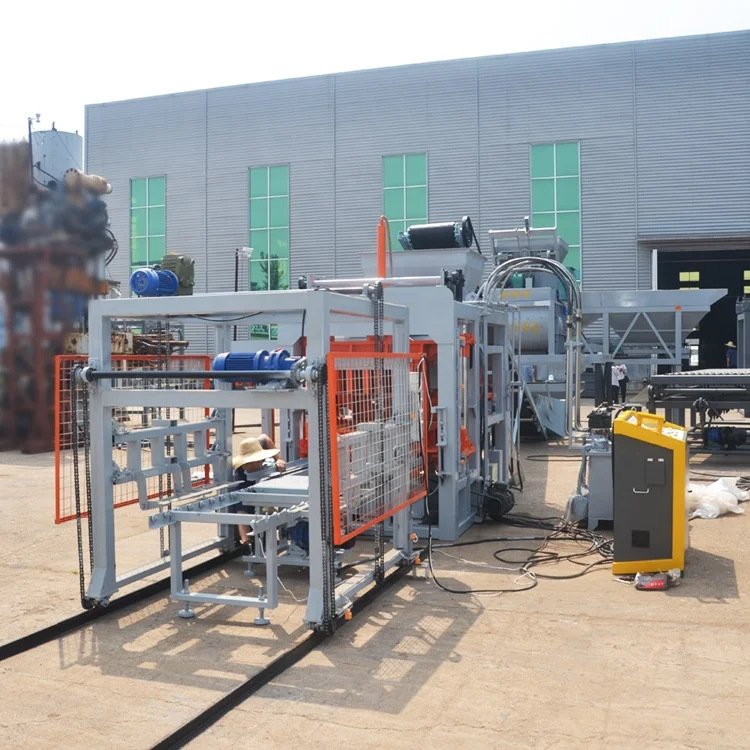
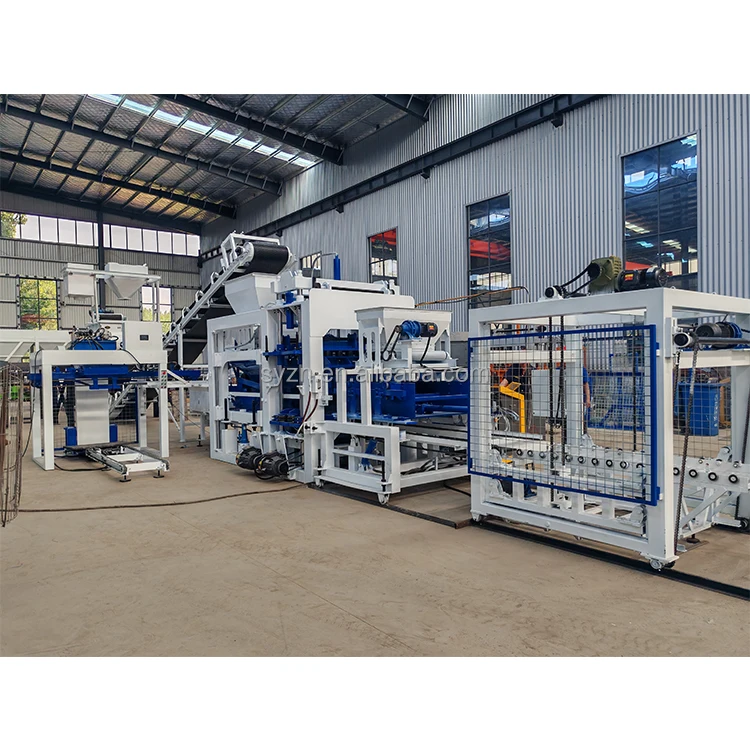
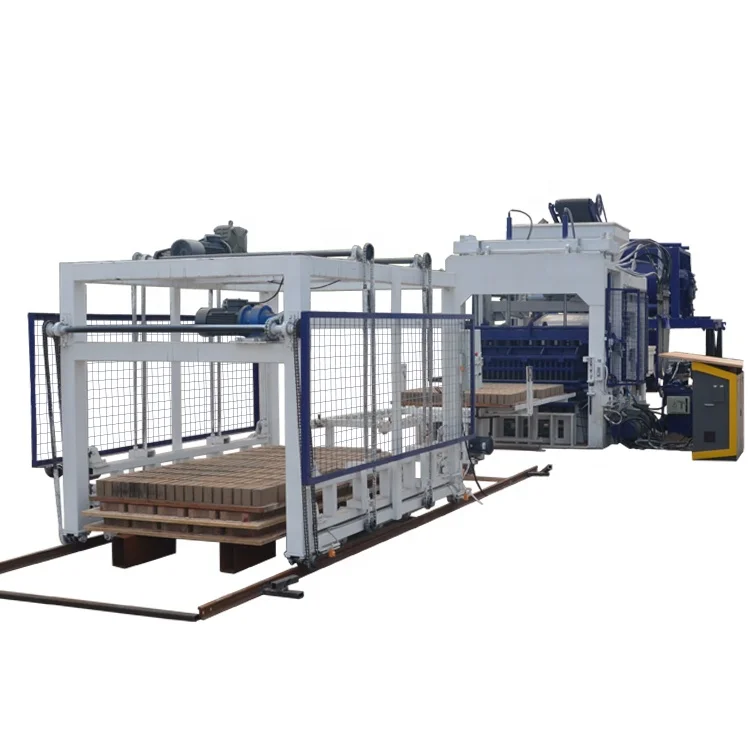
Integrated System Match — the QT6-15 is specified as a complete block line with matched mould, pallet and handling rather than a standalone press, so your output figures reflect the format you actually sell.
Technical Specifications
| Parameter |
Value |
| Model |
QT6-15 |
| Product Type |
Automatic Concrete Block Making Machine |
| Overall Dimensions |
7400 × 1900 × 2660 mm |
| Total Weight |
7 T |
| Molding Cycle |
15–25 s |
| Vibration Frequency |
4600 r/min |
| Exciting Power |
40–50 kN |
| Total Power |
31.25 kW |
| Mixer |
JQ350 |
| Pallet Size |
850 × 550 × 25 mm |
| Control System |
PLC control system |
| Hydraulic Station |
High-pressure hydraulic station included |
| Included Equipment |
Block making machine, hydraulic station, PLC control system, pallet feeder, brick conveyor, block sweeper |
| Free Accessories |
Manual hydraulic trolley, spare parts, tools |
| Output Capacity (Hollow Block 400×200×200 mm) |
9,600–13,440 pcs / 8 hr |
| Output Capacity (Hollow Block 400×150×200 mm) |
14,400–19,200 pcs / 8 hr |
| Output Capacity (Solid Brick 240×115×53 mm) |
16,200–19,440 pcs / 8 hr |
Application Suitability
| Application |
Material or Output |
| Hollow block production for structural walls |
Crushed stone, sand, cement, fly ash |
| Solid brick production for load-bearing and partition masonry |
Sand, cement, dust, fly ash |
| Paver and interlocking block for walkways and driveways |
Crushed stone, sand, cement |
| Curbstone production for road and pavement edging |
Crushed stone, cement, sand |
What a Cycle Time Figure Hides About Your Daily Output
A machine rated at 15-second cycles only reaches that number on one specific block format — your daily output depends entirely on the format you actually run.
When buyers ask me about capacity, they usually quote the fastest cycle the brochure mentions. I once shipped a QT6-15 to a site where the buyer expected 19,000 hollow blocks per shift based on the 400×150×200 format, but their market actually demanded the larger 400×200×200 block — which cut daily volume to roughly 13,000. The machine was not underperforming; the expectation had been set against the wrong format [NEED_CITE: block format assumptions in capacity quotations]. An automatic concrete block making machine manufacturer should always state which block format the capacity figure assumes, so you can plan your curing racks, pallet inventory and labour around real numbers.

Where the QT6-15 Sits in the Full Machine Range
The SHIYUE range spans mobile egg-laying machines for on-site production, semi-automatic workshop models for first-time investors, and high-capacity fully automatic lines. The QT6-15 occupies the mid-to-high automatic tier. It includes a PLC-controlled press, pallet feeder, brick conveyor and block sweeper as standard equipment, placing it above semi-automatic machines that still require manual pallet handling while sitting below the highest-tier models with full stacking and cubing systems.
Choosing the Right Tier for Your Project
If you are a contractor producing blocks for a single housing development, a semi-automatic or mobile machine may keep investment low while meeting site-level demand. If you are a commercial block plant supplying the regional market, the QT6-15 tier provides the PLC consistency and integrated handling that reduce labour and cycle-time variation across shifts [NEED_CITE: automation tier selection for block production plants]. Buyers stepping up from a manual press often find that the pallet feeder and conveyor alone remove the two biggest bottlenecks — pallet return and green block transport to the curing area.
Reading the Specs That Actually Shape Production
Vibration frequency at 4600 r/min paired with 40–50 kN exciting power determines how tightly the mix is compacted inside the mould cavity. Higher compaction means denser blocks with greater compressive strength, but only if the mix design matches the vibration energy available — a dry mix that works on one machine may produce fragile blocks on another. The hydraulic station works alongside vibration to apply top pressure during forming, and both forces must be balanced against your local aggregate gradation and cement content. Pallet size of 850 × 550 × 25 mm dictates which mould formats fit the machine and how many blocks each pallet carries; it also defines the curing rack dimensions and forklift capacity you need on the floor. The JQ350 mixer feeds the press at a rate matched to the 15–25 second molding cycle so the hopper does not run dry between batches.
The Hidden Cost of a Mismatched Pallet and Curing Layout
I have seen plants where the machine ran fine but the curing area could not keep up. The pallet size selected for the press did not match the existing racks or the forklift width at the site, so every pallet had to be rehandled by hand before it could be moved to curing [NEED_CITE: pallet-curing area mismatch in block plants]. The QT6-15 uses 850 × 550 mm pallets, and confirming that dimension against your curing rack spacing and forklift fork width before shipment avoids a bottleneck that no amount of press speed can fix. When the downstream handling does not match the press output, blocks pile up on the floor and get damaged before they ever reach the rack.
Why Buyers Specify the QT6-15 as a Matched System
The press, mould, pallet and handling equipment are configured together rather than assembled from separate suppliers, so cycle times are balanced across every station. The machine is set against your actual mix design and local aggregate — not a factory default that assumes standard sand. Mould design covers the formats your market sells, with custom drawings available for non-standard block shapes. Automation level is selectable, meaning a buyer can start with the QT6-15 semi-automatic configuration and add stacking or cubing modules later without replacing the press. Factory testing runs your target block format before dispatch, so the capacity figure you receive is tied to the product you will produce.
Documentation & Verification
- Line layout and capacity calculation stating the block format assumed for the QT6-15
- Machine specification sheet with voltage, frequency and PLC display language confirmed for your site
- Mould drawing and format list showing every block type the supplied moulds can produce
- Pallet specification matching the 850 × 550 × 25 mm size to your curing rack and forklift
- Factory test record on your target block format before shipment
- Packing photographs and customs documentation support for your destination port
Installation, Commissioning & Support
- Foundation plan sized for the 7400 × 1900 mm footprint and 7 T operating weight
- Dedicated power circuit rated for the 31.25 kW total load at confirmed voltage and frequency
- Assembly guidance covering hydraulic station connection, PLC wiring and pallet feeder alignment
- First-run parameter setting for vibration frequency and hydraulic pressure against your local aggregate
- Operator training on mould change procedure and daily PLC fault-code response
- Wear parts list covering mould liners, hydraulic seals and vibration motor bearings
What We Need to Size Your Line Correctly
Tell us the block formats your market buys — hollow, solid, paver or curbstone — along with the dimensions and required compressive strength. Share your local aggregate type and the cement source available at your site, because the mix design drives vibration and pressure settings. Let us know your site voltage, frequency and preferred PLC display language so the control system arrives ready to run. If you already have curing racks or forklifts on the floor, send the pallet dimensions they accept so we can confirm the 850 × 550 mm pallet fits your existing layout.
Frequently Asked Questions
Q: Where does the QT6-15 fit in the full SHIYUE machine range compared to semi-automatic and higher-capacity models?
A: The QT6-15 is a mid-to-high tier automatic concrete block making machine within the SHIYUE range. It sits above semi-automatic workshop machines by including a PLC system, pallet feeder, conveyor and sweeper as standard. It sits below the highest-tier lines that add automatic stacking and cubing. Buyers choose this tier when they need consistent PLC-controlled cycles and integrated handling without the investment of a full cubing line.
Q: How is capacity verified per block format and what are realistic daily output figures?
A: Every capacity figure is stated per block format. For 400×200×200 mm hollow blocks, the QT6-15 produces 9,600–13,440 pieces per 8-hour shift. For 400×150×200 mm hollow blocks the figure is 14,400–19,200, and for 240×115×53 mm solid bricks it is 16,200–19,440. These figures assume the stated molding cycle per format and a continuous production run with matched upstream mixing and downstream pallet handling.
Q: What voltage, frequency and PLC language options are available for different target markets?
A: Voltage and frequency must be confirmed before production so the motor, hydraulic pump and PLC match your site supply. Common configurations include 380V/50Hz, 415V/50Hz and 440V/60Hz depending on the destination market. PLC display language is also confirmed at the order stage. Confirming these details upfront prevents commissioning delays after the automatic concrete block making machine manufacturer delivers the equipment to your site.
Q: What plant footprint and supporting equipment does the QT6-15 tier require?
A: The press itself measures 7400 × 1900 × 2660 mm and weighs 7 T. The included line comprises a JQ350 mixer, pallet feeder, brick conveyor and sweeper, so the full production area extends beyond the press footprint. You also need curing rack space sized for the 850 × 550 mm pallet and a forklift with compatible fork width. Total plant area depends on daily volume, curing duration and stacking method.
Q: Can I start with a semi-automatic configuration and add automation later?
A: Yes. The SHIYUE range is designed so buyers can begin with the QT6-15 at a semi-automatic level — handling pallets manually or without the sweeper — and add pallet return systems, automatic stacking or cubing modules as production volume grows. The press, hydraulic station and PLC remain the same core platform, so the upgrade does not require a full machine replacement.

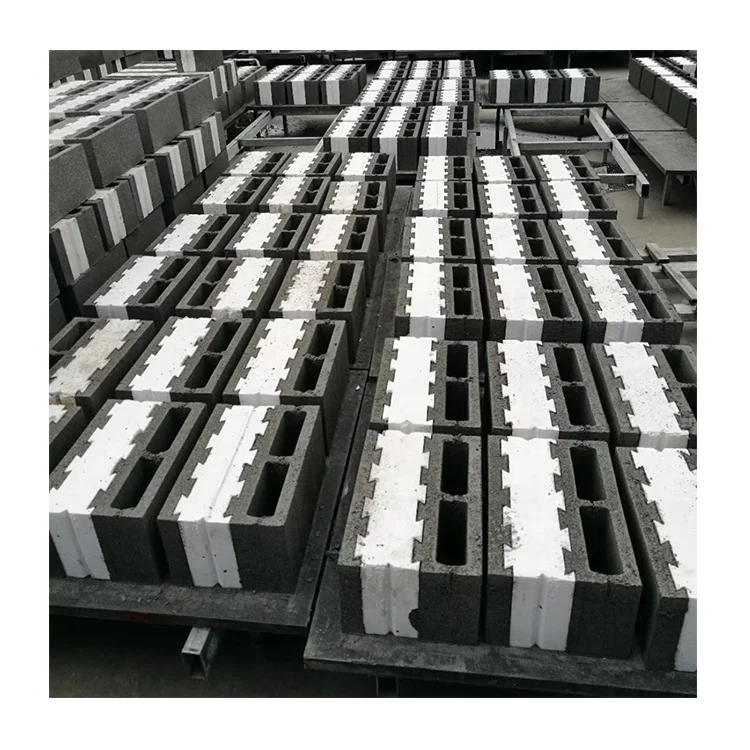
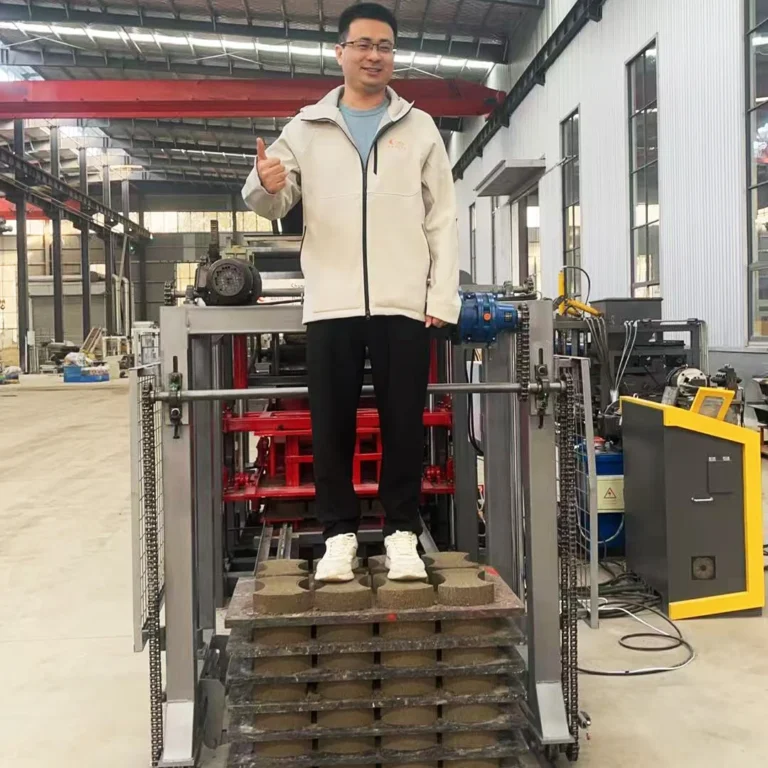 High quality block machine