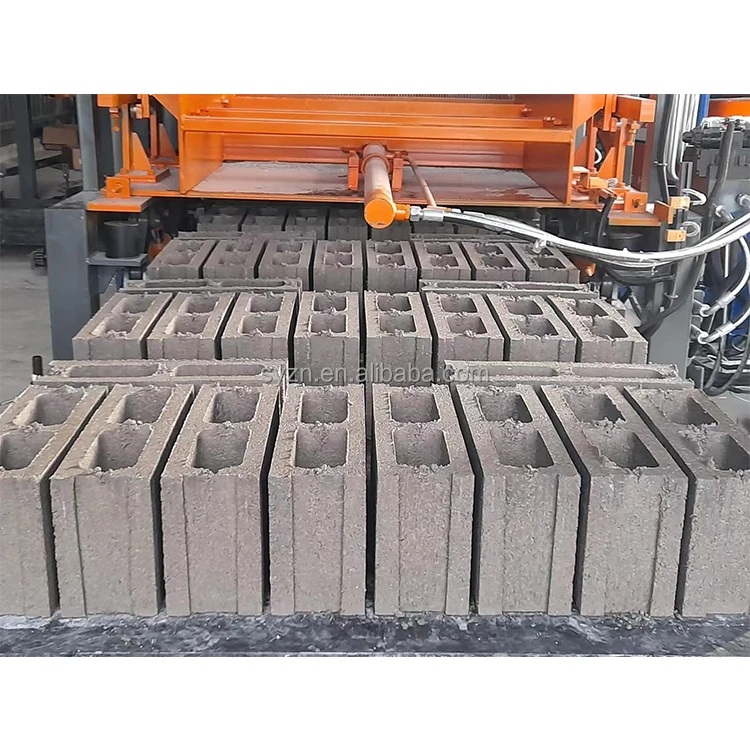
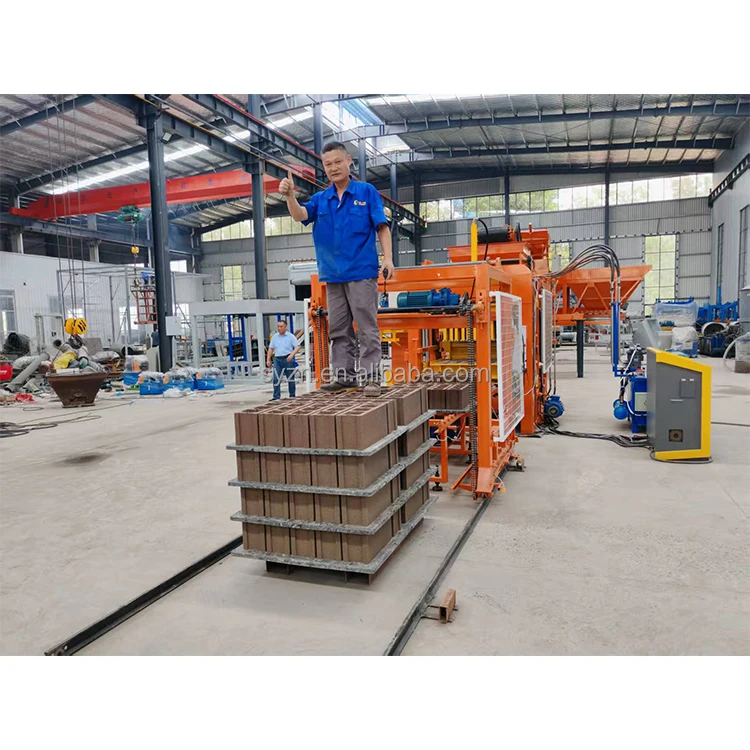
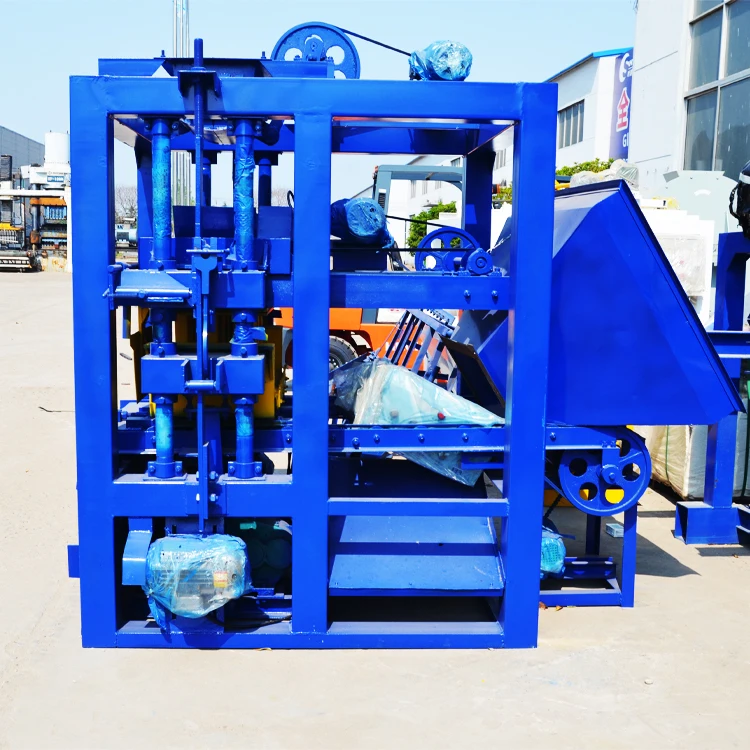
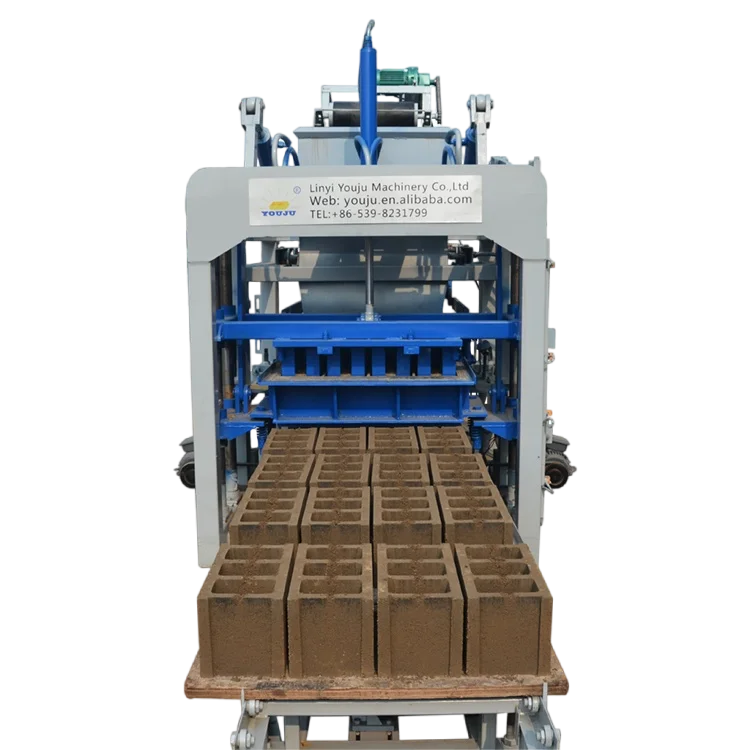
Integrated Press and Line Configuration — The QT12-15 is engineered as part of a matched system where pallet handling, vibration force, and mould changeover are specified together, not sourced separately.
Technical Specifications
| Parameter |
Value |
| Model |
QT12-15 |
| Product Type |
Fully Automatic Hydraulic Block Making Machine |
| Total Power |
62 kW |
| Pallet Size |
1300×900 mm |
| Moulding Cycle |
15–30 seconds (basis not stated in source — confirm block format, material, and thickness) |
| Vibration Type |
Table vibration (dynamic + static table with frequency conversion) |
| Vibration Acceleration |
up to 20g (source value — verify against manufacturer catalog) |
| Control System |
PLC (European version, brand and language options to be confirmed) |
| Feeding System |
360° rotating press-in arch breaker |
| Vibration Damping |
Flexible pressure head damping + adjustable air bag damping on mould box |
| Automation Level |
Fully automatic |
| Mould Compatibility |
Hollow, solid, paving, kerbstone, porous, and slope protection bricks |
| Voltage & Frequency |
Customized to local industrial voltage (exact V/Hz to be confirmed) |
| Standards |
CE (to be verified for this specific model) |
Application Suitability
| Application |
Material or Output |
| High-volume hollow block production |
Cement, crushed stone, fly ash, and local aggregate blends |
| Paving block and kerbstone manufacturing |
High-density concrete mixes with fine and coarse aggregates |
| Fly ash brick manufacturing |
Fly ash, lime, gypsum, and sand mixtures |
| Porous and slope protection brick production |
Permeable concrete and specialized aggregate blends |
| Solid block production for housing projects |
Standard concrete mixes with regional sand and gravel |
What "Cycle Time" Really Means for Your Output
A moulding cycle of 15–30 seconds only becomes meaningful once your exact block format and mix design are factored in.
When buyers evaluate a QT12-15 automatic block making machine full range option, the headline cycle time often obscures the real picture. A thin paving block on a well-graded aggregate may press at the shorter end of the range, while a tall hollow block with a sticky fly ash mix extends the cycle considerably. I have seen projects in arid climates where local sand contained high clay content, and the standard cycle time simply did not hold — daily output dropped noticeably because the material would not release from the mould cleanly. Before any capacity figure is committed to paper, a trial with your actual raw material is the only reliable path. [NEED_CITE: effect of aggregate clay content on concrete block cycle time]

Positioning the QT12-15 Within the Automatic Range
The QT12-15 occupies the high-capacity tier of the Shiyue lineup, intended for plants that intend to run multiple block formats from a single press without sacrificing throughput. Its 1300×900 mm pallet size places it above mid-range models and signals that the supporting equipment — pallet feeders, curing racks, and forklifts — must be sized accordingly. Buyers considering the QT12-15 automatic block making machine full range should evaluate whether their planned curing area and material handling infrastructure can absorb the volume this press generates.
Matching the Line to the Press
A press of this output class demands that every upstream and downstream station keeps pace. The raw material batching and mixing station must deliver consistent batches at a rate that prevents the press from idling. Pallet circulation must return cured pallets to the feed conveyor before the next cycle demands them. If any station lags, the QT12-15 sits idle and the quoted capacity becomes theoretical. Line layout planning must account for each station’s cycle contribution, not just the press itself. [NEED_CITE: block production line synchronization principles]
Vibration, Pressure, and Mix Design Interaction
The table vibration system with dynamic and static components and frequency conversion allows the operator to tune the vibration profile to the mix. Hydraulic pressure and vibration force must work in concert: too much vibration on a lean mix causes segregation, while too little on a stiff mix leaves voids and weak corners. The adjustable air bag damping on the mould box further refines how energy transfers into the concrete. Getting this balance right depends entirely on the buyer’s local aggregate grading and cement content, which is why a mix-specific trial is standard practice before the machine configuration is finalized.
The Cost of Overlooking Pallet and Voltage Details
Choosing a pallet material and size without checking compatibility with existing curing racks and forklifts leads to expensive retrofitting after the machine arrives. Similarly, failing to confirm voltage, frequency, and PLC display language before production starts can delay commissioning by weeks. I recall a project where the control interface shipped in a language the local operators could not read, and the plant ran manually for the first month until the correct firmware was sourced. These are not engineering failures — they are specification oversights that are entirely avoidable. [NEED_CITE: industrial equipment voltage and frequency standards by region]
Why Specify This Machine Through a Single Supplier
Block machinery as a single focus means the press, moulds, pallets, and handling equipment are specified as one matched system rather than assembled from separate vendors. The configuration is set against the buyer’s actual mix design and target block format, not a catalogue default. Custom mould design is available to buyer drawings, so the formats your market actually sells are produced from day one. The automation level is selectable — a buyer can begin semi-automatic and add stacking and cubing later. Documentation includes line layout with capacity stated per format, not a single aggregate number.
Documentation & Verification
- Line layout and capacity calculation stating the block format assumed for each output figure
- Machine specification sheet with confirmed voltage, frequency, and PLC language
- Mould drawing and format list including custom designs to buyer specifications
- Pallet specification matched to buyer curing area and handling equipment
- Factory test record using buyer representative mix design before dispatch
- Hydraulic and electrical schematic for local maintenance reference
Installation, Commissioning & Support
- Foundation plan reflecting the QT12-15 footprint and 62 kW power requirement with dedicated circuit
- Assembly sequence for press, pallet feeder, and mixer station with anchor bolt specifications
- Voltage and frequency verification against local supply before control cabinet energization
- PLC display language set and confirmed during commissioning with operator walkthrough
- Mould changeover procedure and cycle time validation per block format using site materials
- Wear parts list covering vibration table components, hydraulic seals, and mould liners
What We Need to Build Your Configuration
To move from an initial inquiry to a firm proposal, the critical inputs are your target block formats and daily output expectation, the source and grading of your local aggregate, and the available plant footprint. Voltage and frequency at the site, along with the preferred PLC language, should also be confirmed early. If you have existing curing racks, forklifts, or upstream mixing equipment, sharing those details ensures the QT12-15 is configured to integrate rather than require duplicate infrastructure.
Frequently Asked Questions
Q: Where does the QT12-15 sit in the range compared to smaller automatic models?
A: The QT12-15 is at the high-capacity end, with a 1300×900 mm pallet suited for plants producing multiple formats at volume. Smaller automatic models use more compact pallets and serve lower-throughput operations or startups with limited initial investment. The choice depends on daily output targets and the number of formats you plan to run simultaneously.
Q: What block formats can this machine produce?
A: The press supports hollow blocks, solid blocks, paving blocks, kerbstones, porous bricks, and slope protection bricks through mould changes. Cycle time varies by format — a paving block cycles faster than a tall hollow block. Capacity calculations are provided per specific format, not as a single headline number, so buyers can plan realistic daily output.
Q: What supporting equipment is needed to run the QT12-15 at full capacity?
A: A complete line includes raw material batching and mixing, pallet feeding, automatic stacking, and curing rack handling. Each station must match the press cycle so the QT12-15 is never left waiting. The line layout document specifies each station and confirms that cycle times align across the entire production setup.
Q: Can I start semi-automatic and upgrade later?
A: Yes, the platform allows starting with manual pallet handling and adding automatic stacking and cubing as production grows. The press itself and the mould compatibility remain the same. This approach lets buyers manage initial investment while preserving a clear upgrade path within the same machine range.
Q: How is pallet size selected and what if my equipment does not match?
A: Pallet size is confirmed against the buyer’s existing curing racks and forklift capacity before the order is placed. The 1300×900 mm pallet for the QT12-15 is substantial, and any mismatch with handling equipment leads to costly modifications. Pallet material is also specified based on the curing method and expected service life.

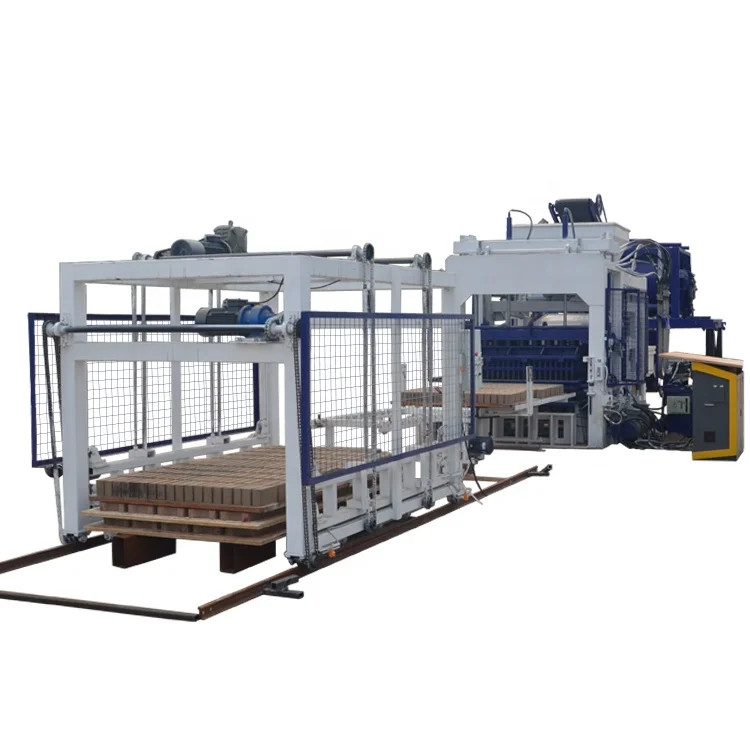
 High quality block machine