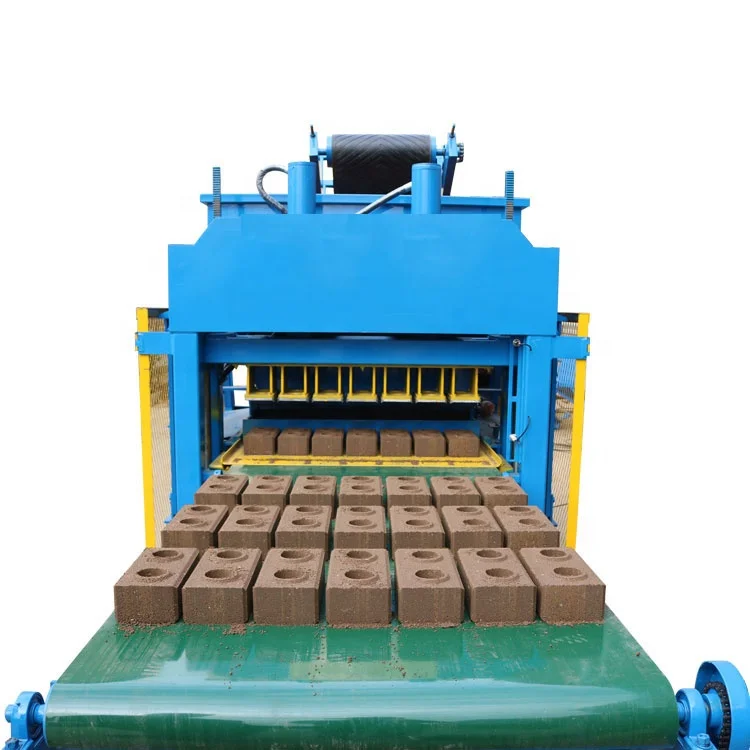
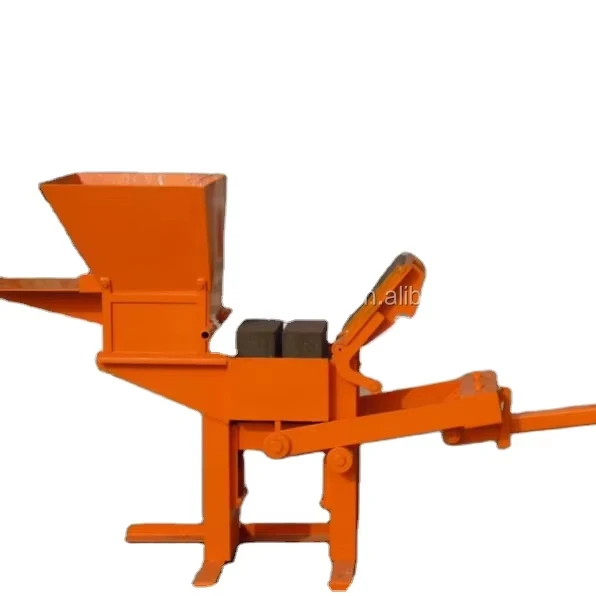
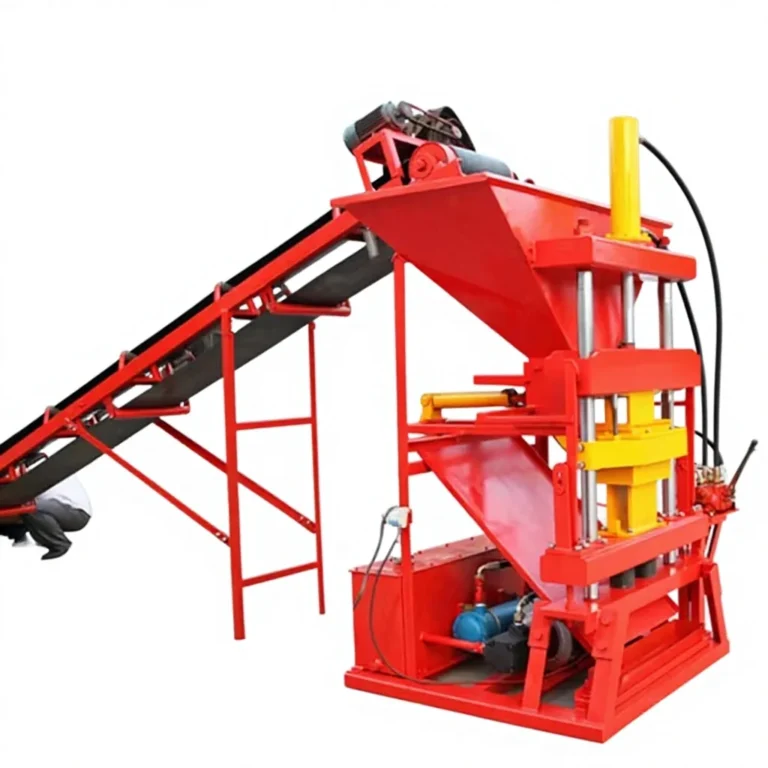
Integrated System Sizing — every M7MI TWIN SUPER configuration is matched to the buyer’s actual clay mix and target interlocking profile before production begins, not pulled from a catalogue default.
Technical Specifications
| Parameter |
Value |
| Model |
M7MI TWIN SUPER |
| Product Type |
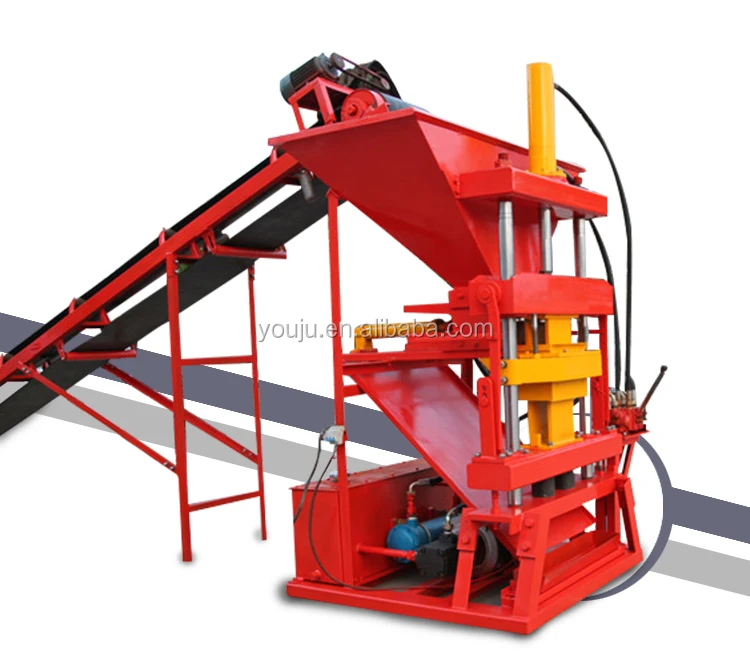
Mobile Clay Interlocking Brick Making Machine |
| Integrated Mixer |
Pan mixer |
| Power Source |
Diesel engine |
| Mobility |
Mobile frame for on-site relocation |
| Brick Size |
300×150×100 mm |
| Molding Cycle |
20 s |
| Qty per Mould |
2 pcs |
| Output Capacity |
400 pcs/h based on 300×150×100 mm interlocking block |
| Daily Output |
3,200 pcs/8 hr based on 300×150×100 mm interlocking block |
| Mould Format |
Interlocking earth block |
| Automation Level |
Semi-automatic with integrated mixing |
| Assembly State |
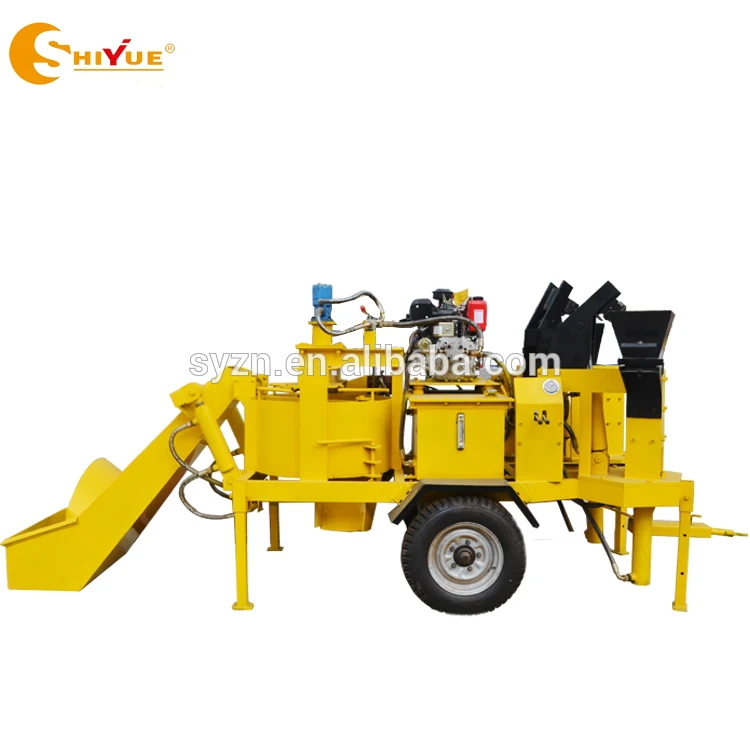
Fully integrated on mobile frame (mixer + press + engine) |
| Voltage & Frequency |
Not stated in source (confirm with supplier) |
| Hydraulic Pressure |
Not stated in source (confirm with supplier) |
| Vibration Force |
Not stated in source (confirm with supplier) |
Application Suitability
| Application |
Material or Output |
| On-site housing project brick production |
Local clay and earth mixes forming 300×150×100 mm interlocking blocks |
| Remote construction sites without grid power |
Diesel-powered operation producing interlocking earth blocks at temporary locations |
| Small-scale contractor block yards |
Clay-soil blends for interlocking brick formats used in load-bearing and infill walls |
| Mobile production between building plots |
Machine relocated by tractor or forklift as construction progresses |
What "400 Bricks per Hour" Leaves Out When No Format Is Stated
Capacity figures mean nothing without the block dimensions they assume.
Many mobile clay interlocking brick machine manufacturer brochures quote cycles per hour and leave the buyer to calculate daily output themselves. The problem is that a 20-second cycle producing two 300×150×100 mm interlocking blocks yields a very different daily total than the same cycle producing larger or smaller formats. In my years helping contractors size equipment in Linyi, I have seen buyers compare machines on output alone, only to find their actual block format cuts real production well below expectation. The M7MI TWIN SUPER output stated here — 400 pcs/h and 3,200 pcs per eight-hour shift — is based explicitly on the 300×150×100 mm interlocking earth block [NEED_CITE: block format and cycle time assumptions in mobile brick machine quotations].

Where the M7MI TWIN SUPER Sits on the Range
The block machine range spans mobile diesel units at one end and fully automatic stationary lines at the other. The M7MI TWIN SUPER occupies the mobile tier, purpose-built for contractors who move production to the building site rather than transporting finished bricks from a fixed yard. This mobile clay interlocking brick machine manufacturer offering integrates the pan mixer, press and diesel engine onto a single chassis, so the entire production unit arrives as one piece. Buyers who need to follow construction progress across multiple plots find this tier removes the logistics chain that stationary plants require.
When Mobility Outweighs Automation
Higher tiers in the range add automatic pallet feeding, stacking and PLC-controlled batching — features that reduce labour but demand fixed foundations, three-phase power and dedicated curing areas. For a housing development where the build moves from plot to plot, those fixed-plant advantages become constraints. The semi-automatic integrated design here keeps the operator in control of material feed and brick handling while still delivering a consistent 20-second molding cycle. Buyers who later need to scale volume without relocating can move up to the semi-automatic stationary or full automatic tiers within the same range [NEED_CITE: mobile versus stationary block machine investment comparison].
Reading the Specs That Actually Shape Output
The 300×150×100 mm brick size determines not only the interlocking profile but the volume of clay each cycle consumes, which in turn governs how frequently the pan mixer must deliver fresh material. Two bricks per mould at a 20-second cycle sets the pace; any delay in mixer discharge or manual brick removal directly extends that cycle. The diesel engine must deliver sufficient torque for both the hydraulic press and the pan mixer simultaneously — undersizing the engine causes pressure drop mid-stroke and weak brick density. Hydraulic pressure and vibration force, once confirmed with the supplier, will jointly determine whether the local clay-sand mix achieves adequate compressive strength without cracking during curing [NEED_CITE: hydraulic pressure and vibration matching for clay interlocking bricks]. Pallet size, although not applicable to this mobile unit in the same way as stationary lines, is replaced by the ground surface condition — uneven or soft ground directly affects brick dimensional accuracy.
The Cost of Skipping Soil Analysis Before Ordering
A buyer once sourced a mobile interlocking brick machine for a Middle East housing project, testing only with standard red clay at the factory. On arrival, the local soil carried a high sand content; bricks emerged with surface cracks and compressive strength well below the project requirement. The hydraulic pressure and vibration frequency both needed recalibration, and commissioning extended by several weeks. When clay composition changes from the sample used during factory testing, the entire forming parameter set may need revision. Verifying local soil behaviour before the machine ships avoids costly on-site rework [NEED_CITE: clay soil variability and brick forming parameter adjustment].
Why Buyers Source This Tier Here
Block machinery is the single focus of this operation, meaning the M7MI TWIN SUPER is specified alongside its mould, mixer and engine as one matched system rather than assembled from separate vendors. The capacity calculation provided at quotation states the exact block format it assumes, so buyers can cross-check against their project bill of quantities. Mould design covers the interlocking profile the buyer’s market actually uses, including custom drawings when local building codes require non-standard dimensions. Automation level is selectable across the range, allowing a contractor to begin with this mobile semi-automatic unit and move to a stationary automatic line as volume grows. Installation and commissioning support extends to operator training on the specific clay mix and site conditions the buyer will encounter.
Documentation & Verification
- Line layout and capacity calculation stating 300×150×100 mm interlocking format as the basis
- Machine specification sheet confirming diesel engine rating, hydraulic pressure and vibration force
- Mould drawing and interlocking profile list matching the buyer’s local building standard
- Factory test record run on buyer-supplied clay sample before dispatch
- Operation and maintenance manual covering pan mixer, press and engine service intervals
- Packing photographs and customs documentation support for mobile unit shipment
Installation, Commissioning & Support
- Level compacted ground required across the machine footprint to maintain brick dimensional tolerance
- Diesel engine fuel and oil specifications confirmed for local ambient temperature range
- Machine arrives fully assembled on mobile frame — no foundation bolts or fixed wiring needed
- First-run commissioning includes cycle timing verification on the buyer’s actual clay mix
- Operator training covers pan mixer loading sequence, mould release technique and daily engine checks
- Wear parts list provided for mould liners, mixer blades and hydraulic seals specific to this unit
What to Prepare Before Requesting a Quote
To size the M7MI TWIN SUPER correctly, share the target interlocking brick dimensions, the daily volume your project requires, and a representative sample or analysis of your local clay and soil composition. Confirm whether any electrical accessories will run on your site voltage and frequency, and describe the ground conditions where production will take place. This information allows the configuration proposal to match the mixer capacity, engine rating and mould profile to your actual working environment.
Frequently Asked Questions
Q: Where does the M7MI TWIN SUPER sit compared to semi-automatic stationary and fully automatic lines?
A: It occupies the mobile, diesel-powered entry tier. Stationary semi-automatic machines add fixed foundations and grid power for higher volume, while fully automatic lines include pallet handling, stacking and PLC batching for continuous production. The M7MI TWIN SUPER suits contractors who prioritise site mobility over automation and produce interlocking bricks where the building goes up.
Q: How can I verify the stated daily output against my own block format and shift pattern?
A: The 3,200 pcs/8 hr figure assumes the 300×150×100 mm interlocking block at a 20-second cycle producing two pieces per mould. If your format is larger or smaller, the volume per cycle changes. Request a capacity recalculation stating your exact block dimensions and planned shift length before confirming the order.
Q: What site conditions does a diesel-powered mobile block machine need?
A: The ground must be compacted and reasonably level so that brick dimensions remain consistent during pressing. Adequate space is needed around the machine for raw material storage, freshly pressed brick curing and diesel refuelling. Ambient temperature affects engine performance and clay moisture behaviour, so share your climate data with the supplier.
Q: When should a buyer move from a mobile machine to a stationary plant?
A: When production volume outgrows what a single mobile unit can deliver within available shift hours, or when the project requires multiple block formats with frequent mould changes. Stationary plants also suit buyers who have secured a fixed site with reliable grid power and want to add automatic stacking and curing rack handling to reduce labour.
Q: What supporting equipment is needed beyond the integrated unit?
A: Although the pan mixer and press are on-board, you still need a water supply for clay moisture control, hand tools or a conveyor for moving freshly pressed bricks to the curing area, and covered curing space protected from direct sun and rain. Pallets or trays may be required if the interlocking bricks cannot cure directly on the ground surface.

 Clay interlocking brick