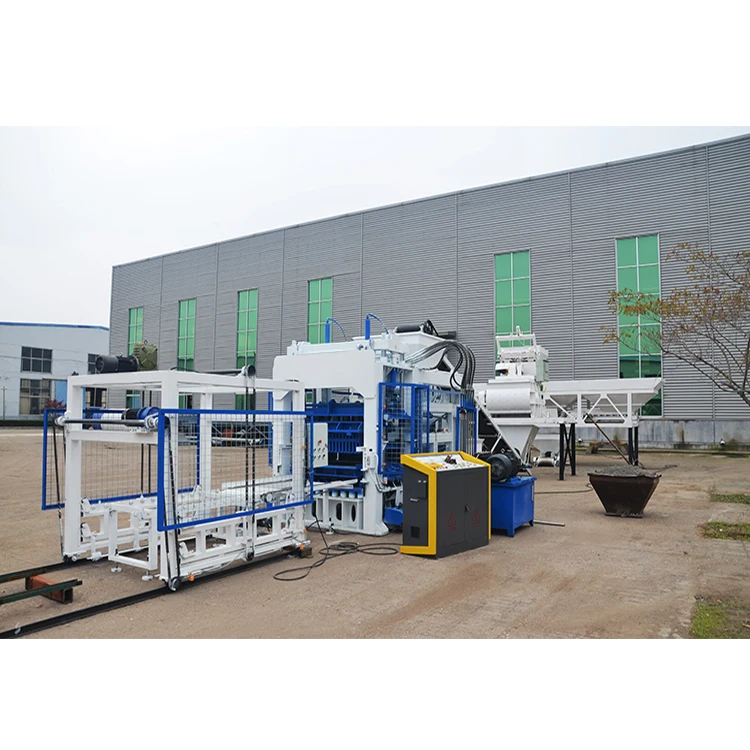
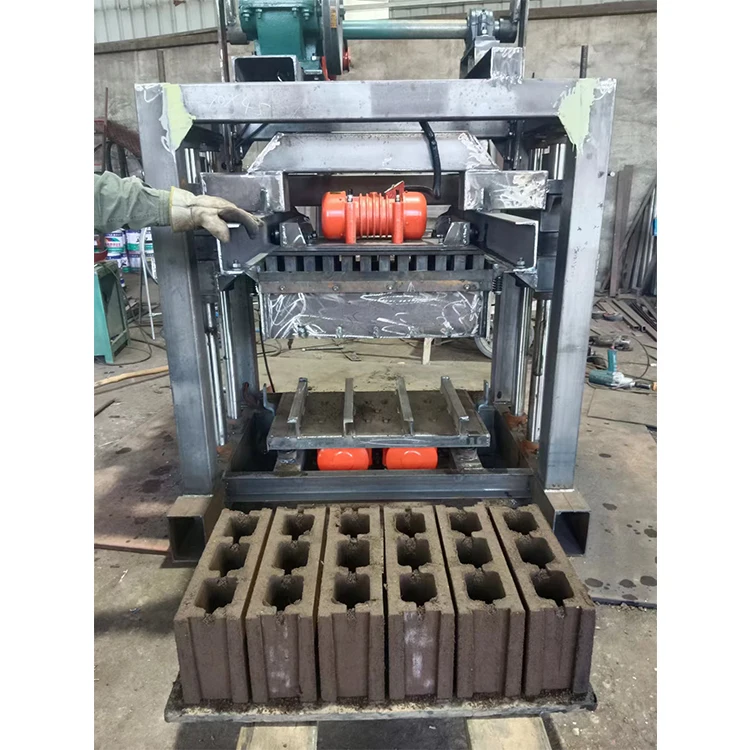
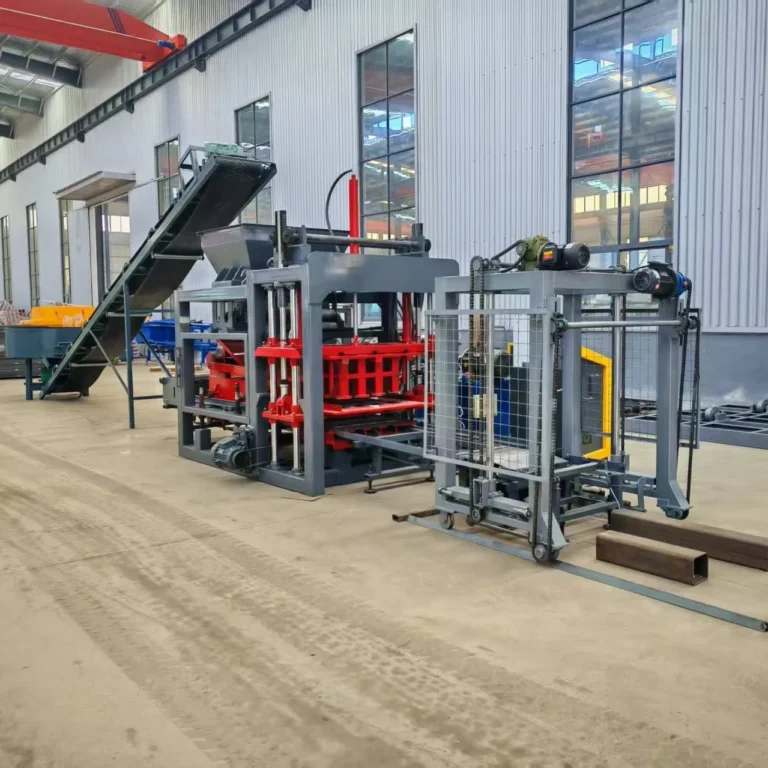
Single-Focus System Match — Every QTJ4-26 block making machine leaves our Linyi workshop with its mould, pallet and mixer specified as one coordinated line rather than assembled from separate catalogues, so buyers see real daily output instead of theoretical cycle counts.
Technical Specifications
| Parameter |
Value |
| Model |
QTJ4-26 |
| Product Type |
Concrete Block Making Machine |
| Overall Dimensions (L×W×H) |
2060×1730×2580 mm |
| Net Weight |
1800 kg |
| Moulding Cycle |
26 s |
| Vibration Frequency |
4200 r/min |
| Exciting Power (Vibration Force) |
35.5 kN |
| Vibration Type |
Dual vibrating motors under mould, direct vertical vibration combined with upper mould pressing |
| Rated Power |
14.25 kW |
| Mixer Model |
JQ350 |
| Pallet Size |
850×450×20 mm |
| Automation Level |
Semi-automatic (four guide pillars, automatic mould movement) |
| Applied Products |
Concrete hollow blocks (8 inch, 6 inch), solid bricks |
| Raw Materials |
Crushed stones, sand, cement, dust, fly ash |
| Output Capacity |
480 pcs/h (basis: 390×190×190 mm hollow block, 4 pcs/mould) |
| Output Capacity |
600 pcs/h (basis: 400×150×200 mm hollow block, 5 pcs/mould) |
| Output Capacity |
2100 pcs/h (basis: 240×115×53 mm solid brick, 18 pcs/mould) |
| Voltage & Frequency |
Basis not stated in source — confirm with buyer’s local supply |
| Control System |
Basis not stated in source — confirm PLC or relay logic |
Application Suitability
| Application |
Material or Output |
| Small-scale hollow block plant |
390×190×190 mm and 400×150×200 mm hollow blocks from crushed stone, sand and cement |
| On-site contractor production |
8-inch and 6-inch hollow blocks using locally available aggregates and fly ash |
| Solid brick manufacturing |
240×115×53 mm solid bricks from cement, dust and fine sand mixes |
| First-time block plant setup |
Semi-automatic operation with room to add automation stages later |
Why "Pieces per Hour" Without a Block Format Is Meaningless
Capacity only matters when tied to the exact block you intend to sell.
I have watched buyers sign contracts based on a headline number, then discover on commissioning day that the figure assumed a solid brick format while their market demands 8-inch hollow blocks. The QTJ4-26 block machine manufacturer quotation you receive from us states output per format — 480 pieces per hour for 390×190×190 mm hollow blocks, 600 pieces per hour for 400×150×200 mm hollow blocks, and 2100 pieces per hour for 240×115×53 mm solid bricks. Without this breakdown, a daily production plan is guesswork. [NEED_CITE: common misalignment between quoted cycle rates and actual block format output in small block plants]

Where the QTJ4-26 Sits in the Full Machine Range
The Shiyue range spans mobile egg-layers at the entry end, semi-automatic presses like the QTJ4-26 in the middle, and fully automatic lines with stacking and cubing at the top. This model targets buyers who need reliable hollow and solid block output without the footprint or capital of a continuous automatic plant. The four-guide-pillar structure and automatic mould movement give it stability that mobile units lack, while keeping the investment below a full automatic line.
Matching the Press to Your First or Replacement Plant
A first-time entrepreneur often starts with one block format and adds others as local demand grows. The QTJ4-26 block machine manufacturer package includes a mould drawing and format list with the quotation, so you can verify that 6-inch and 8-inch hollow blocks match your market before the machine enters production. Construction contractors producing on-site appreciate that the 2060×1730 mm footprint and 1800 kg weight allow relocation between project sites with a standard flatbed. [NEED_CITE: typical site conditions for contractor-operated semi-automatic block presses]
How Vibration Force and Upper Press Shape Block Density
The 35.5 kN exciting power delivered by dual vibrating motors at 4200 r/min works together with upper mould pressing to compact the concrete mix from both directions. This vertical vibration plus downward pressure is what gives hollow blocks consistent wall density across the 26-second cycle. The JQ350 mixer prepares a uniform batch before it reaches the hopper, reducing density variation between the first and last pallet of a shift. Pallet size at 850×450×20 mm was chosen so that standard curing racks in small plants can accept the output without modification.
The Hidden Cost of Skipping Voltage and Language Confirmation
A machine that arrives with the wrong voltage rating sits idle until a transformer is sourced, and a control panel in a language the operator cannot read invites incorrect parameter changes. [NEED_CITE: commissioning delays caused by unconfirmed voltage and PLC language in exported machinery] These issues do not show up in a specification sheet comparison, yet they add weeks of downtime. We confirm your local supply voltage, frequency and preferred display language before the QTJ4-26 enters assembly, so the first power-on at your site is also the first production run.
Why Buyers Source This Tier from Shiyue
Block machinery is our single focus, which means the press, mould, pallet and mixer are engineered to work together rather than adapted from unrelated product lines. We configure the vibration force and hydraulic pressure against your actual mix design and local aggregate, not a default catalogue setting. Mould design covers the formats your market sells, and custom drawings are available when standard sizes do not match. Semi-automatic operation on the QTJ4-26 leaves a clear upgrade path; buyers can add automatic pallet feeding or stacking later without replacing the press itself. Factory testing runs your specific block format before crating, and the test record ships with the machine.
Documentation & Verification
- Line layout showing QTJ4-26 footprint with curing area and pallet flow
- Capacity calculation per hollow and solid block format you confirmed
- Mould drawing with exact cavity dimensions for your chosen formats
- Pallet specification matched to your curing racks and forklift
- Voltage, frequency and control language confirmation record
- Factory test record run on your block format before dispatch
Installation, Commissioning & Support
- Foundation pad sized to the 2060×1730 mm base with anchor bolt plan
- Dedicated circuit matching confirmed voltage and 14.25 kW rated power
- Machine arrives upright; four guide pillars and mould lowered into position
- First-cycle parameter setting for your mix and block format on site
- Operator training covering mould change and daily vibration motor checks
- Wear parts list covering mould liners and pallets for your reorder planning
Before You Request a Quotation
Send us the exact block formats your market requires, the daily output you plan to reach, and the raw materials you can source locally including aggregate type and cement grade. Include your site voltage and frequency so the motor and control panel are wound correctly before assembly. If you already own curing racks or a forklift, share the pallet dimensions they accept so the 850×450×20 mm pallet spec is verified or adjusted.
Frequently Asked Questions
Q: How is the QTJ4-26 output capacity calculated, and which block format does each figure assume?
A: Each capacity figure is tied to a specific block format and mould cavity count. The 480 pieces per hour rate assumes 390×190×190 mm hollow blocks at four per mould, 600 pieces per hour assumes 400×150×200 mm hollow blocks at five per mould, and 2100 pieces per hour assumes 240×115×53 mm solid bricks at eighteen per mould, all within the 26-second cycle.
Q: Where does the QTJ4-26 sit in the Shiyue range compared to fully automatic and mobile tiers?
A: It occupies the semi-automatic middle tier. Below it are mobile egg-laying machines for on-site work without fixed foundations. Above it are fully automatic lines with pallet feeding, stacking and cubing. The QTJ4-26 offers stable four-pillar forming at a smaller footprint and lower capital than the automatic tier.
Q: What voltage and control language options are available for my market?
A: Voltage and frequency are confirmed with each buyer before production to match local supply. Control display language is also set during this stage. These details are recorded in a confirmation document so the machine arrives ready for immediate commissioning without transformer rental or panel re-labelling.
Q: Can I start with the QTJ4-26 semi-automatic and upgrade to higher automation later?
A: Yes. The press design allows automatic pallet feeding, stacking and cubing modules to be added as separate stations when your volume justifies it. The four-pillar press and mould system remain in place, so the upgrade extends the line rather than replacing the core machine.
Q: What pallet size does the QTJ4-26 use, and how do I ensure it matches my curing area and forklift?
A: The standard pallet is 850×450×20 mm. Before order confirmation we ask for your curing rack shelf width and forklift fork dimensions so this size is verified or adjusted. A pallet specification sheet is included in the quotation package for your cross-check.

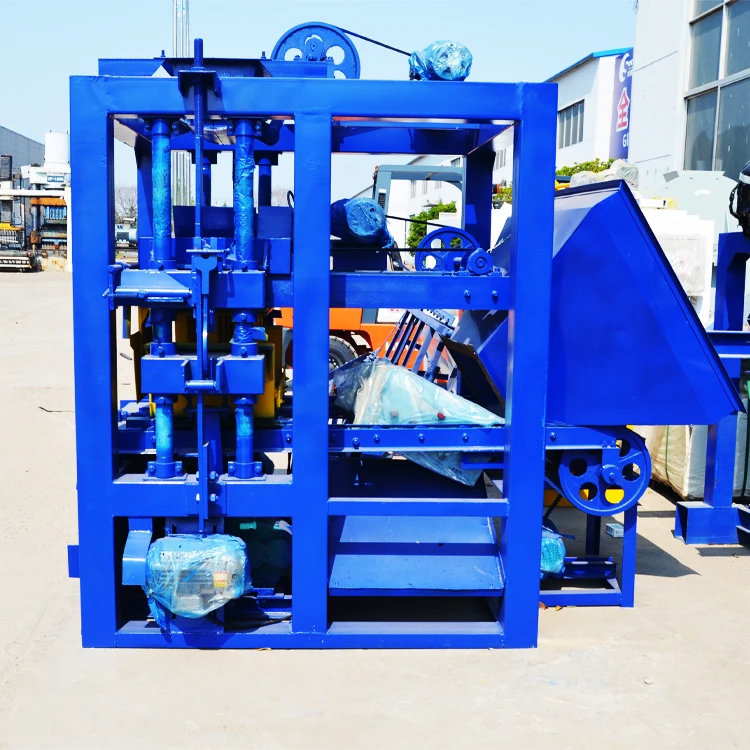
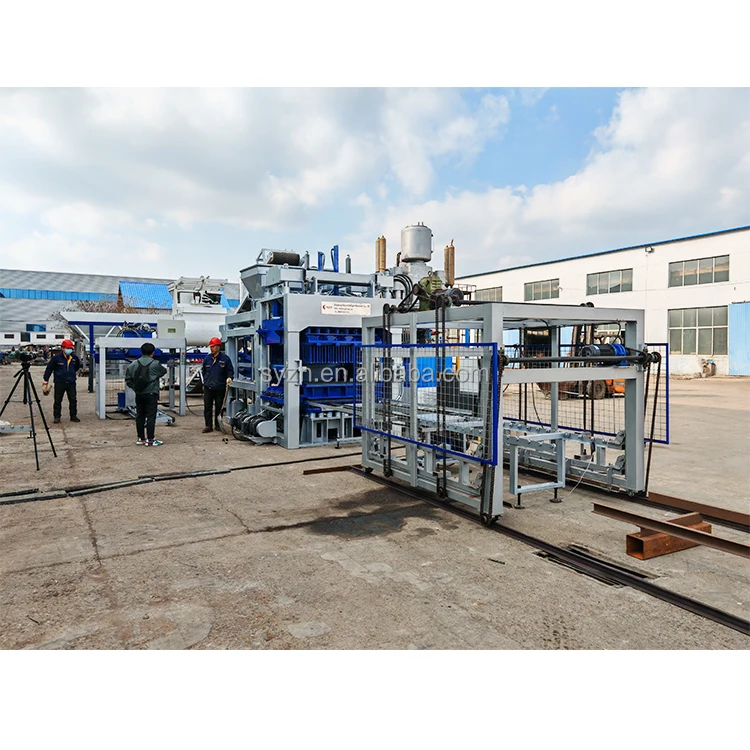 High quality block machine