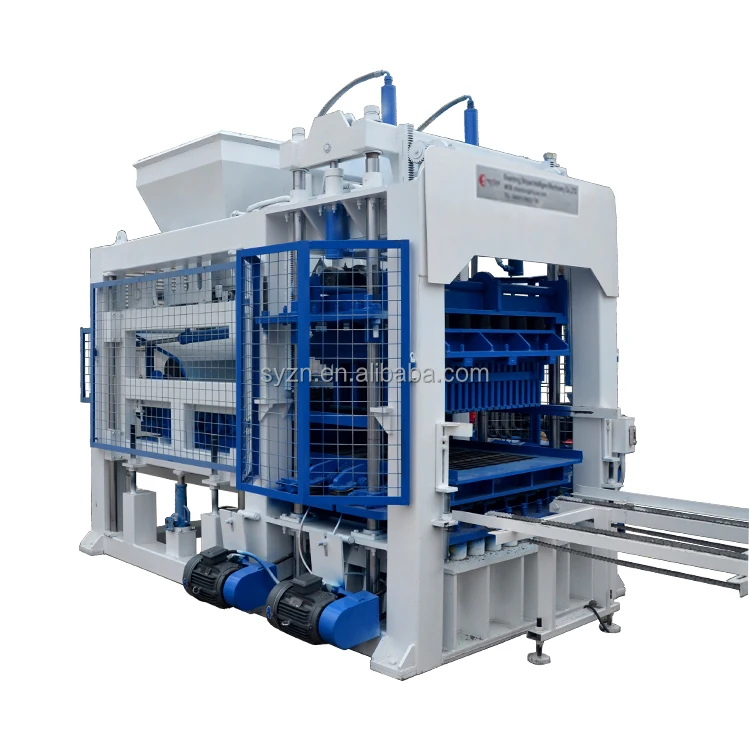
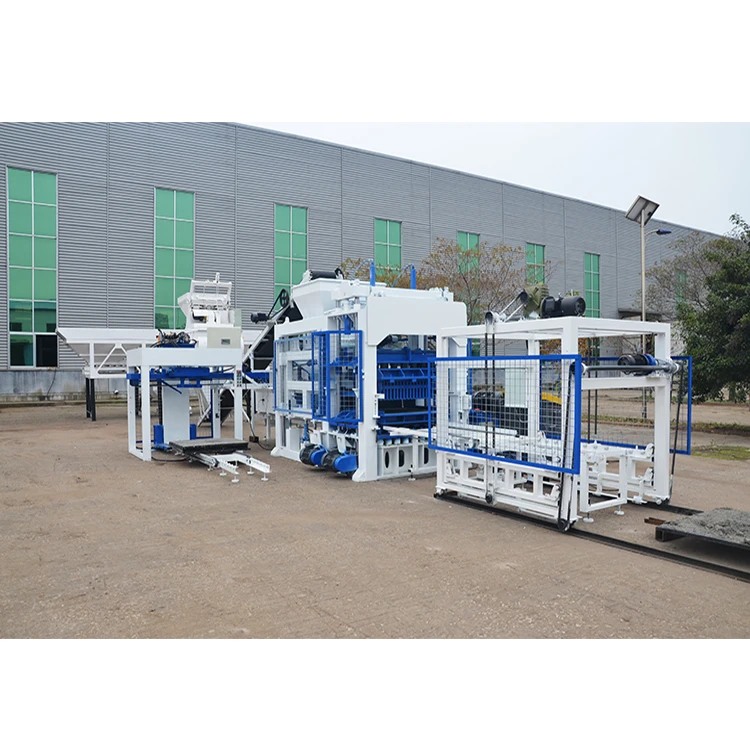
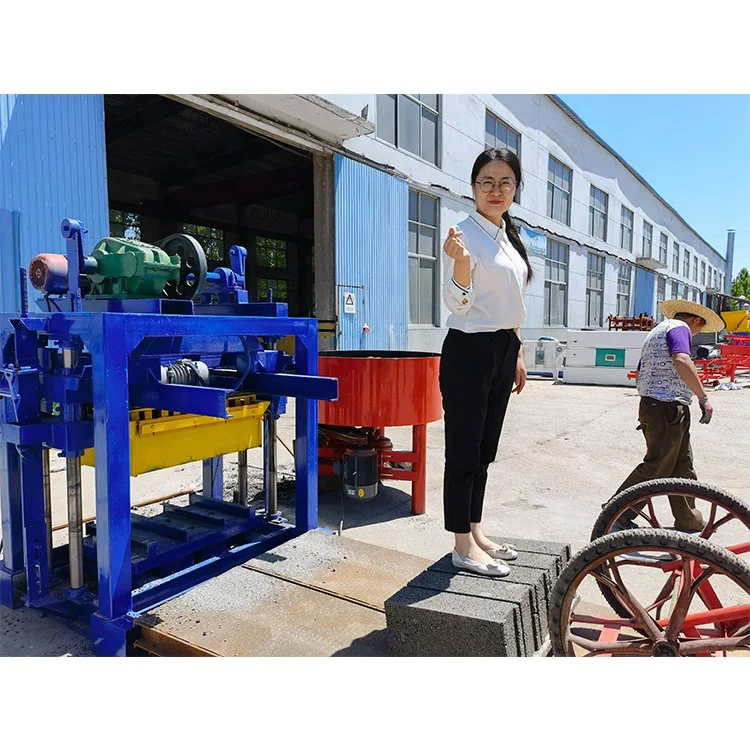
Matched System Configuration — the QTJ4-40 block machine, mould, pallet and handling are specified together so cycle times align across stations rather than assembled from mismatched sources.
Technical Specifications
| Parameter |
Value |
| Product Type |
Semi-Automatic Concrete Block Making Machine |
| Model |
QTJ4-40 |
| Machine Power |
10.4 kW |
| Molding Cycle |
40 s |
| Output Capacity |
2000–2500 pcs / 8 hours (basis not stated in source — confirm block format, material and thickness) |
| Theoretical Output (400×200×200 mm hollow, 4 pcs/mould) |
360 pcs/h, 2800 pcs/day |
| Theoretical Output (400×150×200 mm hollow, 5 pcs/mould) |
450 pcs/h, 3600 pcs/day |
| Theoretical Output (225×112.5×60 mm solid brick, 9 pcs/mould) |
800 pcs/h, 6400 pcs/day |
| Vibration System |
Bed mould vertical vibration + upper mould compression vibration |
| Pallet Size |
850 × 450 mm |
| Overall Dimensions |
1350 × 1460 × 1800 mm |
| Machine Weight |
1 T |
| Raw Materials |
Concrete, sand, cement, fly ash, lime, gypsum |
| Automation Level |
Semi-automatic (top die push-pull, automatic scraper, manual pallet handling) |
| Voltage |
Configured to buyer’s local supply (exact V/Hz to be confirmed before production) |
| Control System |
To be confirmed (PLC / relay / manual panel) |
Application Suitability
| Application |
Material or Output |
| Hollow block production for small masonry contractors |
Crushed stone, sand and cement on 400×200×200 mm format |
| Solid brick manufacturing for local building supply |
Sand, cement and fly ash on 225×112.5×60 mm format |
| On-site block production for housing projects |
Locally sourced aggregate with cement binder, workshop or open-yard setup |
| First plant setup by entrepreneurs entering block market |
Mixed formats starting with hollow block, expanding to pavers as demand grows |
What "2000 Pieces per Day" Actually Means for the QTJ4-40 Block Machine Manufacturer
Capacity figures only hold when the block format, mould cavity count and material mix are all stated upfront.
I have watched buyers in East Africa place orders based on a single daily output number, then discover on site that the quoted figure assumed a small solid brick they never intended to sell. When they switched to the 400×200×200 mm hollow block their market actually demanded, daily throughput dropped because each cycle now produced four pieces instead of nine, and the local river sand with high clay content required longer vibration to reach acceptable density. [NEED_CITE: effect of aggregate clay content on block compaction and cycle time] A QTJ4-40 block machine manufacturer worth working with will tie every output number to a specific block size, mould layout and mix design before the order is confirmed.

Where the QTJ4-40 Sits in the Full Machine Range
The QTJ4-40 occupies the entry point of the semi-automatic tier. Below it sit manual egg-laying machines that need no pallets but produce blocks one at a time on the ground. Above it, fully automatic lines add hydraulic pressure, PLC-controlled batching and automatic stacking, pushing investment and plant footprint higher. This model gives buyers a defined step up from mobile machines without committing to the infrastructure a high-capacity automatic line demands. The semi-automatic operation handles top die movement and material scraping mechanically, while pallet feeding and block removal remain manual, keeping both purchase cost and maintenance complexity within reach of a first-time plant operator.
Planning the Plant Footprint Around a One-Ton Machine
At 1350 × 1460 × 1800 mm and one ton, the QTJ4-40 fits inside a standard workshop bay or under a simple roof structure on a project site. The real space calculation starts after the press: cured blocks on 850 × 450 mm pallets need a flat, shaded curing area large enough to hold at least one full day’s production before pallets cycle back. [NEED_CITE: curing area sizing for small-scale concrete block plants] Buyers who overlook this end up stacking wet blocks on top of each other, cracking edges and losing saleable output. The pallet size also determines which forklift or hand cart can handle them, so confirming compatibility with existing site equipment avoids a second unplanned purchase after the machine arrives.
Vibration, Pressure and the Density Question
Block strength comes from the combination of vibration force and compression applied during the 40-second molding cycle. The QTJ4-40 uses bed mould vertical vibration paired with upper mould compression vibration, which compacts the mix from both directions and produces more uniform density across the block cross-section than single-direction vibration alone. When the local aggregate shifts from clean crushed stone to river sand with higher fines content, the vibration duration may need adjustment to push trapped air out and achieve the same compaction. The 10.4 kW motor drives both the vibration system and the mechanical scraper, so power supply stability matters — voltage drops common on some project sites can reduce vibration amplitude and produce weaker blocks without any visible warning on the machine itself.
The Hidden Cost of Unconfirmed Voltage and Pallet Specs
I once spent a week on a site in Cameroon where a newly arrived block machine sat idle because the local supply was 220V/60Hz and the motor had been wound for 380V/50Hz. The buyer had assumed the seller would know the correct standard for the destination country. [NEED_CITE: voltage and frequency standards by export market] A similar problem appears when pallet size is chosen without checking the curing rack dimensions the buyer already has — pallets that are even slightly too wide for existing racks mean either new racks or manual ground curing, both of which add cost the original quotation never mentioned. These are not engineering failures; they are communication gaps that surface only after the machine is bolted to the floor.
Why Source This Tier From a Specialist
Block machinery is the single production focus here, which means the QTJ4-40 is not pulled from a general machinery catalogue and paired with third-party moulds and pallets. The mould, pallet and handling equipment are specified as one system matched to the buyer’s target block format and local aggregate. Configuration is set against actual site conditions rather than a default datasheet, so the vibration timing and scraper stroke are adjusted before the machine leaves the factory. Buyers can start with this semi-automatic tier and move to higher automation later, because the pallet size and block format remain compatible across the range. Mould design covers the formats the buyer’s market actually sells, including custom drawings when a standard cavity layout does not fit the local building code dimensions.
Documentation & Verification
- Line layout showing the QTJ4-40 position with capacity stated per block format
- Machine specification sheet with voltage, frequency and control language confirmed before production
- Mould drawing and format list covering every cavity layout on the 850 × 450 mm pallet
- Pallet material and thickness specification matched to curing area conditions
- Factory test record with photographs of the machine running the buyer’s requested block format
- Packing photographs documenting crate condition and component placement before container loading
Installation, Commissioning & Support
- Concrete pad with level tolerance suitable for the 1350 × 1460 mm base footprint and one-ton operating weight
- Dedicated electrical circuit rated for the 10.4 kW motor with voltage confirmed to local supply before wiring
- Machine shipped as a single unit with mould and pallet set, requiring on-site placement and belt alignment only
- First-run commissioning includes vibration duration adjustment for the buyer’s specific aggregate and cement ratio
- Operator training covers mould change procedure, scraper adjustment and daily vibration table inspection
- Wear parts list identifies high-contact components with recommended replacement intervals for planning spares stock
Before You Send the Inquiry
To size the QTJ4-40 correctly for your project, share the block formats your market sells most, the aggregate sources available near your site and the daily output you need to meet your delivery schedule. Confirm your local voltage and frequency, the pallet handling equipment you already have, and whether your curing area is open yard or covered rack. This information lets the configuration start from your actual conditions instead of a generic template.
Frequently Asked Questions
Q: How is the 2000–2500 pcs/day figure calculated, and which block format does it assume?
A: That range appears in general product literature without a stated block format or material basis. The realistic numbers depend on which mould is fitted: a 400×200×200 mm hollow block at four pieces per cycle yields a different daily total than a 225×112.5×60 mm solid brick at nine pieces per cycle. We provide a capacity table tied to your specific format before confirming the order.
Q: Where does the QTJ4-40 sit compared to fully automatic models — what am I trading for the lower investment?
A: You gain a lower purchase price and simpler maintenance by keeping pallet feeding and block stacking manual. Fully automatic lines add PLC-controlled batching, hydraulic pressing and automatic stacking, which raise both investment and the plant footprint. The semi-automatic tier suits buyers whose daily volume does not yet justify full automation but who want consistent mechanical compaction.
Q: What voltage and frequency options are available, and when must they be confirmed?
A: The motor and control components are configured to your local supply standard. Voltage, frequency and any phase requirements must be confirmed in writing before production begins, because rewinding a motor or replacing control components after assembly delays shipment and adds cost. Share your site supply details at the inquiry stage so this is locked in early.
Q: Can I start with the QTJ4-40 and upgrade to a higher automation tier later?
A: Yes. The pallet size and block format standards used on this semi-automatic model carry through to the higher tiers in the range. When your volume grows and you move to an automatic line, the moulds and pallets you already own can transfer, protecting your initial tooling investment while the press itself is replaced with a higher-capacity unit.
Q: What plant footprint is required, and how does it compare to mobile or fully automatic lines?
A: The machine itself occupies roughly 1.35 × 1.46 m, but the total working area must include raw material storage, a mixer station, pallet circulation space and a curing zone large enough for one day’s output on 850 × 450 mm pallets. This footprint is larger than a mobile egg-laying setup but considerably smaller than a fully automatic line with conveyor-linked curing racks and cubing stations.

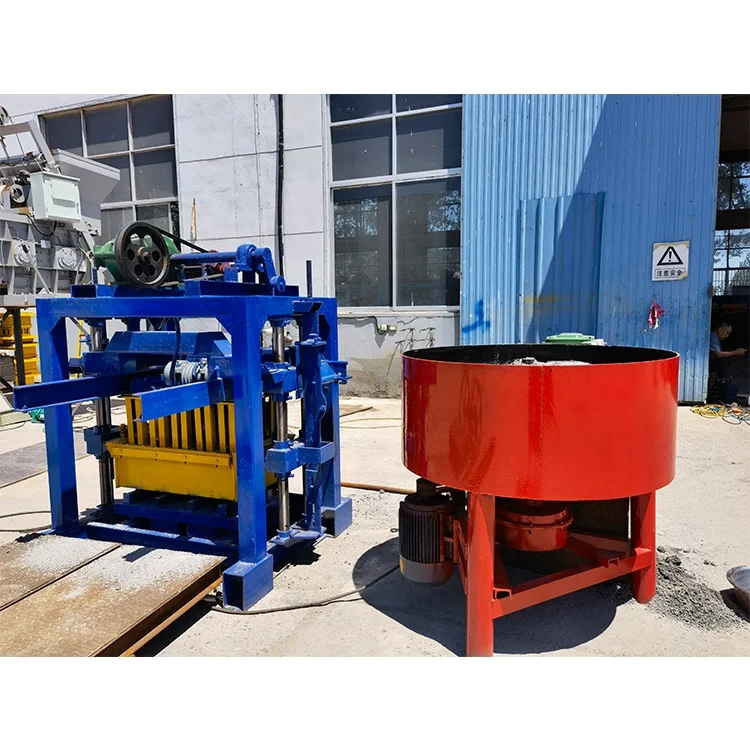
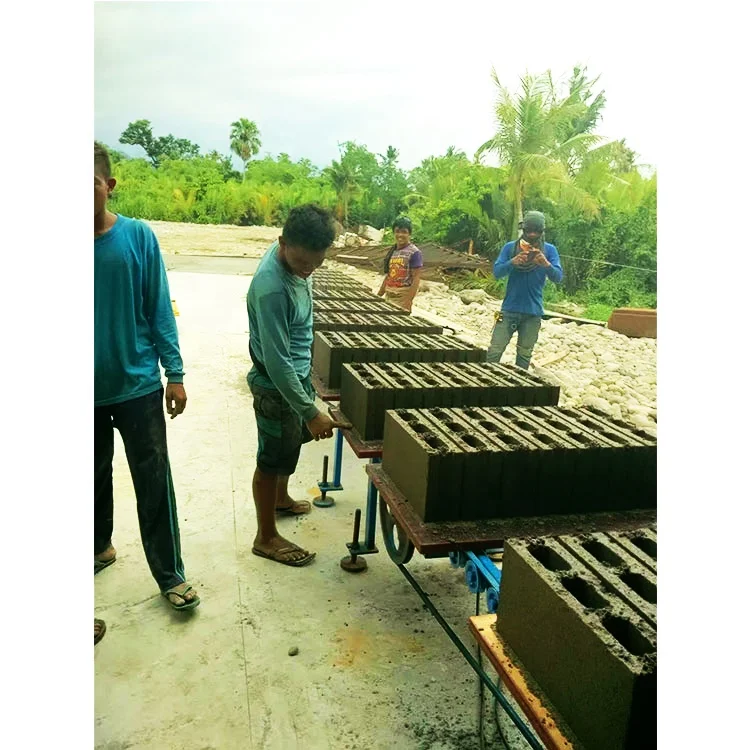 High quality block machine