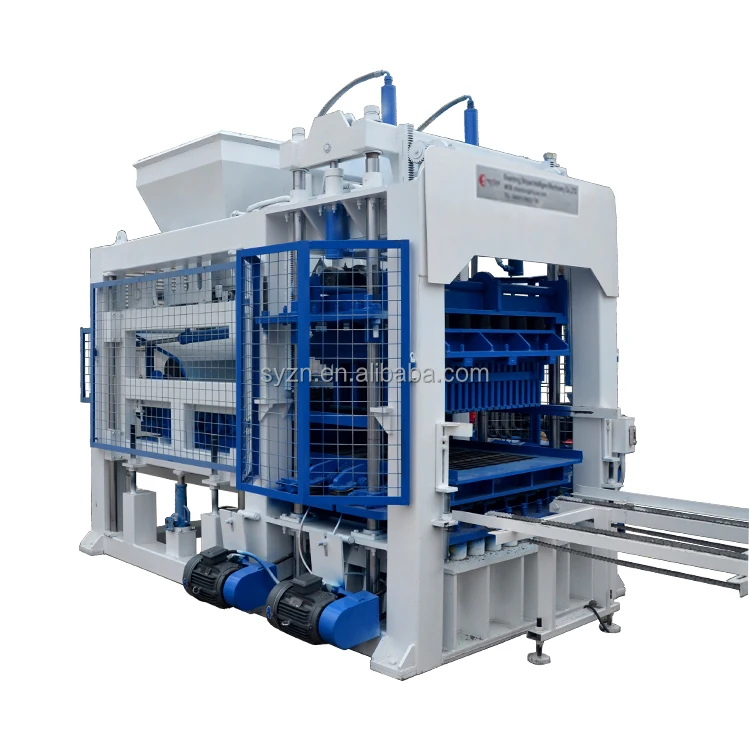
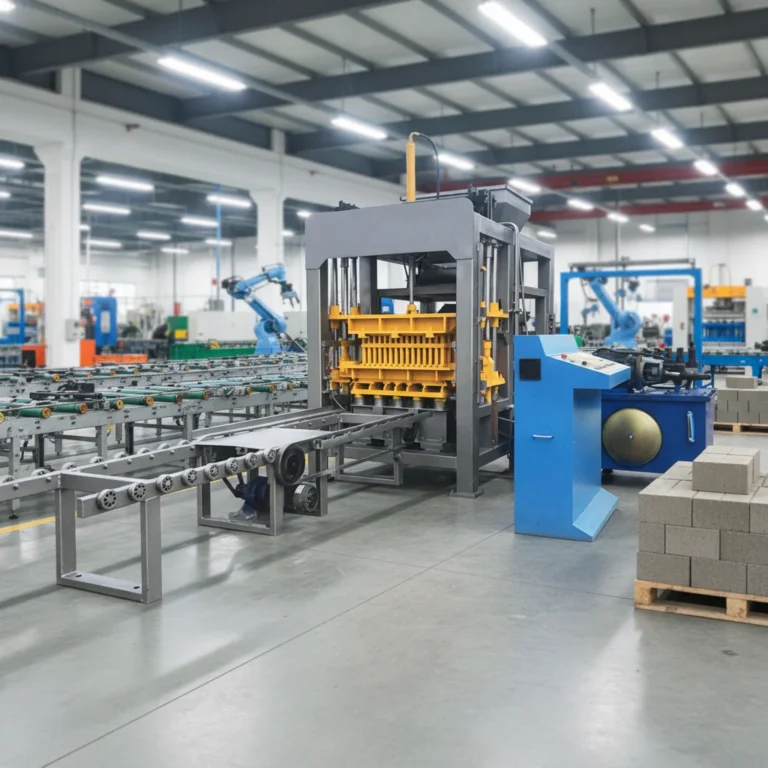
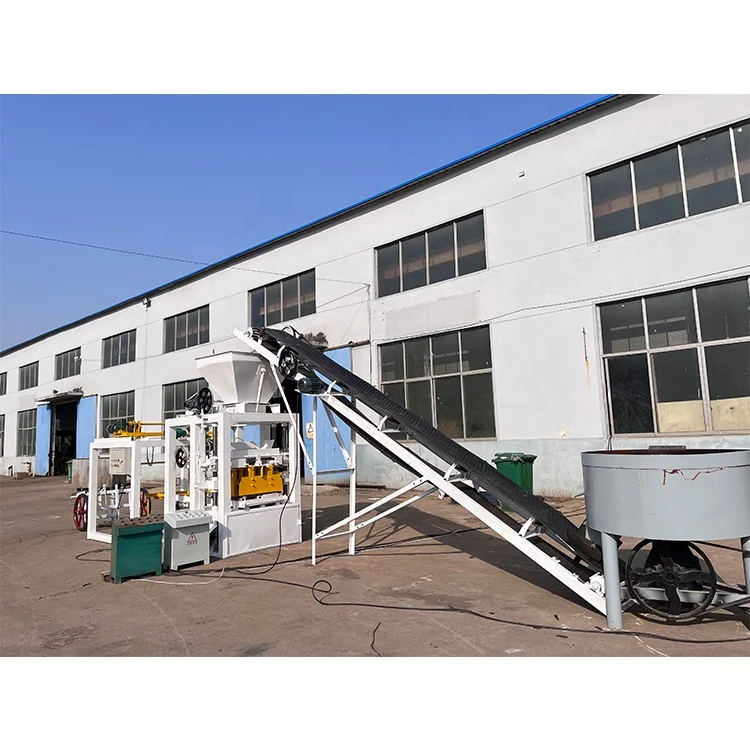
Single Focus Design — the LY1-10 semi-automatic block machine, its moulds, pallets and handling gear are specified together as one matched line, not sourced from separate suppliers.
Technical Specifications
| Parameter |
Value |
| Model |
LY1-10 |
| Product Type |
Semi-Automatic Clay Brick Making Machine |
| Rated Power |
1.5 kW |
| Molding Cycle |
45 seconds |
| Theoretical Productivity |
360 pcs/hour based on 300×150×100 mm block, 1 pc/mould (basis to be confirmed for other formats) |
| Daily Output Reference |
2880 pcs/day based on 300×150×100 mm block, 1 pc/mould (basis to be confirmed) |
| Raw Materials |
Concrete, sand, cement, fly ash, lime, gypsum |
| Machine Weight |
400 kg |
| Overall Dimensions |
1300 × 1800 × 2400 mm |
| Vibration Method |
Bed mould vertical vibration and upper mould compression vibration |
| Control System |
Semi-automatic |
| Voltage |
Configurable to local supply standard |
Application Suitability
| Application |
Material or Output |
| Small workshop block production |
Concrete and sand mixes for solid blocks |
| On-site construction block making |
Cement and fly ash blends for walling units |
| First plant for entrepreneurs |
Lime and gypsum mixes for lightweight bricks |
| Distributor adding compact capacity |
Crushed aggregate and cement for paving formats |
What "2880 Pieces per Day" Actually Means for Your Workshop
Every output figure we quote names the block format behind it, so your daily plan matches the machine’s real cycle.
Catalogues often list a single headline number — cycles per hour or pieces per day — without saying which block size that number assumes. A Semi-Automatic Block Making Machine manufacturer may show 2880 pieces daily, but if your market sells 400×200×200 mm hollow blocks instead of the 300×150×100 mm solid used for the calculation, actual throughput drops noticeably. I have seen buyers in Southeast Asia sign off on a machine expecting one output tier and then scramble to add shifts when the real format runs slower. The LY1-10 capacity sheet states the exact block dimensions and mould cavity count behind each figure so you can compare apples to apples before committing. [NEED_CITE: block format effect on cycle time and daily output]
Where the LY1-10 Sits in the Full Machine Range
Our range spans mobile egg-laying units, semi-automatic workshop presses, and high-capacity automatic lines with pallet stackers and cubing systems. The LY1-10 occupies the entry semi-automatic tier: a single-operator machine with manual pallet handling and a compact 1300 × 1800 mm footprint. It suits buyers who need reliable daily output without the floor space, power supply, or capital outlay a fully automatic line demands. For a first block plant or a construction contractor producing on-site, this tier keeps the investment contained while still delivering consistent vibration and compression.
How Semi-Automatic Operation Shapes Your Floor Plan
Because pallets are fed and collected by hand at this tier, the curing rack layout and forklift route must be planned around the press position. The LY1-10 overall height of 2400 mm means most standard workshops can accommodate it without roof modification, but the pallet return path still needs clear width on at least two sides. When we lay out a line, we match pallet size to the curing area you already have so blocks move from press to rack without bottlenecks. This planning step is where many small installations lose time — the press finishes a cycle and then waits for the operator to shuttle a loaded pallet away. [NEED_CITE: semi-automatic block line layout and pallet circulation]
Vibration, Pressure, and the 45-Second Cycle
The LY1-10 pairs bed mould vertical vibration with upper mould compression vibration. This dual action densifies the mix from both directions during the 45-second molding cycle, producing blocks with more uniform wall thickness and fewer surface voids than single-axis vibration alone. The 1.5 kW rated power keeps energy draw low enough for a standard workshop supply, yet the vibration force is matched to the single-cavity mould format so the concrete consolidates fully before the upper head descends. Voltage is configured to your local standard before production — running a 380 V motor on a 415 V supply or vice versa shortens bearing and winding life, a problem I have encountered too many times on humid job sites. Mould change is manual at this tier; the operator unbolts the current mould box and seats the replacement, a process that takes a portion of a shift rather than minutes, so format flexibility should be planned around the two or three block types your market actually buys.

The Hidden Cost of Underspecifying Your Entry Line
Choosing a machine purely on the lowest quoted price often means accepting a vibration motor that cannot fully compact the local aggregate blend. Blocks leave the mould with weak edges, breakage during pallet transfer rises, and the curing yard fills with scrap. I once visited a workshop in the Philippines where the owner ran river gravel with high mica content through a lightly specified press; the vibration was insufficient to settle the mix, and reject rates climbed until he replaced the entire vibration assembly. With the LY1-10 we confirm your aggregate source and mix proportions before finalising the vibration force rating, so the machine arrives configured for what you will actually feed it. [NEED_CITE: aggregate properties and vibration force matching in block production]
Why Source This Tier Through a Block-Machinery Specialist
- Block machinery is our single focus, so the LY1-10 press, mould, pallet and handling items are specified as a matched set, not assembled from unrelated catalogues.
- Configuration starts from your actual mix design and local aggregate, not a default table — the vibration force and cycle time are set for the material you will run.
- Mould design covers the formats your market sells, including custom drawings if your buyers need a non-standard bond or face texture.
- The semi-automatic tier is a deliberate entry point; when demand grows you can move to a higher automation level without scrapping the knowledge base you built on this machine.
- Installation support includes operator training on mould change, vibration tuning and daily maintenance, so the first production week is not spent troubleshooting.
Documentation & Verification
- Line layout drawing showing LY1-10 position, pallet path and curing rack arrangement for your workshop dimensions.
- Capacity calculation sheet stating block format, mould cavity count and cycle time behind every output figure.
- Machine specification sheet covering vibration force, hydraulic ratings and 1.5 kW power draw at your confirmed voltage.
- Voltage and PLC display language confirmation signed off before production begins.
- Factory test record with the agreed block format and mix, photographed before crating.
- Packing photographs and customs documentation support for your import port.
Installation, Commissioning & Support
- Foundation pad sized to the 1300 × 1800 mm base with anchor bolt template provided before machine arrival.
- Dedicated circuit rated for 1.5 kW plus starting surge, voltage confirmed to local frequency before wiring.
- Machine shipped as a single assembly; on-site positioning requires a forklift rated for 400 kg at the mast height needed.
- First-run commissioning covers vibration tuning to your specific sand-cement ratio and aggregate gradation.
- Operator training on manual pallet feed rhythm, mould change procedure and daily greasing points.
- Wear parts list identifying vibration springs, mould liners and hydraulic seals stocked for reorder.
Starting the Conversation
Tell us the block formats your customers buy most, the daily volume you need to hit, and the raw materials available near your site. Share your workshop floor dimensions and the voltage and frequency your utility provides. If you already own pallets or a curing rack system, send the sizes so we can match the line layout to what you have. We will return a capacity calculation that names every assumption behind the output number.
Frequently Asked Questions
Q: How is the LY1-10 daily output calculated, and which block format is assumed?
A: The published figure of 2880 pieces per day assumes a 300×150×100 mm solid block with one cavity per mould and a 45-second cycle. If your target format is larger or uses a multi-cavity mould, the cycle time and pieces-per-hour change accordingly. We provide a revised capacity sheet that states the exact block dimensions and mould configuration behind every output number before you place an order.
Q: Where does the LY1-10 fit in the full machine range?
A: It sits in the entry semi-automatic tier, below our fully automatic lines with pallet stackers and cubing systems and above mobile egg-laying machines. This tier gives a fixed-position press with consistent vibration and compression while keeping the footprint, power requirement and initial outlay within reach of a first plant or small workshop expansion.
Q: What voltage and frequency options are available for my market?
A: The motor and control panel are wound and configured to your local supply standard before production begins. We confirm voltage, phase and frequency during the proposal stage so the machine arrives ready to connect. Running a mismatched voltage shortens motor and bearing life, a common issue we help buyers avoid.
Q: What plant footprint and supporting equipment does this tier require?
A: The LY1-10 occupies roughly 1300 × 1800 mm, but you must also plan pallet circulation paths on two sides and space for a curing rack within forklift reach. Supporting equipment at this tier is typically a small pan mixer and manual pallet trolleys. We supply a line layout drawing that shows clearances and rack positions matched to your workshop.
Q: Can I start with the LY1-10 and move to higher automation later?
A: Yes. The semi-automatic tier is designed as a starting point. When your volume grows, you can add automatic pallet feeding, stacking and cubing modules or move to a higher-capacity press while keeping the mould formats and mix knowledge you developed on the LY1-10. We plan the upgrade path during the initial line layout so floor space is reserved.

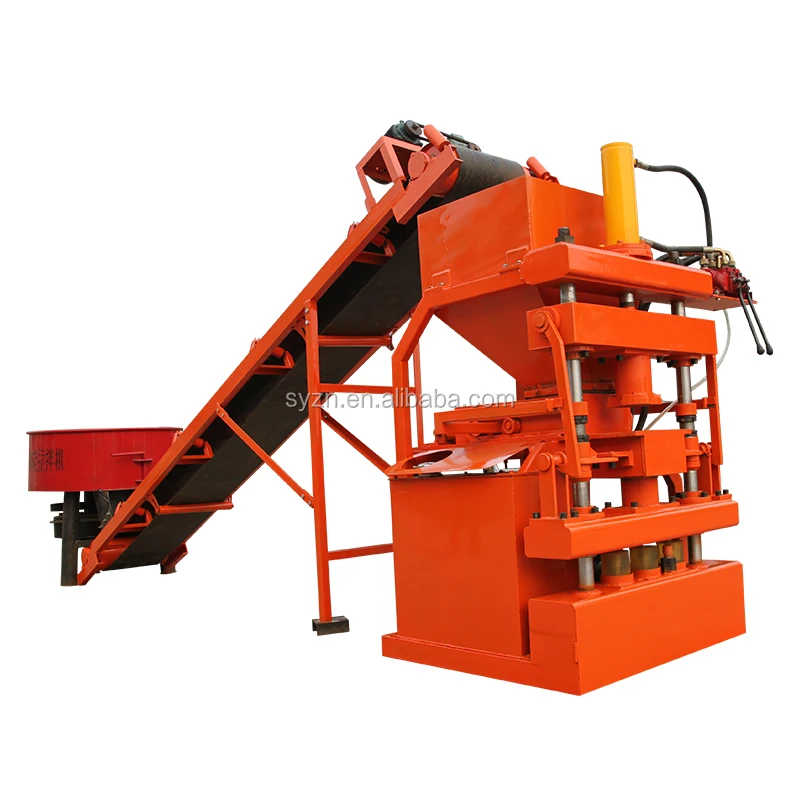
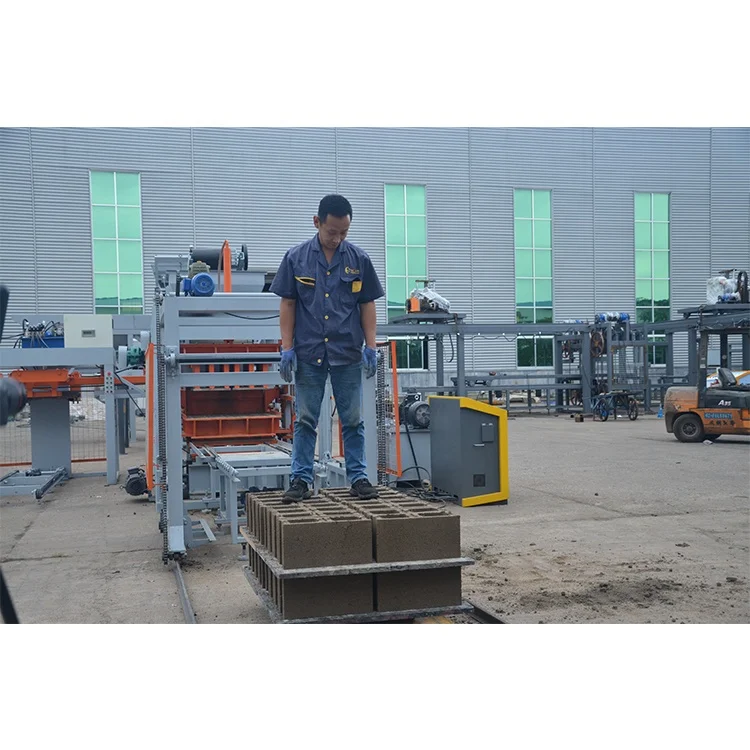 High quality block machine