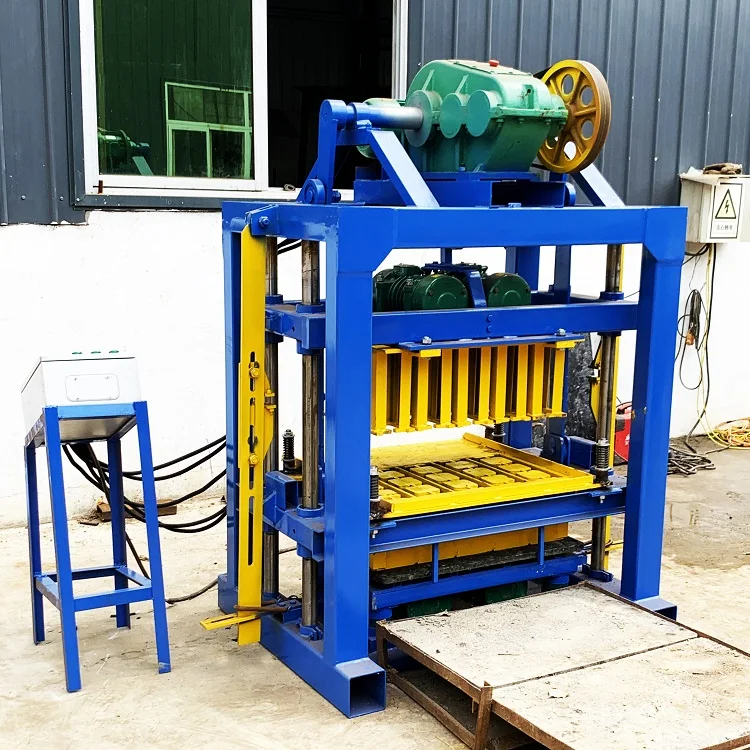
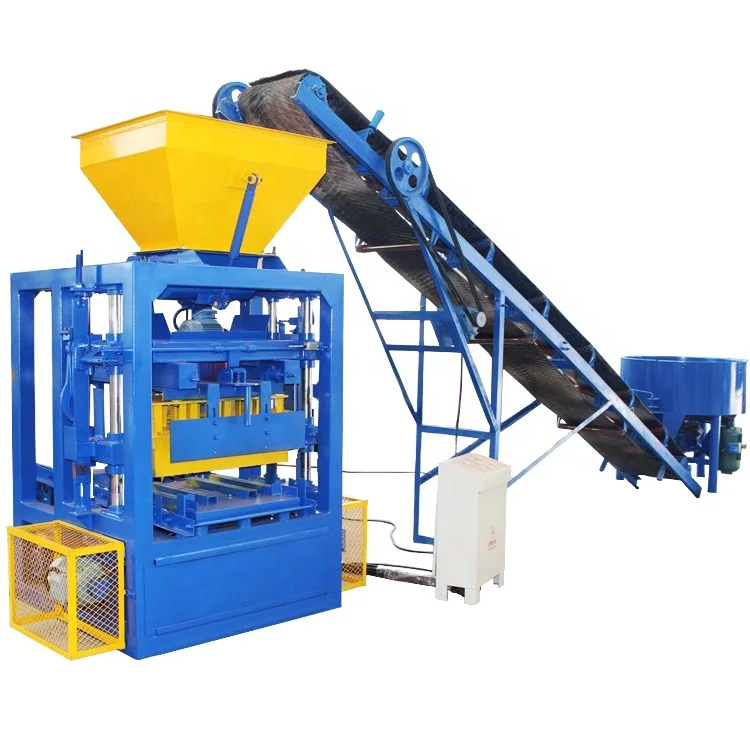
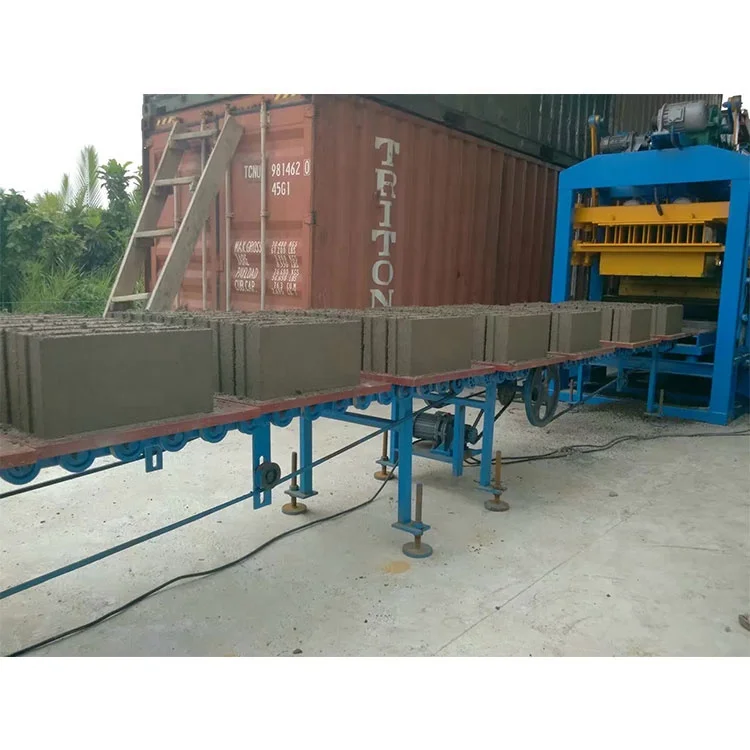
Matched System Approach — Every mould, pallet, and handling element for the QTJ4-24 is specified as one integrated set, so cycle times and output figures reflect the actual block format you plan to produce rather than a generic catalogue claim.
Technical Specifications
| Parameter |
Value |
| Model |
QTJ4-24 |
| Product Type |
Stationary Block Making Machine |
| Overall Dimensions (L×W×H) |
3600×1700×2560 mm |
| Pallet Size |
850×450 mm |
| Molding Cycle |
24-26 s (basis to be confirmed by block format) |
| Overall Power |
11.95 kW |
| Vibration Force |
45 kN |
| Total Mass |
2 T |
| Vibration Configuration |
2×3 kW lower vibrators + 2×1.5 kW upper vibrators |
| Reducer |
350-type for mold lifting |
| Material Distribution |
Full-automatic spiral |
| Molding Method |
Mechanical |
| Control System |
PLC (brand and language to be confirmed) |
| Voltage & Frequency |
Configurable to buyer site requirement |
| Automation Level |
Semi-automatic |
| Mould Format |
Options available (format list to be confirmed) |
| Output Capacity |
Rated per specific block format and material mix |
Application Suitability
| Application |
Material or Output |
| Hollow block production |
Cement, sand, and crushed stone aggregate mixes |
| Solid block manufacturing |
Standard concrete mix with local river or quarry sand |
| Interlocking brick forming |
Fine aggregate blends with cement binder |
| Paving block production |
Dense mix designs with coarse stone and pigment additives |
What "24-Second Cycle" Actually Means for Your Daily Output
The molding cycle of 24-26 seconds is only the starting point — real daily output depends entirely on which block format sits on the pallet.
When suppliers quote a stationary block making machine for sale based on cycles per hour alone, the number looks impressive on paper. In practice, a hollow block takes longer to fill and vibrate than a thin paving brick, and the 24-26 second figure shifts depending on wall thickness, cavity count, and aggregate gradation [NEED_CITE: block format impact on cycle time in mechanical molding]. I have seen project schedules slip because the buyer assumed the headline cycle applied to their primary product, only to find the actual throughput for 200 mm hollow blocks was materially lower. Before any configuration is locked in, we calculate capacity against the specific format and mix design you will actually run.

Where the QTJ4-24 Fits in the Full Machine Range
Our stationary block machine lineup spans from mobile egg-laying units through semi-automatic presses like this model up to high-capacity fully automatic hydraulic lines. The QTJ4-24 occupies the semi-automatic tier, meaning the molding press handles material distribution and vibration automatically, while pallet movement and stacking are managed by the operator. This positions it as a practical entry point for a stationary block making machine for sale where capital and floor space are constrained but a reliable mechanical press is required.
Choosing Between Semi-Automatic and the Next Tier Up
Buyers often weigh whether to invest in this tier or step directly to a fully automatic hydraulic press with integrated stacking and cubing. The decision typically comes down to daily volume targets, available labour, and how quickly the plant needs to recover its initial outlay. A semi-automatic stationary block making machine for sale like the QTJ4-24 suits operations where two or three workers can manage pallet handling without creating a bottleneck [NEED_CITE: labour allocation in semi-automatic block plants]. If your target output eventually demands continuous pallet cycling with minimal manual intervention, the range includes upgrade paths that retain the same pallet footprint.
Reading the Vibration and Pressure Specs
The 45 kN vibration force is delivered through four vibrators — two 3 kW units below the mould and two 1.5 kW units above. This dual-layer configuration compacts the concrete mix from both directions, which matters when your aggregate includes coarse stone that resists settling under single-plane vibration. The mechanical molding method relies on this vibration rather than hydraulic pressure to achieve density, so the force rating directly correlates with block strength and surface finish. The full-automatic spiral material distribution ensures the mould cavity fills evenly before vibration begins, reducing the chance of weak spots in thinner block walls.
The Cost of Skipping the Pallet and Curing Check
A frequent issue on projects I have supported arrives before the machine does: the buyer’s existing curing racks and forklift were never measured against the pallet specification. The QTJ4-24 uses an 850×450 mm pallet, and if your curing area is designed around a different dimension, you either rearrange your entire rack system or run a second pallet inventory. I once spent two days on a site in Colombia re-spacing curing racks because the pallet width was confirmed after the racks were already welded [NEED_CITE: pallet and curing rack compatibility in block production]. Confirming this dimension early avoids costly rework.
Why Source This Machine Here
Block machinery is our single focus, so the QTJ4-24 is never assembled from mismatched third-party components — the press, mould, pallet, and feeder are specified together as a matched system. Configuration is set against your actual mix design and local aggregate rather than a default catalogue setting. Mould design covers the formats your market actually sells, including custom drawings when standard options do not fit. The automation level is selectable, so starting with semi-automatic operation leaves a clear upgrade path. Installation support includes on-site commissioning and operator training specific to this machine’s controls and vibration settings.
Documentation & Verification
- Line layout showing QTJ4-24 footprint with pallet flow and curing area allocation
- Capacity calculation sheet stating the block format assumed for the 24-26 s cycle
- Mould drawing and format list covering every block size the machine can produce
- Pallet specification matched to your curing rack dimensions and forklift capacity
- Voltage, frequency, and PLC display language confirmation before production begins
- Factory test record captured on your target block format before dispatch
Installation, Commissioning & Support
- Foundation pad must accommodate the 3600×1700 mm footprint with level tolerance for vibration stability
- Power supply requires a dedicated circuit rated for the 11.95 kW overall power draw at confirmed voltage
- Machine ships partially dismantled; reassembly on site includes vibrator alignment and reducer check
- First production run includes vibration force calibration against your local aggregate and mix ratio
- Operator training covers PLC navigation, mould change procedure, and spiral feeder adjustment
- Wear parts list provided with recommended replacement intervals for vibrator mounts and mould liners
What We Need to Configure Your QTJ4-24
To build an accurate proposal, share the primary block format and dimensions your market demands, along with the daily output target you need to hit. Tell us what aggregate sources are available locally — river sand, quarry dust, crushed stone — and whether you have an existing curing area or forklift we should design around. Confirm your site voltage and frequency, and let us know your preferred PLC display language so commissioning proceeds without delay.
Frequently Asked Questions
Q: How is the QTJ4-24’s daily output calculated and which block format is assumed?
A: The 24-26 second molding cycle is a baseline that shifts depending on block format, wall thickness, and mix design. We calculate daily output by stating the exact block dimensions assumed, then factoring in pallet handling time and curing logistics. No capacity figure is quoted without naming the format it applies to.
Q: Where does this machine sit compared to fully automatic hydraulic models in the range?
A: The QTJ4-24 is a semi-automatic mechanical press — it handles material feeding and vibration automatically but requires manual pallet movement and stacking. Fully automatic hydraulic models in our range add automated pallet cycling, stacking, and cubing for higher throughput with fewer operators on the line.
Q: What pallet size does it use and can it match my existing curing racks and forklift?
A: The standard pallet size is 850×450 mm. Before production, we confirm this dimension against your curing rack spacing and forklift tine width so the pallets integrate with your existing handling equipment without modification.
Q: Which block formats and mould options are available for this model?
A: The QTJ4-24 supports hollow block, solid block, interlocking brick, and paving block moulds. We provide a full format list and mould drawing during the proposal stage, and custom mould designs are available when standard options do not match your local market requirements.

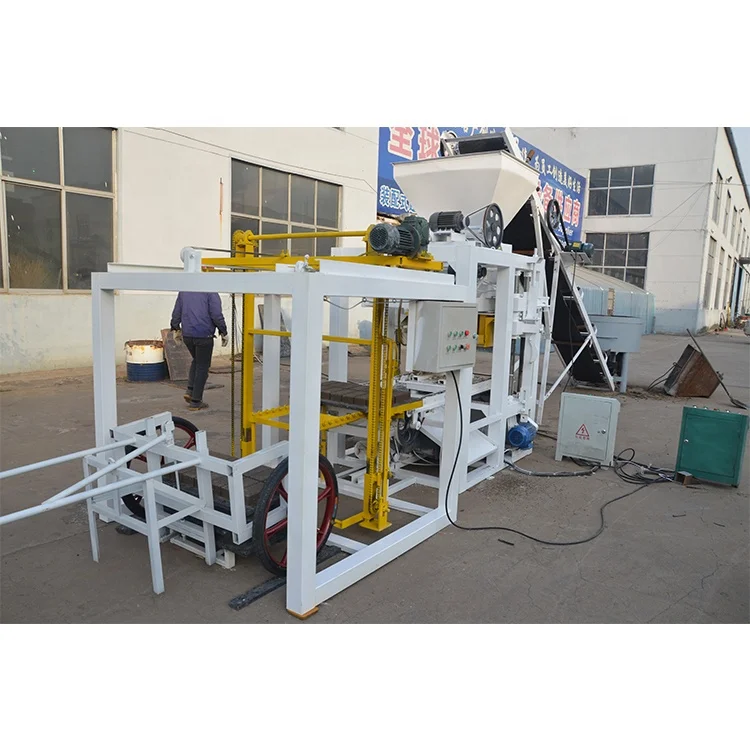
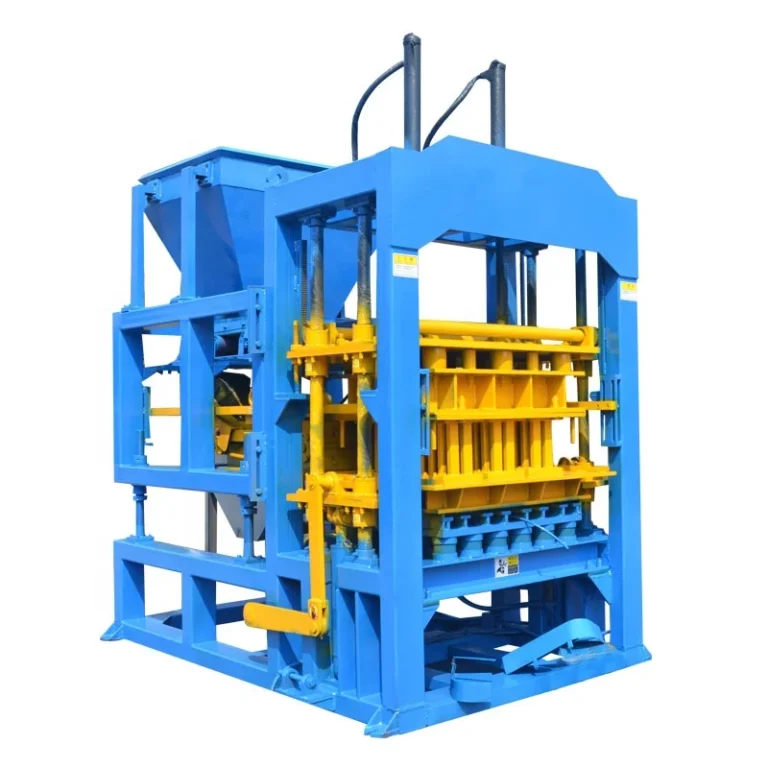 Stationary block machine