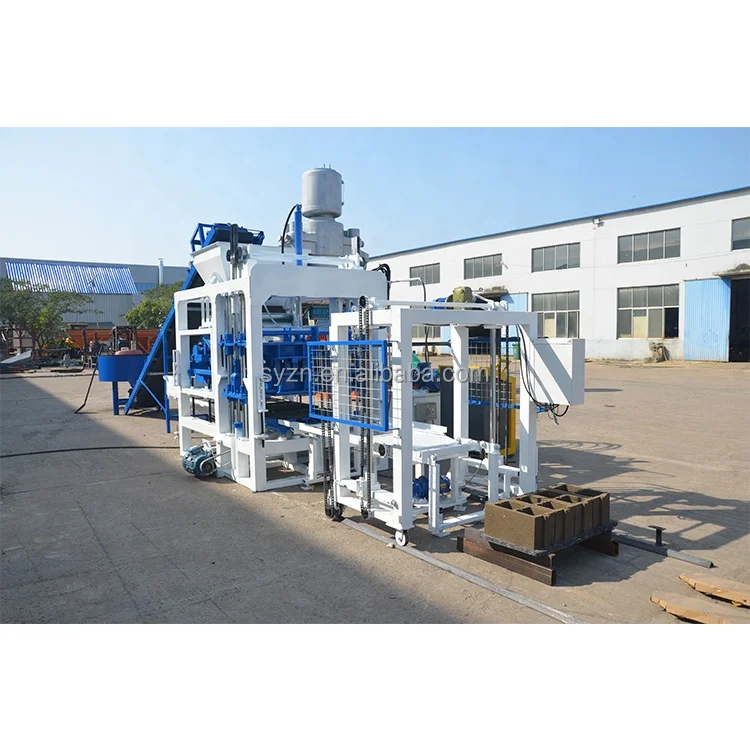
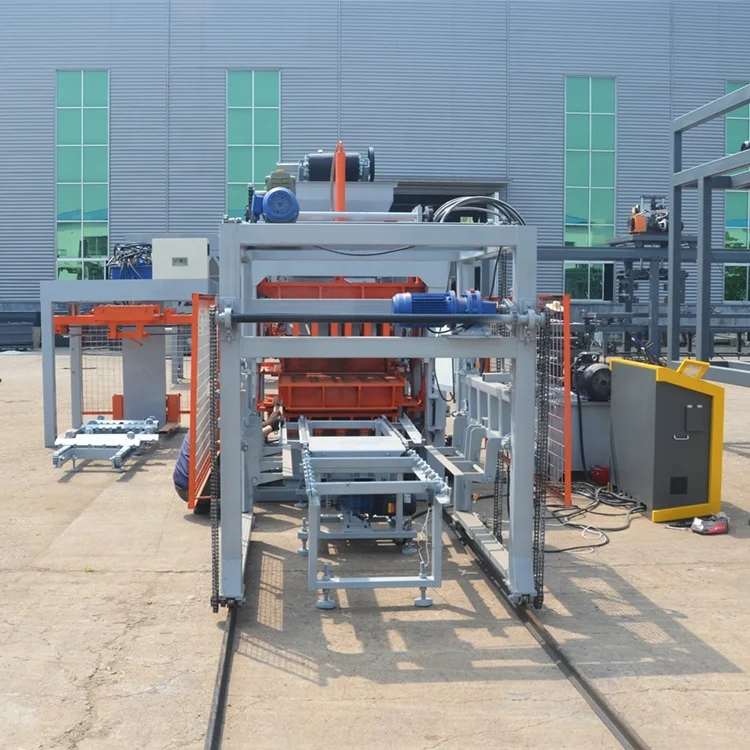
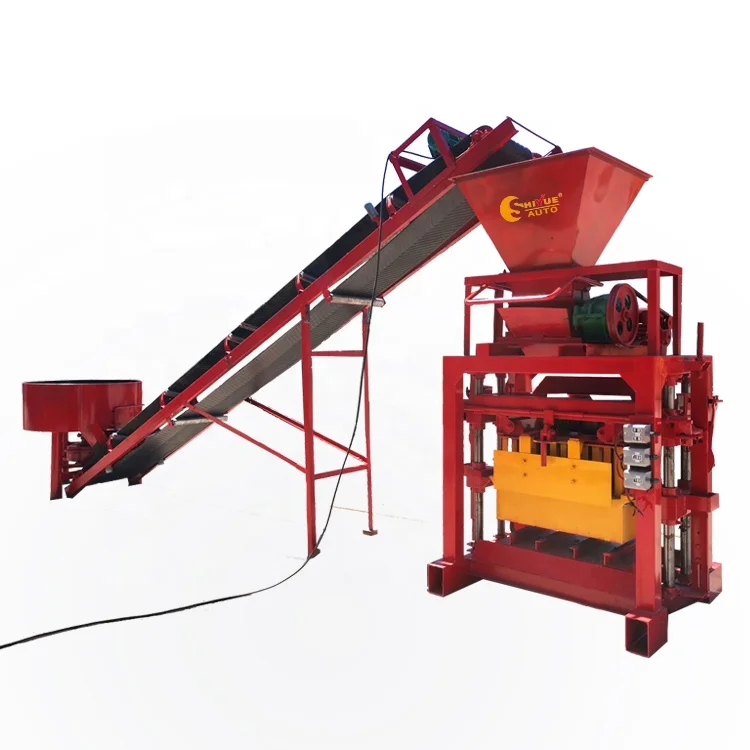
Entry-Level Full Automation — the QT4-15 is positioned as the starting point of the Shiyue fully automatic range, configured around your local aggregate and target block format rather than a generic catalogue default.
Technical Specifications
| Parameter |
Value |
| Product Type |
Fully Automatic Concrete Block Making Machine |
| Model |
QT4-15A |
| Overall Dimensions (L×W×H) |
4100×1600×2600 mm |
| Rated Pressure |
16–21 MPa |
| Main Vibration Form |
Platform Vibration |
| Vibration Frequency |
4200 r/min |
| Vibration Force |
55 kN |
| Pallet Size |
880×550 mm |
| Molding Cycle |
25–30 s (basis not stated in source — confirm block format / material / thickness) |
| Overall Power |
18.45 kW |
| Demolding Method |
Hydraulic |
| Total Mass |
4 T |
| Factory Area Requirement |
300 m² |
| Applied Products |
Concrete blocks, hollow/solid blocks, pavers, interlocking blocks, curbstone, colored pavers |
| Raw Materials |
Crushed stone, sand, cement, dust, fly ash, gravel, slag |
| Automation Level |
Fully automatic |
| Control System |
PLC (brand and language options to be confirmed) |
| Voltage & Frequency |
Configurable (to be confirmed before order) |
| Warranty |
1 year |
Application Suitability
| Application |
Material or Output |
| Hollow block production for wall construction |
Crushed stone, sand, cement, fly ash |
| Solid block manufacturing for load-bearing structures |
Gravel, cement, slag blends |
| Paving block and colored paver production for roads and walkways |
Fine aggregate with pigment additives |
| Interlocking brick for erosion control and landscaping |
Sand-cement mix, dust |
| Kerbstone and curb units for road edging |
Coarse aggregate with high cement content |
| On-site production for housing development contractors |
Locally sourced aggregate and cement |
What "Cycles per Hour" Leaves Out When Sizing a QT4-15 Block Machine Manufacturer
Cycle time only matters once the block format and mix design are locked in.
Every QT4-15 block machine manufacturer will quote a molding cycle of 25–30 seconds, but that number shifts depending on whether you are pressing a thin paver or a tall hollow block. I have watched buyers sign off on a capacity figure assuming standard hollow blocks, then switch to interlocking pavers on day one and wonder why daily output drops. The vibration force of 55 kN and the hydraulic pressure of 16–21 MPa are matched for a specific density target — change the aggregate or the block height and the cycle stretches [NEED_CITE: block format impact on cycle time in hydraulic vibration presses]. A QT4-15 block machine manufacturer that does not ask for your target format before quoting is selling a catalogue number, not a production plan.

Where the QT4-15 Sits in the Shiyue Range
The Shiyue lineup spans mobile egg-layers at the bottom, semi-automatic presses in the middle, and high-capacity fully automatic lines at the top. The QT4-15 occupies the entry point of the fully automatic tier, meaning it delivers PLC-controlled batching, pallet feeding, and hydraulic demolding without the footprint and capital outlay of a large-scale plant. For a buyer comparing options across the range, this model answers the question: can I get full automation on a 300 m² floor? The answer is yes, provided your curing area and pallet circuit are planned around the 880×550 mm pallet.
Matching Automation Tier to Your Actual Daily Target
Automation removes labour from the pallet handling and stacking stages, but it only pays off when your daily target justifies continuous running. A contractor producing blocks for a single housing project may run the QT4-15 block machine manufacturer setup for one shift and still meet demand, while a commercial block plant running two shifts will rely on the automatic pallet return loop to keep cycle gaps out of the schedule [NEED_CITE: shift planning for small-scale automatic block plants]. The 4-tonne machine mass keeps relocation feasible if your project site changes mid-contract, something heavier tiers cannot offer.
Reading the Spec Sheet Beyond the Headline Numbers
The 16–21 MPa rated pressure and 55 kN vibration force work together — pressure compresses the mix while vibration settles fine particles into voids. If your local sand has a high clay content, the vibration frequency of 4200 r/min may need adjustment through the PLC to avoid surface cracking on demolding. The 880×550 mm pallet is the smallest standard size in the range, which means your curing racks and forklift tines must match; arriving with a pallet that does not fit your existing rack system creates a bottleneck no amount of press speed can fix. Total installed power of 18.45 kW across mixer, press, and pallet feeder means a standard three-phase supply handles the load, but confirm voltage and frequency with the QT4-15 block machine manufacturer before production begins.
The Hidden Cost of Skipping the Configuration Conversation
Buyers who confirm price before confirming mix design often face a costly material substitution after the machine arrives. A press tuned for clean river sand will underperform with unwashed quarry dust, producing blocks that fail compressive strength tests. I have seen entire curing yards of blocks rejected because the vibration force was set for a material the buyer could not source locally [NEED_CITE: aggregate moisture and fines content effect on block density]. Similarly, ordering without confirming PLC language means the operator spends the first week navigating menus in an unfamiliar script, delaying commissioning and pushing back the first saleable batch.
Why Source This Tier Through Shiyue
Block machinery is the single focus here, so the QT4-15 is specified as a matched system — press, mould, pallet, and handling — rather than assembled from separate suppliers. Configuration starts with your actual mix design and target block format, not a default setting. Moulds are designed for the formats your market sells, including custom drawings if your region demands a non-standard interlocking profile. The automation level is selectable, meaning you can begin with manual pallet handling and upgrade the stacking and cubing stations later as volume grows. Installation support includes operator training on the PLC interface, and wear parts and mould replacements are listed from day one so your first reorder is never a surprise.
Documentation & Verification
- Line layout showing QT4-15 footprint and pallet circuit within your 300 m² area
- Capacity calculation sheet stating the block format assumed for the 25–30 s cycle
- Mould drawing and format list confirming which products this tier can produce
- Voltage, frequency, and PLC display language confirmation before production
- Factory test record on your specified block format before dispatch
- Operation and maintenance manual with wear parts list
Installation, Commissioning & Support
- 4100×1600×2600 mm footprint requires a level concrete pad within the 300 m² allocation
- 18.45 kW total load needs a dedicated three-phase circuit at confirmed voltage and frequency
- Machine ships dismantled for container loading; reassembly includes press, pallet feeder, and mixer
- First-run commissioning covers vibration tuning to your local aggregate and mix moisture
- Operator training on PLC menus, mould change procedure, and daily greasing points
- Wear parts and hydraulic seal kit listed with part numbers for first reorder
Before You Request a Quote
Tell us which block format you intend to produce — hollow, solid, paver, or interlocking — along with the daily output you need to hit. Share your local aggregate type, cement source, and any moisture or fines data from your supplier. Confirm the three-phase voltage and frequency at your site, the PLC display language your operators read, and whether your existing curing racks match an 880×550 mm pallet.
Frequently Asked Questions
Q: Where does the QT4-15 sit compared to the next tier up in the Shiyue range?
A: The next tier uses a larger pallet and delivers higher daily output per format, but demands more floor space and a bigger curing yard. The QT4-15 is the right call when your site caps at around 300 m² and your daily target fits a single-shift operation on the 880×550 mm pallet.
Q: What block formats can the QT4-15 produce, and which require a larger machine?
A: It handles hollow, solid, paver, interlocking, and kerbstone formats through mould swaps. Very large kerbstones or jumbo retaining wall blocks that exceed the 880×550 mm pallet footprint need the next tier up, where pallet dimensions and press tonnage are sized for heavier units.
Q: How does daily output change when switching from hollow blocks to pavers on this model?
A: Pavers are thinner and lighter, so the molding cycle can shorten slightly, but each pallet holds more pieces. Daily output in terms of square metres covered shifts because paver production runs faster per cycle yet requires more pallets in the curing circuit to maintain continuous pressing.
Q: Can I start with the QT4-15 semi-automatic and upgrade automation later?
A: Yes. The machine frame and press are identical across automation levels within this tier. You can begin with manual pallet handling and add automatic stacking and cubing stations later, provided the pallet return conveyor space was reserved in your original layout.
Q: What factory area and curing space does this tier need compared to higher tiers?
A: The QT4-15 needs roughly 300 m² including press, mixer, and pallet circuit. Higher tiers require proportionally more curing rack space because they produce more pallets per hour. Plan your curing area based on the slowest-curing format you intend to run.

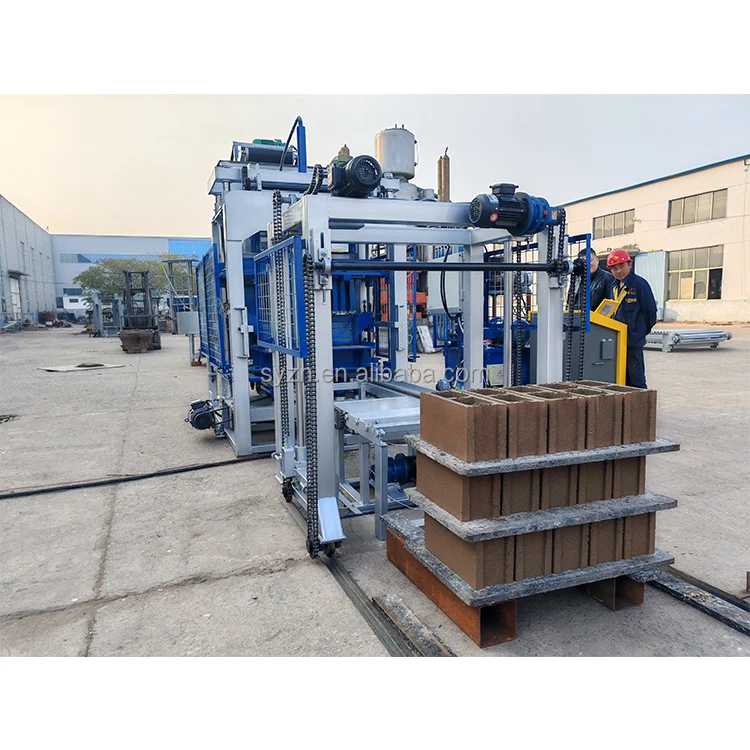
 High quality block machine