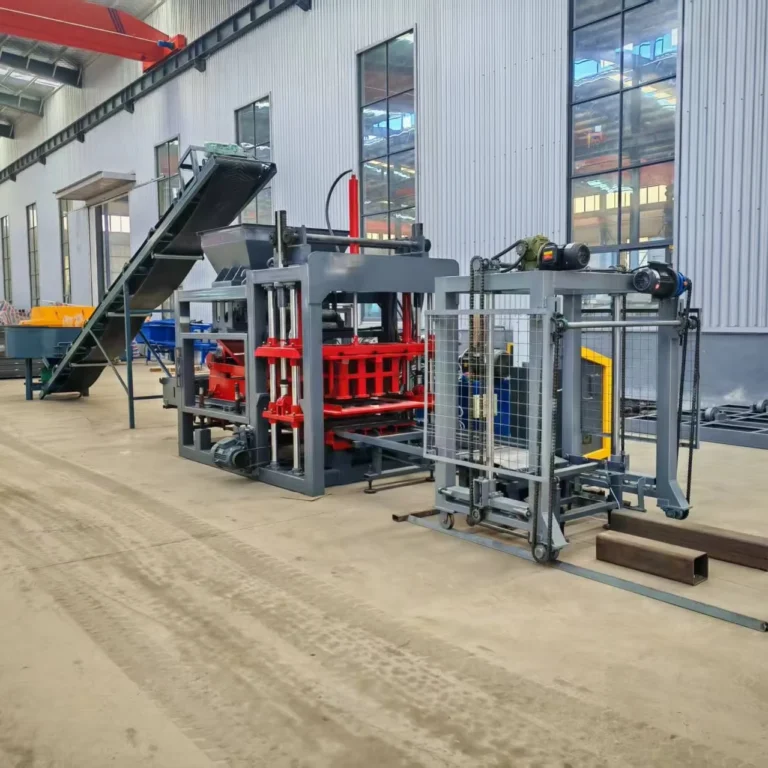
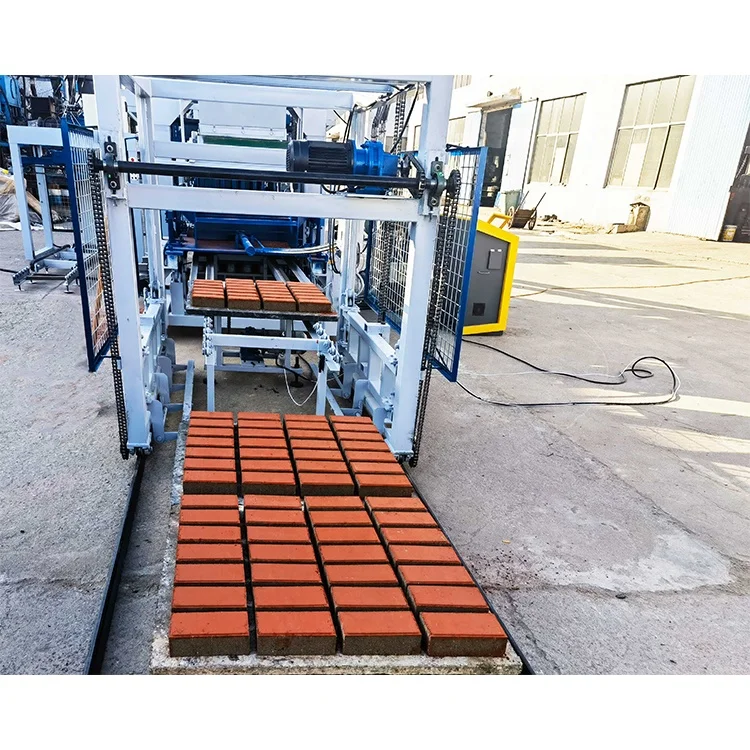
Integrated Block Machinery System — the QT4-15A fully automatic block machine, mould, pallet and handling equipment are specified as one matched production line rather than assembled from separate catalogue pages.
Technical Specifications
| Parameter |
Value |
| Product Type |
Fully Automatic Concrete Brick Making Machine |
| Model |
QT4-15A |
| Overall Dimensions (L×W×H) |
4100×1600×2600 mm |
| Rated Pressure |
16–21 MPa |
| Main Vibration Form |
Platform Vibration |
| Vibration Frequency |
4200 r/min |
| Vibration Force |
55 kN |
| Pallet Size |
880×550 mm |
| Molding Cycle |
25–30 s (basis not stated in source — confirm block format) |
| Total Mass |
4 T |
| Demolding Method |
Hydraulic |
| Applied Products |
Concrete blocks, hollow/solid blocks, pavers, interlocking blocks, curbstone |
| Raw Material |
Crushed stone, sand, cement, fly ash, gravel, slag |
| Automation Level |
Fully automatic |
Application Suitability
| Application |
Material or Output |
| Hollow and solid block production |
Crushed stone, sand, cement, fly ash mixes |
| Paving block and interlocking brick production |
Fine aggregate and cement blends for surface finishes |
| Curbstone and colored paver production |
Pigmented concrete mixes with local gravel and slag |
What a Block Machine Cycle Time Actually Means for Your Daily Output
Cycle time only matters once you know exactly which block format and mix design that number was measured against.
When evaluating a block machine manufacturer, buyers often see "25–30 seconds" and calculate an eight-hour shift backward. The reality is that a hollow block requires different compaction time than a solid paver, and a mix heavy in fly ash behaves differently under vibration than one based on sharp sand. Quoting output per hour without stating the format assumed leads to daily production that falls noticeably short of the plan [NEED_CITE: block format impact on actual cycle time in hydraulic press operations].

Where the QT4-15A Sits in the Shiyue Automatic Range
The QT4-15A occupies the mid-tier position among fully automatic options, sitting above semi-automatic and mobile machines in both output capability and plant footprint requirements. Buyers moving from workshop-scale production or replacing an aging manual setup typically land here when daily volume demands exceed what a smaller press can sustain across a standard shift.
Matching Automation Level to Your Plant’s Current Stage
A fully automatic block machine for sale at this tier handles hydraulic demolding, platform vibration, and pallet cycling without manual intervention at the press itself. The automation level is selectable across the range, meaning a buyer can begin with semi-automatic pallet handling and transition toward full stacking and cubing as production volume justifies the additional stations. This progression matters because over-specifying automation on day one ties capital into equipment that the surrounding line may not yet support [NEED_CITE: automation upgrade paths in concrete block production].
Pressure, Vibration, and Pallet Dimensions Explained
The rated pressure of 16–21 MPa works together with 55 kN of vibration force at 4200 r/min to compact the concrete mix across the pallet area. Platform vibration distributes energy through the pallet surface rather than through the mould walls, which produces more uniform density in taller formats like hollow blocks. The 880×550 mm pallet size sets the physical envelope for every mould this machine accepts — a buyer’s existing curing racks and forklifts must accommodate this dimension, or the pallet specification must be adjusted before the line is finalized. The 4 T machine mass provides the static weight needed to absorb vibration reaction forces without transmitting them into the foundation.
The Cost of Skipping Pallet and Handling Verification
When pallet size is chosen without checking the curing area layout or the forklift the buyer already operates, pallets arrive that do not fit existing racks. Output then piles up on the floor waiting for manual restacking, which cancels the throughput advantage the automatic press was supposed to deliver. Voltage, frequency, and PLC display language left unconfirmed before shipment cause delays at commissioning that stretch into weeks while replacement electrical components are sourced locally [NEED_CITE: voltage and frequency standards by export market].
Why This Range Exists as a Matched System
Block machinery remains the single focus here, so the press, mould, pallet, and handling equipment are specified together against the buyer’s actual mix design and local aggregate. Mould design covers the formats the buyer’s market actually sells, including custom drawings when standard options do not match. Installation and commissioning support includes operator training at the plant, not just a manual left in a crate. The configuration is set against real production conditions rather than defaulting to a catalogue entry.
Documentation & Verification
- Line layout and capacity calculation stating the block format assumed for the QT4-15A cycle time
- Machine specification sheet with voltage, frequency, and PLC display language confirmed pre-shipment
- Mould drawing and format list showing every block type the machine is configured to produce
- Factory test record demonstrating the press under load before dispatch
- Hydraulic and electrical schematic for on-site maintenance reference
Installation, Commissioning & Support
- Foundation must support 4 T static mass plus dynamic vibration loads across the 4100×1600 mm footprint
- Power supply must match confirmed voltage and frequency with a dedicated circuit for the 18.45 kW total load
- Machine ships dismantled for container loading and requires on-site reassembly of hydraulic and vibration assemblies
- Commissioning includes parameter setting for the buyer’s specific mix design and target block format
- Operator training covers mould change procedure, hydraulic system checks, and PLC operation in the confirmed language
- Wear parts list and mould inventory provided for first replacement planning before production begins
What to Include with Your Inquiry
Provide the specific block formats your market demands, the daily output you need per format, and the raw materials available locally including aggregate type and cement source. Confirm your site’s voltage, frequency, and preferred PLC display language so the electrical system matches your grid before the machine ships.
Frequently Asked Questions
Q: How is the capacity of the QT4-15A calculated, and which block format is assumed?
A: The 25–30 second molding cycle is a range, and the actual output depends on which block format is running, the mix design being used, and the thickness of the product. A hollow block and a thin paver require different compaction times under the same vibration force, so the capacity calculation must state the format assumed before the number means anything for daily planning.
Q: Where does the QT4-15A sit between semi-automatic and high-capacity automatic lines?
A: This machine occupies the mid-tier automatic position, offering fully automatic hydraulic demolding and platform vibration above semi-automatic options while remaining below the high-capacity lines that add automatic stacking and cubing. It suits buyers who have outgrown workshop volume and need consistent output across a full shift.
Q: What voltage, frequency, and control language options are available?
A: The electrical system and PLC display are configured to match the buyer’s local grid standards and operator language before production begins. Confirming these details during the quotation stage prevents commissioning delays that occur when the control panel arrives in a language the operators cannot read or at a frequency the local grid does not support.
Q: What plant footprint and supporting equipment do I need alongside this machine?
A: The machine itself occupies a defined area within the 300 m² factory space, but the full line requires raw material feeding, mixing, pallet feeding, and curing rack handling stations arranged around the press. The pallet size of 880×550 mm dictates the curing rack dimensions and forklift specifications needed to move output through the curing cycle.

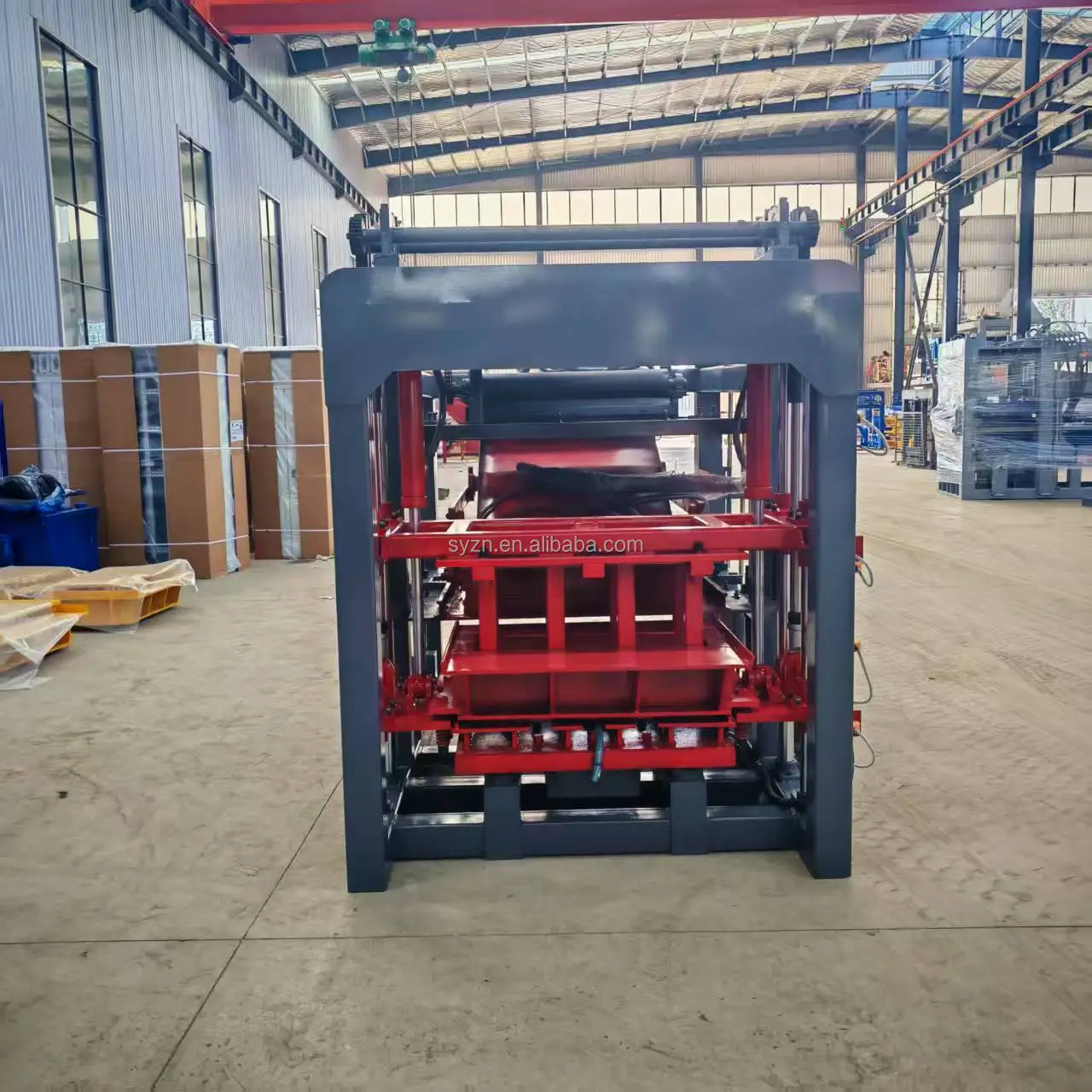
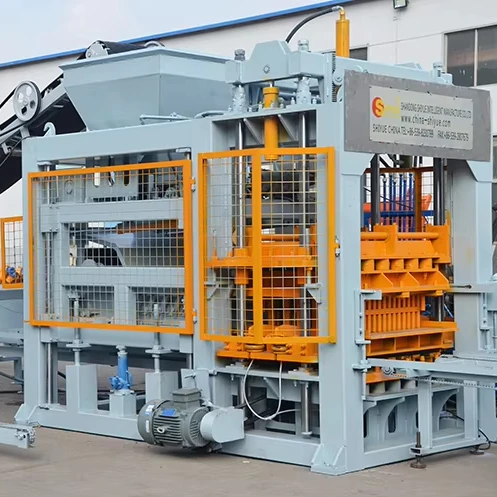 High quality block machine