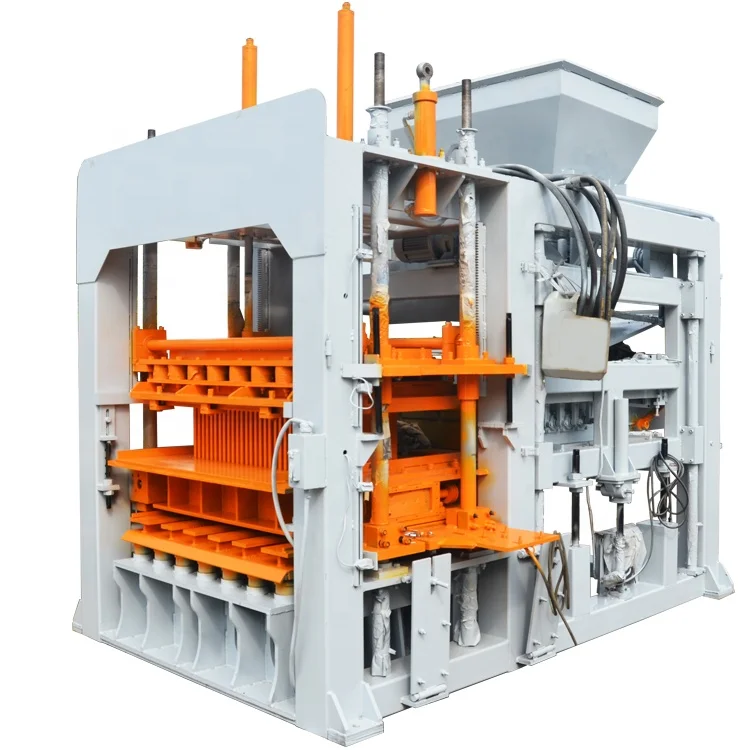
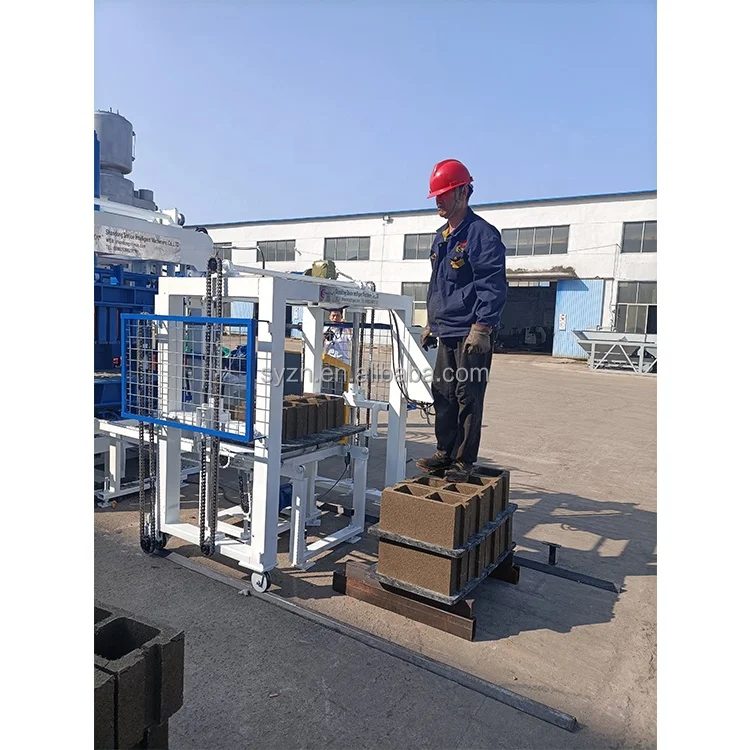
Matched System Configuration — the QT8-15 block machine, moulds, pallets, and handling equipment are specified together against your local aggregate and target format, preventing the mismatched vibration and pressure settings that cause weak blocks on arrival.
Technical Specifications
| Parameter |
Value |
| Product Type |
Hydraulic Concrete Block Making Machine |
| Model |
QT8-15 |
| Overall Dimensions (L×W×H) |
8300×1860×3000 mm |
| Rated Pressure |
21 MPa |
| Main Vibration Form |
Platform Vibration |
| Vibration Frequency |
2800–4500 r/min |
| Vibration Force |
45 kN |
| Pallet Size |
950×900 mm |
| Molding Cycle |
15–20 s |
| Overall Power |
55.5 kW |
| Total Mass |
8 T |
| Demolding Method |
Hydraulic |
| Recommended Factory Area |
300 m² |
| Applied Products |
Concrete hollow blocks, solid blocks, pavers, interlocking blocks, curbstone, colored pavers |
| Raw Materials |
Crushed stone, sand, cement, dust, fly ash, gravel, slag |
| Output Capacity |
(basis to be confirmed depending on block format, material, and thickness) |
| Loading |
1×40HQ container (basic equipment) |
Application Suitability
| Application |
Material or Output |
| Mid-volume hollow block plant |
Crushed stone, sand, cement, fly ash, and slag blends |
| Paving block production for municipal projects |
High-density aggregate mixes requiring sustained hydraulic pressure |
| Interlocking brick manufacturing |
Specialized mould formats with precise vibration frequency tuning |
| Curbstone production for road infrastructure |
Heavy-duty pallet handling and extended molding cycles |
| Colored paver runs for landscaping |
Multi-layer feed systems and pigment-integrated raw materials |
Why "Cycles Per Hour" Misleads the QT8-15 Block Machine Manufacturer Buyer
Real daily output depends on the block format, wall thickness, and local mix design — not a single cycle-per-hour figure pulled from a catalog.
Many quotations list a peak cycle rate without specifying which block size that rate assumes, leading to plants that fall far short of projected volume once production starts. A thinner paver may complete a cycle at the lower end of the 15–20 s range, while a thick-walled hollow block demands longer vibration and pressure dwell. The QT8-15 concrete block making machine range must be configured around your actual product mix, not a generic benchmark. [NEED_CITE: common block machine capacity misrepresentation in export quotations]

Positioning the QT8-15 Within the Full Machine Range
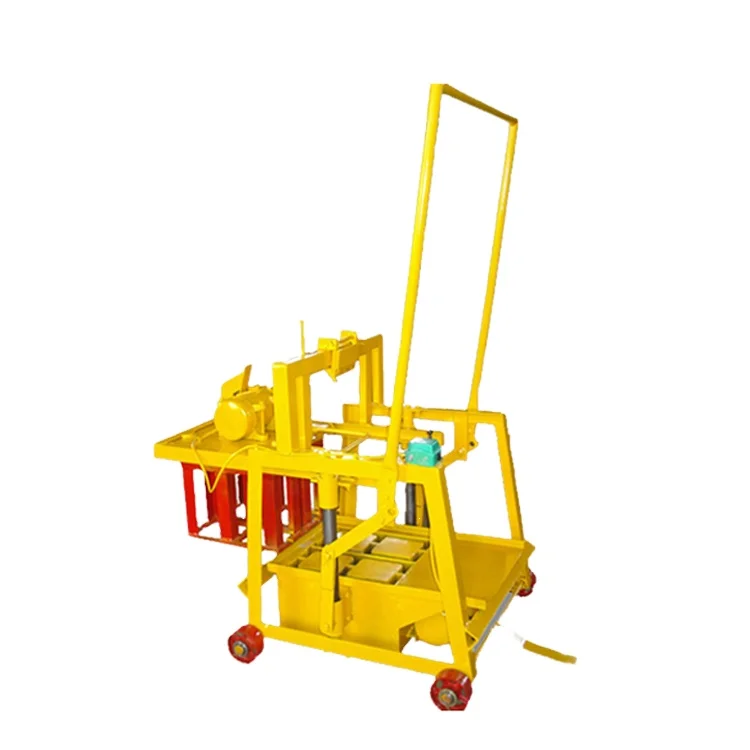
The QT8-15 block machine manufacturer lineup places this model in the mid-to-high automatic tier, bridging the gap between small semi-automatic workshops and large fully automatic lines. Buyers moving up from egg-laying or mobile machines will find the 8 T mass and 300 m² recommended factory area represent a meaningful step up in fixed infrastructure commitment. At the same time, the footprint remains manageable for entrepreneurs setting up a first block plant where land cost is a constraint.
Choosing the Right Tier for Your Production Scenario
Contractors replacing an aging unit often need to compare whether the QT8-15 concrete block making machine range offers sufficient output headroom without the capital jump to a higher-tier press. The deciding factors typically include the pallet size your existing curing racks accept, the forklift capacity on site, and whether your current batching system can feed the press without bottlenecking. A detailed line layout showing station-to-station timing eliminates guesswork before the order is placed. [NEED_CITE: block plant capacity planning methodology for tier selection]
How Vibration Force and Hydraulic Pressure Define Block Quality
The 45 kN vibration force operating at 2800–4500 r/min must be matched to the hydraulic pressure of 21 MPa and the specific aggregate gradation available locally. When a plant uses lightweight volcanic scoria instead of dense crushed granite, excessive vibration frequency drives fines to the surface and leaves the core under-compacted. The platform vibration system on the QT8-15 allows frequency adjustment within the rated band, so the setting can be dialed to the buyer’s actual mix design rather than a factory default. Pallet size at 950×900 mm determines how many blocks fit per cycle and how the curing yard must be laid out to avoid double-handling.
The Hidden Cost of Ignoring Pallet and Voltage Details
Pallets ordered without confirming the curing area dimensions and forklift fork width force the buyer into manual handling that cancels out the automation investment. Voltage, frequency, and PLC display language left unconfirmed until the machine arrives delay commissioning by weeks while panels are rewired and control interfaces are translated. These are not minor oversights — they are recurring reasons why QT8-15 installations stall after delivery. [NEED_CITE: voltage and frequency standards by export market]
Why Source the QT8-15 from a Single-Focus Machinery Supplier
Block machinery is the sole product focus here, meaning the press, moulds, pallets, and handling stations are specified as one matched system rather than assembled from separate vendors. Configuration starts with your local aggregate sample and target block format, not a catalog default. Mould design covers the formats your market actually sells, including custom drawings when standard options do not fit. Automation level is selectable, so you can begin with semi-automatic pallet handling and add stacking later. Installation support includes operator training on your specific mix and machine settings.
Documentation & Verification
- Line layout and capacity calculation stating the assumed block format for every output figure
- Machine specification sheet confirming vibration force and hydraulic pressure matched to your aggregate
- Mould drawing and format list showing achievable block types with per-format cycle times
- Voltage, frequency, and PLC display language written into the production order before manufacturing starts
- Factory test record on your target block format before container loading
Installation, Commissioning & Support
- 300 m² recommended factory area with level concrete foundation to support the 8 T total mass
- 55.5 kW overall power requiring dedicated circuit with confirmed voltage and frequency at site
- Machine dismantled into 1×40HQ container with reassembly supervised on arrival
- Vibration frequency tuned between 2800–4500 r/min against your local aggregate during commissioning
- Operator training covering mould change procedure and pallet loading for the 950×900 mm format
- Wear parts list with hydraulic seal and vibration motor brush replacement intervals documented
Before You Send an Inquiry
Provide the specific block formats your local market demands — hollow, solid, paver, interlocking, or curbstone — along with wall thickness and target daily volume per format. Share your available raw materials with a sample or gradation report so vibration and pressure settings can be calculated before quotation. Confirm site voltage, frequency, and preferred PLC language to avoid post-arrival delays.
Frequently Asked Questions
Q: How do I verify the QT8-15 real daily output for my specific block format?
A: Request a capacity calculation that states the exact block dimensions, wall thickness, and mix design assumed for every output number. The 15–20 s molding cycle is a baseline; actual cycle time shifts with format complexity and aggregate density. Without this per-format breakdown, any quoted pieces-per-hour figure is unreliable for your production planning.
Q: Where does the QT8-15 sit compared to semi-automatic and higher-tier models?
A: The QT8-15 occupies the mid-to-high automatic tier, suited for buyers outgrowing semi-automatic workshops but not yet requiring a fully automatic high-capacity line. The 300 m² plant footprint and 8 T mass define the infrastructure step-up. The right choice depends on your volume target, curing yard size, and whether you plan to add pallet stacking automation later.
Q: What plant footprint and foundation does the QT8-15 require?
A: The recommended 300 m² factory area accommodates the 8300×1860×3000 mm machine envelope plus material staging and pallet circulation space. A level reinforced concrete foundation must support the 8 T static mass plus dynamic vibration loads. Compare this against smaller mobile units that need no fixed foundation and larger lines demanding significantly more floor space.
Q: Can I start at a basic automation level and add pallet handling later?
A: The automation level is selectable, allowing a semi-automatic start with manual pallet handling and later addition of automatic stacking or curing rack handling. The press itself remains unchanged; the upgrade involves adding peripheral stations and updating the PLC program. This path lets first-time plant owners manage initial capital outlay while preserving an expansion route.
Q: Which mould formats are available for the QT8-15?
A: Standard options include hollow blocks, solid blocks, pavers, interlocking bricks, and curbstones, all designed for the 950×900 mm pallet. Custom mould design to buyer drawings is available when local market demand requires formats outside the standard catalog. Each format carries its own cycle time and output calculation that should be confirmed before ordering.

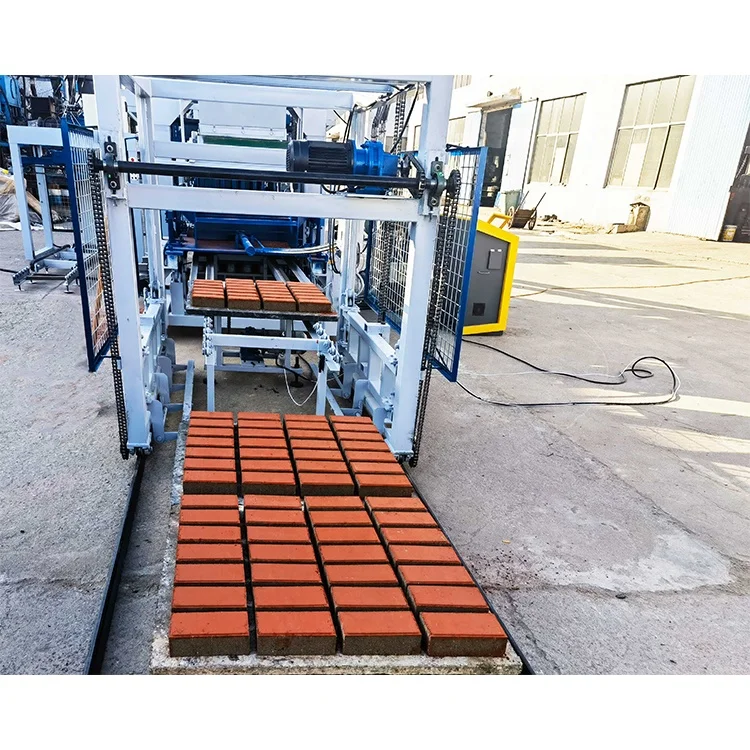
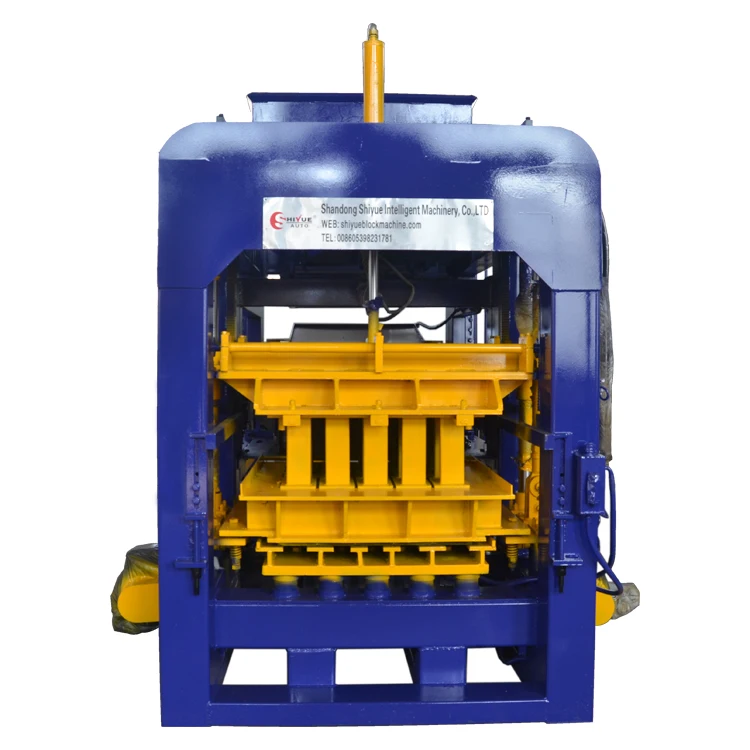 High quality block machine