

Troubleshooting Mobile Block Machine QMY6-25 & QMY10-15 for Gov Works
Most mobile block machine failures on government sites are not electrical glitches but mechanical consequences of improper site leveling.
When a QMY10-15 vibration issues report lands on your desk during a critical public housing phase, the instinct is often to check the PLC or hydraulic valves. However, the root cause frequently lies in the foundation. Mobile block machines operate without fixed concrete foundations, making them uniquely sensitive to ground instability. Rapid troubleshooting requires prioritizing mechanical leveling and hydraulic stability over electrical checks. This approach minimizes downtime and ensures consistent block quality under the high-intensity schedules typical of government public works construction.
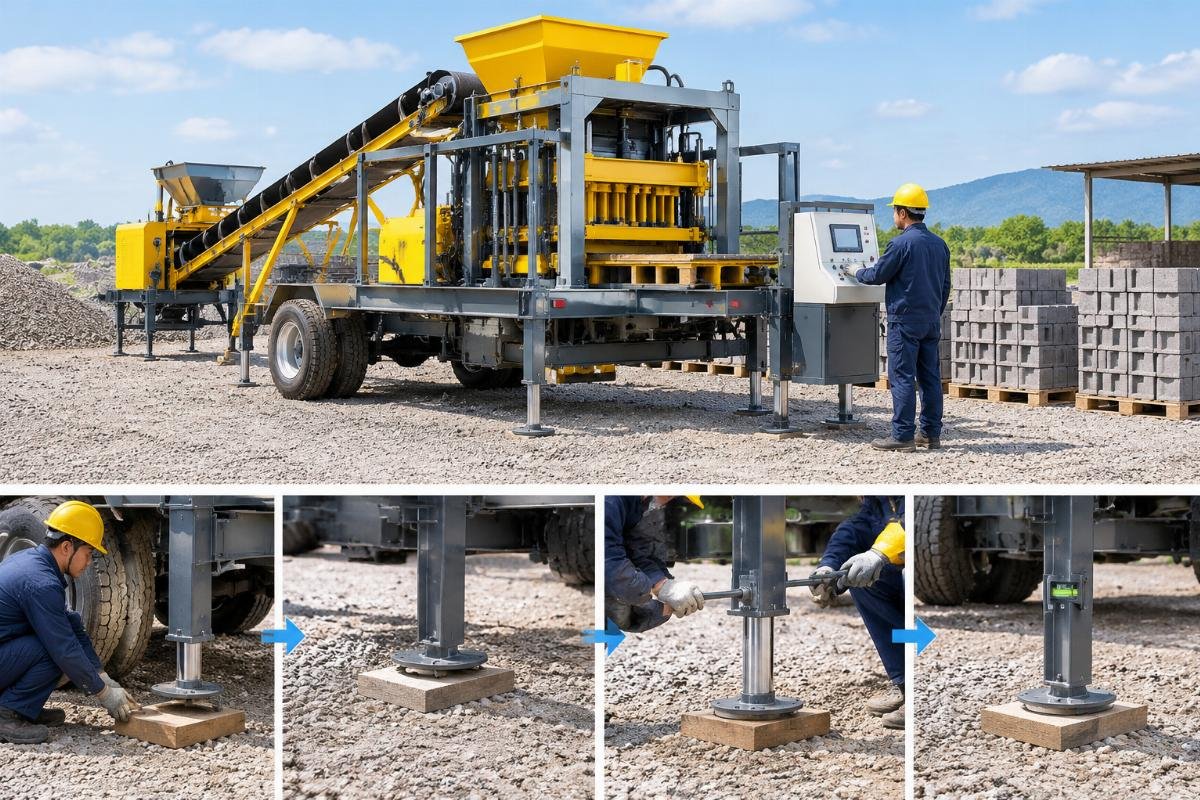
The transition from logistics documentation to field support revealed a pattern: machines shipped in perfect condition often failed within days of arrival at remote government sites. The common denominator was not manufacturing defect but site preparation. Understanding this shift in perspective is crucial for site engineers who need immediate solutions without waiting for factory support.
Why Do Mobile Machines Fail More Often on Government Sites?
High-intensity schedules and temporary site conditions exacerbate mechanical wear far faster than standard commercial operations.
Government infrastructure projects, such as affordable housing complexes or rural road paving, often operate on tight deadlines with continuous shifts. Unlike stationary plants with permanent foundations, mobile units like the QMY6-25 are deployed on compacted gravel or temporary earth pads. These surfaces settle unevenly under the dynamic load of vibration and compaction cycles. [NEED_CITE: impact of temporary foundations on heavy machinery stability]
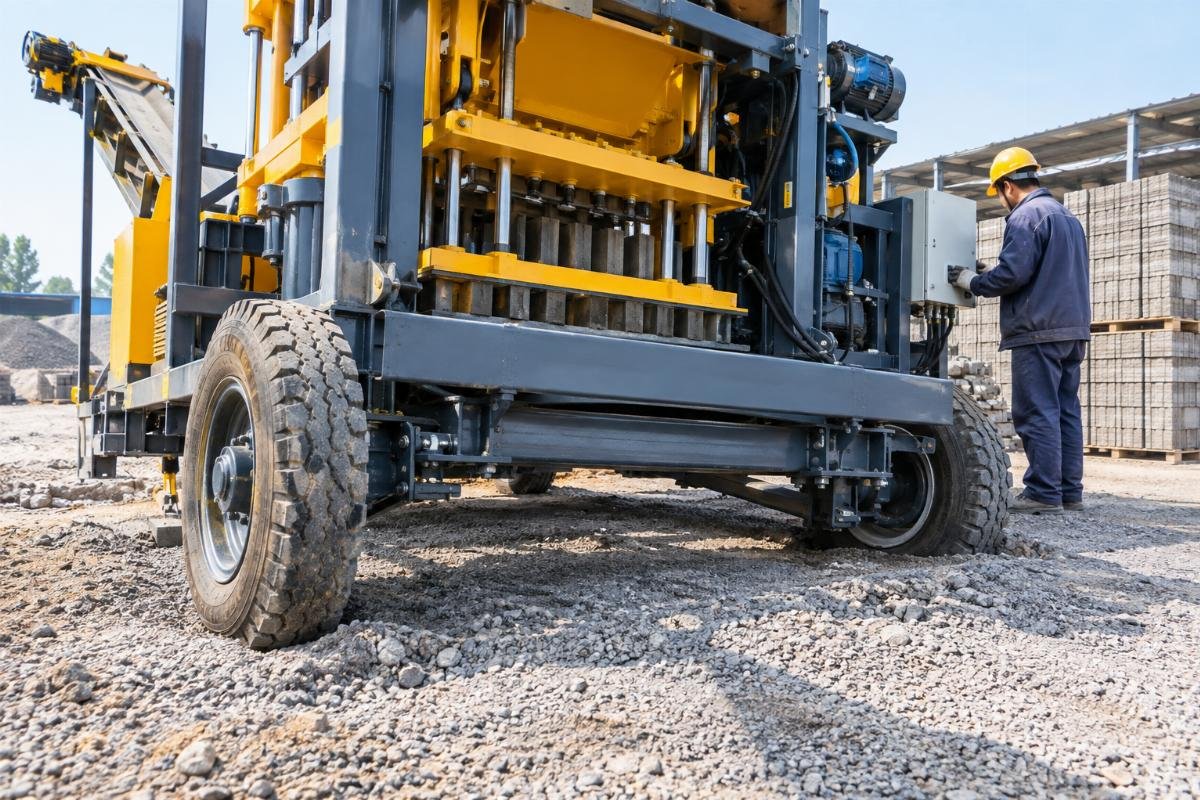
The stress on the chassis is significant. When the ground shifts even slightly, the frame twists, causing misalignment in the mold box and vibration table. This misalignment leads to premature wear on guide rods and seals. In one instance, a project in a humid coastal region faced repeated stoppages because the soil softened after rain, altering the machine’s level by several millimeters overnight. The operator attempted to compensate by increasing hydraulic pressure, which only accelerated seal failure.
Mobile block machine troubleshooting in these environments must account for environmental variables. The lack of a rigid foundation means the machine’s structural integrity relies entirely on the initial setup and ongoing monitoring of the base. Ignoring this fundamental aspect leads to a cycle of reactive repairs rather than proactive maintenance.
How to Diagnose Uneven Block Production Quickly?
Start with chassis leveling and mold alignment before checking electrical systems or hydraulic pressures.
Uneven block output is the most common complaint in government project block machine maintenance. Blocks may appear skewed, have varying heights, or show inconsistent density. While operators often suspect the vibration motor or concrete mix, the primary culprit is usually the machine’s physical orientation.
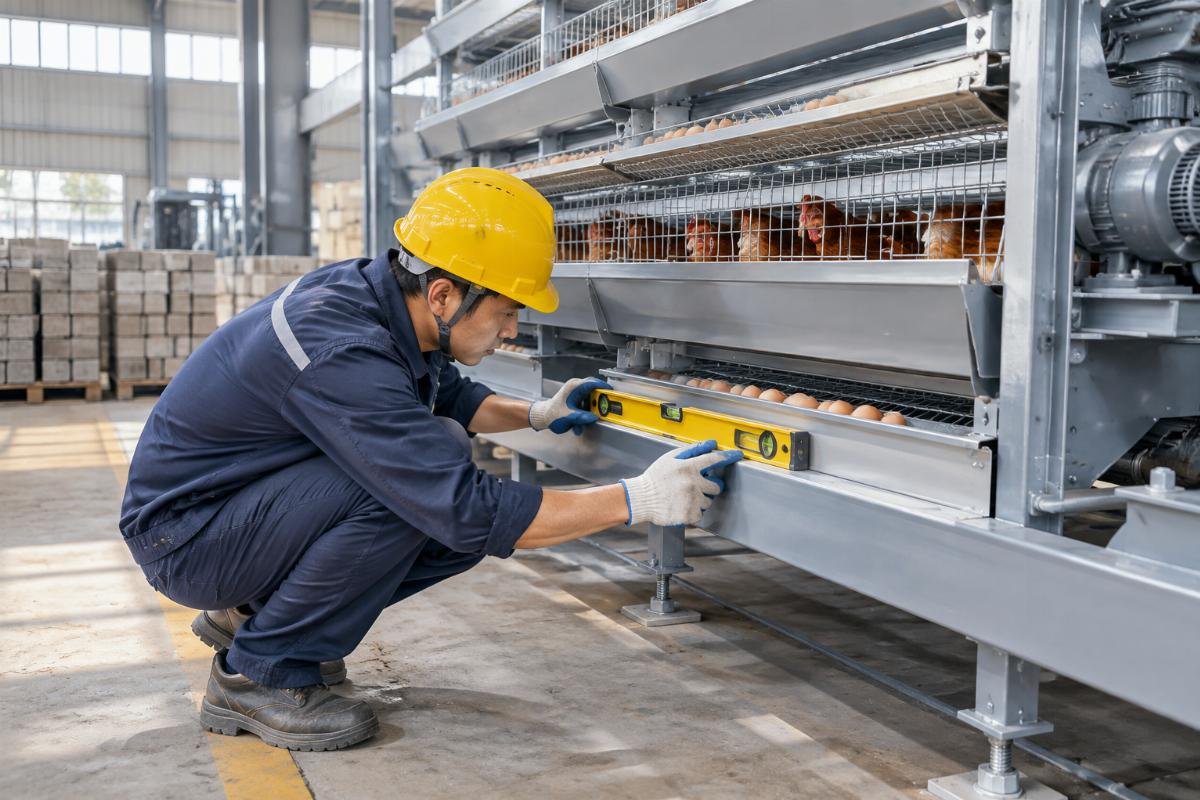
A specific case involved a QMY10-15 producing skewed blocks on a compacted gravel site. The initial response was to adjust the vibration time, which yielded no improvement. The correct diagnostic path began with a spirit level check on the main chassis. The tolerance for mobile units is strict; even a deviation beyond 2mm can cause the mold box to tilt during the compaction phase.
To diagnose this effectively:
- Place a precision spirit level on the main frame rails, both longitudinally and transversely.
- Check the support pads or outriggers for settlement. If the ground has softened, re-leveling is required before any mechanical adjustment.
- Inspect the mold box alignment relative to the vibration table. Misalignment here causes uneven wear and inconsistent block dimensions.
This method bypasses unnecessary electrical diagnostics. Most assume electrical faults cause stoppages, but the majority of mobile machine issues stem from improper site leveling and foundation instability. By addressing the mechanical baseline first, you eliminate the most probable cause of production errors.
What Causes Hydraulic Overheating During Continuous Operation?
Inadequate cooling intervals and contaminated oil are primary culprits in high-demand projects, not necessarily pump failure.
Continuous 24/7 operation during tight government deadlines places extreme thermal stress on hydraulic systems. Operators often notice a drop in pressure or sluggish movement after several hours of non-stop cycling. The immediate reaction is to increase the relief valve setting, which generates more heat and accelerates component degradation.
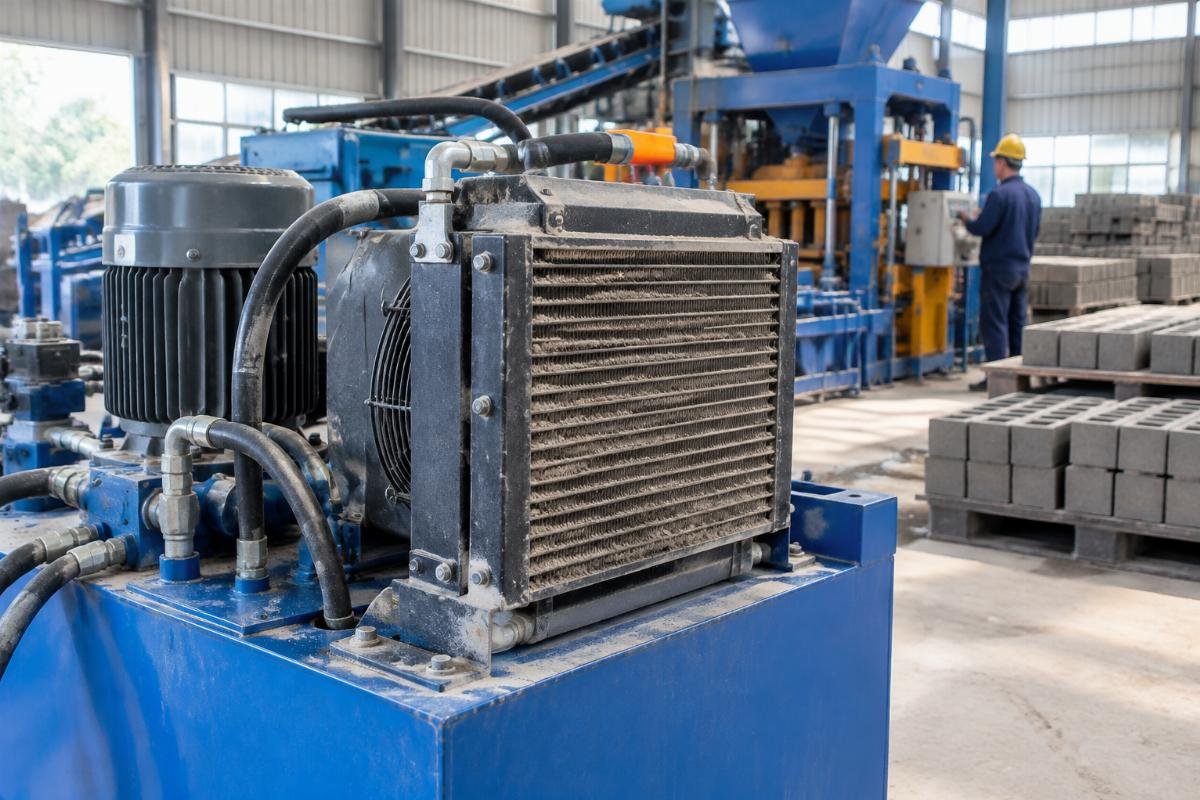
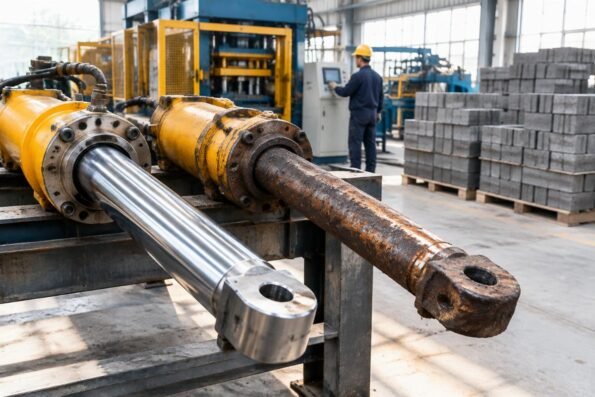
Hydraulic overheating occurs when the system cannot dissipate heat faster than it is generated. In mobile units, the oil reservoir is often smaller than in stationary plants, reducing thermal mass. Additionally, dust and debris from construction sites can clog air filters on oil coolers, reducing efficiency.
Monitoring oil temperature rise after extended operation is critical. If the system runs hot, check the cooler fins for blockage and ensure the oil viscosity matches the ambient temperature. Using oil that is too thick in cold weather or too thin in heat compromises lubrication and increases internal leakage, generating excess heat.
The real fix is optimizing the cycle rather than forcing pressure. Adjusting the vibration time and allowing brief pauses for cooling can stabilize temperatures. This approach preserves seal life and maintains consistent pressure without risking catastrophic pump failure.
How to Prevent Mold Jamming and Extend Component Life?
Adjusting vibration timing and mix consistency reduces stress on ejection mechanisms more effectively than increasing force.
Mold jamming is a frequent issue in humid climates where concrete mix consistency changes rapidly. Operators often attempt to force ejection by increasing hydraulic pressure, which damages the mold walls and stripping plates. This practice leads to costly repairs and prolonged downtime.
The solution lies in process adjustment rather than mechanical force. When the mix is wetter due to humidity, reduce the vibration time by one to two seconds. This prevents the concrete from becoming too fluid and sticking to the mold surfaces. Conversely, if the mix is dry, slightly increase vibration to ensure proper compaction without over-working the material.
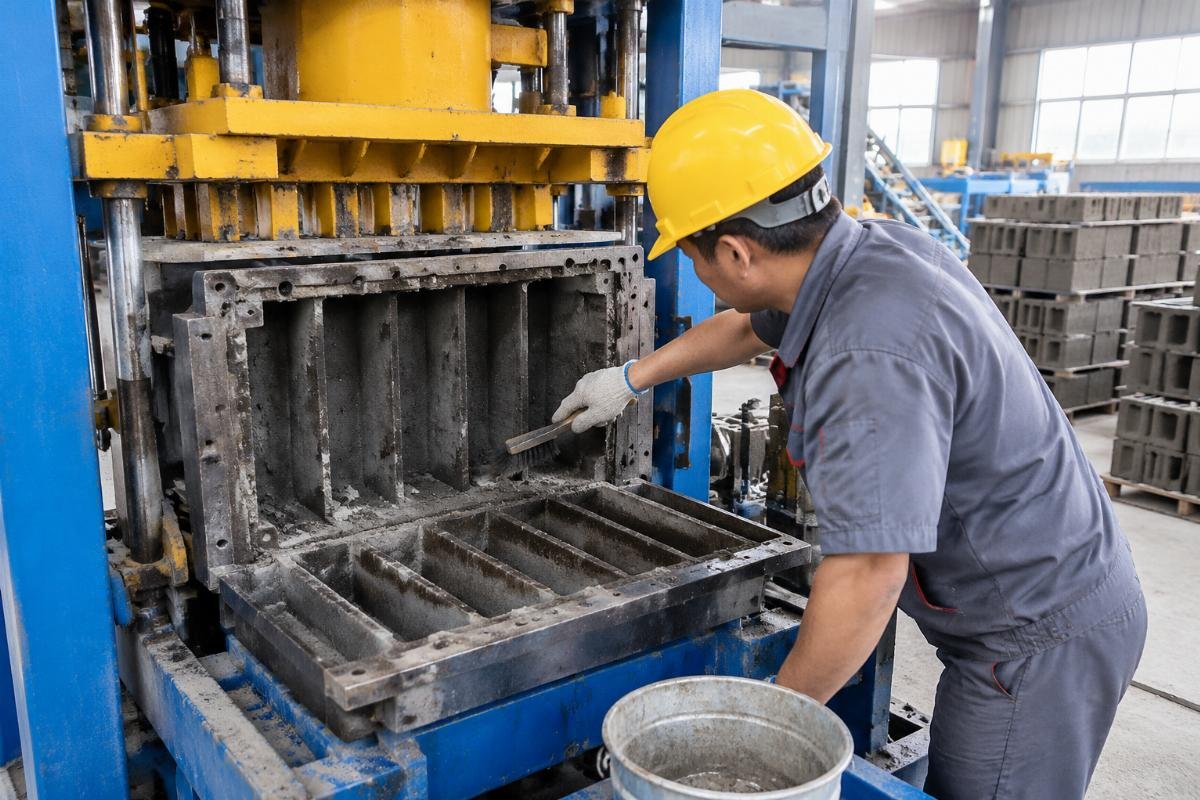
Regular cleaning of the mold interior is also essential. Buildup of cement paste creates friction, making ejection difficult. Using a non-stick coating or regular application of release agents can significantly reduce jamming incidents.
This proactive approach extends the life of the mold and ejection system. It also ensures consistent block quality, which is critical for meeting the stringent standards of government public works contracts. By focusing on mix management and vibration control, you avoid the destructive cycle of forced ejection and subsequent repair.
Conclusion
Effective troubleshooting of mobile block machines prioritizes mechanical stability and process optimization over reactive electrical or hydraulic fixes.
Site engineers must recognize that the unique conditions of government projects demand a different maintenance strategy. By focusing on leveling, hydraulic temperature management, and mix consistency, you can minimize downtime and ensure consistent production. This approach not only resolves immediate issues but also extends the operational life of the equipment, supporting the successful completion of critical infrastructure projects.

Industry expert sharing insights about concrete machinery, block making technology and turnkey production solutions.
View all posts →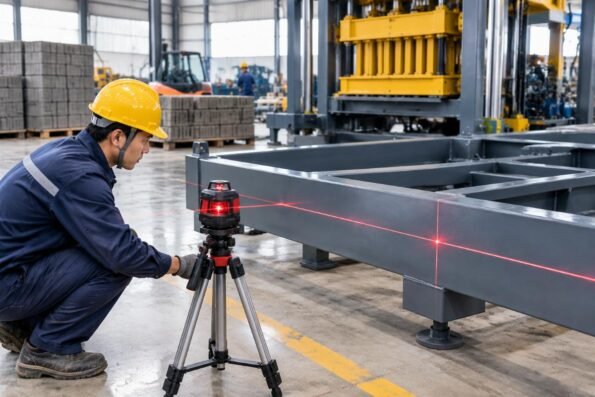
Leave a Reply