

Clean & Sanitize Belt Conveyor for Concrete Block Machine Manufacturer
High-pressure water washing is often the fastest way to destroy your conveyor belt.
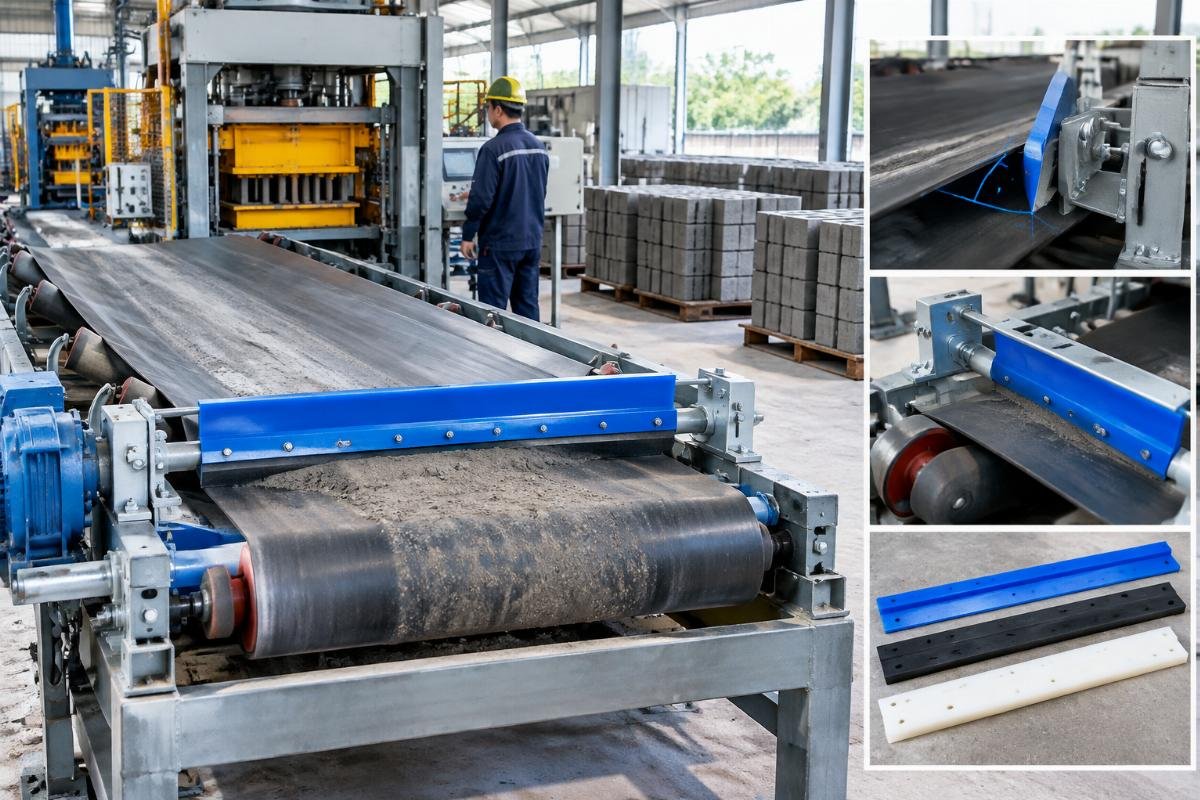
Effective belt conveyor cleaning for block machine operations relies on mechanical scraper geometry and dry removal protocols, not aggressive wet cleaning. The correct approach involves installing polyurethane or rubber blades at a 15-25 degree angle against the belt travel direction, combined with daily visual inspections of roller rotation and tracking. This method prevents fine aggregate from turning into abrasive slurry, significantly extending belt life and reducing unplanned downtime in concrete block production lines.
I still remember the humid air in Lagos, where a local block plant manager showed me a conveyor belt that had failed in less than three months. The surface was scarred with deep gouges, and sticky sand had caked between the rollers, causing severe misalignment. The local maintenance team had been using metal shovels to scrape off the buildup, believing that harder tools meant cleaner belts. In reality, they were accelerating the wear process. Later, in Ethiopia, I encountered a different issue: high heat and dust accumulation led to tracking problems because the scrapers were tightened so aggressively that they generated excessive friction heat. These experiences across Africa and the Middle East revealed a consistent pattern: most production stoppages stem from improper cleaning techniques rather than equipment quality. [NEED_CITE: common causes of conveyor belt failure in aggregate handling]
Understanding why standard cleaning methods fail is the first step toward optimizing your production line. The following sections detail the technical requirements for maintaining aggregate conveyors, focusing on practical adjustments that plant managers can implement immediately.
Why Does Aggregate Buildup Kill Your Conveyor Belt?
Material buildup is not just a cleanliness issue; it is a primary driver of mechanical failure and premature belt degradation.
When fine sand and cement dust mix with moisture, they form a hard, abrasive compound that adheres to the belt surface and roller shells. If left unchecked, this buildup changes the effective diameter of the rollers, causing the belt to drift off-center. [NEED_CITE: impact of roller diameter variation on belt tracking] In high-humidity environments, such as those found in many coastal regions of Southeast Asia and West Africa, this problem accelerates rapidly. The moisture acts as a binding agent, turning loose dust into a concrete-like layer that is difficult to remove once hardened.
Many operators assume that washing the belt with high-pressure water is the best solution. However, this approach often worsens the situation. Water penetrates the belt carcass and mixes with fine particles to create a slurry. This slurry acts as a grinding paste between the belt and the rollers, accelerating wear on both components. Furthermore, frequent wetting can lead to corrosion of the steel roller shafts and bearings, leading to seized rollers that drag against the moving belt. [NEED_CITE: effects of water ingress on conveyor component longevity]
In a project in the Middle East, we observed that dust accumulation was the main culprit for tracking issues. By switching from wet cleaning to a dry mechanical scraping system, the plant reduced manual labor significantly and stabilized belt alignment. The key is to remove material before it bonds to the belt surface, using tools that are softer than the belt cover but tough enough to dislodge aggregate.
The Right Way to Install Scrapers and Cleaners
Correct scraper installation is a precise mechanical adjustment, not a matter of tightening bolts until the noise stops.
The effectiveness of a cleaning system depends largely on the angle and pressure of the scraper blade relative to the belt. A common mistake is installing the blade perpendicular to the belt or applying excessive downward force. This creates high friction, generating heat that can degrade the rubber cover of the belt and cause the edges to fray. [NEED_CITE: optimal scraper blade angle for conveyor cleaning]
For most aggregate applications in concrete block manufacturing, the ideal installation angle is between 15 and 25 degrees relative to the direction of belt travel. This angle allows the blade to glide over the surface, lifting debris away rather than digging into the belt. The choice of blade material is equally critical. For abrasive aggregates like crushed stone and sharp sand, polyurethane blades offer superior wear resistance compared to standard rubber. However, for finer materials, rubber blades provide a better seal and are less likely to damage the belt if small stones get trapped.
| Parameter | Incorrect Practice | Correct Practice |
|---|---|---|
| Blade Angle | Perpendicular (90 degrees) or too steep | 15-25 degrees against belt travel |
| Blade Material | Metal or worn-out hard plastic | Polyurethane or specialized rubber |
| Contact Pressure | Maximum tension to stop all leakage | Light contact allowing slight flex |
| Cleaning Method | High-pressure water washing | Dry mechanical scraping and brushing |
In one startup case in Southeast Asia, new operators were using metal shovels to clean the belt during operation. This practice caused immediate damage to the belt cover, leading to frequent replacements. After implementing a proper rubber-blade cleaner system and training the staff on correct adjustment procedures, the replacement costs dropped noticeably within the first year. [NEED_CITE: cost benefits of proper conveyor maintenance protocols]
When integrating these systems into a new plant, it is essential to consider the specific aggregate type. Shiyue’s turnkey training for QT series lines includes specific maintenance protocols that address these nuances, ensuring that operators understand how to adjust scrapers for different material mixes. This attention to detail helps maintain consistent production quality and reduces long-term operational costs.
Daily Maintenance Routine to Prevent Costly Downtime
A structured daily inspection routine is more effective than reactive repairs after a breakdown occurs.
Preventive maintenance does not require complex tools or extensive downtime. It relies on consistent visual checks and simple physical inspections performed by operators at the start of each shift. The goal is to identify minor issues before they escalate into major failures that halt production. [NEED_CITE: recommended daily inspection checklist for industrial conveyors]
The first step is to check roller rotation. Seized rollers act as brakes, causing localized wear on the belt and increasing motor load. Operators should listen for unusual noises and look for flat spots on the roller shells, which indicate that the roller has stopped turning. Next, inspect the belt tracking. If the belt is drifting to one side, it may be due to uneven buildup on the rollers or misaligned idlers. Correcting tracking issues early prevents edge damage and material spillage.
Another critical check is the condition of the scraper blades. Over time, blades wear down and lose their effectiveness. If the blade is worn unevenly, it may leave streaks of material on the belt, which can accumulate and cause further problems. Replacing blades proactively is far cheaper than replacing a damaged belt. Additionally, operators should ensure that safety guards are in place and that no loose tools or debris are near the moving parts.
In a high-volume plant in Latin America, the implementation of a simple daily checklist reduced unexpected stoppages significantly. Operators were trained to spend five minutes at the start of each shift inspecting the conveyor system. This small investment of time paid off by preventing several potential major failures during peak production periods. The routine included checking for buildup under the belt, verifying scraper contact, and ensuring that emergency stop cords were accessible.
Common Mistakes That Damage Belts and How to Avoid Them
Most belt damage is self-inflicted through well-intentioned but technically flawed maintenance practices.
One of the most prevalent errors is the use of inappropriate cleaning tools. As seen in the Lagos example, metal shovels and screwdrivers are sometimes used to remove stuck material. These tools easily puncture or slice the belt cover, creating entry points for moisture and debris that lead to internal carcass corrosion. Instead, plants should use wooden or plastic scrapers for manual cleaning when necessary, and rely on installed mechanical cleaners for routine maintenance.
Another common mistake is over-tensioning the belt. Operators often tighten the belt to improve tracking or reduce slippage, but excessive tension puts immense stress on the bearings, shafts, and the belt itself. This can lead to premature bearing failure and stretching of the belt, which requires costly splicing or replacement. Proper tension should be just enough to prevent slip under full load, not enough to eliminate all sag. [NEED_CITE: guidelines for conveyor belt tensioning]
Misalignment of the conveyor structure is also a frequent issue. If the head and tail pulleys are not parallel, the belt will naturally drift to one side. Adjusting the tracking idlers can correct minor drift, but significant misalignment requires structural adjustment. Ignoring this root cause and constantly adjusting the belt leads to uneven wear and eventual failure.
In a project involving an upgrade to a fully automatic line, we noticed that the previous manual setup had severe alignment issues. By realigning the frame and installing proper training idlers, we stabilized the belt movement. This correction, combined with the right cleaning protocol, ensured that the new automated system operated smoothly from day one. Avoiding these common pitfalls requires a shift in mindset from reactive fixing to proactive care.
Conclusion
Proper maintenance is the backbone of reliable concrete block production.
Effective belt conveyor cleaning for block machine operations is not about using the most forceful method, but the most appropriate one. By focusing on correct scraper angles, suitable blade materials, and consistent daily inspections, plant managers can significantly extend equipment life and minimize downtime. These practical steps, grounded in field experience across diverse climates, offer a low-cost path to higher efficiency and profitability.

Industry expert sharing insights about concrete machinery, block making technology and turnkey production solutions.
View all posts →
Leave a Reply