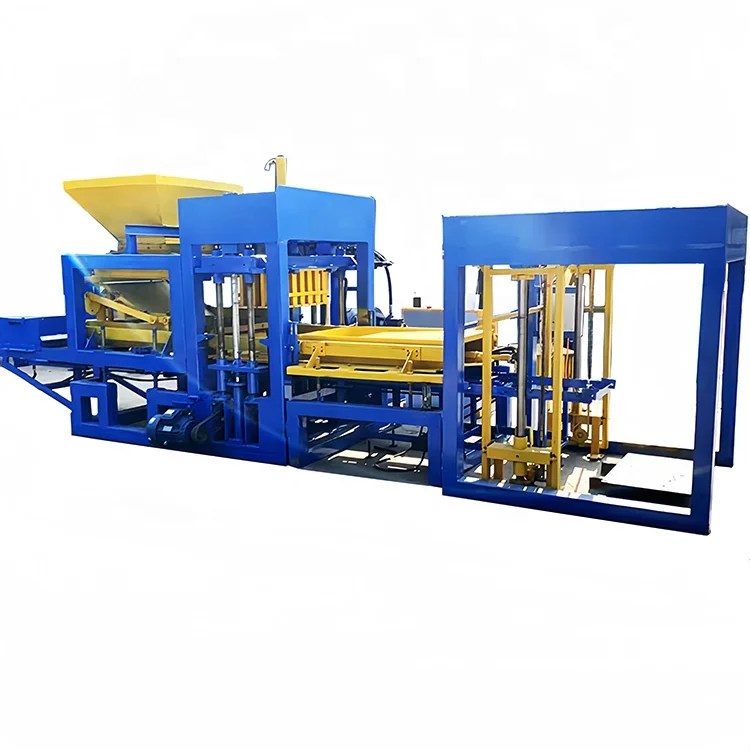
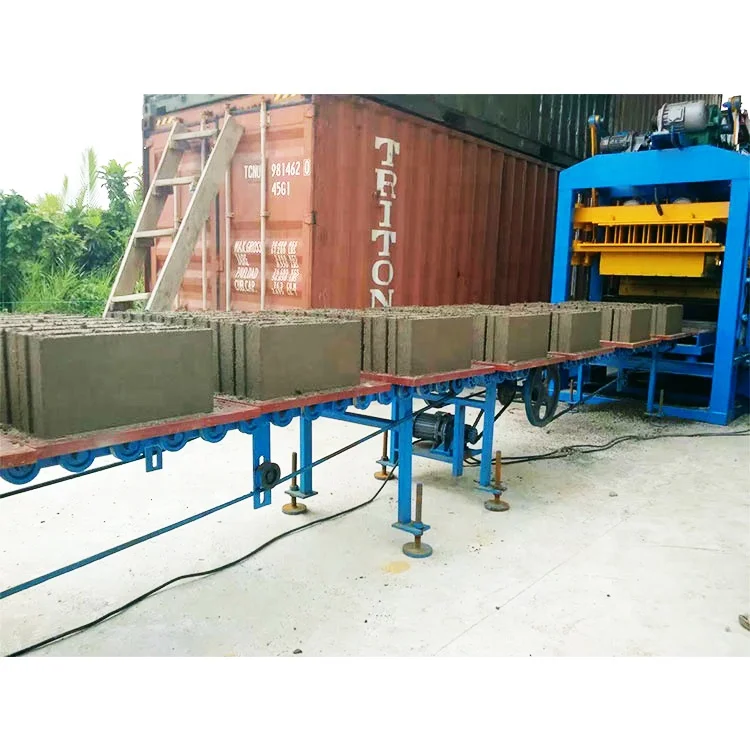
Matched System Configuration — the QTJ4-40 is specified with pallet, mould and handling as a complete entry-level tier so small workshop buyers see the real daily footprint before they commit.
Technical Specifications
| Parameter |
Value |
| Model |
QTJ4-40 |
| Product Type |
Small Manual Cement Block Making Machine |
| Machine Power |
9.5 kW |
| Molding Cycle |
40 s |
| Output Capacity |
2,000–2,500 pcs / 8 h (basis not stated in source — confirm block format) |
| Theoretical Output (400×200×200 mm hollow, 4 pcs/mould) |
360 pcs/h, 2,800 pcs/day |
| Theoretical Output (400×150×200 mm hollow, 5 pcs/mould) |
450 pcs/h, 3,600 pcs/day |
| Theoretical Output (225×112.5×60 mm solid brick, 9 pcs/mould) |
800 pcs/h, 6,400 pcs/day |
| Vibration Type |
Bed mould vertical vibration + upper mould compression vibration |
| Pallet Size |
850 × 450 mm |
| Overall Dimensions |
1,350 × 1,460 × 1,800 mm |
| Machine Weight |
1 T |
| Automation Level |
Semi-automatic (top die push-pull, automatic scraper, manual pallet handling) |
| Voltage |
Configurable to buyer local voltage and frequency |
| Mould Compatibility |
Hollow blocks, paving bricks, solid bricks (mould change required) |
| Operating Labor |
One worker |
Application Suitability
| Application |
Material or Output |
| Small workshop hollow block production |
Concrete, sand, cement, fly ash with local aggregate |
| On-site block making for housing projects |
Hollow blocks in 400×200×200 mm and 400×150×200 mm formats |
| Paving brick manufacturing for municipal or residential use |
Crushed stone, sand, cement mixes |
| Solid brick runs for infill and partition walls |
225×112.5×60 mm format in standard concrete mix |
| First plant setup by entrepreneurs |
Low-investment entry with single-operator workflow |
What "2,000 Pieces per Day" Actually Means for a Small Block Machine Manufacturer
The number is meaningless until you know which block format was in the mould.
Most small block machine manufacturer catalogues quote a single headline figure without naming the block size, mix design, or shift length behind it. A workshop buying on that headline number often discovers on the first production day that the machine cannot reach it with the hollow block their market actually demands. I have stood on site watching operators count finished pieces at noon and realise the day will end well short of the brochure promise. The gap is not a machine fault — it is a quotation fault. [NEED_CITE: realistic output calculation methods for concrete block production]

Where the QTJ4-40 Sits in the Full Machine Range
The QTJ4-40 occupies the entry tier for buyers who need dependable output without the capital outlay of a fully automatic line. Its semi-automatic layout keeps one operator on pallet handling while the top die push-pull mechanism and automatic scraper take over the forming stroke. For a buyer surveying the complete range, this model answers the question of whether a small workshop can start producing immediately and scale later by adding automation stations rather than replacing the press.
Footprint and Plant Layout for Entry-Level Buyers
At 1,350 × 1,460 × 1,800 mm, the machine fits inside a standard workshop bay alongside a small mixer and a curing rack area. The 850 × 450 mm pallet size must be cross-checked against the curing space the buyer already has, because pallets that do not match the rack dimensions create a bottleneck that has nothing to do with the press itself. A small block machine manufacturer should confirm pallet compatibility before dispatch, not after arrival. [NEED_CITE: pallet size and curing rack alignment in block plant design]
Dual Vibration, Hydraulic Pressure and Local Aggregate
The bed mould vertical vibration combined with upper mould compression vibration compacts the concrete mix from two directions during the 40-second cycle. Vibration force and pressure must match the buyer’s actual aggregate gradation — a mix high in fine volcanic ash, for example, absorbs vibration differently than clean river sand, and the resulting block density drops if the settings stay at catalogue defaults. The 9.5 kW motor provides enough force for standard concrete mixes, but the real test is whether the amplitude and dwell time are tuned to the material that arrives at the hopper every morning.
The Cost of Skipping the Voltage Conversation
Voltage, frequency, and control panel language are the last items confirmed on many orders, yet they sit at the heart of commissioning delays. A 9.5 kW motor wound for 380 V / 50 Hz will not run correctly on a 440 V / 60 Hz supply without rewinding or a transformer, and the extra weeks spent solving this on site are weeks the machine does not earn. I have seen a brand-new press sit idle under a tarp because the local electrician could not read the panel labels. [NEED_CITE: voltage and frequency standards by export market]
Why Procure This Tier from a Focused Block Machinery Source
Block machinery is the sole product focus here, so the QTJ4-40 arrives with mould, pallet and handling specified as one matched system rather than assembled from separate suppliers. Configuration is set against the buyer’s actual mix design and local aggregate, not a catalogue default. Mould design covers the formats the buyer’s market sells, and custom drawings are available when the local demand falls outside standard sizes. Automation level is selectable, meaning a buyer can start semi-automatic and add automatic pallet feeding or stacking later without changing the press.
Documentation & Verification
- Line layout and capacity calculation stating the block format assumed for each output figure
- Machine specification sheet with voltage, frequency and panel language confirmed before production
- Mould drawing and format list showing included sizes and additional mould options
- Factory test record on the buyer’s target block format before dispatch
- Packing photographs and customs documentation support for smooth clearance
Installation, Commissioning & Support
- Foundation pad sized to the 1,350 × 1,460 mm footprint with level tolerance confirmed
- Dedicated circuit matched to the 9.5 kW motor rating and buyer’s local voltage
- Machine ships as a single assembled unit; on-site setup limited to electrical connection and mould fitting
- First-run commissioning with amplitude and dwell time adjusted to the buyer’s actual aggregate
- Operator training covering mould change procedure and daily vibration system inspection
- Wear parts and mould compatibility list provided for first replacement cycle planning
Before You Send the Inquiry
To size this entry-level tier correctly, share the block formats your market buys, the aggregate sources within trucking distance of your site, and the voltage and frequency your facility runs on. If you already have curing racks or a forklift, include the pallet dimensions those assets accommodate.
Frequently Asked Questions
Q: How is the daily output of the QTJ4-40 calculated, and which block format does it assume?
A: The quoted 2,000–2,500 pieces per eight-hour shift is a general range without a stated format. Theoretical figures are tied to specific sizes: 2,800 pieces for 400×200×200 mm hollow blocks, 3,600 for 400×150×200 mm hollow, and 6,400 for solid bricks. Request the capacity calculation document that maps each output figure to its exact block format and cycle time.
Q: What voltage options are available, and can the control panel language be changed?
A: Voltage and frequency are configured to the buyer’s local supply before production starts. The control panel language is confirmed at the same stage. This prevents commissioning delays that occur when a small block machine manufacturer ships a default electrical setup and the buyer discovers a mismatch on arrival.
Q: How does the QTJ4-40 compare to the next tier up in the range?
A: The next tier adds automatic pallet feeding and stacking, raising throughput and reducing labour. The QTJ4-40 keeps manual pallet handling and a single-operator workflow, suited to workshops where investment must stay low and the curing area is compact. Buyers can add automation stations later without replacing the press.
Q: Which pallet material and size should I choose for this machine?
A: The standard pallet size is 850 × 450 mm, but the material — timber, bamboo, or composite — depends on your curing method and forklift type. Timber suits air-cured yards, while composite handles steam curing. Confirming pallet choice before production ensures the curing rack spacing and handling equipment match from day one.
Q: How long does a mould change take on the QTJ4-40?
A: Mould change on this semi-automatic tier involves unbolting the current mould, fitting the replacement, and adjusting the scraper and upper die alignment. On a small block machine manufacturer’s standard setup, a prepared operator can complete the swap within a portion of a shift, but exact timing depends on familiarity and tool readiness.

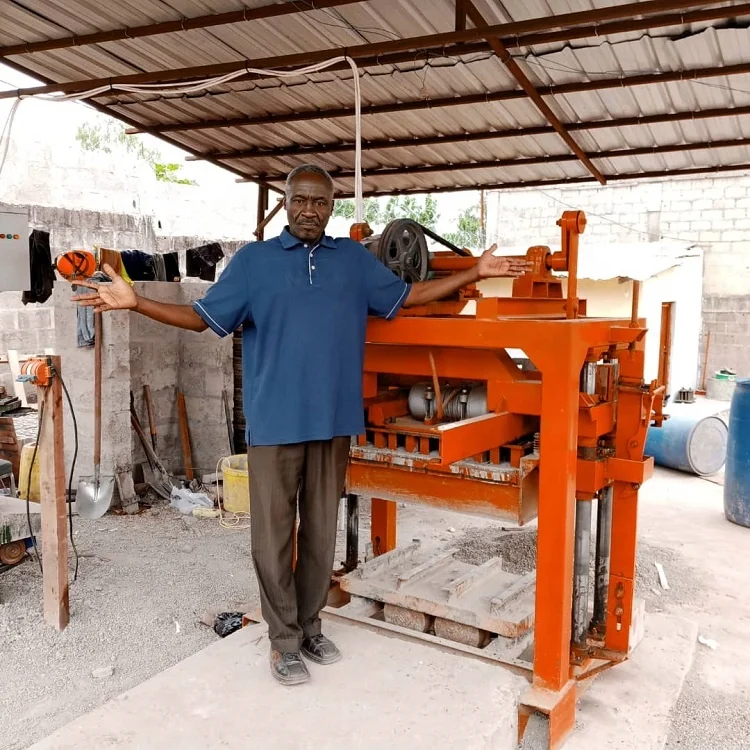
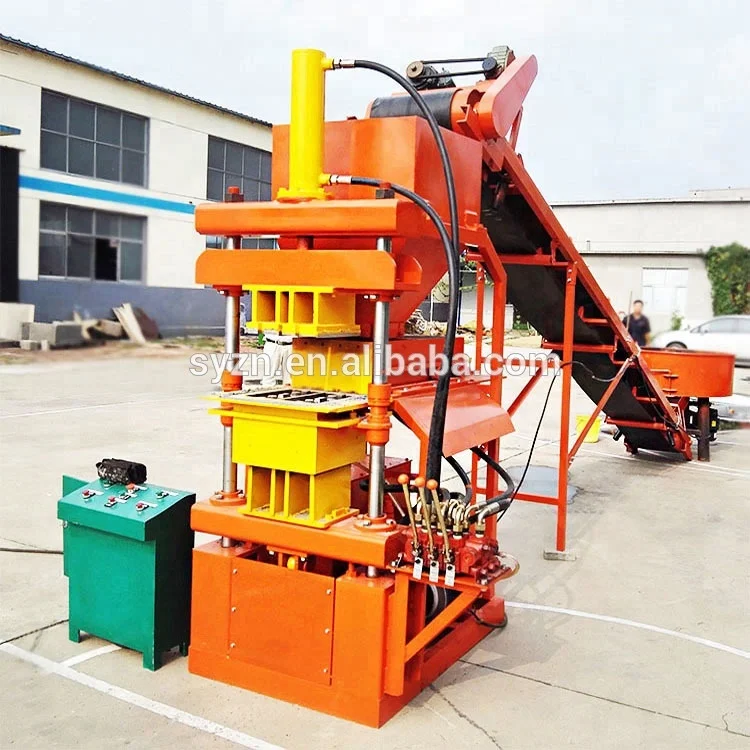 High quality block machine