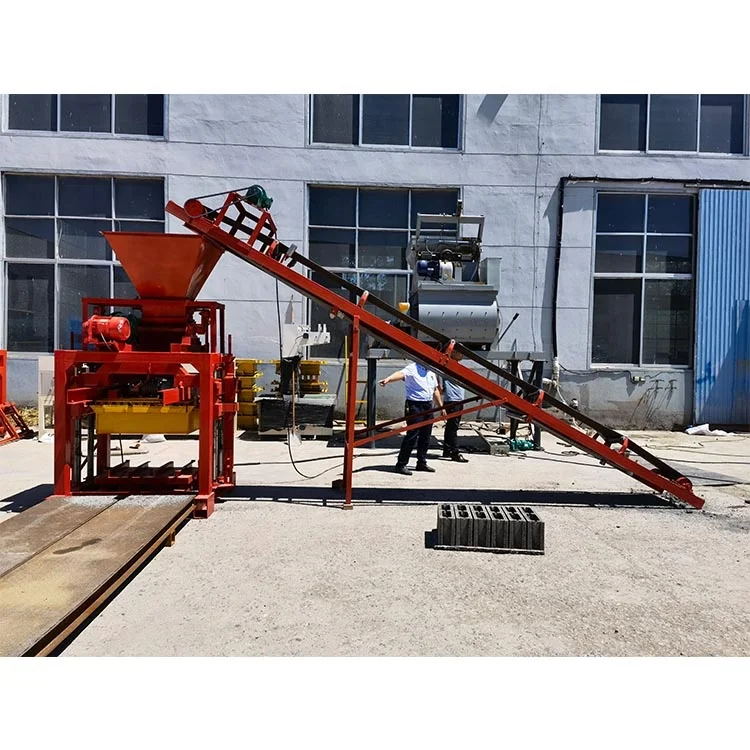
Full Range Positioning — the QTJ4-40 anchors the entry tier of our semi-automatic lineup, giving buyers a clear starting point before stepping up to higher output or full automation.
Technical Specifications
| Parameter |
Value |
| Model |
QTJ4-40 |
| Product Type |
Semi-Automatic Cement Block Making Machine |
| Machine Power |
9.5 kW |
| Molding Cycle |
40 s |
| Theoretical Productivity (400×200×200 mm hollow block, 4 pcs/mould) |
360 pcs/h, 2800 pcs/day |
| Theoretical Productivity (400×150×200 mm hollow block, 5 pcs/mould) |
450 pcs/h, 3600 pcs/day |
| Theoretical Productivity (225×112.5×60 mm solid brick, 9 pcs/mould) |
800 pcs/h, 6400 pcs/day |
| Capacity (general) |
2000–2500 pcs/8 hours (basis not stated in source — confirm block format and material) |
| Raw Materials |
Concrete, sand, cement, fly ash, lime, gypsum |
| Vibration System |
Bed mould vertical vibration + upper mould compression vibration |
| Pallet Size |
850 × 450 mm |
| Overall Dimensions (L×W×H) |
1350 × 1460 × 1800 mm |
| Machine Weight |
1 T |
| Voltage |
Configurable to buyer’s local supply |
| Automation Level |
Semi-automatic (top die push-pull, automatic scraper, manual pallet handling) |
| Condition |
New |
Application Suitability
| Application |
Material or Output |
| Small-scale hollow block production |
Crushed stone, sand, cement mix |
| Solid brick manufacturing for local masonry |
Sand, fly ash, cement, lime |
| Paving brick molding for walkways and yards |
Concrete with fine aggregate |
| On-site block production for building contractors |
Locally sourced aggregate and cement |
| First plant setup for entrepreneurs |
Concrete, sand, cement, gypsum blends |
Why the QTJ4-40 Block Machine Manufacturer Quotation Must Name the Block Format
Capacity numbers without a format label are not capacity numbers — they are placeholders.
I once stood next to a QTJ4-40 that was supposed to produce a steady stream of hollow blocks all day. The buyer had looked at a single headline figure and placed an order. What the brochure did not mention was that the figure assumed a specific block size and a clean, well-graded aggregate. The local sand at his site carried a high clay content, which absorbed water unevenly and slowed the vibration compaction cycle. Daily output dropped sharply until we re-tuned the vibration frequency and adjusted the mix on the spot [NEED_CITE: effect of aggregate clay content on block compaction cycle time]. That is why every QTJ4-40 block machine manufacturer proposal we issue lists output per format, per mould, so the buyer sees the real number before the container is booked.

Where the QTJ4-40 Sits in the Full Machine Range
The QTJ4-40 occupies the entry tier of our block machine lineup, positioned below the fully automatic and high-output models. Buyers who are setting up a first workshop or adding a secondary production line typically start here. The semi-automatic configuration keeps the initial investment manageable while still delivering consistent moulding through the top die push-pull mechanism and automatic scraper. As production volume grows, the same buyer can move to a higher tier in the range without redesigning the entire plant layout.
Planning the Upgrade Path from Semi-Automatic to Full Line
Starting with a QTJ4-40 does not lock a buyer into manual pallet handling forever. The machine footprint and pallet size leave room to add automatic pallet feeding, stacking, and cubing stations later. We have seen contractors begin with this model on a project site, then relocate the press into a permanent plant and bolt on the surrounding equipment as demand increases [NEED_CITE: typical block plant expansion sequence from semi-automatic to automatic]. Knowing the upgrade path before the first machine arrives prevents costly layout changes down the road.
Reading the Specs That Actually Shape Daily Output
The 9.5 kW motor drives both the bed mould vertical vibration and the upper mould compression vibration. These two forces working together determine how densely the concrete is packed into the mould cavity, which directly affects block strength and surface finish. A 40-second molding cycle means the operator completes roughly one pallet every 40 seconds under steady conditions, but actual rhythm depends on how quickly pallets are fed and removed by hand. The 850 × 450 mm pallet size must match the curing racks and forklift tines already on site — ordering a pallet size that conflicts with existing handling equipment creates a bottleneck that no machine speed can fix. At 1350 × 1460 × 1800 mm and one tonne, the press fits into a compact workshop bay, but the surrounding space for raw material storage, wet pallets, and curing racks typically requires several times the machine footprint.
The Hidden Cost of Skipping the Configuration Conversation
When a buyer selects a block machine based only on a headline capacity figure and skips the configuration dialogue, the problems surface after commissioning. Moulds that do not match the formats the local market actually buys sit unused while the buyer pays for custom replacements. Pallets that are too large for the curing area force workers to stack blocks by hand in aisles, slowing the entire cycle. Voltage confirmed too late can delay energizing the press for days while a transformer is sourced locally [NEED_CITE: common commissioning delays caused by unconfirmed voltage and frequency]. These are not machine defects — they are specification gaps that a thorough pre-order conversation would have closed.
Why Source the QTJ4-40 Through This Range
We focus exclusively on block machinery, so the press, moulds, pallets, and handling equipment are specified as one matched system rather than assembled from unrelated suppliers. Every QTJ4-40 configuration is set against the buyer’s actual mix design and local aggregate, not pulled from a catalogue default. Mould design covers the formats the buyer’s market sells, with custom drawings available when standard sizes do not fit. The automation level is selectable, allowing a buyer to start semi-automatic and add stations later. Installation support includes operator training so the crew knows how to adjust vibration and pressure before the first production run.
Documentation & Verification
- Line layout and capacity calculation stating the block format assumed for each QTJ4-40 output figure
- Machine specification sheet confirming motor power, vibration type, and pallet dimensions
- Mould drawing and format list so block dimensions can be checked against local market demand
- Pallet specification sheet noting size, material, and compatibility with buyer’s curing racks
- Voltage and control language confirmation recorded before production begins
- Factory test record on the buyer’s target block format before dispatch
Installation, Commissioning & Support
- Verify floor leveling within the 1350 × 1460 mm footprint before the QTJ4-40 is set in place
- Confirm dedicated circuit matching the confirmed voltage and frequency for the 9.5 kW motor
- Machine ships partially assembled; allow time for on-site bolting of vibration table and upper frame
- First-run parameter setting covers vibration frequency and pressure matched to the buyer’s mix
- Operator training on top die push-pull operation, scraper adjustment, and manual pallet handling rhythm
- Wear parts list and mould maintenance schedule provided at handover
What to Include in Your Inquiry
Tell us the block formats you sell most — hollow block dimensions, solid brick sizes, or paver shapes — along with the daily volume you need. Share the raw materials available locally, especially the sand or aggregate type and any fly ash or lime sources. Confirm your site voltage and frequency, and let us know the pallet size your curing area and forklift are built around. With those details, we can position the QTJ4-40 correctly within the range or recommend a different tier if your output target falls outside this model’s envelope.
Frequently Asked Questions
Q: How is the QTJ4-40’s daily capacity calculated, and which block format does each figure assume?
A: Each capacity figure is tied to a specific block size and mould cavity count. For example, the 400×200×200 mm hollow block figure assumes four cavities per mould and a 40-second cycle. Different block formats change the pieces-per-mould count, so the daily total shifts accordingly. We provide a format-by-format breakdown in every proposal.
Q: Where does the QTJ4-40 sit in the full machine range, and what is the upgrade path?
A: The QTJ4-40 is the entry-tier semi-automatic model. Buyers can later add automatic pallet feeding, stacking, and cubing stations around the same press, or move to a higher-output automatic model in the range. Starting here keeps initial investment low while leaving room to grow.
Q: What voltage and frequency options are available, and is the control display language configurable?
A: Voltage is configured to match the buyer’s local supply before production. Frequency and control language are confirmed at the same stage so the machine arrives ready to energize. We record these details in writing to avoid commissioning delays.
Q: Which pallet size does the QTJ4-40 use, and how should I plan my curing area around it?
A: The standard pallet size is 850 × 450 mm. Your curing racks, shelving spacing, and forklift tines should all accommodate this dimension. Confirming compatibility before ordering prevents a handling bottleneck that would slow the entire production cycle.

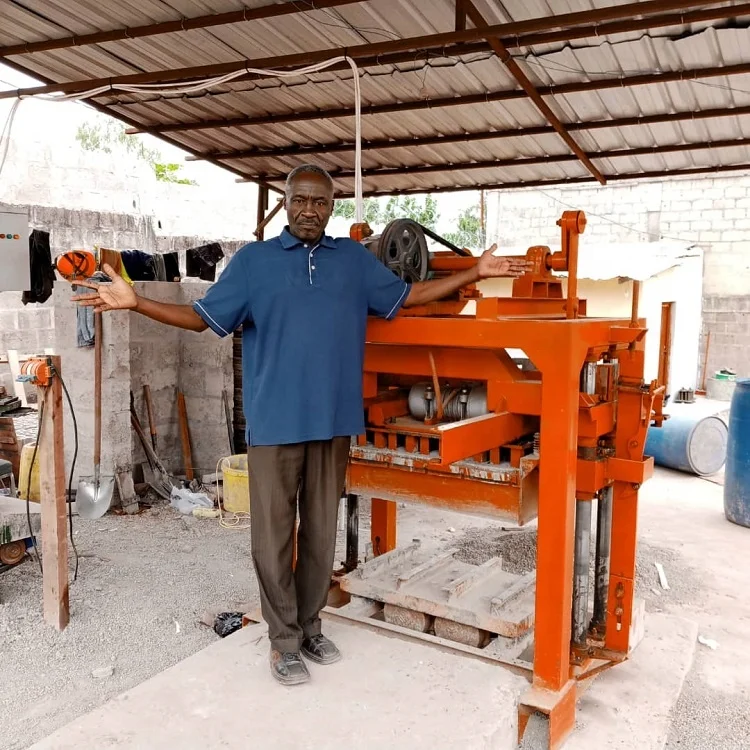
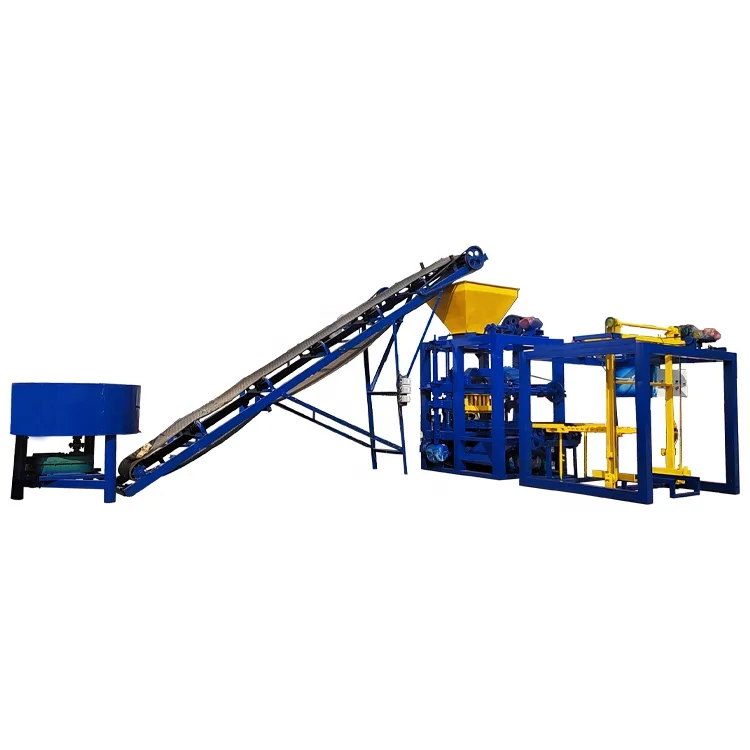 High quality block machine
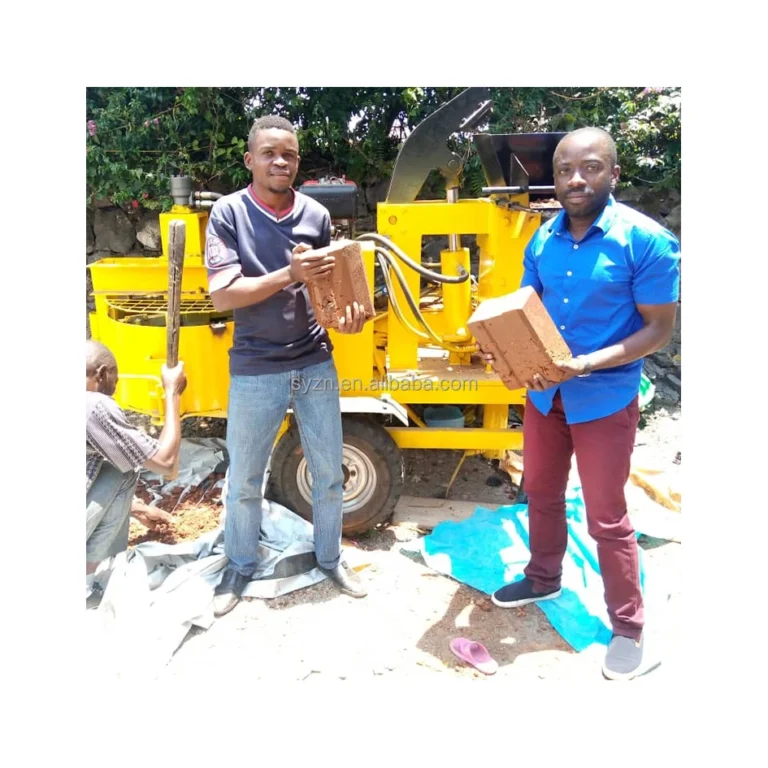
![QTJ4-35 Block Making Machine for Hollow Block – Manufacturer 记录ID 80035 数字之和:8+0+0+3+5=16 第一层:shiyueblockmachine.com → FULL MACHINE RANGE → 全品类目录类角色 → Manufacturer / Factory Supply / Full Range 第三层:16 % 3 = 1 → Factory Supply 第二层:16 % 6 = 4 → [品类词] with [核心配置] – [站点修饰词] Block Making Machine with Belt Conveyor – Factory Supply](https://shiyueblockmachine.com/wp-content/uploads/2026/04/H226555bf51f44687a8dd9cee247a6ab2c.webp)