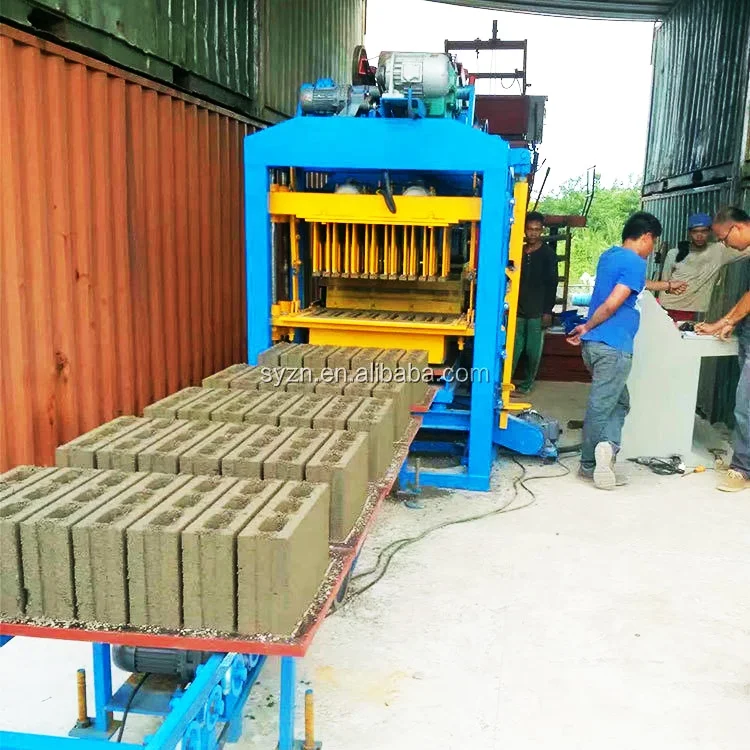
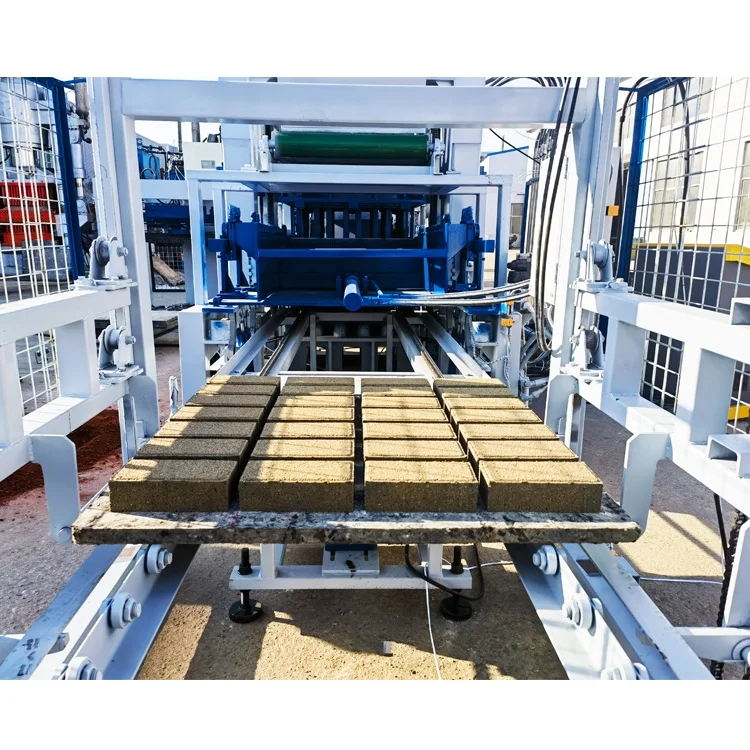
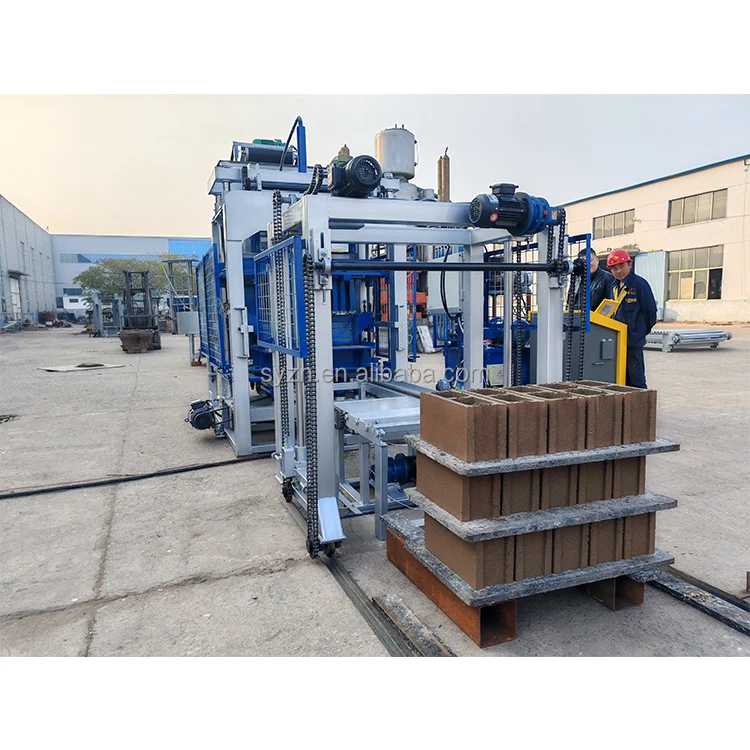
Matched System Sizing — the QTJ4-40 is specified against your actual mix design and local aggregate rather than a default catalogue setting, ensuring the vibration force and hydraulic pressure match what you can actually source on site.
Technical Specifications
| Parameter |
Value |
| Model |
QTJ4-40 |
| Product Type |
Semi-Automatic Concrete Block Making Machine |
| Machine Power |
9.5 kW |
| Molding Cycle |
40 s |
| Output Capacity |
2,800 pcs/day (400×200×200 mm hollow block, 4 pcs/mould); 3,600 pcs/day (400×150×200 mm block, 5 pcs/mould); 6,400 pcs/day (225×112.5×60 mm block, 9 pcs/mould) |
| Capacity per Hour |
360 pcs/h (basis: 400×200×200 mm block, 4 pcs/mould) |
| Machine Weight |
1 T |
| Overall Dimensions (L×W×H) |
1350×1460×1800 mm |
| Pallet Size |
850×450 mm |
| Vibration Type |
Bed mould vertical vibration + upper mould compression vibration |
| Mould Features |
Top die push and pull with automatic scraper |
| Control System |
Semi-automatic (basis not stated in source — confirm PLC or relay logic) |
| Voltage |
According to buyer’s local voltage (basis to be confirmed) |
| Raw Materials |
Concrete, sand, cement, fly ash, lime, gypsum, etc. |
Application Suitability
| Application |
Material or Output |
| Hollow block production |
Concrete, sand, cement, fly ash aggregates for 400×200×200 mm and 400×150×200 mm formats |
| Solid block production |
Dense concrete mixes for load-bearing wall units |
| Paver block production |
Fine aggregate and cement blends for 225×112.5×60 mm paving formats |
| Interlocking brick production |
Stabilized soil or cement-sand mixes for dry-stack interlock profiles |
| Fly ash brick production |
Fly ash, lime, gypsum, and sand blends for lightweight masonry units |
Why Quoted Capacity Rarely Matches Your Daily Count
A capacity number means nothing without the block format and pieces-per-mould it was measured against.
Every supplier quotes the semi-automatic concrete block making machine for sale at a certain pieces-per-hour figure, yet few state which block size was used for that test. I have watched buyers receive their machines only to find the 400×200×200 mm hollow blocks they actually sell take twice as long to press as the small pavers the quote was based on. Their daily output drops to a fraction of what they budgeted for, and suddenly the whole business plan is under pressure. [NEED_CITE: block format impact on real cycle time and daily output]

Where the QTJ4-40 Sits on the Machine Range
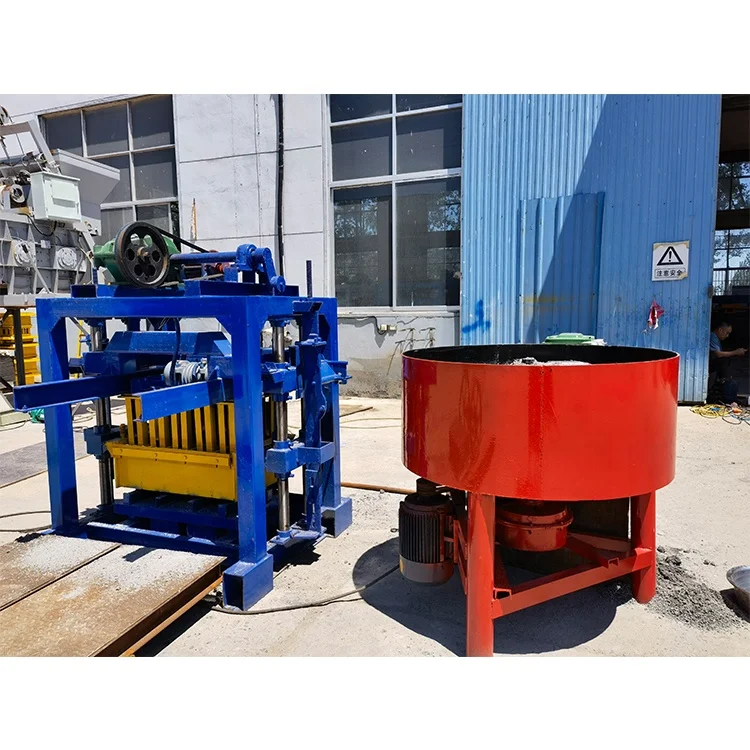
The QTJ4-40 occupies the semi-automatic tier, positioned between mobile egg-laying units and fully automatic stacking lines. Buyers evaluating a first semi-automatic concrete block making machine for sale usually compare this tier against higher-automation models that handle pallet feeding and cubing automatically. The trade-off is straightforward: lower capital outlay and a smaller footprint in exchange for manual pallet handling at the press discharge.
This tier suits a compact workshop layout or a contractor who needs block production on a construction site without dedicating a full industrial plot. The 1350×1460×1800 mm frame fits into a modest bay, and the 9.5 kW power draw stays within a standard three-phase workshop supply.
Understanding the Semi-Automatic Tier Decision
Choosing semi-automatic over automatic is a calculation about labour cost versus capital cost in your specific market. In regions where manual pallet handling does not dominate the wage bill, the QTJ4-40 delivers the same vibration force and mould compression as higher-tier machines at a fraction of the line investment. [NEED_CITE: labour cost versus automation level decision in block production]
The 850×450 mm pallet size is a critical dimension here — it must align with whatever curing racks and forklifts you already operate or plan to purchase. A pallet mismatch means your curing area cannot accept the output, and you end up restacking blocks by hand before they set. That is the kind of detail that only surfaces when the whole line is specified as one system.
How Vibration and Mould Compression Shape Block Density
The bed mould vertical vibration paired with upper mould compression vibration is the forming principle behind consistent block density. Vertical vibration alone settles the aggregate, but without simultaneous top compression the upper face of a hollow block can remain porous. The dual-action approach on the QTJ4-40 compresses both planes during the 40-second cycle, producing a uniform core and surface finish.
The automatic scraper on the top die removes excess material after each press stroke, which keeps the next cycle clean and reduces the manual scraping an operator would otherwise do between presses. For the 850×450 mm pallet, this translates to a flat, dimensionally accurate block that stacks evenly on curing racks — critical when you are stacking several layers high during the hydration period.
The Cost of Skipping Configuration
When a buyer orders a semi-automatic block press based on catalogue output alone, the downstream problems accumulate quietly. The pallet size might not fit existing curing racks, forcing a restack operation that negates any time saved in pressing. Voltage and frequency left unconfirmed can stall commissioning for weeks while a transformer or motor swap is arranged. [NEED_CITE: consequences of unconfirmed pallet and electrical specifications in block machinery imports]
Mould availability is another blind spot — if the format your local market actually buys is not included in the first shipment, the machine sits idle until a replacement mould arrives. These are not equipment failures; they are specification gaps that should have been closed during the proposal stage.
What Makes This Procurement Path Different
Block machinery is the only product line here, which means the press, mould, pallet, and handling equipment are specified as one matched system rather than assembled from unrelated suppliers. The QTJ4-40 configuration is set against your actual mix design and local aggregate, not a default setting that works in the factory test but fails on your sand.
Mould design covers the formats your market sells, including custom drawings when standard catalogues do not match local dimensions. The semi-automatic tier is a starting point — if output demand grows, the automation level can be upgraded to include pallet feeding and stacking without replacing the press itself. Installation support includes operator training on your specific block format and mould change procedure.
Documentation & Verification
- Line layout and capacity calculation stating the block format assumed for each output tier
- Machine specification sheet confirming voltage, frequency, and control display language
- Mould drawing and format list matching your local block dimensions
- Pallet specification aligned with your curing rack system and forklift capacity
- Factory test record run on your target block format before dispatch
Installation, Commissioning & Support
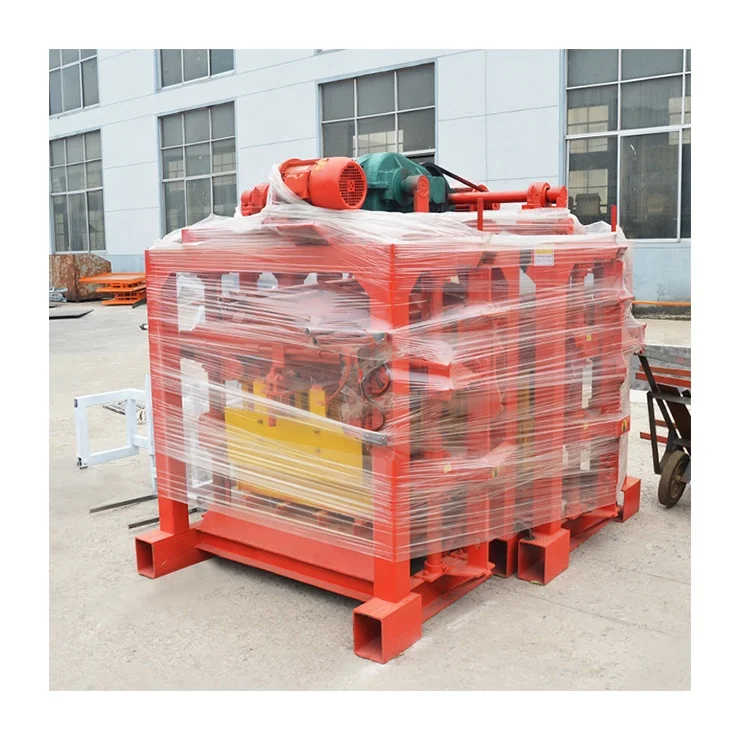
- Foundation pad must support the 1 T machine weight and vibration loads across the 1350×1460 mm footprint
- Dedicated three-phase circuit rated for 9.5 kW continuous draw at confirmed local voltage and frequency
- Machine ships as a single unit requiring on-site electrical connection and mould installation
- First-run commissioning covers cycle timing adjustment and vibration force tuning for your aggregate mix
- Operator training includes manual pallet handling sequence and 40-second mould cycle workflow
- Wear parts list covers mould liners and vibration components with reorder intervals
What to Share Before Quoting
Send your target block format with exact dimensions, the daily output you need for that specific format, and a sample of your local sand or aggregate so the mould and vibration settings can be matched. Confirm your workshop voltage, frequency, and any existing curing racks or forklifts so the pallet size is cross-checked before production begins.
Frequently Asked Questions
Q: How is the output capacity of the QTJ4-40 verified for different block formats?
A: Each capacity figure is tied to a specific block size and pieces-per-mould count. The 2,800 pieces per day assumes 400×200×200 mm hollow blocks at 4 pieces per mould, while 6,400 pieces per day assumes 225×112.5×60 mm blocks at 9 pieces per mould. We provide a capacity calculation document stating the format assumed so you can match it against your actual product mix.
Q: Where does the semi-automatic tier fit compared to automatic and mobile machines?
A: The QTJ4-40 sits between mobile egg-laying units and full automatic lines with pallet stacking. It offers higher output than mobile machines with a smaller footprint than automatic lines, requiring manual pallet handling. Buyers choose this tier when capital budget is limited or when a compact workshop layout is the constraint.
Q: What electrical specifications need confirming before the QTJ4-40 enters production?
A: Voltage and frequency must match your local grid, and the control display language should be confirmed so operators can read cycle data on site. These details are locked in before production begins to avoid commissioning delays. We include the confirmed electrical specification sheet in the shipping documentation.
Q: Is pallet handling and stacking included in the machine quotation?
A: The QTJ4-40 quotation covers the press unit with semi-automatic control and manual pallet handling. Pallet feeding, stacking, and curing rack systems are separate line stations that can be added to the scope. We specify the full line layout so you know exactly what is included and what to budget for the complete setup.
Q: Can the automation level be upgraded after starting with the QTJ4-40?
A: Yes, the semi-automatic configuration is a starting tier. Pallet feeding and stacking modules can be added later without replacing the press. This lets buyers begin production at a lower investment level and scale automation as demand grows, provided the initial pallet size and line layout were planned with that upgrade path in mind.

 High quality block machine