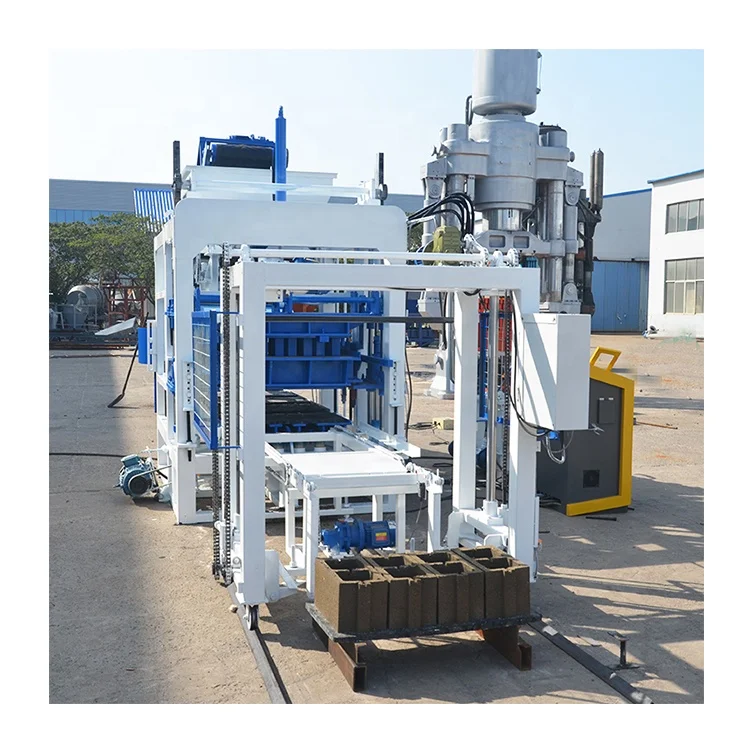
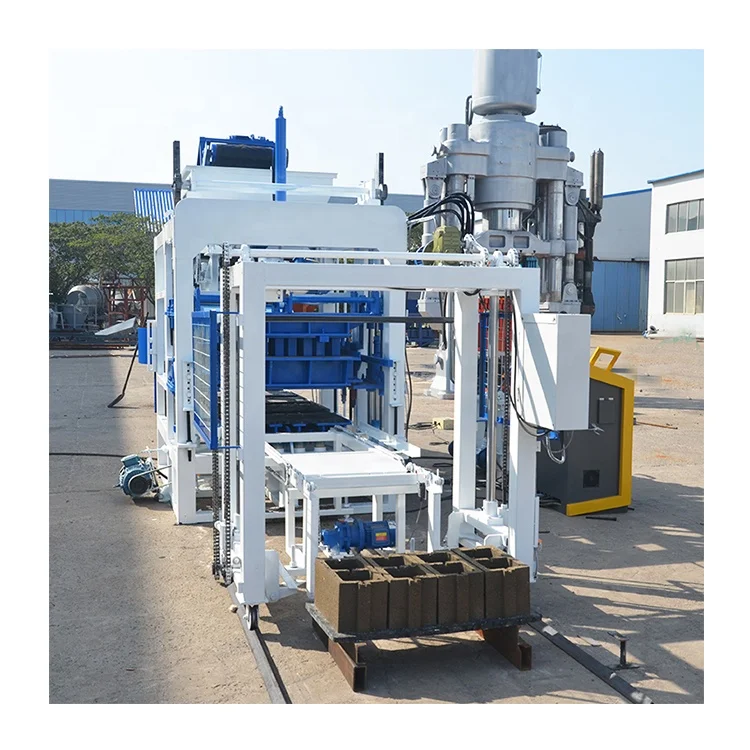
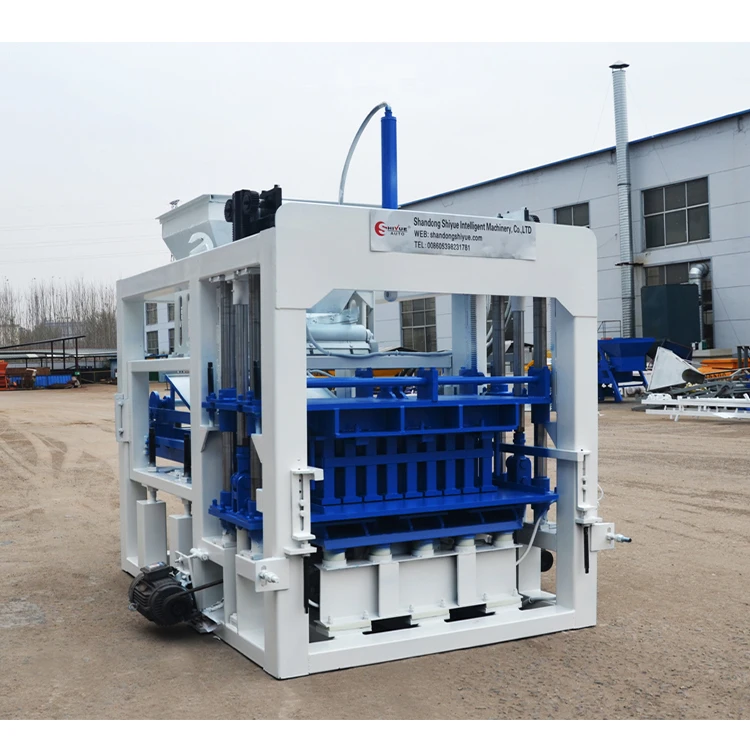
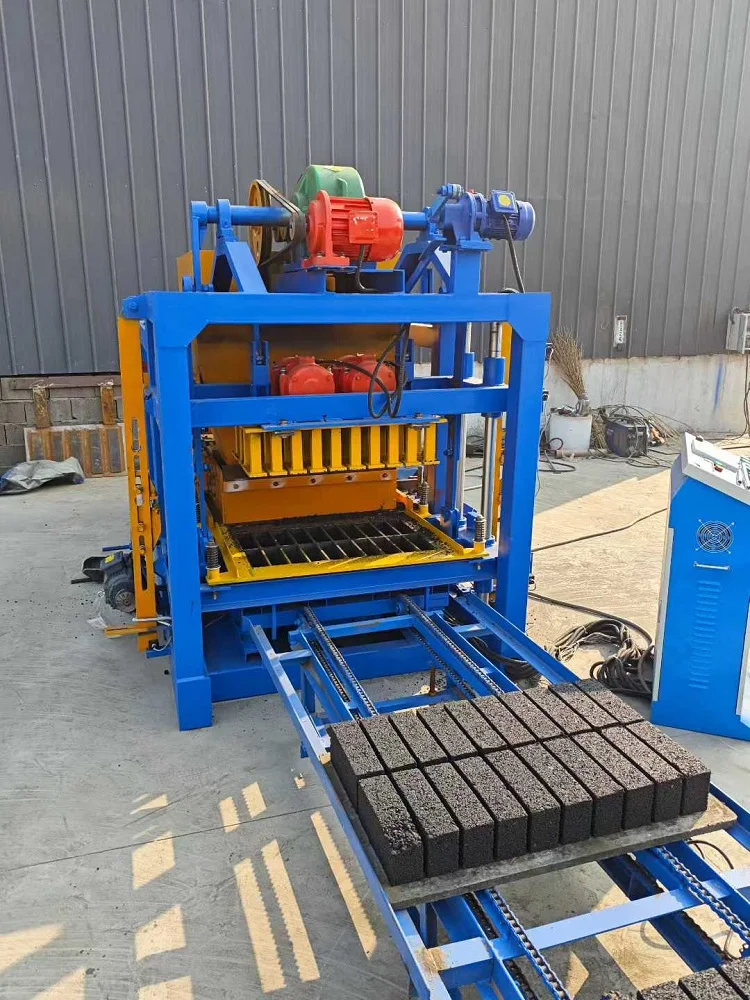
Single-Machine Focus, Matched System — The QTJ4-24 is specified as one press within our block machine range, with pallet, mould and automation tier chosen together so capacity and footprint align before the order is placed.
Technical Specifications
| Parameter |
Value |
| Model |
QTJ4-24 |
| Product Type |
Semi-Automatic Concrete Block Making Machine |
| Overall Dimensions (L×W×H) |
2060×1730×2580 mm |
| Main Vibration Form |
Platform vibration (dynamic + static table) |
| Vibration Frequency |
4200 r/min |
| Pallet Size |
880×480×38 mm |
| Molding Cycle |
26 s (basis not stated in source — confirm block format) |
| Total Power |
14.25 kW |
| Exciting Force |
35.5 kN |
| Rated Pressure |
15 MPa |
| Control System |
Electro-mechanical integration (PLC not specified) |
| Voltage & Frequency |
380V / 3-phase / 50Hz (customizable) |
| Frequency Converting Control |
Adopted on all motors |
| Mould Format |
Exchangeable moulds |
Application Suitability
| Application |
Material or Output |
| Hollow block production |
Concrete mix with crushed stone, river sand, and cement |
| Solid block manufacturing |
Dense aggregate blends for load-bearing masonry |
| Paving block output |
Fine aggregate and cement for interlocking road surfaces |
| On-site contractor use |
Project-specific batches using locally sourced sand and gravel |
What a "26-Second Cycle" Actually Means for Your Daily Output
A molding cycle number is only meaningful once the block format and local raw material are defined.
Many quotations list a cycle time without saying which block size or wall thickness produced that figure, so the buyer calculates daily output on a best-case hollow block and then discovers solid pavers take considerably longer per cycle. [NEED_CITE: capacity calculation standards for concrete block machines] When I first started quoting machines for Latin American projects, I quoted cycle-based capacity without checking local river sand clay content — the result was slower forming and cracking on demoulding, cutting actual output well below the calculation. The QTJ4-24 semi-automatic block machine manufacturer specification sheet should always pair the 26-second cycle with the exact format and mix it was measured against.

Where the QTJ4-24 Sits in the Full Machine Range
This model occupies the entry-to-mid investment tier of our complete block machine lineup. Buyers comparing options will find it below the fully automatic lines that include pallet feeding, stacking and cubing, and above the mobile egg-laying machines that produce on bare ground without pallets. The QTJ4-24 semi-automatic block machine manufacturer offering is designed for buyers who need a fixed press with consistent vibration output but are not yet ready to invest in full-line automation.
Understanding the Semi-Automatic Tier Positioning
Semi-automatic here means the press cycle is controlled, but pallet handling between the press and the curing area is done by operators or simple conveyors. This keeps the initial capital requirement lower while leaving a clear path to add automatic pallet feeding and stacking later. [NEED_CITE: automation upgrade paths for small block plants] For buyers setting up a first block plant or adding production to an existing distribution business, this tier gives a production foundation without over-investing in capacity that the local market has not yet demanded.
Vibration, Pressure and Pallet: How the Core Parameters Interact
The platform vibration system uses a dynamic and static table structure with low-frequency standby and high-frequency operation, which means the table reaches full vibration force during the compaction phase rather than running at peak draw continuously. The 35.5 kN exciting force works together with the 15 MPa rated pressure to compact the concrete mix — vibration settles the aggregate while pressure locks density, and if either is mismatched to the local mix design, block strength becomes inconsistent. The 880×480×38 mm pallet size determines how many blocks fit per cycle and must match the curing rack spacing and forklift tine width already in use at the buyer’s site. Frequency converting control on all motors reduces mechanical shock at start-up, which matters when the machine runs multiple shifts per day and motor winding heat builds up over time. The total power draw of 14.25 kW falls within the capacity of a standard 3-phase workshop supply, but voltage and frequency must still be confirmed before production to avoid rewiring on arrival.
The Hidden Cost of Skipping Configuration Checks
When the pallet size is chosen without checking the curing area layout, the buyer ends up reconfiguring racks or buying different pallets after the machine arrives — a cost that does not appear on any quotation. [NEED_CITE: pallet handling mismatches in block production] If voltage and control display language are not confirmed before the QTJ4-24 is built, commissioning stalls while waiting for transformer replacements or translated PLC screens. A mould format list not reviewed before ordering means the buyer may discover after delivery that the specific interlocking profile their market needs was never included in the scope.
Why Source This Tier Through a Single-Focus Supplier
Block machinery is our sole product category, so the QTJ4-24 press, its moulds, pallets and supporting equipment are specified as one system rather than assembled from separate vendors. Configuration is set against the buyer’s actual mix design and target block format, not pulled from a catalogue default. Mould design covers the formats the buyer’s market sells, with custom drawings available for non-standard profiles. The automation level is selectable, so a buyer can begin with the semi-automatic tier and add pallet feeding or stacking as volume justifies it. Installation support includes operator training on mould changeover and daily maintenance routines specific to this machine class.
Documentation & Verification
- Line layout with capacity calculation stating the exact block format assumed for the QTJ4-24
- Machine specification sheet confirming voltage, frequency and control language before production
- Mould drawing and format list showing every profile included in the order scope
- Pallet specification matched to the 880×480×38 mm size and buyer curing area
- Factory test record documenting cycle time and block density on buyer’s mix
- Operation and maintenance manual covering vibration table and hydraulic wear parts
Installation, Commissioning & Support
- Floor space of 2060×1730 mm plus clearance for manual pallet handling and operator access
- Dedicated 3-phase circuit rated for 14.25 kW with voltage confirmed to site supply
- Machine ships fully assembled with mould installed; pallet stock loaded in container
- Commissioning includes vibration frequency tuning to buyer’s specific concrete mix
- Operator training covers mould change procedure and platform vibration table maintenance
- Wear parts list identifies hydraulic seals and vibration table components for first reorder
What to Include in Your First Inquiry
To size the QTJ4-24 correctly within our range, share the block formats your market currently sells along with the daily output target for each. Include a description or lab report of your local aggregate and sand so the vibration and pressure settings can be matched to your actual mix. Confirm your site voltage, frequency and preferred control display language so electrical configuration is locked before production begins.
Frequently Asked Questions
Q: How is daily output calculated for the QTJ4-24, and which block format is assumed?
A: Daily output depends on the block format, wall thickness and concrete mix used. A 26-second molding cycle applies to a specific configuration that must be confirmed per order. We provide a line layout document stating realistic output for each block format you plan to produce, not a single generic number.
Q: Where does the QTJ4-24 sit compared to fully automatic block machines?
A: It occupies the semi-automatic tier with a controlled press cycle and manual pallet handling. This tier requires lower initial investment than full automation while leaving a defined upgrade path to add automatic pallet feeding and stacking as production volume grows within our machine range.
Q: What plant footprint and site conditions does this machine require?
A: The press itself measures 2060×1730 mm, with additional floor space needed for pallet staging, curing racks and operator movement. A stable 3-phase power supply at the confirmed voltage and frequency is required, along with a covered curing area matched to the 880×480 mm pallet size.
Q: Can I start semi-automatic and add automation later?
A: Yes. The QTJ4-24 platform supports adding automatic pallet feeding and stacking equipment as a subsequent phase. The upgrade path is defined at the initial order stage so mechanical and electrical interfaces are prepared for later expansion without replacing the core press.
Q: What voltage and frequency options are available for export markets?
A: The standard configuration is 380V / 3-phase / 50Hz, but this is customizable to match local supply standards. Voltage, frequency and control display language must be confirmed before production begins to ensure the machine is ready for commissioning on arrival.

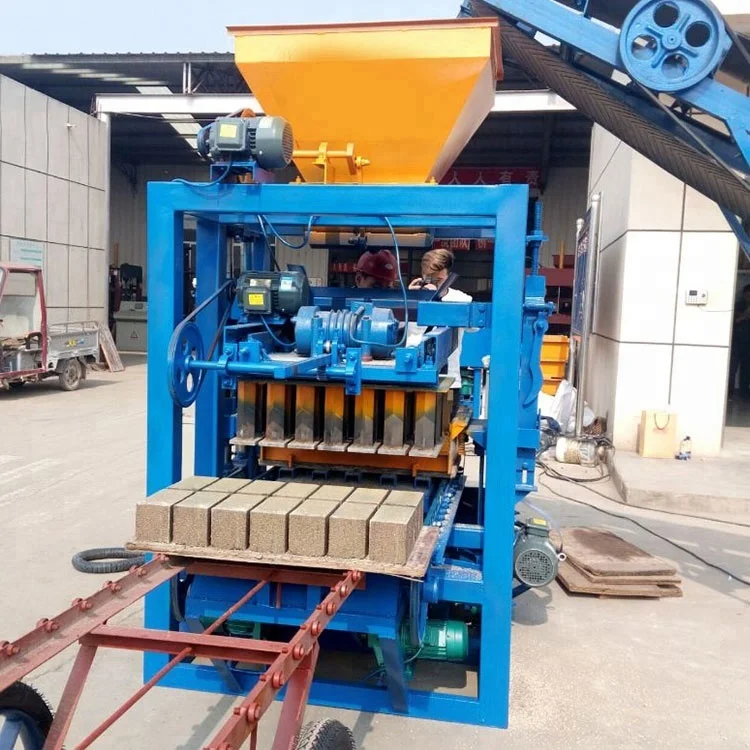
 Automatic block machine