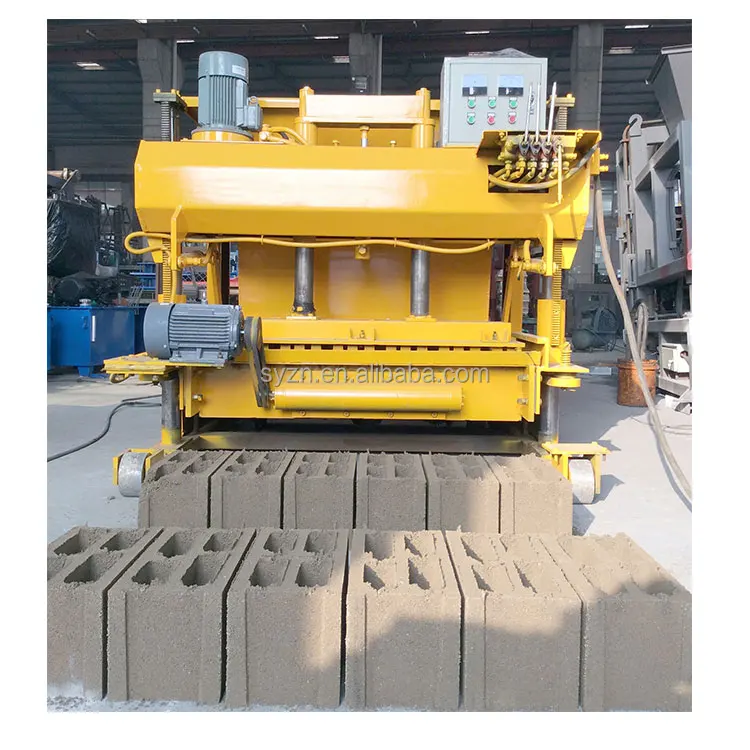
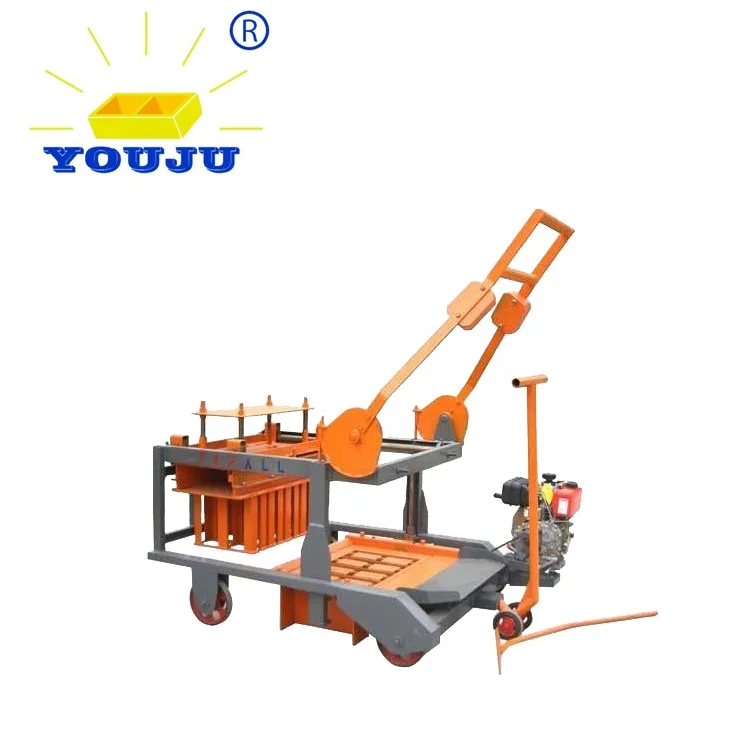
Engine-powered mobility — The QMJ4-45 mobile block making machine eliminates grid dependency and pallet handling, specified against your site conditions rather than a catalogue default.
Technical Specifications
| Parameter |
Value |
| Model |
QMJ4-45 |
| Product Type |
Mobile Egg Laying Block Making Machine |
| Molding Capacity |
4 pcs per mould (basis: 400×200×200mm hollow block) |
| Output Capacity |
3000 pcs/day based on 400×200×200mm hollow block, 8-hour shift; 3500 pcs/day based on 400×150×200mm hollow block, 8-hour shift; 4500 pcs/day based on 400×120×200mm hollow block, 8-hour shift |
| Compaction Method |
Mold vibration only (no hydraulic pressure) |
| Vibration Frequency |
2400 r/min |
| Molding Cycle |
40–45 s depending on block format |
| Demolding Method |
Manual |
| Turning Method |
Manual |
| Total Power |
6 kW |
| Power Source |
Diesel or petrol engine |
| Automation Level |
Manual operation, egg-laying type |
| Pallet Requirement |
None — blocks deposited directly on ground |
| Block Formats Supported |
Hollow block: 400×200×200, 400×150×200, 400×120×200mm |
| Control System |
Not applicable (engine-driven manual operation) |
| Warranty |
One year for the whole machine |
Application Suitability
| Application |
Material or Output |
| On-site housing project production |
Hollow blocks from local aggregate and cement, no fixed plant required |
| Remote rural construction |
Engine-powered operation where grid electricity is unavailable |
| Start-up block yard with limited capital |
Direct ground-laying without pallets, forklifts, or curing racks |
| Infrastructure contractor self-supply |
Mobile deployment to multiple job sites as projects progress |
Why "4500 Blocks per Day" Is Not the Number You Should Plan Around
Real daily output depends entirely on which block format your market actually buys.
When buyers first see the QMJ4-45 mobile block making machine manufacturer literature, the 4500-piece headline catches the eye. That figure applies only to the 120mm hollow block format with a shorter molding cycle. If your local demand centers on 200mm hollow blocks — the most common structural format across the Middle East and Africa — your realistic output sits closer to 3000 pieces per eight-hour shift. I have watched contractors plan a project timeline around the higher number, then scramble to source additional blocks from third-party suppliers mid-build [NEED_CITE: block format demand varies significantly by regional construction code].

Where Engine Power Replaces Infrastructure Assumptions
Most mobile block machines on the market still list a three-phase motor in the specification sheet, which assumes you have reliable grid power at the production site. The QMJ4-45 departs from this by offering diesel or petrol engine drive, meaning the machine can operate at remote construction sites, rural development zones, or any location where grid connection is absent or unstable. This configuration removes one of the most common commissioning delays I encounter — machines sitting idle while the site waits for an electrician to install a dedicated circuit.
What Egg-Laying Design Actually Demands from Your Ground
The egg-laying concept means the machine deposits each molded block directly onto compacted ground and moves forward, leaving the block to cure in place. No pallets, no pallet return system, no pallet storage area. The trade-off is ground preparation: your production surface must be flat, firm, and level within a tight tolerance, because any unevenness transfers into block geometry and compromises wall-course alignment during laying. I have seen first-time operators attempt production on loose sand without compaction, resulting in blocks that cracked before reaching handling strength [NEED_CITE: ground bearing capacity requirements for egg-laying block machines].
Reading the Vibration Frequency and Cycle Time Together
The 2400 r/min vibration frequency operates within a vibration-only compaction method — there is no hydraulic press force supplementing the mold vibration. This means block density and strength rely heavily on the combination of vibration frequency, cycle duration, and mix design. A 40-to-45-second molding cycle is typical for hollow block formats at this vibration level, but the actual cycle you achieve on site will shift based on your aggregate grading, cement content, and moisture percentage. Matching the vibration characteristics to your local sand source — whether it is coarse river sand or fine desert sand — determines whether blocks reach adequate demolding strength consistently.
The Cost of Overlooking What the Quotation Does Not Include
A common disappointment with mobile block machines arrives after delivery when buyers discover that pallet handling, stacking equipment, and curing arrangements were never part of the discussion — because the egg-laying design eliminates pallets but introduces ground preparation and manual stacking requirements instead. For the QMJ4-45, the manual demolding and turning method means your labour plan must account for workers repositioning the machine and handling finished blocks by hand once initial set occurs. Buyers who assume some level of mechanized handling is included find themselves staffing the line with more operators than anticipated [NEED_CITE: labour allocation in manual mobile block production].
What Distinguishes a Matched Configuration from a Catalogue Shipment
Shandong Shiyue Intelligent Machinery Co., Ltd focuses exclusively on block machinery and supporting equipment, which means the QMJ4-45 is not sourced from a generalist trading catalogue and paired with unrelated peripherals. The machine, its moulds, and engine specification are discussed as a system matched to your target block format and site conditions. Mould design covers the hollow block sizes your local market actually demands, including custom drawings when standard formats do not match regional building codes. The automation tier is honest — this is a manual, entry-level machine — and the upgrade path to semi-automatic or pallet-based production is available when your volume grows.
Documentation & Verification
- Line layout and capacity calculation stating the block format assumed for each output figure
- Engine specification sheet confirming fuel type, rated output, and starting method
- Mould drawing and format list showing included block sizes and custom options
- Factory test record with actual cycle times measured per hollow block format
- Operation and maintenance manual covering engine servicing and mould care
Installation, Commissioning & Support
- Ground preparation guidance specifying compaction and flatness tolerances for egg-laying operation
- Engine start-up procedure and fuel system priming covered during on-site commissioning
- First production run supervised with mix adjustment to match your local aggregate source
- Operator training on manual demolding technique and machine repositioning rhythm
- Mould and vibration component wear parts list supplied with recommended replacement intervals
- One-year warranty coverage with remote technical support for engine and mechanical issues
What to Prepare Before Requesting a Quotation
To configure the QMJ4-45 for your project, share the hollow block dimensions your market requires, the daily volume you need to sustain, and whether your site has access to diesel or petrol fuel supply. Details about your local sand and aggregate type — particularly grading and fineness — help determine whether the standard vibration setup will produce adequate block strength or whether mould adjustments are needed.
Frequently Asked Questions
Q: How is daily output verified per block format, and why does it vary so much?
A: The output figures are measured per eight-hour shift with specific block dimensions. A 400×120×200mm hollow block molds faster and yields 4500 pieces, while a 400×200×200mm block requires a longer cycle and produces 3000 pieces. Always plan around the format your market purchases, not the highest headline number.
Q: What ground preparation does egg-laying operation require?
A: The production surface must be compacted, flat, and free of loose material. Uneven ground causes blocks to deform before initial set, reducing structural strength. A concrete floor or well-compacted gravel base provides the most consistent results for egg-laying production.
Q: Can the QMJ4-45 be upgraded to semi-automatic or pallet-based operation later?
A: The QMJ4-45 is a standalone manual tier designed for egg-laying without pallets. Upgrading to pallet-based or semi-automatic production involves moving to a different machine platform rather than retrofitting this model. Buyers anticipating growth typically plan for a separate semi-automatic line.
Q: What mould formats come with the standard quotation?
A: The standard package includes moulds for confirmed hollow block sizes: 400×200×200mm, 400×150×200mm, and 400×120×200mm. Custom block sizes or alternative formats such as solid or interlocking blocks require separate mould design and additional lead time.
Q: How is engine maintenance handled during the warranty period?
A: The one-year warranty covers the complete machine including the engine. An engine specification sheet and maintenance schedule are provided at delivery, detailing fuel filter intervals, oil change periods, and spare part numbers. Remote support is available for troubleshooting during the warranty term.

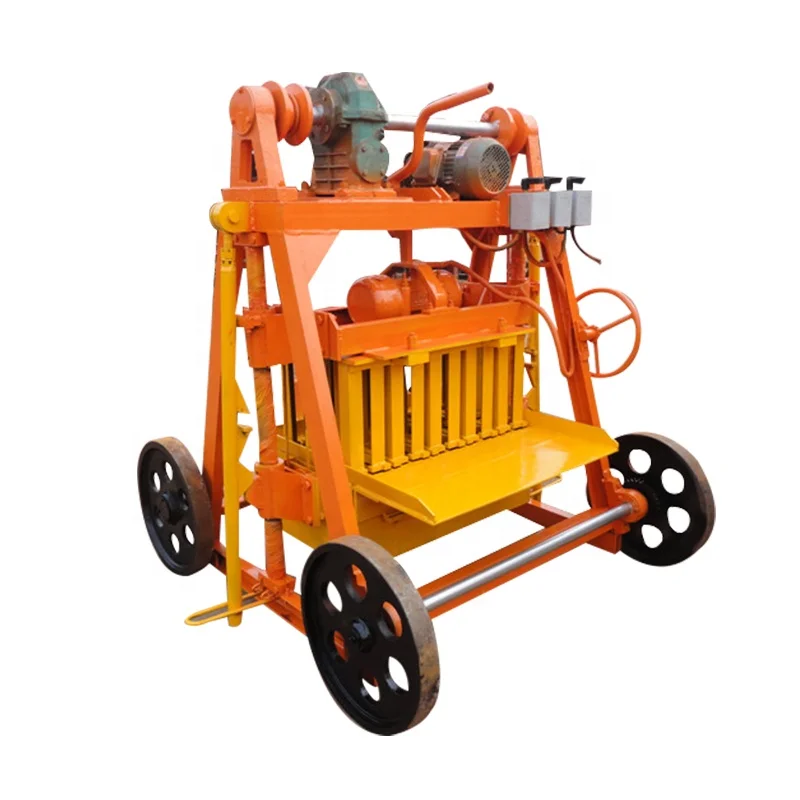
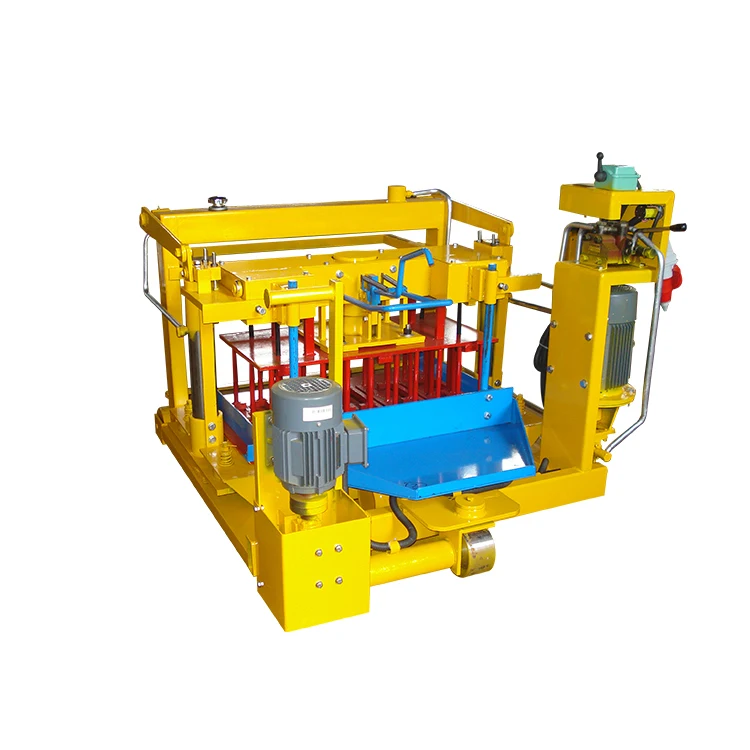 Mobile block machine