Matched as one system — The QMR4-45 mobile block machine for sale is specified against your actual mix design and local aggregate, not pulled from a catalogue default, so capacity matches what you will produce on your site.
Technical Specifications
| Parameter |
Value |
| Model |
QMR4-45 |
| Product Type |
Mobile Egg-Laying Block Making Machine |
| Overall Dimensions (L×W×H) |
2420×1320×1650 mm |
| Net Weight |
810 kg |
| Rated Power |
6 kW |
| Power Source Options |
6 kW electric motor or 6–8 HP diesel engine |
| Voltage & Frequency |
220V / 380V (frequency to be confirmed per site supply) |
| Moulding Cycle |
40–45 s |
| Output (400×200×200 mm hollow block) |
3,000 pcs per 8-hour shift (4 pcs per mould) |
| Output (400×150×200 mm hollow block) |
3,500 pcs per 8-hour shift (5 pcs per mould) |
| Output (400×120×200 mm hollow block) |
4,500 pcs per 8-hour shift (6 pcs per mould) |
| Pallet Requirement |
None (egg-laying type, cured on ground) |
| Control System |
Hydraulic pressure via power unit (PLC or manual to be confirmed) |
| Stacking Method |
Blocks laid on ground, manual stacking after curing |
| Assembly State |
Fully assembled, mobile unit with wheels |
| Warranty |
One year for the whole machine |
| Certification |
CE (certificate details to be verified) |
Application Suitability
| Application |
Output or Material |
| On-site hollow block production at housing projects |
Crushed stone, sand, cement mixes laid directly on cleared ground |
| Remote or off-grid construction sites |
Diesel engine option where grid electricity is absent or unreliable |
| Small-scale building material supply |
3,000–4,500 hollow blocks per shift depending on format |
| First block production operation |
Low-capital start without fixed plant or pallet investment |
| Contractor self-supply for development projects |
Hollow blocks produced on-site to avoid transport cost and delays |
What a Single "Pieces per Day" Number Leaves Out When Buying a Mobile Block Machine
Real output depends entirely on which block format you will actually produce.
Many quotations for a mobile block machine for sale quote one headline daily capacity without naming the block size behind it. In my time setting up block lines across Shandong and exporting abroad, I have seen buyers expect 4,500 blocks a day and end up with 3,000 because they needed the 200 mm hollow format. The difference is simply the number of cavities per mould. When the block format assumption is missing from the offer, your real output falls short before the machine even arrives [NEED_CITE: block machine capacity calculation standards by format].

Where the QMR4-45 Sits in the Full Mobile Range
This unit occupies the entry tier of the mobile egg-laying lineup. It is built for buyers who need to start production immediately on a cleared site, with no fixed plant, no pallets, and minimal support infrastructure. A mobile block machine for sale at this tier is the practical choice when you are proving a local market or fulfilling a single housing contract.
Choosing Diesel or Electric Before the Machine Ships
The dual power configuration is one of the most consequential decisions at inquiry stage. On sites where grid power is unstable or simply absent, the 6–8 HP diesel engine removes the dependency entirely. Where 380V three-phase supply is available, the electric motor runs quieter and at lower operating cost. I have seen contractors arrive on a rural site to find the nearest transformer cannot handle their equipment — confirming your power situation before the machine enters production avoids a costly swap later [NEED_CITE: voltage and frequency standards by export market].
How Pressure, Vibration, and Mix Design Determine Block Strength
The QMR4-45 forms blocks through hydraulic pressure combined with vibration, but the resulting block density depends as much on your mix as on the machine itself. Local aggregate properties — particularly fines content and particle shape — affect how well the mix consolidates under pressure. A machine configured for a standard sand-and-gravel mix will produce weak blocks if your local material is high in clay. This is why confirming your raw material source before the machine is built matters more than comparing vibration force figures in a catalogue. The 40–45 second moulding cycle gives the mix time to consolidate within each cavity, which is adequate for hollow block formats at this tier.
The Hidden Cost of Ignoring Site Ground Conditions
Egg-laying machines produce directly on the ground, which removes pallet cost but introduces a different variable. The curing surface must be level, compacted, and free of standing water. On sites where the ground is soft or uneven, blocks settle irregularly during the first hours of curing, leading to dimensional inconsistency and waste. I have watched an otherwise sound mobile block machine for sale produce a high rejection rate simply because the curing area was a muddy field after rain [NEED_CITE: site preparation requirements for egg-laying block machines]. Ground preparation is not optional — it is part of your line setup.
Why Sourcing This Machine Through a Single-Focus Supplier Matters
Block machinery is our only product category, which means the QMR4-45 is specified alongside the correct moulds, power configuration, and spare parts for your actual production target rather than assembled from disconnected component suppliers. We configure the machine against your local mix design and aggregate, not a generic default. Moulds for the hollow formats your market sells are designed and supplied with the machine, and custom drawings are available for formats outside the standard range. Voltage, frequency, and control language are confirmed in writing before production begins, so the machine arrives ready to commission rather than sitting idle while an adapter is sourced. Installation guidance, operator training, and ongoing mould and wear parts support are included from the same team that built the line.
Documentation & Verification
- Line layout and capacity calculation stating the hollow block format assumed
- Machine specification sheet with confirmed voltage and frequency
- Mould drawing and format list for every cavity included in your order
- Factory test record showing the QMR4-45 running your specific mould before dispatch
- Packing photographs and customs documentation support for export shipment
- Operation and maintenance manual covering daily checks and mould change procedure
Installation, Commissioning & Support
- Site must have a level, compacted ground area of adequate size for daily block curing output
- Confirm 220V or 380V supply and local frequency before machine enters production
- Machine arrives fully assembled on wheels — no foundation or fixed mounting required
- First-run commissioning includes verifying cycle time against the ordered mould format
- Operator training covers mix loading, moulding cycle, and machine movement between curing rows
- One-year warranty on the complete QMR4-45 with hydraulic and wear parts lists provided
- Ongoing mould supply available for additional hollow block formats as your market expands
What to Share When Requesting a Quotation
To match the QMR4-45 to your site, we need to know which hollow block format your market sells and your target daily output. Share your local raw material source — specifically sand type and aggregate grading — along with your site voltage, frequency, and whether grid power is reliable enough to run electric or if diesel is required. If you are working to a project deadline, state the required arrival date so lead time and shipping can be quoted upfront.
Frequently Asked Questions
Q: How is daily output calculated, and which block format does each figure assume?
A: Output for the QMR4-45 is stated per block format over an 8-hour shift: 3,000 pieces for 400×200×200 mm hollow blocks, 3,500 for 400×150×200 mm, and 4,500 for 400×120×200 mm. Each figure is based on a 40–45 second moulding cycle and the specific number of cavities per mould. Always confirm which format applies to your production target.
Q: Can I run this machine on diesel only, and does output change?
A: Yes, the QMR4-45 is available with a 6–8 HP diesel engine for sites without reliable grid power. Output capacity and cycle time remain the same across both power options. The choice between diesel and electric affects operating cost and noise level, not production rate.
Q: What voltage and frequency options are available?
A: The machine supports 220V or 380V configurations, with frequency set to match your local grid. Voltage and frequency must be confirmed in writing before the machine enters production to ensure compatibility on arrival. We request your site supply details at inquiry stage.
Q: Which block formats can the QMR4-45 produce, and how is the mould changed?
A: Standard hollow formats include 400×200×200, 400×150×200, and 400×120×200 mm. Additional formats are available through mould changes, with custom designs produced to your drawings. The mould is bolted to the machine frame, and change procedure is covered during operator training.
Q: When should I consider stepping up from this mobile machine to a higher tier?
A: If your daily output target exceeds what an 8-hour shift on the QMR4-45 can deliver in your required format, or if you need automatic stacking and pallet-based curing for consistent block dimensions, a semi-automatic or full automatic line is the next step. We map your production target against the full range before recommending a tier.

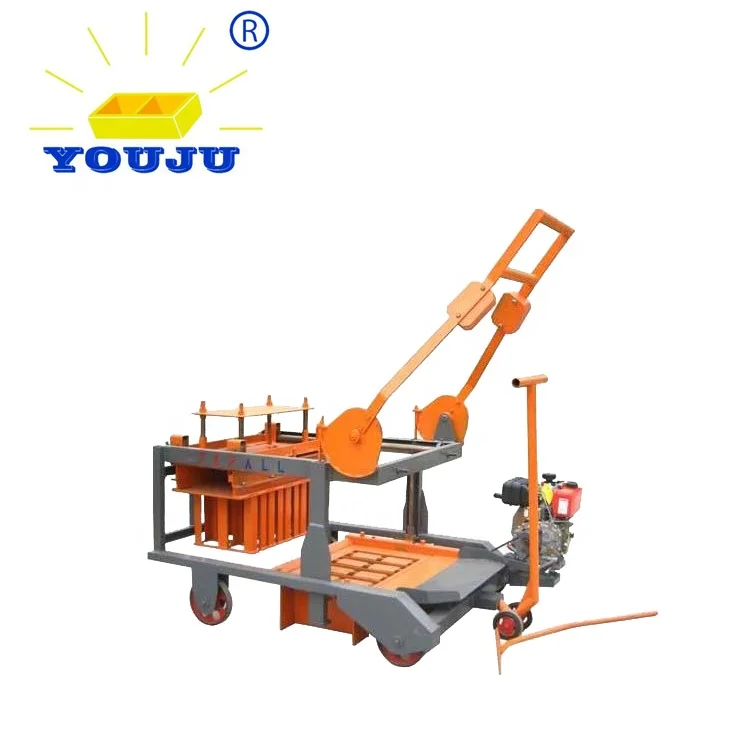
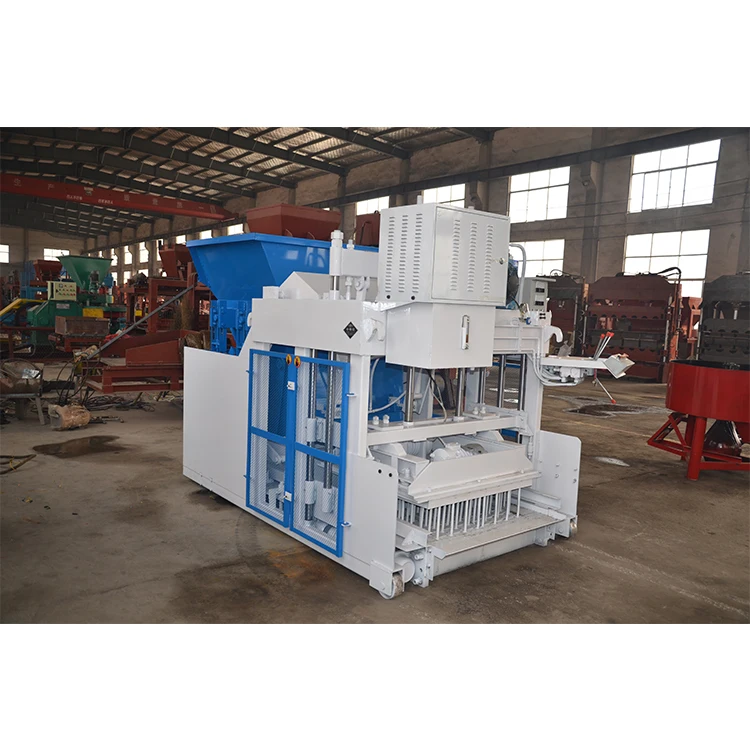
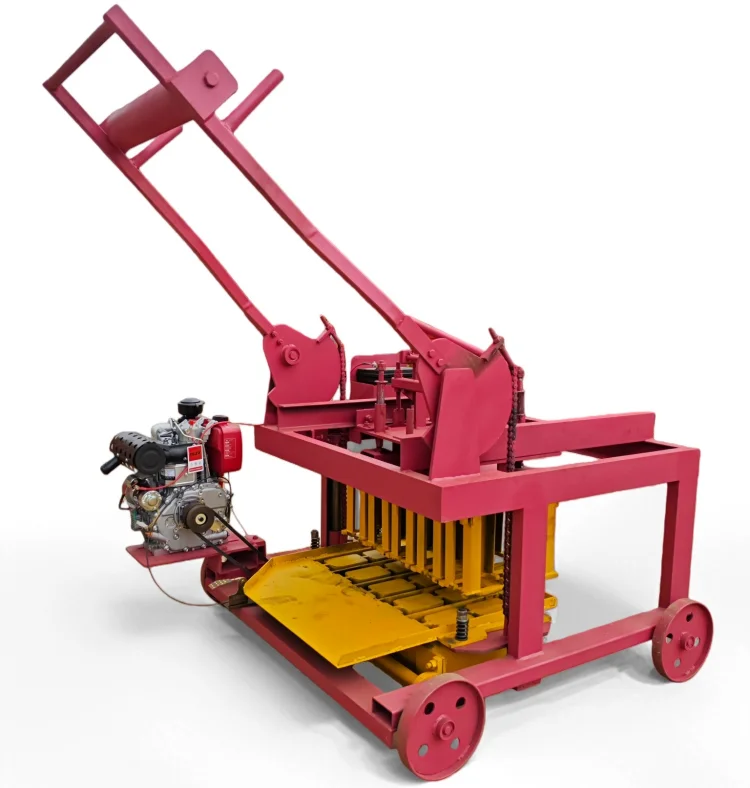
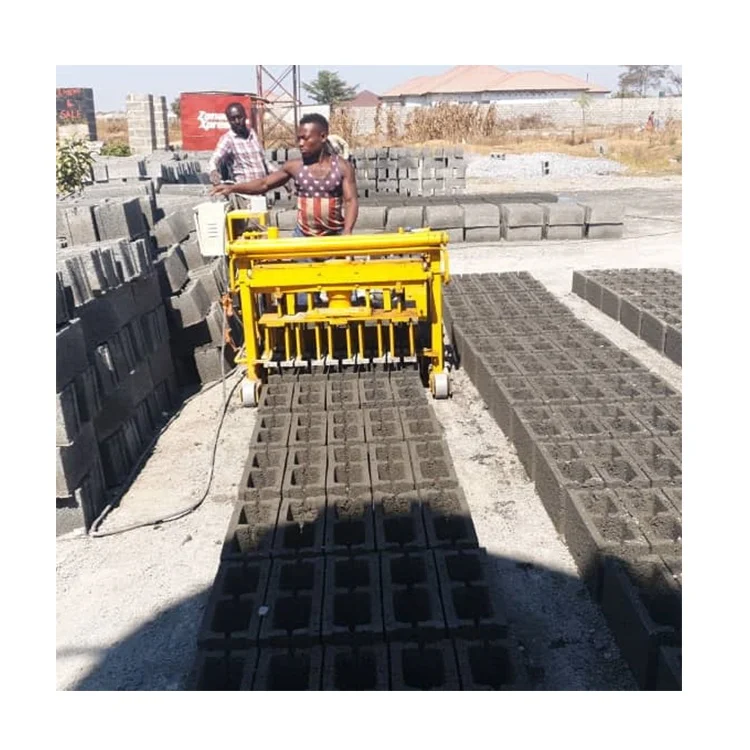 Mobile block machine
![QMY4-30 Mobile Block Machine for Hollow Block | Full Range 80243 → 8+0+2+4+3=17, 17 mod 6 = 5 结构5: [站点修饰词] [品类词] – [规格或产能限定] shiyueblockmachine.com → 全品类目录类角色 → Manufacturer / Factory Supply / Full Range 17 mod 3 = 2 → Full Range → Full Range QMY4-30 Mobile Block Machine – 5 kW Cement Brick Maker = 63 chars ✓ QMY4-30 Mobile Block Machine for Hollow Block | Full Range](https://shiyueblockmachine.com/wp-content/uploads/2026/04/Hca7e15e2bc404a5391aee52b9c7213b9L.webp)