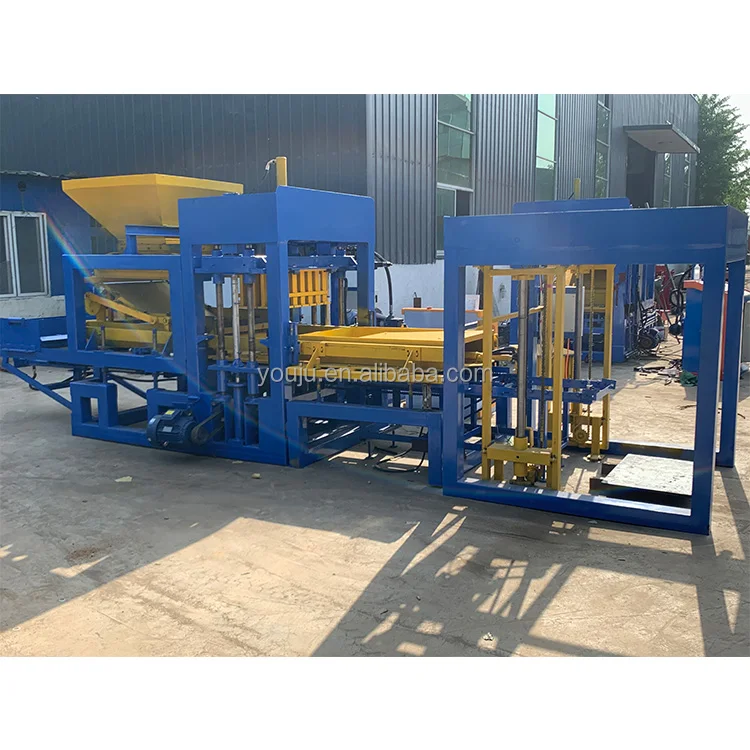
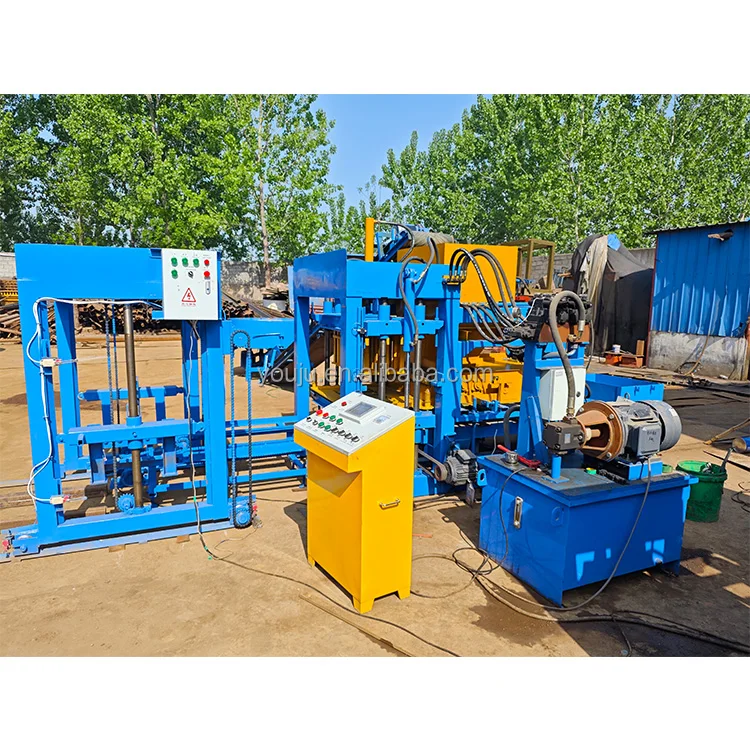
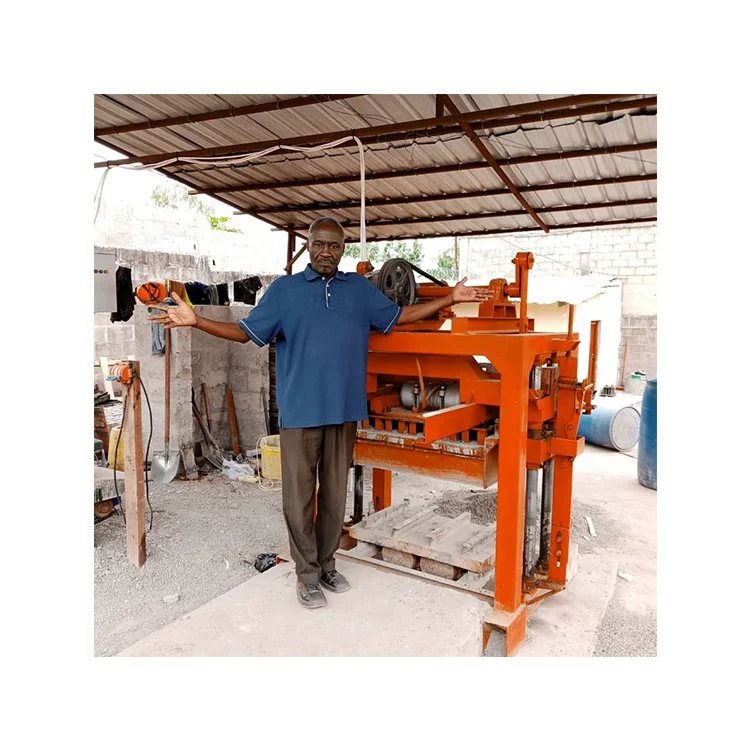
Matched System Configuration — every output tier in the SHIYUE block machine range is specified as a complete press, mould, pallet and handling unit rather than assembled from separate catalogues, so a buyer evaluating the QTJ4-40 sees exactly where it sits before stepping up to a fully automatic line.
Technical Specifications
| Parameter |
Value |
| Model |
QTJ4-40 |
| Product Type |
Manual Hydraulic Block Making Machine |
| Overall Dimensions (L×W×H) |
1350×1460×1800mm |
| Net Weight |
1.2T |
| Rated Power |
10.4kW |
| Voltage & Frequency |
Configurable to buyer’s local supply (basis to be confirmed before production) |
| Control System |
Semi-automatic operation with manual pallet handling |
| Moulding Cycle Time |
40s |
| Output Capacity |
2880 pcs/day based on 400×200×200mm hollow block, 4 pcs/mould |
| Output Capacity |
3600 pcs/day based on 400×150×200mm block, 5 pcs/mould |
| Output Capacity |
6400 pcs/day based on 225×112.5×60mm solid block, 9 pcs/mould |
| Pallet Size |
850×450×20mm |
| Mould Format |
Hollow, solid, paver — standard 8", 6", 5", 4"; custom on request |
| Vibration System |
Bed mould vertical vibration + upper mould compression vibration |
| Assembly State |
Host machine + block mould + pallets; mixer optional |
| Automation Level |
Semi-automatic, upgrade path available |
| Raw Materials |
Concrete, sand, cement, fly ash, lime, gypsum |
Application Suitability
| Application |
Material or Output |
| First-stage block plant for entrepreneurs |
Hollow and solid blocks from local sand, crushed stone and cement |
| On-site production for building contractors |
400×200×200mm hollow blocks for wall construction at project scale |
| Building material distributors adding formats |
Paver and interlocking brick runs from the same press with mould change |
| Small-to-medium workshops |
Solid blocks and kerbstones using fly ash or lime-based mixes |
What "Pieces per Day" Really Means When No Block Format Is Stated
Every output figure on this page is tied to a specific block dimension, mould cavity count and the 40-second cycle.
I have seen buyers sign off on a capacity number only to discover it assumed a 4-inch solid block while their market pays for 8-inch hollow units. The daily tonnage drops to a fraction of what the brochure implied, and the payback timeline collapses with it. When a buyer in West Africa ordered based on a catalogue figure, the local sand carried a clay content that swallowed vibration energy, and real output fell well short of the quoted number until the mix and pressure were re-tuned to the aggregate on hand [NEED_CITE: effect of clay content on concrete block density and strength]. A QTJ4-40 block making machine manufacturer that quotes honestly will always pair the cycle time with the exact format and cavity count.

Where the QTJ4-40 Sits in the Full Machine Range
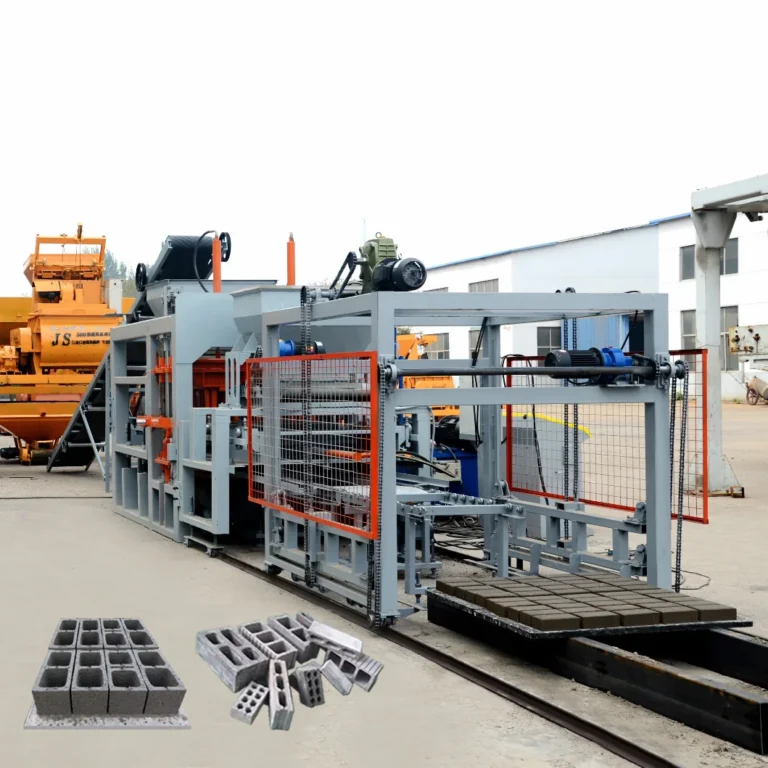
The SHIYUE line runs from mobile egg-laying units through semi-automatic presses like the QTJ4-40 and up to high-capacity fully automatic plants with stacking and cubing. This model occupies the entry tier for stationary production — it gives a buyer a fixed-plant workflow without the capital commitment of a complete automatic line. For a first-time plant owner, starting at this tier keeps the investment contained while proving the local market can absorb daily output before scaling upward.
Comparing Footprint and Supporting Equipment Across Tiers
A mobile unit needs no curing racks and no pallets but limits block format. The QTJ4-40 requires a flat curing area sized to the 850×450mm pallet, a small forklift or hand cart, and a mixer feeding the hopper. Step up to an automatic tier and the line adds pallet feeders, stackers and cubing machines that multiply floor space and power draw. Understanding where each tier lands in plant footprint helps a buyer avoid over-building the shed before the market is proven [NEED_CITE: typical block plant layout planning for semi-automatic operations].
Reading the Specs That Actually Shape Your Output
The 40-second moulding cycle is the baseline for all three stated output tiers — any format change that alters cavity count or block height shifts daily numbers accordingly. Dual vibration, combining bed vertical oscillation with upper mould compression, forces the concrete mix into the mould corners and controls density variation across the pallet. The 850×450×20mm pallet dimension was chosen to fit common curing-yard layouts and the fork width of small warehouse forklifts, so blocks can be wheeled straight to the curing zone without re-stacking. A 10.4kW rated power draw keeps the machine within the capacity of a standard workshop supply without requiring a dedicated transformer in most export markets [NEED_CITE: voltage and frequency standards by export market].
The Hidden Cost of a Mould Change That Eats a Full Shift
Some presses advertise format flexibility, then take most of a working shift to swap moulds because the clamping and alignment were never designed for quick changeover. A buyer who purchased for paver variety ends up running a single format all week to avoid the downtime, and the extra moulds sit on a shelf gathering dust. The QTJ4-40 range covers hollow, solid and paver formats in standard dimensions, and custom moulds are built to buyer drawings so the formats your market actually sells are the ones loaded on the press.
Why Source This Tier from SHIYUE
Block machinery is our single focus, which means the press, mould, pallet and handling equipment are specified as one matched system — not assembled from separate suppliers and left to the buyer to reconcile. Configuration starts with your actual mix design and local aggregate rather than a catalogue default, so the vibration force and hydraulic pressure are matched to what you can source on the ground. Mould design covers the formats your market moves, including custom drawings when standard sizes do not apply. The semi-automatic level is selectable, so a buyer can start with the QTJ4-40 and move to higher automation later without replacing the entire line. Installation and commissioning support includes operator training so the crew running the press on day one knows the cycle, the mould change and the maintenance intervals.
Documentation & Verification
- Line layout drawing with capacity calculation tied to your chosen block format
- Machine specification sheet confirming pallet size, vibration ratings and voltage
- Mould drawing and format list covering the blocks your market sells
- Voltage and control language confirmation signed off before production begins
- Factory test record run on your block format before dispatch
Installation, Commissioning & Support
- Foundation pad sized to 1350×1460mm footprint with anchor bolt template provided
- Electrical feed matched to 10.4kW draw and buyer-confirmed voltage and frequency
- Machine ships as host unit, mould and pallets; mixer sourced or supplied separately
- On-site commissioning covers first-run cycle tuning and mould alignment check
- Operator training covers mould change, vibration adjustment and daily maintenance
- Wear parts list and mould inventory sheet included for first replacement order
Before You Request a Quote
To size the QTJ4-40 to your project, share the block formats your market sells, the daily volume you need per format, and a sample or photo of your local sand and aggregate. Confirm your site voltage, frequency, and the control panel language your operators read. If you already have a mixer, curing racks or a forklift on site, note their dimensions so the pallet and line layout can be matched to what you own.
Frequently Asked Questions
Q: How is daily output calculated per block format, and what cycle time does each figure assume?
A: Every output number is based on the 40-second moulding cycle and the specific cavity count of that mould. For example, 2880 hollow blocks per day assumes the 400×200×200mm four-cavity mould. Changing to a different block size or height shifts both the cavity count and the daily total, so always confirm the calculation against the format you will actually produce.
Q: Where does the QTJ4-40 sit compared to automatic and mobile tiers?
A: It is the entry stationary tier — a fixed-plant press with manual pallet handling, sitting between mobile egg-laying machines that need no curing yard and fully automatic lines with stackers and cubing. Buyers start here when they need a broader format range than a mobile unit but are not yet ready for the capital outlay of a full automatic plant.
Q: What voltage, frequency and display language options are confirmed before shipment?
A: Voltage and frequency are set to your local supply standard and confirmed in writing before production. The control panel language is agreed at the same stage so operators can read the interface on day one. This avoids the common delay where a machine arrives with the wrong voltage or an unreadable display.
Q: Can I start semi-automatic and move to higher automation later?
A: Yes. The QTJ4-40 configuration allows a buyer to begin with manual pallet handling and add automatic pallet feeding, stacking or cubing as demand grows. The press itself remains in the line; the supporting equipment is what changes, so the initial investment is not lost when the plant scales.
Q: What plant footprint and supporting equipment does this model need?
A: The press sits on a pad of roughly 1350×1460mm. You need a flat curing area for the 850×450mm pallets, a small forklift or hand cart to move them, and a mixer feeding the hopper. Compared to a full automatic line, the footprint and power draw stay within a standard workshop envelope.

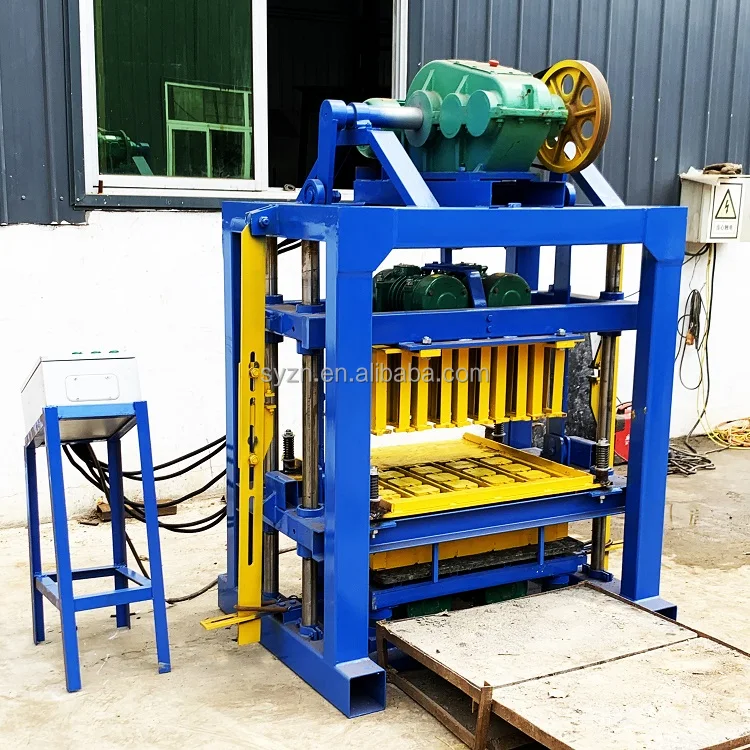
 Stationary block machine