
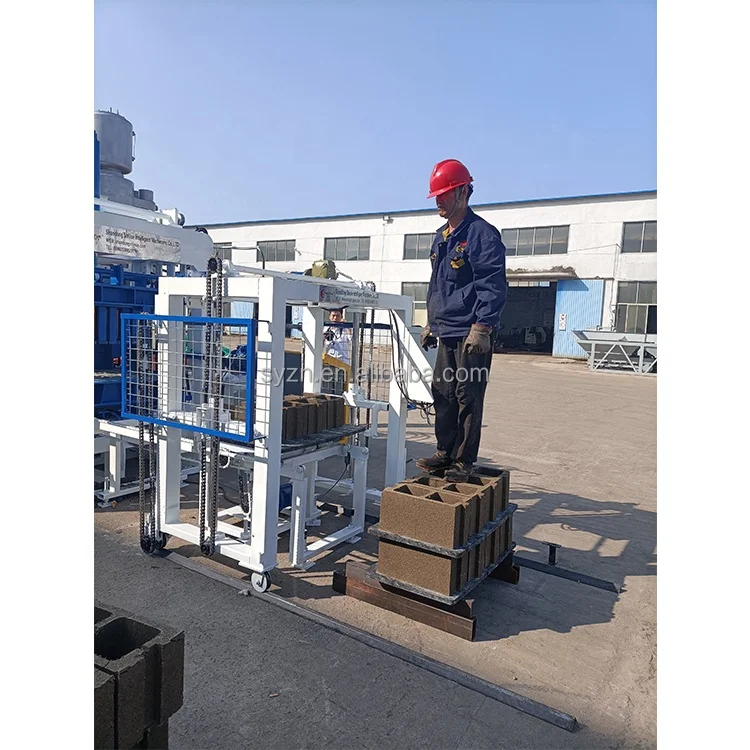
 Stationary block machine
Home
Products
Stationary block machine
QT4-15 Interlocking Brick Making Machine Concrete Block Machine | Full Range
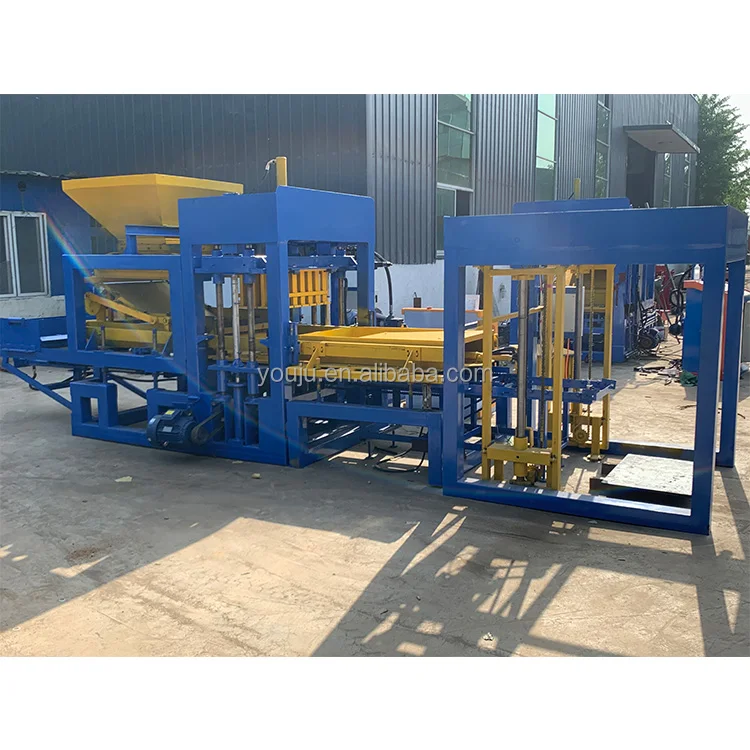 Stationary block machine
Concrete Machinery
QT4-15 Interlocking Brick Making Machine Concrete Block Machine | Full Range
<p><strong>QT4-15 Stationary Block Machine, PLC Controlled, 900×500mm Pallet, 24.5kW</strong> — positioned in the mid-tier of our full stationary range, this hydraulic interlocking brick machine bridges entry-level semi-automatic models and high-capacity automatic lines.</p> <ul> <li>Platform vibration at 50-70 Hz with hydraulic demolding delivers block compressive strength above 15 MPa</li> <li>PLC with approach switch monitoring coordinates pallet feeding, material distribution, vibration and demolding in one automatic cycle</li> <li>Supports hollow block, paver, solid brick and interlocking formats with product heights from 50 to 220 mm</li> </ul> <p>Output figures are stated per block format and mould cavity count — no unqualified cycles-per-hour claims. Machine, mould, pallet and handling are specified as one matched system against your local aggregate and target product range.</p>
CE Certified
European Standards
Ships 15-30 Days
Fast Delivery
108+ Countries
Global Export
After-Sales Support
Training Included
24h Response
Free Technical Consultation
Product Details
Matched System Design — Machine, mould, pallet and handling are specified as one integrated unit rather than assembled from separate vendors, ensuring the QT4-15 block machine manufacturer delivers a coordinated stationary block machine for sale.
Technical Specifications
| Parameter | Value |
|---|---|
| Model | QT4-15 |
| Product Type | Hydraulic Interlocking Brick Making Machine / Concrete Block Machine |
| Control System | PLC controlled with approach switch monitoring |
| Molding Cycle | 15-30 seconds |
| Pallet Size | 900×500 mm |
| Vibration Type | Platform vibration |
| Vibration Frequency | 50-70 Hz |
| Product Height Range | 50-220 mm |
| Overall Power | 24.5 kW |
| Demolding Method | Hydraulic |
| Output (Hollow Block 400×200×200 mm) | 900-1200 pcs/hour, 7200-9600 pcs/8hr (basis: 4 pcs/mould, 15-20s cycle) |
| Output (Hollow Block 400×150×200 mm) | 1080-1440 pcs/hour, 8640-11520 pcs/8hr (basis: 5 pcs/mould, 15-20s cycle) |
| Output (Hollow Block 400×100×200 mm) | 1440-1920 pcs/hour, 11520-15360 pcs/8hr (basis: 8 pcs/mould, 15-20s cycle) |
| Output (Paver 200×100×60 mm) | 2880-3840 pcs/hour, 23040-30720 pcs/8hr (basis: 16 pcs/mould, 15-20s cycle) |
| Output (Solid Brick 240×115×53 mm) | 5930-6720 pcs/hour, 47400-53700 pcs/8hr (basis: 28 pcs/mould, 15-20s cycle) |
| Raw Materials | Fly ash, slag, gangue, sand, crushed stone, cement, water |
| Block Compressive Strength | More than 15 MPa |
| Automation Level | Automatic (machinery, electric, hydraulic and vibrating system integrated) |
| Electrical & Hydraulic Components | Original imported or China famous brand (basis to be confirmed) |
| Voltage & Frequency | Configurable per buyer market (basis to be confirmed) |
| Overall Dimensions | Confirmed per configuration (basis to be confirmed) |
| Net Weight | Confirmed per configuration (basis to be confirmed) |
| Hydraulic Pressure | Confirmed per block format and material (basis to be confirmed) |
| Vibration Force | Confirmed per block format and material (basis to be confirmed) |
| Mould Change Time | Confirmed per mould design (basis to be confirmed) |
| PLC Display Language | Configurable per buyer requirement (basis to be confirmed) |
Application Suitability
| Application | Material or Output |
|---|---|
| Hollow block production for mid-scale plants | Crushed stone, sand, cement, and fly ash blends |
| Solid brick manufacturing for masonry walls | Sand, gangue, slag, and cement mixes |
| Paver brick production for walkways and driveways | Fine aggregate with cement at high vibration density |
| Interlocking brick formation for load-bearing walls | Graded aggregate with controlled moisture content |
| Industrial residue utilisation projects | Fly ash and slag combined with binding agents |
What "900 Pieces per Hour" Actually Means for Your QT4-15 Block Machine Manufacturer Selection
Every capacity figure above is tied to a specific block size, mould cavity count, and cycle time — not a single headline number.
Sellers across the industry quote peak cycle rates without disclosing the format behind them. A buyer might see a stationary block machine for sale listed at a certain hourly output, only to discover on arrival that the figure assumed a small solid brick, not the 400×200×200 mm hollow block their market demands. I have walked onto sites in Latin America where this exact gap shut down a project schedule for days. The QT4-15 capacity table above states each output per format so your daily planning starts from a number you can actually rely on. [NEED_CITE: common misrepresentation of block machine capacity in export quotations]
Where the QT4-15 Sits in the Full Stationary Range
The QT4-15 occupies the mid-tier position in the stationary block machine lineup. Below it, semi-automatic models require manual pallet handling and deliver lower throughput. Above it, high-capacity automatic lines demand larger factory footprints, higher power supply, and significantly greater capital outlay. For a buyer surveying the complete range, this model represents the point where PLC-controlled automation begins to replace operator-dependent timing, yet the plant footprint remains compact enough for mid-to-small scale operations.
Understanding the Output Tiers Before You Commit
Choosing the right tier depends on your current daily requirement, available curing space, and the formats your local market actually purchases. A first-time plant owner producing for a single housing project may find the QT4-15 tier matches both output and investment. A contractor who later expands into commercial paver supply can move up the range to a higher-capacity automatic line within the same matched system. The key decision is not just machine price but the total cost of pallets, handling equipment, and curing racks that must scale alongside it. [NEED_CITE: block plant capacity planning based on local market demand formats]
Vibration, Pressure, and the 900×500 mm Pallet Explained
The QT4-15 uses platform vibration at 50-70 Hz combined with hydraulic demolding to achieve block compressive strength above 15 MPa. Vibration frequency alone does not guarantee density — it must match the hydraulic pressure applied during the molding cycle and the moisture content of the specific mix being fed. The 900×500 mm pallet size determines how many block cavities fit per cycle, which directly drives the output figures in each row of the specification table. When a buyer changes pallet dimensions to suit an existing curing yard or forklift, every output number shifts accordingly. Product heights from 50 to 220 mm are supported, covering thin pavers through tall hollow blocks without requiring a separate machine. Overall power at 24.5 kW places the electrical demand in a range that most mid-scale industrial sites can accommodate without a dedicated transformer upgrade.
The Hidden Cost of Skipping Configuration Verification
When voltage and frequency are left unconfirmed before production, the machine arrives with motor windings or PLC components that do not match the local supply. Commissioning stalls until replacement parts are shipped overseas. I have seen this delay push project timelines by weeks on more than one occasion. Similarly, when a mould is selected from a catalogue without reference to the buyer’s local aggregate and mix design, the vibration and pressure parameters produce blocks that fail strength tests. The cost is not the mould itself — it is the lost production time and the reputational damage of delivering weak blocks to a construction site. [NEED_CITE: impact of aggregate variation on concrete block compressive strength]
Why Procure the QT4-15 Through a Matched-System Supplier
Block machinery is the sole focus, meaning the machine, mould, pallet, and handling equipment are specified together against your actual mix design and target format, not pulled from a generic catalogue default. Mould design covers the formats your local market sells, including custom drawings when standard options do not match. Automation level is selectable — a buyer can begin with semi-automatic pallet handling and add automatic stacking later within the same range. Configuration is verified against your local aggregate characteristics before the machine enters production, avoiding the scenario where parameters calibrated for test sand produce weak output on your actual raw material. Installation includes on-site commissioning and operator training so the crew understands cycle adjustment from day one.
Documentation & Verification
- Line layout with capacity calculation per block format you will produce
- Machine specification sheet with confirmed voltage, frequency, and PLC language
- Mould drawing and format list matching your local market product range
- Pallet specification aligned with your curing area dimensions and forklift capacity
- Factory test record on your actual mix design before dispatch
- Operation and maintenance manual with wear parts and mould replacement list
Installation, Commissioning & Support
- Foundation pad sized to the QT4-15 footprint and vibration load requirements
- Dedicated electrical circuit rated for 24.5 kW overall power draw at confirmed voltage
- Machine dismantled for container loading and reassembled on-site during commissioning
- PLC parameters set to match your aggregate, moisture content, and target block strength
- Operator training covering cycle adjustment, mould change procedure, and daily maintenance
- Wear parts list with reorder references for hydraulic seals and vibration components
- Recommended maintenance intervals for hydraulic fluid, approach switches, and pallet guides
Prepare Your Specification Brief
To receive an accurate configuration proposal, provide your target block formats and daily output requirement per format, your local raw material source and aggregate characteristics, and the available factory floor area and curing yard dimensions. Specify your local voltage, frequency, and preferred PLC display language. If you have existing pallets or forklifts on site, share their dimensions so the system is matched to what you already operate.
Frequently Asked Questions
Q: How is the capacity of the QT4-15 verified, and which block format does each output figure assume?
A: Each output row in the specification table names the block dimensions, mould cavity count, and cycle time behind the number. For example, hollow block output at 400×200×200 mm is based on 4 cavities per mould and a 15-20 second cycle. No single headline figure is used. Your configuration proposal will state capacity per format you actually intend to produce.
Q: Where does the QT4-15 sit in the full machine range compared to semi-automatic or high-capacity automatic models?
A: It occupies the mid-tier stationary position with PLC-controlled automation and platform vibration. Semi-automatic models below it require manual pallet handling and deliver lower output. High-capacity automatic lines above it need larger footprints and higher investment. The QT4-15 suits mid-to-small plants stepping up from manual production without committing to a full automatic line.
Q: What voltage, frequency, and PLC display language options are available for the QT4-15?
A: Voltage and frequency are configured to match your local industrial supply before production begins. The PLC display language is set to your operator preference. These details are confirmed during the quotation stage and documented on the machine specification sheet, preventing commissioning delays caused by mismatched electrical components or unreadable control screens.
Q: What plant footprint and installation requirements should I plan for with the QT4-15?
A: You need a level foundation pad to absorb vibration loads, a dedicated power circuit for the 24.5 kW draw, space for pallet circulation and curing racks, and access for forklift movement around the machine. Your line layout document will show the exact arrangement based on your chosen automation level and pallet handling configuration.
Q: Can the QT4-15 be upgraded to a higher automation level within the same range?
A: Yes. The system is designed so a buyer can start with semi-automatic pallet handling and later add automatic stacking and cubing modules. The machine, mould, and pallet dimensions remain compatible, meaning the upgrade extends capability without replacing the press or reconfiguring the entire plant layout.
Get a Quote
Request Price for QT4-15 Interlocking Brick Making Machine Concrete Block Machine | Full Range
Fill in your requirements and our export manager will respond within 24 hours with pricing, specs and a customized solution.
You May Also Like
Related Products
Stationary block machine
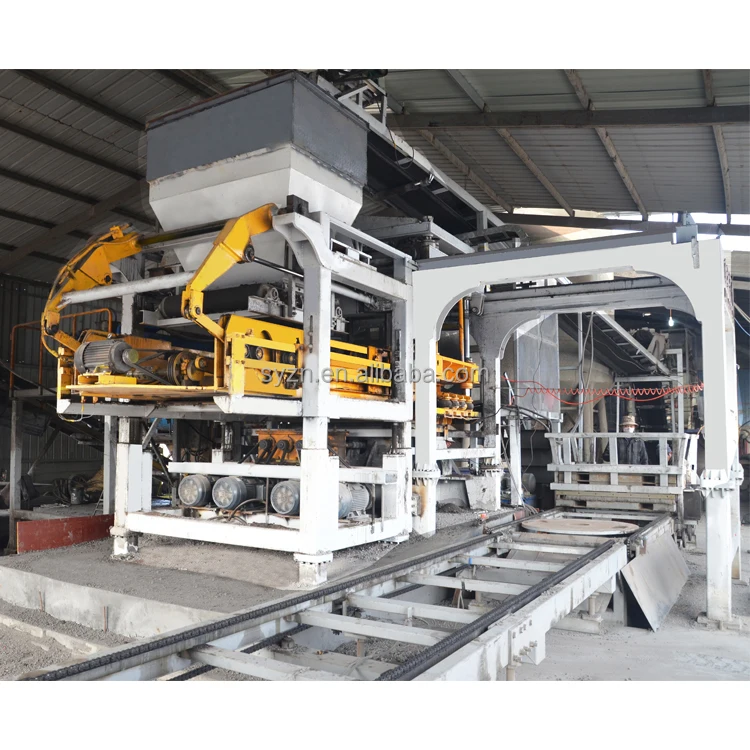 Stationary block machine
QT18-25 Fully Automatic Hollow Block Brick Production Line – Manufacturer
QT18-15 Fully Automatic Block Making Production Line, 1350×1350mm Pallet, 50-300mm Brick Height, 2800-4500 r/min Vibration...
View Details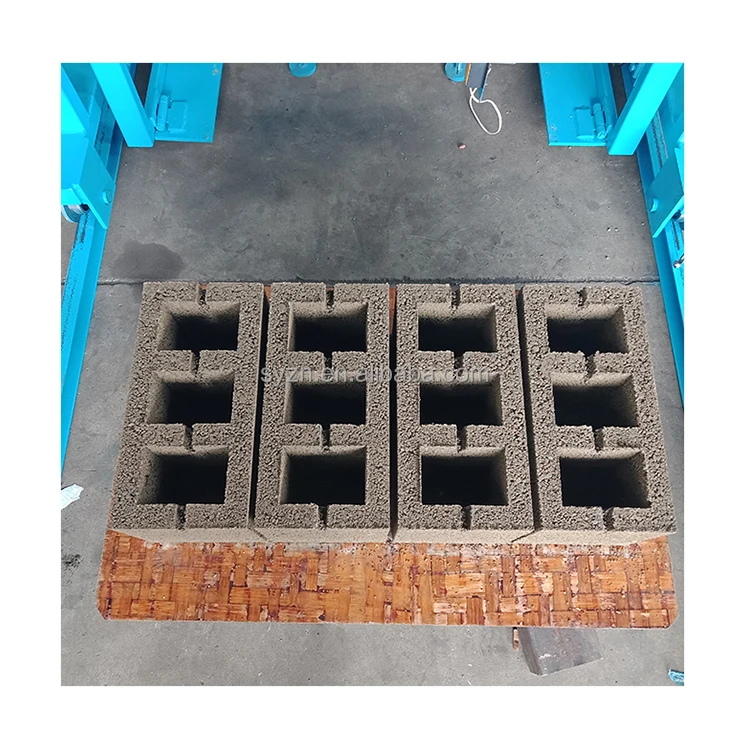 Stationary block machine
QTJ4-25 Building Material Machinery Automatic Block Manufacturing Machines
Products Description Introduction of Qtj4-25 Fly Ash Cement Hollow Brick Making Machine1) semi-automatic hollow block...
View Details Stationary block machine
Block Manufacturing Machine QTJ4-40 for Hollow Bricks | Full Range
QTJ4-40 Semi-Automatic Block Making Machine, 10.4 kW, 40 s Molding Cycle, Dual Vibration System —...
View Details
Established Manufacturer · Since 2005
Ready to Start Your Concrete Production Line?
Our 320+ engineers will design a customized solution for your local materials, voltage and site conditions. Get a free layout plan and ROI estimation within 24 hours.
108+ Countries Exported
46,000㎡ Factory
320+ Engineers
24h Response Guaranteed