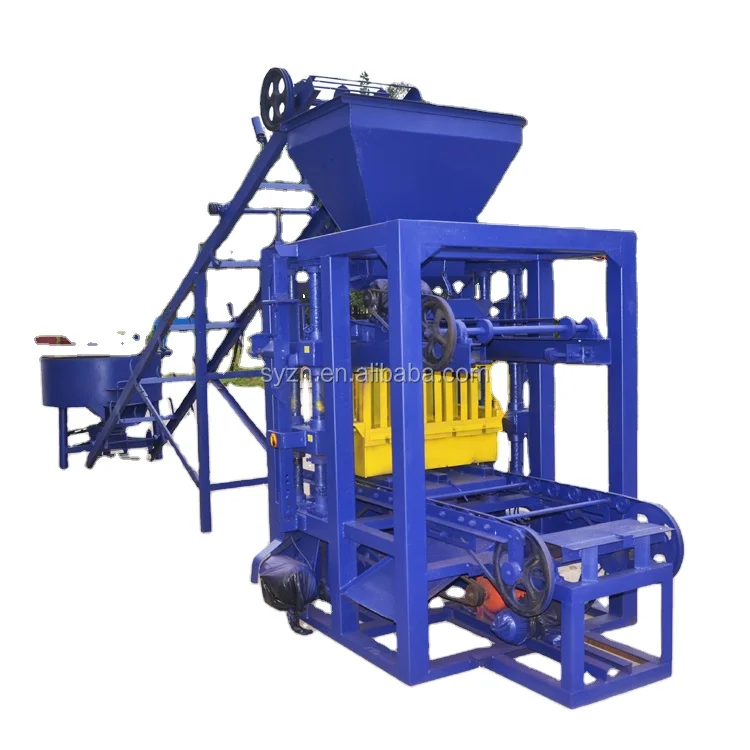
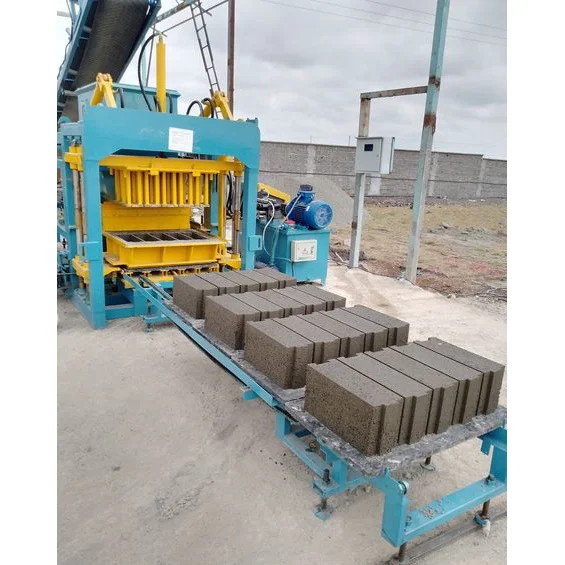
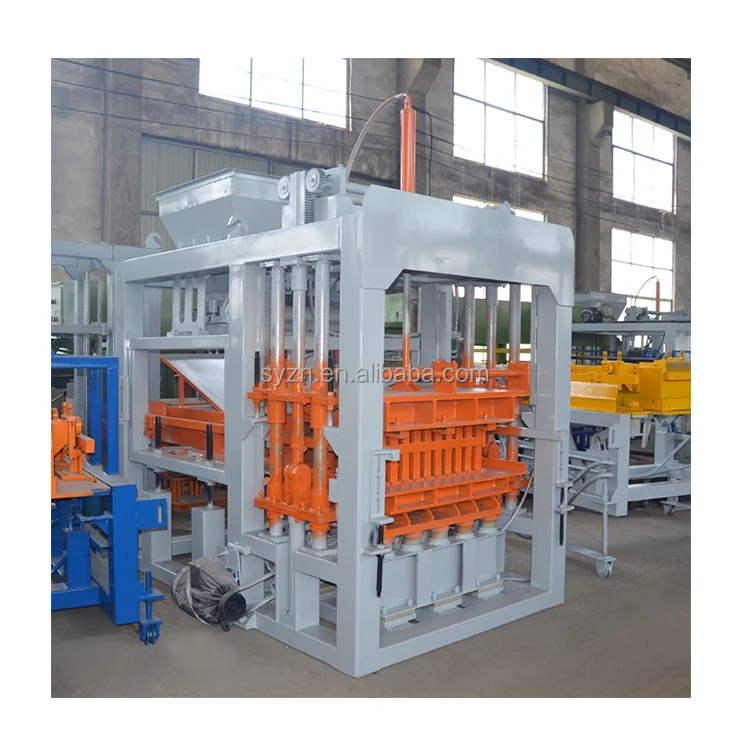
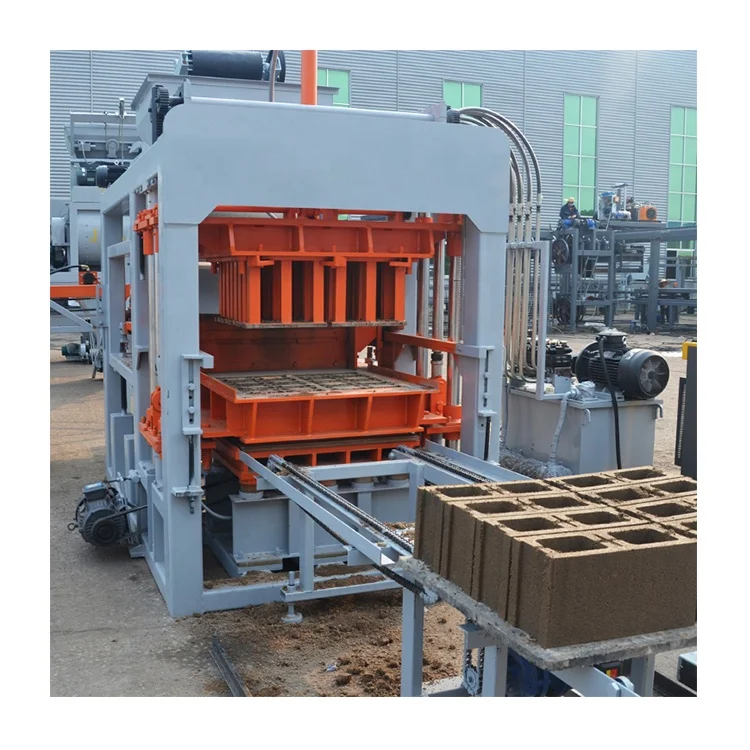
Complete matched system — machine, mould, pallet and handling specified together for the QTJ4-26 so capacity calculations align with your actual block format and curing layout.
Technical Specifications
| Parameter |
Value |
| Model |
QTJ4-26 |
| Product Type |
Semi-Automatic Concrete Block Making Machine |
| Overall Dimensions (L×W×H) |
2060×1730×2580 mm |
| Molding Cycle |
26 s |
| Vibration Frequency |
4200 r/min |
| Vibration Force (Exciting Power) |
35.5 kN |
| Rated Power |
11.95 kW |
| Mixer Model |
JQ350 |
| Pallet Size |
850×450×20 mm |
| Net Weight |
1800 kg |
| Guide Pillar Configuration |
Four guide pillars |
| Mould Movement |
Automatic |
| Automation Level |
Semi-automatic |
| Output Capacity |
480 pcs/h based on 390×190×190 mm hollow block, 4 pcs/mould |
| Output Capacity |
600 pcs/h based on 400×150×200 mm hollow block, 5 pcs/mould |
| Output Capacity |
2100 pcs/h based on 240×115×53 mm solid brick, 18 pcs/mould |
| Output per 8-hour Shift |
3800 pcs based on 390×190×190 mm hollow block |
| Output per 8-hour Shift |
4800 pcs based on 400×150×200 mm hollow block |
| Output per 8-hour Shift |
17000 pcs based on 240×115×53 mm solid brick |
| Applied Products |
Hollow block (8 inch, 6 inch), solid brick |
| Raw Materials |
Crushed stones, sand, cement, dust, fly ash |
| Stacking Method |
Manual (basis to be confirmed) |
| Voltage & Frequency |
Configurable per destination market (basis to be confirmed) |
| Control System |
Configurable (basis to be confirmed) |
| Hydraulic Pressure |
Configurable (basis to be confirmed) |
Application Suitability
| Application |
Material or Output |
| Small-scale hollow block production plant |
Crushed stone, sand, cement and fly ash mixes for 8-inch and 6-inch hollow blocks |
| On-site block production for construction contractors |
Hollow and solid blocks produced directly at project locations with limited footprint |
| First block plant for entrepreneurs |
Standard hollow blocks and solid bricks from locally available aggregates |
| Building material distributor adding production capability |
Solid bricks at 240×115×53 mm and hollow blocks at 390×190×190 mm or 400×150×200 mm |
What "Pieces per Hour" Leaves Out About a Semi-Automatic Block Machine for Sale
Output numbers mean nothing without the block format attached to them.
I have watched buyers compare machines on a single headline figure — usually the highest one — then discover after commissioning that their actual product mix delivers considerably less. A Semi-Automatic Block Machine for sale often gets quoted at its best-case format, which is rarely the format a new plant sells the most of. The QTJ4-26 illustrates this clearly: the gap between solid brick throughput and 8-inch hollow block throughput is substantial, and most buyers in the hollow block market will operate closer to the lower end of that range every single shift. [NEED_CITE: common block format demand distribution by regional market]
Choosing the right entry point in the full machine range matters because it determines not just the press itself but the pallet circuit, curing space and labour plan that must wrap around it.
Where the QTJ4-26 Sits in the Complete Block Machine Range
This model occupies the entry-level semi-automatic tier, positioned between mobile egg-laying machines below and fully automatic lines with stackers and cubing systems above. For a buyer surveying options for a first or replacement machine, the QTJ4-26 represents the point where mould movement becomes automatic while pallet handling and stacking remain manual — keeping capital outlay contained while delivering consistent block density that mobile machines typically cannot match.
Understanding the Footprint and Plant Layout Requirements
At 2060×1730 mm in plan, the press itself is compact, but the real layout question is the curing area the 850×450 mm pallet size demands. Every pallet loaded with wet blocks needs flat, level space to sit until the concrete gains enough strength for handling. Buyers who plan only the press footprint and ignore the curing spread find themselves stacking pallets in aisles within the first week. [NEED_CITE: typical curing area requirements per pallet size for small-scale block plants]

How Vibration Force and Guide Pillars Shape Block Density
The 35.5 kN exciting force at 4200 r/min comes from dual vibrating motors mounted beneath the mould table, transmitting energy through the pallet into the fresh mix. This vibration frequency and force pairing determines how tightly aggregate particles pack during the 26-second molding cycle. The four guide pillar construction keeps the mould head aligned with the mould box across every cycle, preventing uneven wall thickness in hollow blocks — a problem that shows up as weak corners when blocks are tested for compressive strength.
The JQ350 mixer feeds material into the hopper, and its capacity must keep pace with the press cycle so the hopper never runs empty mid-shift. If mixing falls behind, the operator either slows the press or presses short-filled moulds, both of which erode the output figures quoted above.
The Voltage Mistake That Stops a Machine Before It Starts
I spent years on the assembly floor before moving to technical sales, and one early shipment still defines how I approach every order. We sent a QTJ4-26 to an African project site where the local supply was 415V/50Hz, but the motor had been wired for 380V. The machine sat under a tarp for three weeks while the buyer sourced a transformer. Now I confirm voltage, frequency and control display language before any machine enters production — not after the container is booked. A Semi-Automatic Block Machine for sale should arrive ready to connect, not waiting for electrical adaptation. [NEED_CITE: voltage and frequency standards by export market]
The consequence of skipping this step is not a minor delay. It stalls the entire project timeline, burns contractor mobilisation costs and sours the relationship before the first block is pressed.
What Happens When Pallet Size and Curing Area Are Not Matched
When the 850×450 mm pallet specification is chosen without checking the curing racks or forklift the buyer already owns, the result is a daily handling bottleneck. Pallets that do not fit existing racks get stacked on the floor, exposing green blocks to damage. Pallets too heavy for the site forklift require a second equipment purchase that was never budgeted. These mismatches do not appear in any machine quotation — they surface only after the line is running and the first shift ends with blocks stacked by hand wherever floor space allows. [NEED_CITE: pallet handling inefficiencies in small-scale block production]
Why Buyers Specify the QTJ4-26 Through This Workshop
Block machinery is the single focus of this operation, meaning the QTJ4-26 press, its moulds, pallets and any supporting handling equipment are specified as one matched system rather than assembled from separate suppliers. The configuration starts from the buyer’s actual mix design and local aggregate — not a catalogue default — so vibration force and cycle time are set against material that will actually arrive at the hopper.
Mould design covers the formats the buyer’s market sells, with custom drawings available when standard moulds do not match local block dimensions. Automation level is selectable, so a buyer can begin with semi-automatic pallet handling and plan a future upgrade path. Installation support includes operator training so the crew running the press on day one understands mould change procedure, vibration adjustment and daily maintenance checkpoints.
Documentation & Verification
- Line layout and capacity calculation stating the specific block format assumed for each output figure
- Mould drawing and format list confirming exact block dimensions matched to your market
- Pallet specification sheet cross-referenced with your existing curing area and forklift capacity
- Voltage, frequency and control language confirmation document signed before production release
- Factory test record on your selected block format before dispatch
- Operation and maintenance manual with wear parts and mould replacement list
Installation, Commissioning & Support
- Foundation pad sized for the 2060×1730 mm footprint with allowance for mixer and pallet staging area
- Dedicated power circuit rated for the 11.95 kW total draw, voltage and frequency confirmed to local supply
- Machine arrives as a single press unit with separate mixer; on-site assembly covers vibration motor alignment and guide pillar check
- First-run commissioning includes molding cycle adjustment to your mix design and target block density
- Operator training covers mould change procedure, pallet loading rhythm and daily vibration motor inspection
- Wear parts list provided at delivery with reorder references for vibration motor bearings and guide pillar bushings
Before You Request a Quotation
To match the QTJ4-26 to your actual production plan, share the block formats your market demands most, the daily output you need per format, and the raw materials available locally including aggregate type and grading. Include your site voltage and frequency, the control display language your operators need, and the dimensions of your available curing area so pallet circulation can be planned before the machine ships.
Frequently Asked Questions
Q: How is the QTJ4-26 output capacity calculated and which block format does it assume?
A: Each output figure is tied to a specific block format and mould cavity count. For example, 480 pieces per hour is based on 390×190×190 mm hollow blocks at four pieces per mould, while 2100 pieces per hour is based on 240×115×53 mm solid bricks at eighteen pieces per mould. Always match the quoted capacity to the format you will actually produce most often.
Q: Where does the semi-automatic QTJ4-26 sit in the full machine range compared to automatic and mobile tiers?
A: It sits between mobile egg-laying machines and fully automatic lines with stacking and cubing. The press cycle and mould movement are automatic, but pallet feeding and block stacking are handled manually. This keeps investment lower while delivering more consistent density than mobile units can achieve on uneven ground.
Q: What pallet size does the QTJ4-26 require and how does it affect my curing area layout?
A: The pallet size is 850×450×20 mm, and every loaded pallet needs flat curing space until blocks reach handling strength. Your curing area must accommodate the full shift’s pallet volume plus circulation space. Pallet weight and dimensions should also match your existing forklift capacity to avoid secondary equipment purchases.
Q: Can I start with the QTJ4-26 semi-automatic and upgrade to a higher automation tier later?
A: The automation level is selectable, and the semi-automatic configuration can serve as a starting point. Adding automatic pallet feeding or stacking later depends on whether the original line layout预留了 upgrade space. Discussing the upgrade path at the inquiry stage ensures the foundation and electrical provisions support future expansion.
Q: What voltage and frequency options are available and is the control display language configurable?
A: Voltage and frequency are configured to match your site supply before production begins, and the control display language is confirmed at the same stage. These details must be locked in before the machine enters assembly to avoid commissioning delays after arrival at your facility.

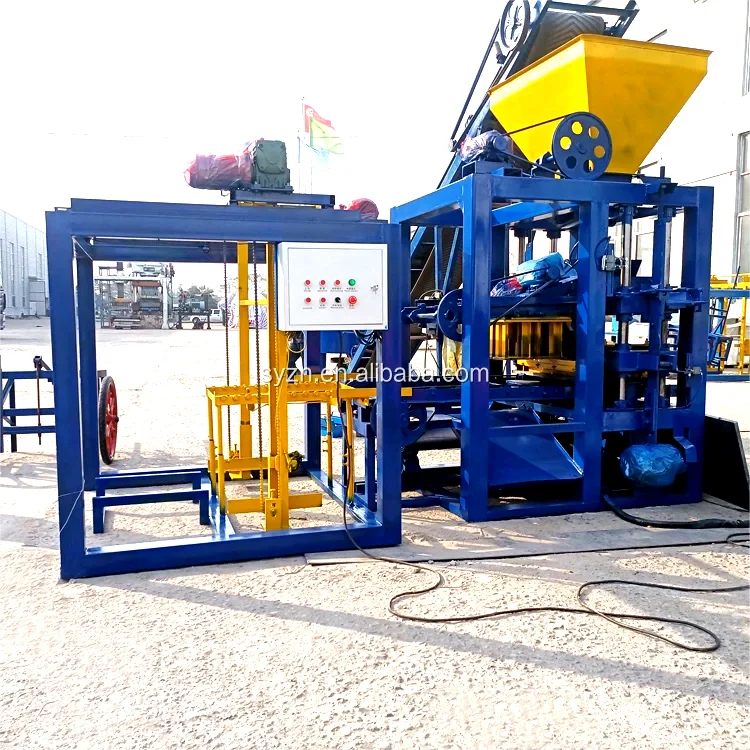
 High quality block machine