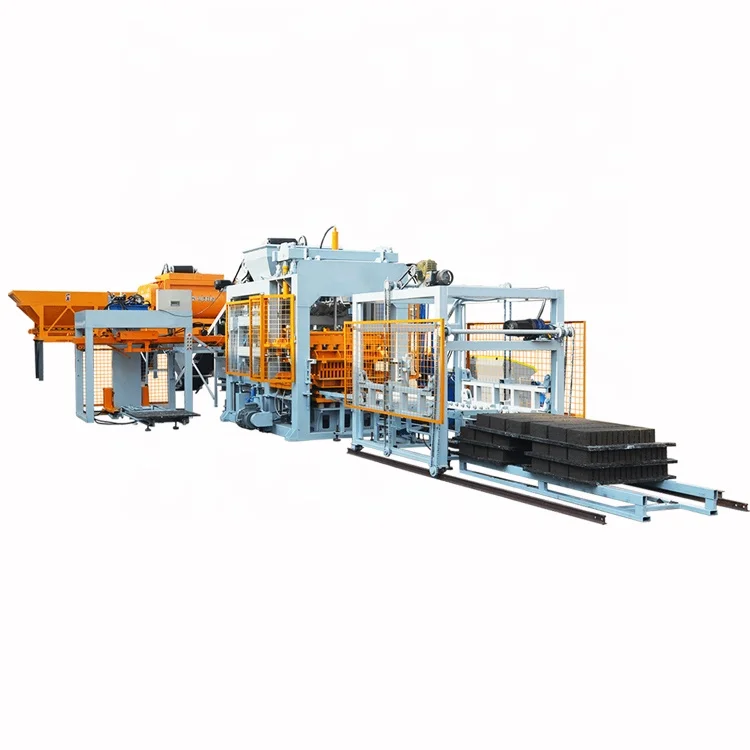
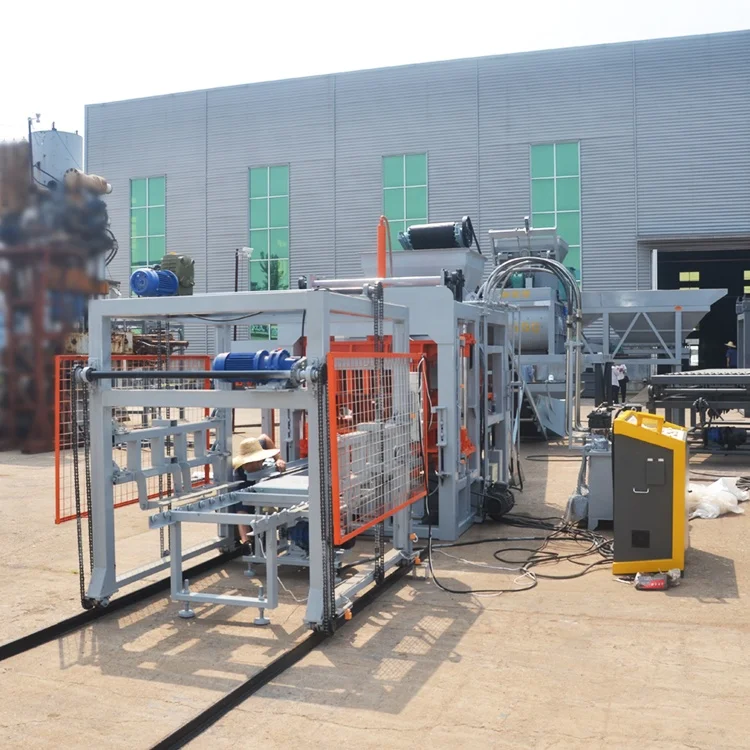
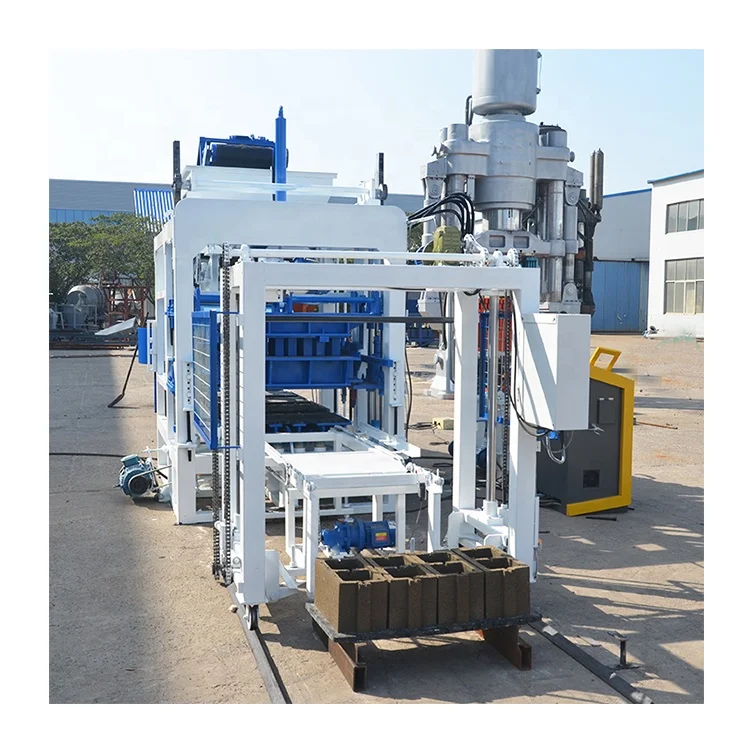
Matched System Specification — every QT5-15 block machine is configured as a complete press, mould, pallet, and handling line matched to your target block format rather than shipped as a catalogue default.
Technical Specifications
| Parameter |
Value |
| Model |
QT5-15 |
| Product Type |
Fully Automatic Hydraulic Block Making Machine |
| Overall Dimensions (L×W×H) |
7400 × 1950 × 2800 mm |
| Total Mass |
5000 kg |
| Overall Power |
32 kW |
| Vibration Force |
80 kN |
| Vibration Frequency |
0–60 Hz |
| Vibration Form |
Platform Vibration |
| Moulding Mode |
Automatic loading, vibration moulding |
| Demolding Method |
Hydraulic |
| Pallet Size |
1100 × 550 mm |
| Molding Cycle |
15–20 s (basis not stated in source — confirm block format) |
| Factory Area Required |
1000 m² |
| Control System |
PLC with touch screen interface |
| Hydraulic System |
Independent integrated hydraulic station |
| Block Compressive Strength |
> 15 MPa |
| Output — Hollow Block 400×200×200 mm |
900–1200 pcs/h (5 pcs/mould, 15–20 s cycle) |
| Output — Hollow Block 400×150×200 mm |
1080–1440 pcs/h (6 pcs/mould, 15–20 s cycle) |
| Output — Solid Brick 240×115×53 mm |
5760–7680 pcs/h (32 pcs/mould, 15–20 s cycle) |
| Output — Rectangular Paver 200×100×60 mm |
3600–4500 pcs/h (25 pcs/mould, 20–25 s cycle) |
| Output — Zigzag Paver 225×112.5×60 mm |
2304–2880 pcs/h (16 pcs/mould, 20–25 s cycle) |
| Raw Material Compatibility |
Fly ash (up to 70%), slag, gangue, sand, crushed stone, cement, water |
| Automation Level |
Fully automatic (pallet feeding, material feeding, vibrating, demoulding) |
| Fault Diagnosis |
Remote control and diagnostics capable |
| Voltage & Frequency |
Configurable (confirm before production) |
| PLC Display Language |
Configurable (confirm before production) |
| Warranty |
1 year (excluding spare parts) |
Application Suitability
| Application |
Material or Output |
| Hollow block production for building walls |
Crushed stone, sand, cement with fly ash or slag aggregate |
| Solid brick manufacturing for load-bearing structures |
Sand, gangue, and cement blends |
| Rectangular and zigzag paver production |
Fine aggregate and cement mixes for pavement surfaces |
| On-site block production for housing projects |
Locally sourced aggregate with cement binder |
| Format expansion for existing concrete product plants |
Multiple mould formats on a single press platform |
What "Pieces per Hour" Actually Means for Your Fully Automatic Block Making Machine for Sale
Every capacity number must be tied to a specific block format, mould cavity count, and cycle time — nothing less is useful for planning.
I have watched buyers sign contracts based on a single headline output figure, only to discover on commissioning day that the number assumed a small solid brick while their market needs hollow blocks. The daily tonnage drops by more than half, the curing yard fills at a different rate, and the pallet circuit suddenly bottlenecks. With the QT5-15, the output range for a 400×200×200 mm hollow block is 900–1200 pieces per hour at five cavities per mould and a 15–20 second cycle, while the same press running 240×115×53 mm solid bricks reaches 5760–7680 pieces per hour at thirty-two cavities. Those are entirely different businesses, and quoting one number for both is misleading [NEED_CITE: block format assumptions in capacity quotations].

Where Each Output Tier Sits in the QT5-15 Range
The QT5-15 occupies the middle tier of the Shiyue fully automatic block making machine range, balancing plant footprint against daily volume. Buyers stepping up from a semi-automatic press will notice the jump in pallet circuit speed and the reduction in manual handling at the demoulding end. Buyers coming down from a high-capacity line will find the 1000 m² factory area requirement and 32 kW power draw more manageable for a first or second plant.
Automatic Versus Semi-Automatic Versus Mobile
This fully automatic block making machine for sale handles pallet feeding, material batching, vibration, and hydraulic demoulding without operator intervention at each station. A semi-automatic press in the same range requires manual pallet handling, which cuts labour cost but lowers cycle consistency. Mobile egg-laying machines sit at the other end, producing blocks directly on a concrete floor without pallets, suited for on-site work where a fixed plant is not justified. The QT5-15 is the choice when daily volume must be predictable and the block format may change across hollow block, paver, and solid brick runs [NEED_CITE: automation level selection for block plants].
Platform Vibration and Hydraulic Pressure Working Together
Block density on the QT5-15 comes from the interaction of 80 kN vibration force at up to 60 Hz and an independent hydraulic station that controls mould compression and demoulding. Platform vibration shakes the aggregate into position across the 1100 × 550 mm pallet, while hydraulic pressure locks the mould box down during the cycle. If vibration frequency is set too high for a coarse local aggregate, the mix segregates and block faces show exposed stone. If hydraulic pressure is too low for a high fly-ash content mix, the green block slumps before it reaches the curing rack. The PLC touch screen lets the operator store recipes for each format so these settings are repeatable.
The Hidden Cost of Skipping the Aggregate Conversation
I once arrived at a site in South Asia where the buyer had ordered a mid-tier press based on catalogue capacity. Local river sand carried a clay content that absorbed water unpredictably, and the standard vibration settings left blocks friable at the edges. Output fell because every third pallet was rejected before curing. The machine was fine; the configuration had never been matched to what was actually going into the hopper. Buyers who send an aggregate sample and a target block drawing before the order avoid this entirely [NEED_CITE: effect of local aggregate clay content on block compressive strength].
Why Buyers Specify With Shiyue
Block machinery is the single product focus here, so the QT5-15 press, mould, pallet, and handling equipment are specified as one matched system rather than assembled from separate suppliers. The mould is designed for the exact formats the buyer’s market sells, including custom drawings when standard cavity layouts do not fit. Configuration is set against the buyer’s actual mix design and local aggregate, not a catalogue default. Automation level is selectable, so a plant can start with the fully automatic QT5-15 and add stacking or cubing modules later without replacing the press. Installation support and operator training are included so the first production run is not a learning exercise on the buyer’s dime.
Documentation & Verification
- Line layout showing pallet circuit and curing rack flow for the QT5-15 footprint
- Capacity calculation stating hollow block, solid brick, and paver formats individually
- Mould drawing with cavity count and cycle time for each format on your list
- Voltage, frequency, and PLC display language confirmed in writing before production
- Factory test record with pallet photographs before container loading
- Operation and maintenance manual in the buyer’s preferred language
Installation, Commissioning & Support
- 1000 m² factory area with level concrete floor and drainage for the QT5-15 line
- 32 kW dedicated circuit with voltage and frequency confirmed before electrical panel build
- Machine shipped dismantled with reassembly supervised on site by a Shiyue technician
- First-run parameter tuning for local aggregate and target block compressive strength
- Operator training covering PLC touch screen recipes, mould change, and daily maintenance
- Wear parts list and hydraulic seal kit supplied with the initial shipment
Before You Request a Quotation
Send the target block formats with dimensions, the daily volume your market absorbs, and the raw materials available within hauling distance of the plant. Confirm the local voltage and frequency, the PLC language your operators read, and whether pallet handling and stacking are already in place or need to be included. If you have an existing curing yard or forklift, share the pallet size that fits your current setup so the QT5-15 is matched to it from the start.
Frequently Asked Questions
Q: How is the capacity figure verified, and which block format does each number assume?
A: Every output figure on this page is tied to a specific block dimension, cavity count, and cycle time. For example, 900–1200 pieces per hour applies to a 400×200×200 mm hollow block at five cavities and a 15–20 second cycle. We provide a written capacity calculation for each format on your list before the order is confirmed.
Q: What voltage, frequency, and PLC language options are confirmed before the machine ships?
A: The QT5-15 electrical panel is built to the buyer’s confirmed voltage and frequency. The PLC touch screen language is set before dispatch so operators can read menus from day one. Both items are confirmed in writing during the quotation stage and verified again before the panel is wired.
Q: How is the machine configured to match my local aggregate rather than a catalogue default?
A: We ask for a sample of your local sand, crushed stone, or fly ash and your target mix ratio. Vibration frequency, hydraulic pressure, and cycle time are then adjusted in the PLC recipe to suit that material, so block compressive strength and surface finish meet your market standard from the first production run.
Q: What is included in the quotation beyond the press itself?
A: The quotation covers the QT5-15 press, the moulds for your confirmed formats, pallets sized to match, and the supporting equipment you select — raw material feeder, mixer, pallet feeder, and stacking system. Items not included are listed separately so there are no surprises at commissioning.

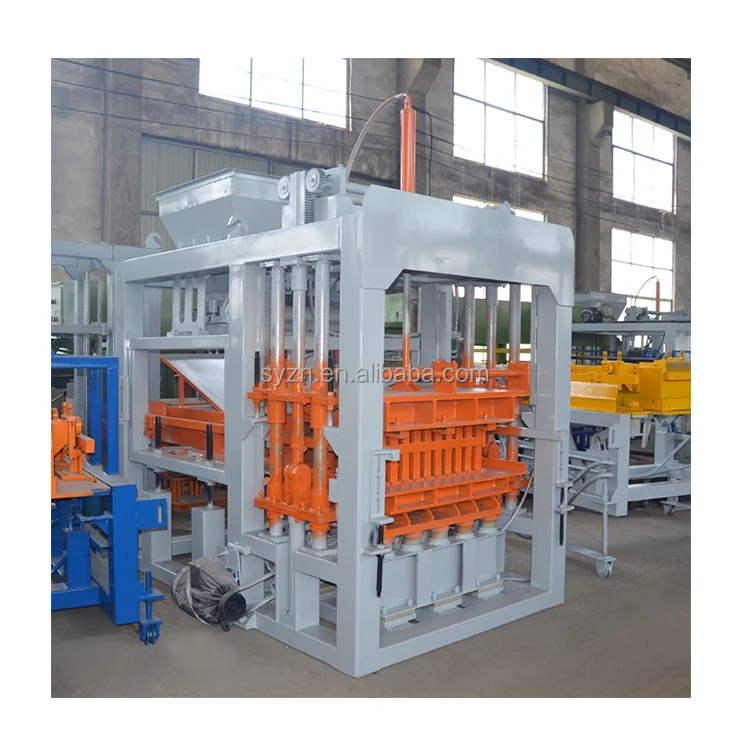
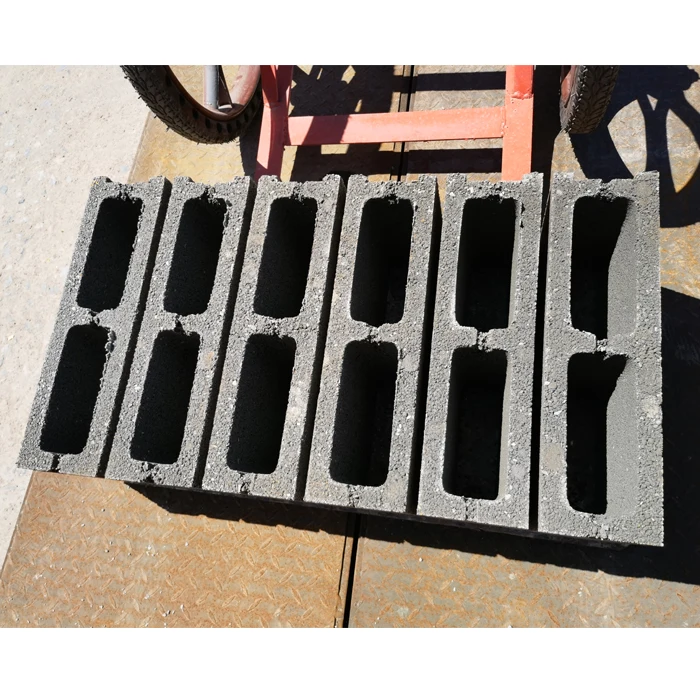 High quality block machine