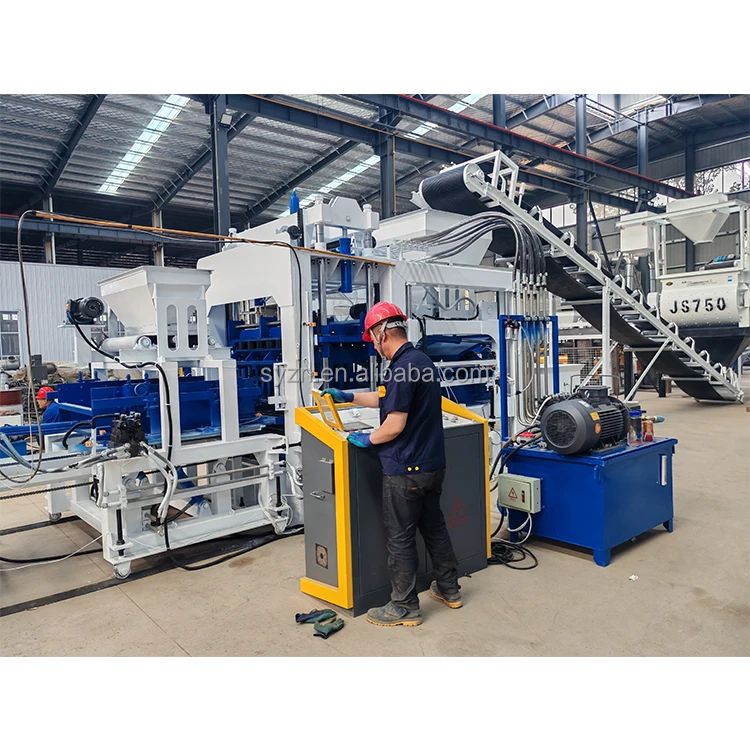
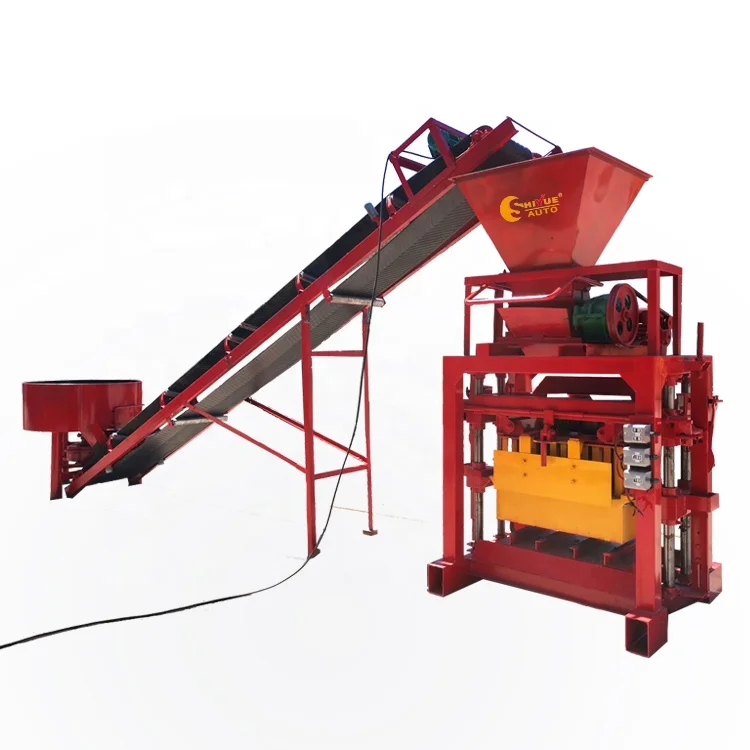
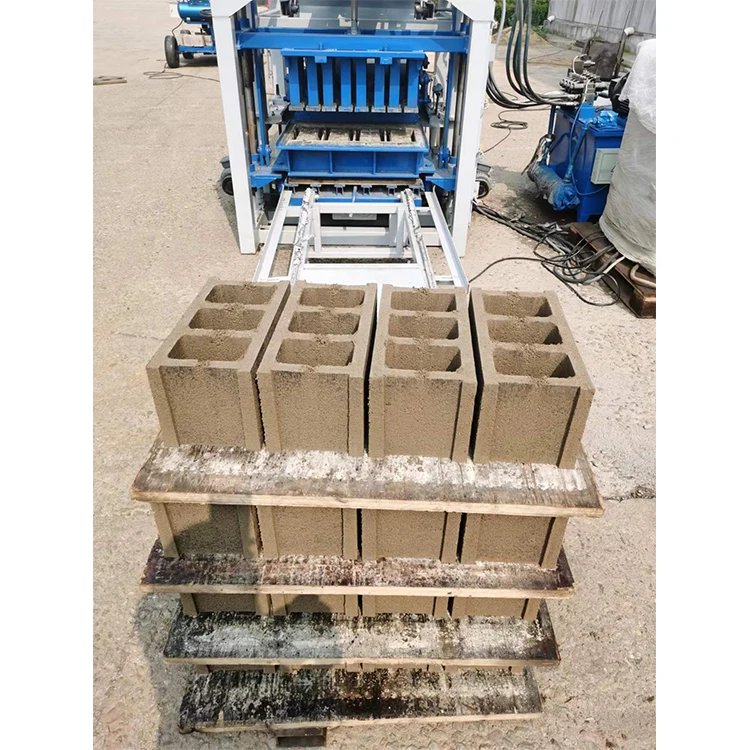
Matched System Specification — The QTJ4-24 operates as a coordinated block line with its mixer, conveyor, and pallet dimensions sized to the press cycle rather than sourced as isolated components.
Technical Specifications
| Parameter |
Value |
| Product Type |
Semi-Automatic Concrete Block Making Machine |
| Model |
QTJ4-24 |
| Overall Dimensions (L×W×H) |
3600mm × 1700mm × 2560mm |
| Net Weight |
3.5T |
| Main Machine Power |
11.95kW |
| Pallet Size |
900mm × 450mm |
| Molding Cycle |
24–26s (basis not stated in source — confirm block format and material) |
| Mould Option 1 |
400×200×200mm — 4 pcs/mould |
| Mould Option 2 |
390×240×190mm — 3 pcs/mould |
| Mould Option 3 |
390×120×190mm — 6 pcs/mould |
| Mould Option 4 |
240×115×53mm — 21 pcs/mould |
| Vibration Type |
Table vibration feeding + fluctuation vibration molding |
| Control System |
Electrical control cabinet with mechanical interlocking |
| Automation Level |
Semi-automatic (manual pallet handling, two feed-way options) |
| Compatible Mixer |
JQ350 or JQ500 vertical mixer |
| Compatible Conveyor |
6m or 8m belt conveyor |
| Wire Specification |
Main machine 3×6mm² / Mixer 3×4mm² / Conveyor 3×2.5mm² / General 3×16mm² |
| Warranty |
1 year for whole machine (excluding spare parts) |
Application Suitability
| Application |
Material or Output |
| Hollow block production |
Crushed stone, cement, sand aggregate blends |
| Solid standard brick |
Cement and fine sand mixtures, 240×115×53mm format |
| Paving block production |
High-density aggregate mixes, subject to mould configuration |
| Small-scale block plant setup |
Lower investment entry point for first-time producers |
| On-site construction blocks |
Production at building sites where fixed plant is not justified |
What "24–26 Seconds per Cycle" Actually Means for Your Output
Cycle time without a stated block format is not a usable production figure.
Buyers often compare machines by a single cycle number and assume daily output scales linearly. In practice, the QTJ4-24 produces a very different quantity of 400×200×200mm hollow blocks compared to 240×115×53mm solid bricks per shift, and the aggregate blend determines whether that 24–26 second cycle holds up or drifts longer as the mix sticks to the mould. [NEED_CITE: relationship between aggregate clay content and block release time] When a semi-automatic block making machine manufacturer quotes capacity, the format and mix must be named alongside the number.

Where the QTJ4-24 Sits in the Full Machine Range
The QTJ4-24 occupies the entry semi-automatic tier, positioned above mobile egg-laying machines and below fully automatic lines with pallet stackers and cubing systems. For a buyer surveying the complete block machine range, this model suits operations that can handle manual pallet transfer but want consistent vibration and hydraulic molding that mobile units cannot match. The semi-automatic block making machine manufacturer configures the press with a stationary setup requiring a precast concrete ground, meaning it demands more site preparation than an egg-layer but less infrastructure than a high-capacity automatic plant.
Matching the Mixer and Conveyor to the Press Cycle
A common mistake in block plant setup is specifying the press first and adding material handling as an afterthought. The QTJ4-24 pairs with either a JQ350 or JQ500 vertical mixer and a 6m or 8m belt conveyor, chosen based on the target block format and shift length. If the mixer cannot replenish the hopper within the press cycle, the operator stands idle and actual daily output falls below what the molding speed suggests. [NEED_CITE: material handling bottleneck in semi-automatic block production lines] The wire specifications — 3×6mm² for the main machine, 3×4mm² for the mixer — ensure each station receives adequate current without voltage drop affecting vibration consistency.
Reading the Specifications That Shape Block Quality
The vibration system combines table vibration feeding with fluctuation vibration molding, a two-stage approach that settles the aggregate into the mould cavity before applying peak compaction force. This matters because uneven fill leads to density variation across the block face, which becomes visible after curing. The 900×450mm pallet size determines how many blocks cure per rack position and must match the buyer’s existing curing area dimensions and forklift capacity. The four mould formats — from 4 pcs per mould at 400×200×200mm down to 21 pcs per mould at standard brick size — mean the daily output calculation changes entirely depending on which product the buyer’s market actually purchases. The electrical-mechanical interlocking control reduces the chance of an operator triggering the upper and lower vibrators out of sequence, protecting both the mould and the green block.
The Cost of Skipping the Site Condition Check
Dispatching a block machine without confirming local aggregate properties and available voltage creates problems that surface only after the machine is bolted to the floor. A mix with high clay content slows the release from the mould, extending the cycle well past the quoted range and cutting shift output significantly. Incorrect voltage or frequency at the site causes the vibration motor to run outside its rated speed, producing blocks with inconsistent density and premature bearing wear. [NEED_CITE: impact of voltage deviation on vibration motor performance in block machines] These issues are not manufacturing defects — they are configuration gaps that could have been addressed before the machine left the factory.
Why Buyers Source This Tier Through the Full Range
The machine, mould, pallet, and handling equipment are specified as one system, preventing the mismatch that occurs when a buyer sources the press and mixer from separate suppliers. The configuration is set against the buyer’s actual mix design and local aggregate rather than a catalogue default, ensuring the vibration force and cycle time align with the material available on site. Mould design covers the formats the buyer’s market sells, with custom drawings available when standard sizes do not match local building codes. The automation level allows a buyer to start with the QTJ4-24 semi-automatic setup and move to a higher tier as production volume grows. Factory testing records document the machine’s performance on the agreed block format before it is dismantled for container loading.
Documentation & Verification
- Line layout showing QTJ4-24 footprint with mixer and conveyor positions
- Capacity calculation sheet stating the block format assumed for each output figure
- Mould drawing and format list for the four standard cavity sizes
- Voltage and control language confirmation record before production begins
- Factory test record on the agreed block format prior to dispatch
- Packing photographs showing dismantling state for container loading
Installation, Commissioning & Support
- Requires precast concrete ground pad leveled to QTJ4-24 3600×1700mm footprint
- Dedicated 3×16mm² general power circuit with confirmed voltage and frequency
- Machine ships dismantled for container loading with reassembly at site
- First-run parameter setting for vibration timing matched to buyer’s mix design
- Operator training on electrical-mechanical interlocking sequence and mould change
- Wear parts list covering vibration pads and mould liner replacement intervals
Preparing Your Inquiry
Provide the target block format your market demands, the local aggregate type available, and your daily output expectation so the capacity calculation can be built around real conditions rather than catalogue assumptions. Confirm the site voltage, frequency, and preferred control display language to avoid commissioning delays after arrival. Share the dimensions of your existing curing area and forklift capacity so the 900×450mm pallet specification can be validated against your handling setup.
Frequently Asked Questions
Q: How should I calculate realistic daily output from the QTJ4-24?
A: Daily output depends on which of the four mould formats you run, the aggregate blend available locally, and the number of effective production hours per shift. A capacity calculation must name the specific block dimension — for example, 400×200×200mm hollow blocks at 4 pcs per mould — rather than quoting a single cycle number in isolation. Request a format-by-format output sheet with your inquiry.
Q: What voltage and control language options are available?
A: Voltage and frequency must be confirmed before production to match the buyer’s site electrical supply, whether 220V, 380V, or 440V at 50Hz or 60Hz. The control display language is set during manufacturing to match the operator’s working language. Specifying these details at inquiry stage prevents commissioning delays once the machine arrives at the plant.
Q: Where does the QTJ4-24 sit compared to automatic and mobile options?
A: The QTJ4-24 sits at the entry semi-automatic tier, above mobile egg-laying machines that produce on-site without pallets and below fully automatic lines with pallet stackers and cubing systems. It suits buyers who can manage manual pallet transfer but require consistent vibration molding that mobile units cannot deliver. The tier choice depends on investment level, daily volume target, and available plant footprint.
Q: What ground preparation does the QTJ4-24 line require?
A: The machine requires a precast concrete ground pad sized to its 3600×1700mm footprint, leveled to support the 3.5T net weight and vibration forces during molding. The mixer and conveyor also need stable positioning relative to the press hopper. Site preparation details, including wire routing for the 3×16mm² general power feed, are provided in the line layout document before shipment.
Q: Which moulds come with the machine and can I add formats later?
A: The QTJ4-24 supports four standard mould sizes covering hollow block, solid brick, and select paver formats. The quotation lists which moulds are included based on the buyer’s market requirements. Additional moulds can be ordered to buyer drawings, and the mould change system allows format switching within a shift when the operator is trained on the procedure.

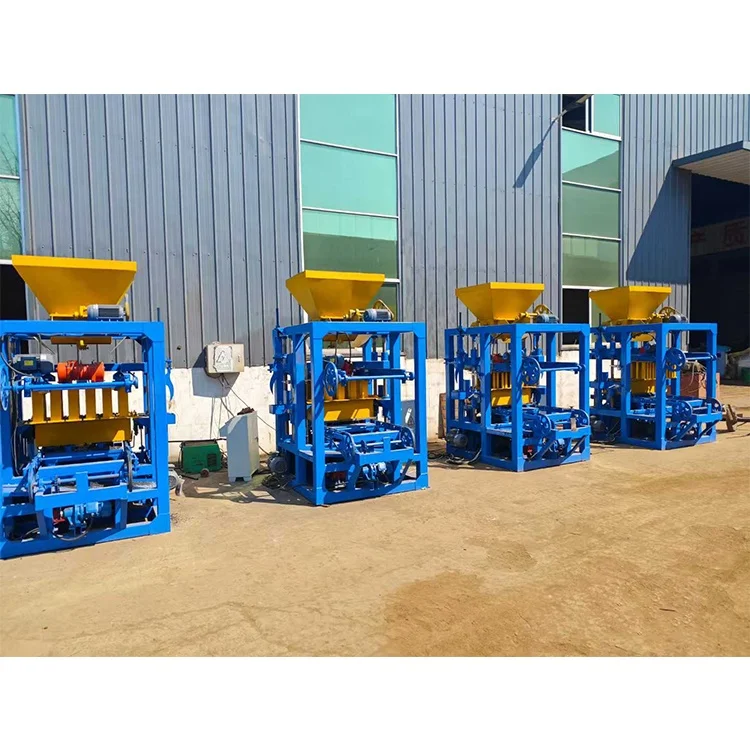
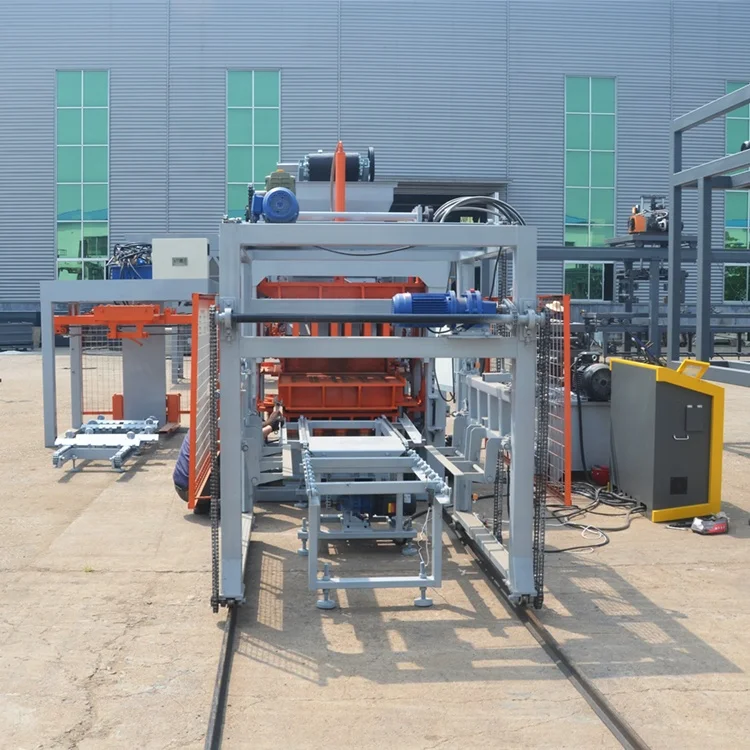 High quality block machine