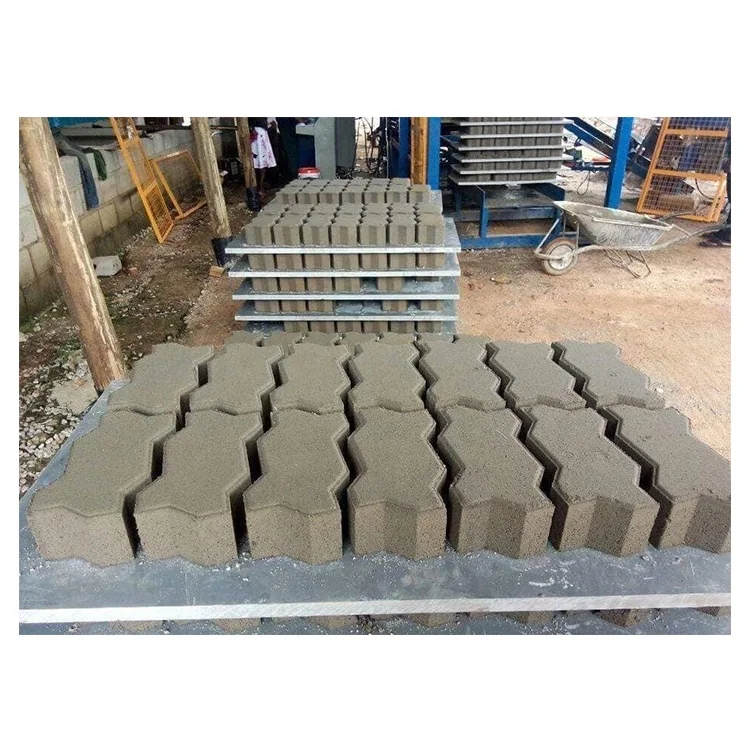
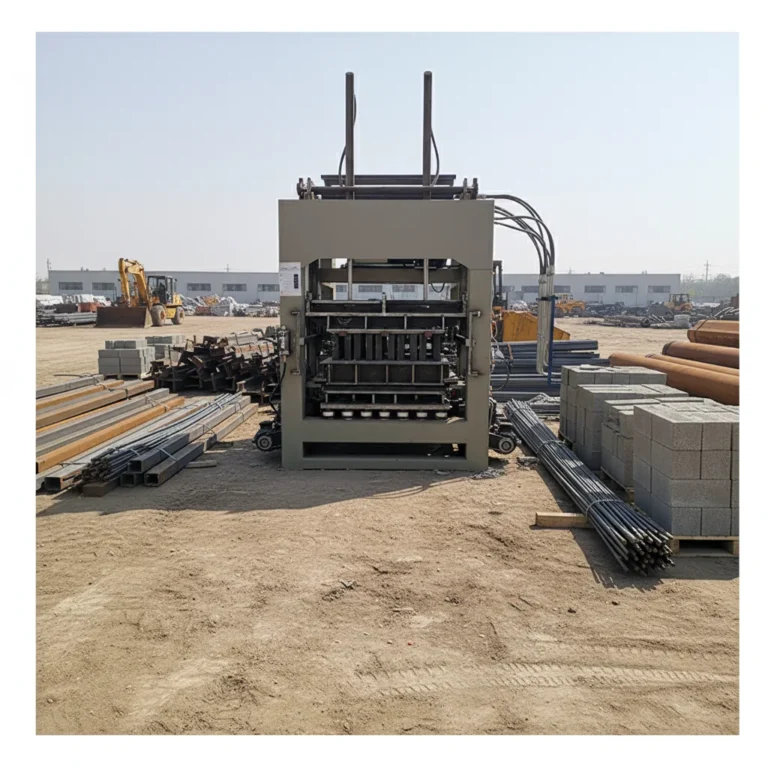
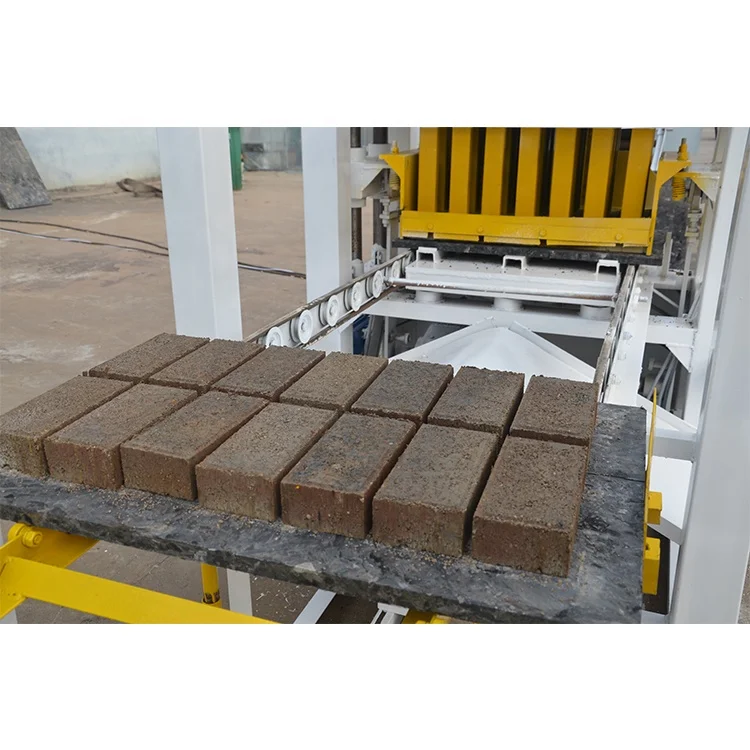
System-Matched Line Integrity — The QT4-15A is specified as a complete production unit where the press, pallet feeder, conveyor, and control cabinet arrive as one tested system rather than separate components assembled on site.
Technical Specifications
| Parameter |
Value |
| Model |
QT4-15A |
| Product Type |
Fully Automatic Concrete Block Production Line |
| Overall Dimensions (L×W×H) |
7100×1600×2610 mm |
| Total Weight |
3 T |
| Molding Cycle |
15–25 s |
| Vibration Frequency |
4600 r/min |
| Exciting Force |
40–50 kN |
| Total Power |
18.45 kW |
| Mixer Model |
JQ350 |
| Pallet Size |
850×550×25 mm |
| Control System |
PLC control system |
| Hydraulic Station |
Included |
| Line Components |
Block making machine, hydraulic station, PLC control system, pallet feeder, brick conveyor, block sweeper |
| Included Accessories |
Manual hydraulic trolley, spare parts and tools |
| Output Capacity |
408 pcs/h (based on 400×200×200 mm hollow block, 4 pcs/mould) |
| Output Capacity |
510 pcs/h (based on 400×150×200 mm hollow block, 5 pcs/mould) |
| Output Capacity |
2100 pcs/h (based on 240×115×53 mm solid brick, 18 pcs/mould) |
| Output per 8h Shift |
3264 pcs (based on 400×200×200 mm hollow block) |
| Output per 8h Shift |
4080 pcs (based on 400×150×200 mm hollow block) |
| Output per 8h Shift |
17000 pcs (based on 240×115×53 mm solid brick) |
| Voltage & Frequency |
Configurable to site standard (basis to be confirmed before production) |
| PLC Display Language |
Configurable (basis to be confirmed before commissioning) |
| Applied Products |
Paver, solid block, hollow block, curbstone |
| Raw Materials |
Crushed stones, sand, cement, dust, fly ash |
Application Suitability
| Application |
Material or Output |
| Hollow block production for residential and commercial walls |
400×200×200 mm or 400×150×200 mm formats from crushed stone, sand, and cement |
| Solid brick manufacturing for load-bearing and partition masonry |
240×115×53 mm bricks using sand, cement, fly ash, and stone dust |
| Interlocking paver and curbstone production for infrastructure projects |
Paver and curbstone formats with mould change on the same press |
| On-site block production for housing and development contractors |
Project-based output using locally available aggregate and cement |
| First plant setup for entrepreneurs entering the block market |
Entry-level fully automatic tier with matched line components |
What "Pieces per Hour" Actually Means on the QT4-15A
Every output figure here is tied to a specific block size and mould cavity count, because a single headline number hides the format assumption.
When a quotation lists a cycle rate without naming the block format behind it, buyers often discover on site that their actual product runs slower than expected. I have watched crews in Guangdong wait for a press that was rated on a standard block while their market demanded a heavier, denser paver that added seconds to every cycle [NEED_CITE: common discrepancy between quoted cycle rates and real-world block format output]. The QT4-15A fully automatic block machine range documentation addresses this by stating capacity per format: 408 pieces per hour for the 400×200×200 mm hollow block, 2100 pieces per hour for the solid brick. Those numbers shift the moment the mould, mix design, or local aggregate changes — and that is exactly the conversation that needs to happen before an order is placed.

Where the QT4-15A Sits in the Fully Automatic Block Machine Range
The QT4-15A occupies the entry-automatic tier. It is positioned above semi-automatic workshop machines that rely on manual pallet handling, and below high-capacity lines that add automatic stacking and cubing. For a buyer moving from manual production, this fully automatic block machine range model introduces PLC-controlled pallet feeding and a brick conveyor without jumping to the footprint and investment of a large-scale plant.
Understanding the Line as a Matched System
A block press does not produce alone. The pallet feeder must deliver on time, the conveyor must clear finished blocks before the next cycle, and the sweeper must clean the pallet return path. On the QT4-15A, these stations are specified together so cycle times align. When one station lags, the press waits — and waiting presses are where quoted capacity disappears [NEED_CITE: production line bottleneck analysis in concrete block manufacturing]. This block making machine manufacturer approach means the quotation covers the hydraulic station, PLC cabinet, pallet feeder, conveyor, and sweeper as a single bill rather than leaving gaps for the buyer to fill.
Vibration Force, Hydraulic Pressure, and What They Mean for Block Density
The 4600 r/min vibration frequency and 40–50 kN exciting force work together with hydraulic pressure to compact the mix into the mould. Higher vibration alone does not guarantee stronger blocks; the hydraulic pressure must match the mix stiffness. On a fly ash-heavy mix, lower vibration with sustained pressure often produces a denser block than high vibration with insufficient hold time. The 15–25 second molding cycle range allows the PLC to adjust hold time per format. Pallet size at 850×550×25 mm determines how many blocks cure per rack tier — a dimension buyers should check against their existing forklift fork width and curing room shelf spacing before confirming the order.
The Cost of Skipping the Pallet and Voltage Conversation
Pallet size seems minor until the first shipment arrives and the forklift cannot slide under the rack. Voltage and frequency are equally easy to overlook — a 50 Hz machine on a 60 Hz site runs the vibration motor faster, altering compaction behavior and accelerating bearing wear [NEED_CITE: motor frequency mismatch effects on industrial vibration equipment]. I have seen commissioning delayed by days because the PLC display language was not confirmed, leaving the operator unable to read fault codes. These are not design flaws; they are specification gaps that a two-page checklist prevents.
Why Buyers Source This Tier from SHIYUE
Block machinery is the single focus here, so the QT4-15A arrives with its mould, pallet, and handling equipment specified as one system rather than assembled from separate suppliers. Configuration is set against the buyer’s actual mix design and target block format, not a catalogue default. Mould design covers the formats the buyer’s market sells, with custom drawings available. The automation level is selectable — a buyer can start with the included pallet feeder and conveyor, then add automatic stacking later. Installation support includes operator training on the PLC interface and mould change procedure.
Documentation & Verification
- Line layout and capacity calculation stating the block format assumed for each output figure
- Machine specification sheet with confirmed voltage, frequency, and PLC language
- Mould drawing and format list including custom mould options
- Factory test record with pallet and block photographs before dispatch
- Packing photographs and customs documentation support for shipment
Installation, Commissioning & Support
- Foundation pad sized to the 7100×1600 mm footprint with level tolerance for vibration stability
- Dedicated power circuit matching the confirmed voltage and 18.45 kW total draw
- Machine arrives with hydraulic station and PLC cabinet pre-wired for on-site connection
- First-run parameter tuning for vibration frequency and molding cycle against local aggregate
- Operator training on PLC fault codes, mould change sequence, and pallet feeder timing
- Spare parts kit and manual hydraulic trolley included for early-stage maintenance
Before You Send an Inquiry
To match the QT4-15A to your site, share the block formats you sell most, your target daily output per format, and the raw materials available locally including aggregate type and moisture range. Confirm your site voltage, frequency, and preferred PLC display language. If you have existing curing racks or forklifts, provide their dimensions so the 850×550 mm pallet can be verified against your handling setup.
Frequently Asked Questions
Q: How do I verify real daily output for the block format I actually sell?
A: Request a capacity calculation that names the block size, mould cavity count, and assumed cycle time for your specific format. The QT4-15A figures are stated per format — 408 pcs/h for 400×200×200 mm hollow block, 2100 pcs/h for solid brick. Your actual output depends on mix design, aggregate, and operator rhythm, so a factory test on your material gives the most reliable number.
Q: Where does the QT4-15A sit compared to semi-automatic and higher-tier machines?
A: It is the entry-automatic tier in the fully automatic block machine range. Above semi-automatic models that require manual pallet handling, and below high-capacity lines with automatic stacking and cubing. It suits buyers who want PLC-controlled pallet feeding and conveyor output without the footprint of a large-scale plant.
Q: What voltage, frequency, and PLC language options are available?
A: Voltage and frequency are configured to your site standard before production begins — this must be confirmed in writing. The PLC display language is also set during manufacturing. Both items are included in the pre-production checklist to avoid commissioning delays on arrival.
Q: Which pallet size does this machine use, and can I match it to my existing setup?
A: The pallet size is 850×550×25 mm. Before ordering, measure your curing rack shelf spacing and forklift fork width to confirm compatibility. If your existing handling equipment uses a different dimension, discuss alternatives during the configuration stage to avoid on-site modification.
Q: What is included in the line quotation versus what I must source separately?
A: The quotation covers the block machine, hydraulic station, PLC control, pallet feeder, brick conveyor, block sweeper, manual hydraulic trolley, and spare parts. Stacking method and curing rack handling are not stated in the base specification, so confirm whether automatic stacking is needed or if manual handling fits your labor plan.

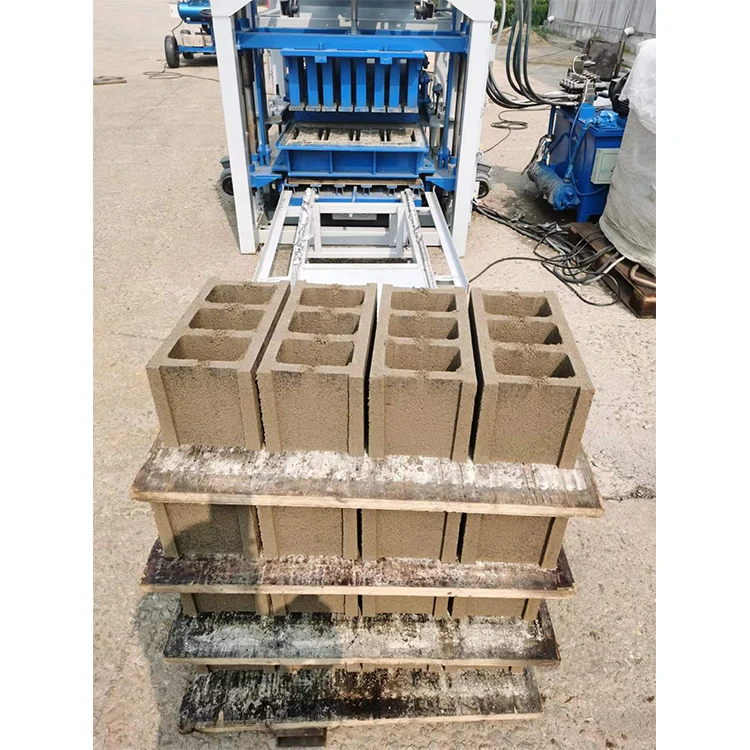
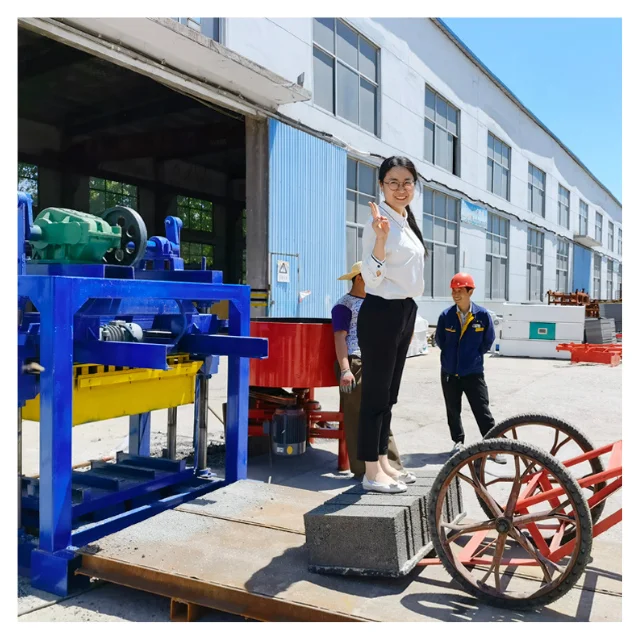 High quality block machine