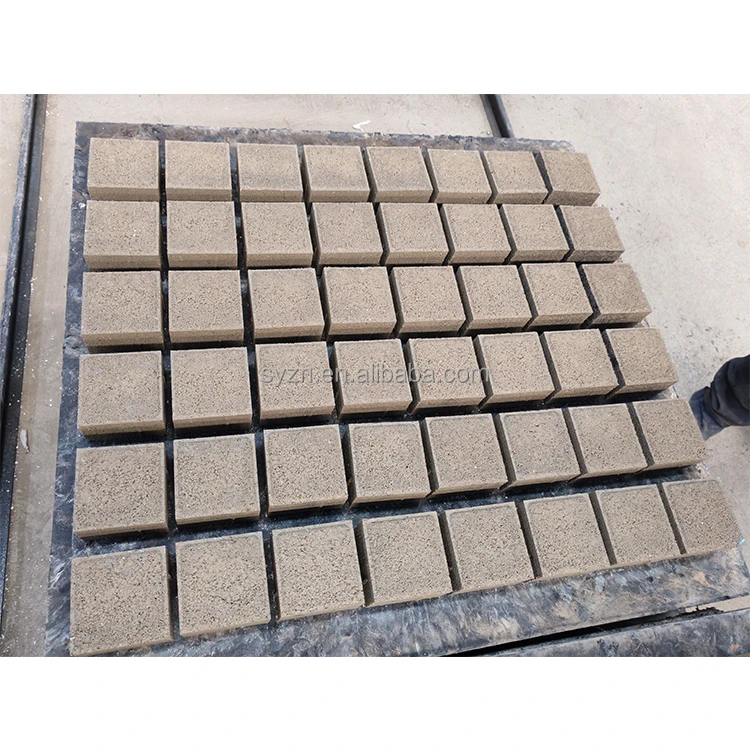
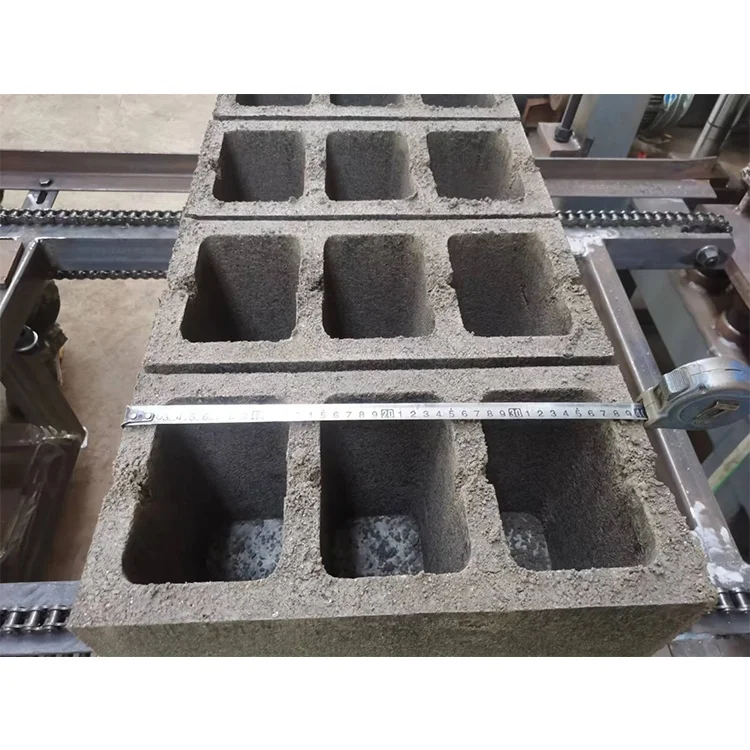
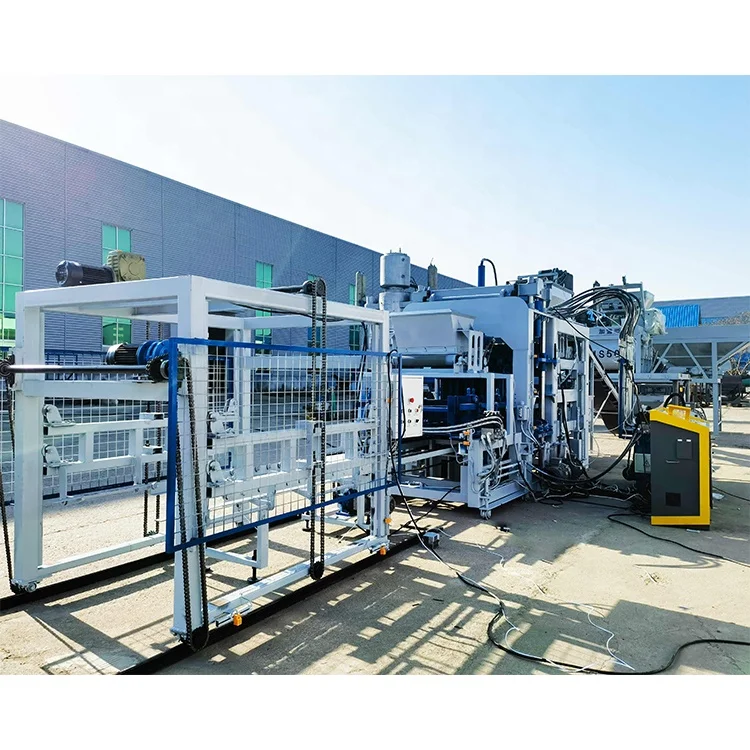
Matched System Configuration — the QT10-15 block machine, mould, pallet and handling equipment are specified as one integrated system rather than sourced separately, eliminating interface mismatches before the line ships.
Technical Specifications
| Parameter |
Value |
| Model |
QT10-15 |
| Product Type |
Stationary Block Machine |
| Control System |
PLC with frequency conversion control |
| Vibration Technology |
Four-axis vibration with dynamic and static table |
| Vibration Acceleration |
20g |
| Mould Formats |
Hollow block, interlock brick, solid block, porous brick, pavement brick, slope protection brick |
| Automation Level |
Full automatic |
| Feeding System |
Press-in arch breaker with 360° rotation |
| Mould Change System |
Replaceable cloth platform wear-resistant plate |
| Vibration Reduction |
Flexible vibration reduction on pressure head; adjustable pressure air bag on mold box |
| Output Capacity |
(basis to be confirmed — depends on block format, material, and thickness) |
| Cycle Time |
(basis to be confirmed — varies by block format) |
| Pallet Size |
(basis to be confirmed) |
| Standards |
CE declaration where applicable |
Application Suitability
| Application |
Material or Output |
| Hollow block production for commercial and residential walls |
Crushed stone, sand, cement, fly ash aggregates |
| Interlock brick manufacturing for paving and landscaping |
Graded aggregate with cement binder |
| Solid block output for load-bearing structures |
Dense aggregate mix with cement |
| Porous brick production for permeable surface projects |
Open-graded aggregate with controlled cement ratio |
| Pavement brick for walkways and parking areas |
Fine aggregate with pigment and cement |
| Slope protection brick for embankment and erosion control |
Coarse aggregate with reinforced cement matrix |
What "Cycles per Hour" Leaves Out When Sizing a Stationary Block Machine Manufacturer Line
Quoted cycle counts mean nothing without the block format they assume.
Capacity numbers on a brochure often reflect the fastest possible cycle on the lightest block format in the mould catalogue. When you switch to a dense hollow block or a thick interlock paver, the same QT10-15 press needs longer vibration and pressing time per cycle. I have watched plant owners in Southeast Asia and Africa plan their daily targets around a single headline figure, then discover during commissioning that their real output on the block their market actually buys falls noticeably short of the projection. A stationary block machine manufacturer worth working with will give you a capacity table that states the format, mix, and curing assumptions behind every number [NEED_CITE: block format assumptions in capacity calculations].

Where the QT10-15 Sits in the Shiyue Range
The QT10-15 occupies the high-capacity tier among Shiyue stationary machines. Below it sit semi-automatic models suited to smaller plants with lower investment, and mobile egg-laying machines for on-site production without a fixed curing yard. The QT10-15 is designed for buyers who have already decided they need a fixed plant with automatic pallet handling and full PLC control. If you are still weighing whether a semi-automatic setup could meet your volume, the lower tiers deserve a look first — but if your daily target puts you in the upper output band and you need format flexibility, this is the tier where the conversation belongs.
Comparing Footprint and Automation Across Tiers
A full automatic QT10-15 line requires a dedicated curing area, pallet return system, and stacking station that a semi-automatic plant does not. The physical footprint is considerably larger, and the power draw reflects the hydraulic and vibration systems running at continuous duty. Semi-automatic tiers let you start with manual pallet handling and add automation stages later, which some entrepreneurs prefer when launching a first block plant. The QT10-15 tier assumes you are building for volume from day one and want the press, pallet feeder, stacker, and cubing system to operate as a coordinated sequence [NEED_CITE: automation tier comparison in block plant layout].
How Vibration, Pressure, and Mould Design Interact on This Press
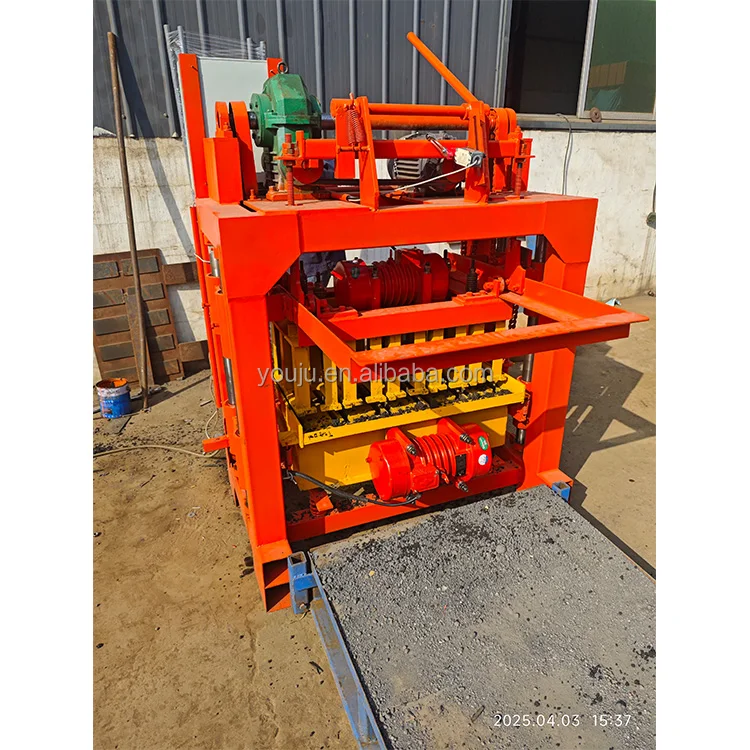
The four-axis vibration system rated at 20g acceleration works together with the dynamic and static table to compact material from multiple directions simultaneously. This matters because single-axis vibration tends to leave density gradients — the top of the block reaches target strength while the bottom remains under-compacted. The frequency conversion control in the PLC lets the operator adjust vibration intensity per mould format, so a thin pavement brick receives a different energy profile than a tall hollow block. The flexible vibration reduction on the pressure head prevents transmitted shock from cracking freshly formed blocks during the lift-off phase. The adjustable pressure air bag on the mold box absorbs residual oscillation, which is particularly important when running porous brick formats where the mix is intentionally open-graded and more fragile at demoulding. The press-in arch breaker with 360° rotation ensures consistent material feed across the mould cavity, avoiding the half-filled blocks that result from bridging in the hopper.
The Hidden Cost of Skipping Configuration Checks
When a buyer orders a stationary block machine without confirming the pallet size against their existing curing racks and forklift capacity, the machine arrives and the pallets do not stack on the shelving already installed in the yard. Retrofitting the curing area after the line is commissioned costs far more than specifying the pallet correctly at the inquiry stage. I have also seen lines shipped with voltage and PLC language settings assumed rather than confirmed, which delays commissioning by weeks while the buyer waits for a technician to arrive and reconfigure the control cabinet [NEED_CITE: commissioning delays from unconfirmed voltage and language settings]. The QT10-15 runs on PLC with frequency conversion control, which means the display language and parameter menus must be set before the machine leaves the factory — not discovered on the first morning of production.
Why Source This Tier Through Shiyue
The QT10-15 is specified alongside its mould, pallet, and handling equipment as a matched system, so the vibration force, hydraulic pressure, and pallet material are balanced against the same target block format rather than negotiated with separate suppliers. Configuration is set against your actual mix design and local aggregate, not pulled from a catalogue default — the same machine behaves differently on river sand versus crushed basalt, and the PLC parameters are tuned accordingly. Mould design covers the formats your market sells, and custom drawings are available when standard catalogue moulds do not match local specifications. The automation level is selectable within the range, so buyers who start on a semi-automatic tier can plan an upgrade path without replacing the entire press platform. Installation support includes operator training on the specific mould formats and mix proportions your line will run.
Documentation & Verification
- Line layout and capacity calculation stating the exact block format assumed for the QT10-15
- Machine specification sheet with vibration force and hydraulic pressure matched to your mix
- Mould drawing and format list covering every block type in your production plan
- Pallet specification confirming size, material, and load rating against your curing setup
- Voltage, frequency, and PLC display language confirmation record before shipment
- Factory test record on your target block format before dispatch
Installation, Commissioning & Support
- Foundation plan drawn to the QT10-15 footprint with curing yard and pallet return layout
- Power supply verified for the PLC frequency conversion system voltage and phase requirements
- Machine assembled on-site with vibration table leveling checked against specification tolerances
- First-run commissioning with your local aggregate and mix ratio to confirm block density
- Operator training on mould change procedure using the replaceable wear-resistant plate system
- Wear parts and mould inventory list matched to your daily production volume and format rotation
- Maintenance schedule aligned to hydraulic and vibration component service intervals
Before You Request a Quotation
To size the QT10-15 correctly within the Shiyue stationary block machine manufacturer range, share your target block formats with dimensions, your planned daily output volume, and the raw materials available locally including aggregate type and source. Confirm your site voltage, frequency, and preferred PLC display language so the control system ships ready to run. Let us know your existing curing area dimensions and forklift capacity so the pallet specification aligns with your yard.
Frequently Asked Questions
Q: What output tier does the QT10-15 occupy and how does it compare to semi-automatic models?
A: The QT10-15 sits in the high-capacity tier of the Shiyue stationary range. Semi-automatic models below it require manual pallet handling and suit lower-volume plants or first-time buyers. The QT10-15 is designed for full automatic operation with coordinated pallet feeding, stacking, and cubing, targeting buyers whose daily volume justifies the larger plant footprint and higher automation investment.
Q: What block format is the quoted capacity based on?
A: Capacity varies significantly across hollow blocks, interlock bricks, solid blocks, and paving formats. Denser and taller formats require longer vibration and pressing cycles, reducing hourly output compared to lighter formats. A proper quotation should state the capacity figure alongside the specific block format, dimensions, and mix design it assumes rather than quoting a single headline number.
Q: What plant footprint does a full automatic QT10-15 line require?
A: A full automatic line includes the press, raw material feeding, mixing, pallet return, stacking, and curing rack handling. The footprint is noticeably larger than a semi-automatic setup where pallet handling is manual. Buyers should confirm their site dimensions, ceiling height, and curing yard area before the layout is finalized to ensure every station connects without bottleneck.
Q: Can I start with a lower tier and upgrade to this automation level later?
A: The Shiyue range is designed so buyers can begin with semi-automatic operation and add automation stages over time. The press platform in lower tiers shares design principles with the QT10-15, though a full upgrade may involve replacing pallet handling and stacking equipment. Discussing your growth plan at the inquiry stage ensures the initial configuration leaves room for expansion.
Q: How does investment level scale across the Shiyue stationary block machine range?
A: Investment increases as you move from mobile and semi-automatic tiers through to the QT10-15 full automatic tier. The difference reflects not just the press itself but the supporting pallet handling, stacking, and control systems. Buyers should weigh the investment against their target daily output and the labour cost difference between manual and automatic operation in their local market.

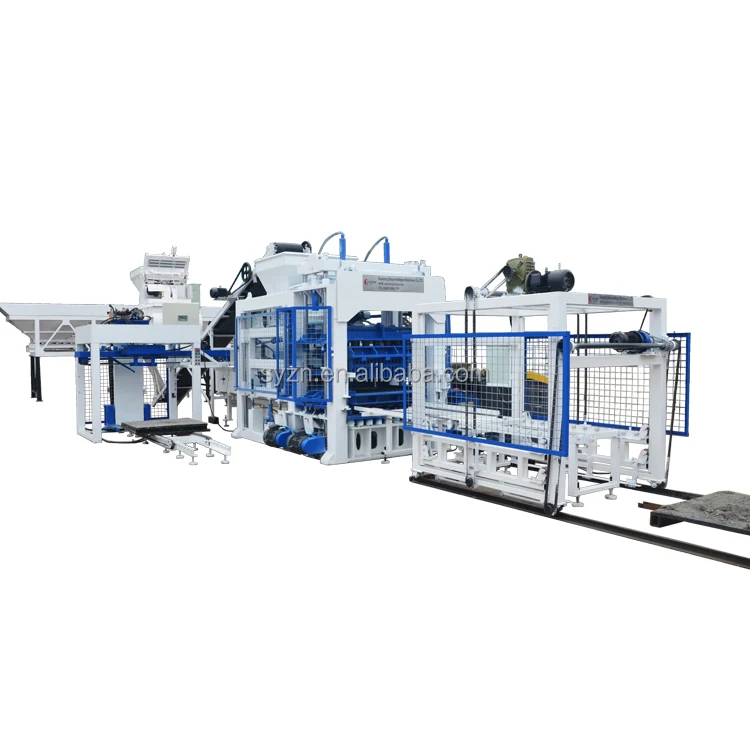
 Stationary block machine