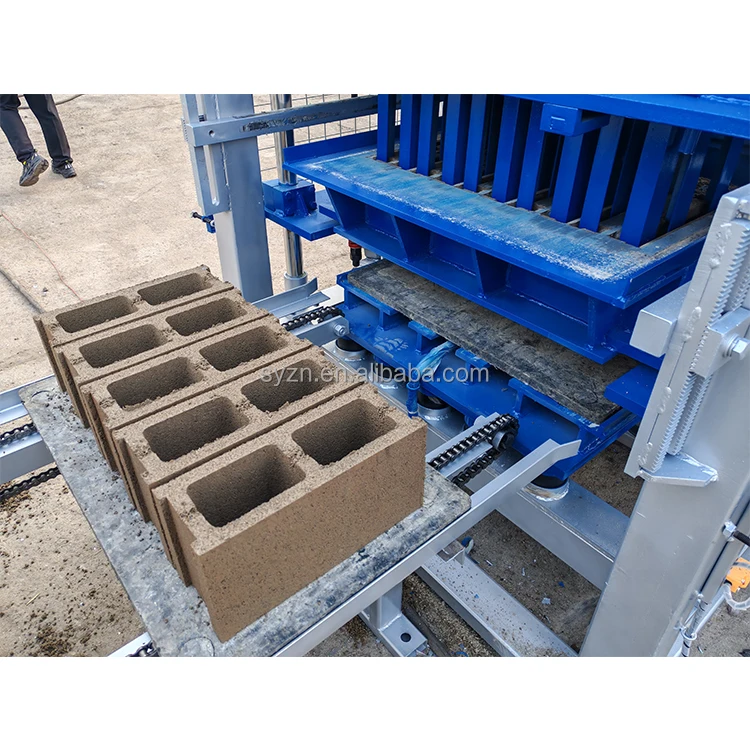
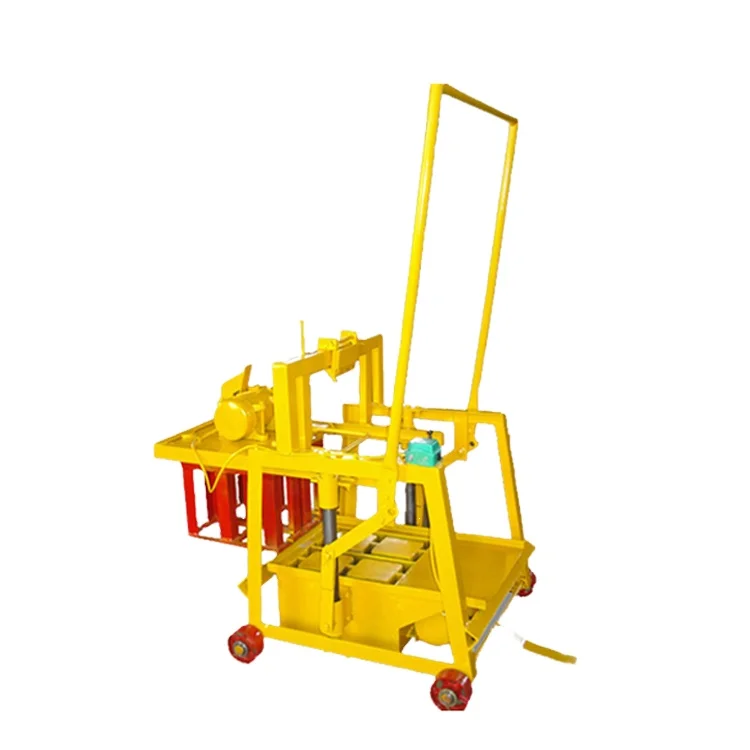
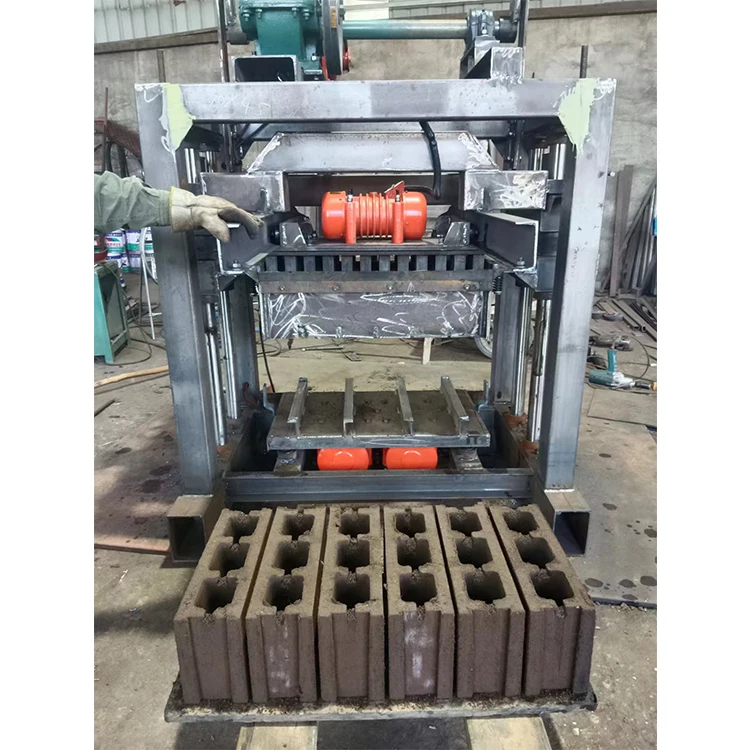
Matched System Design — every component from the QT8-15 press to its pallets and moulds is specified against your local aggregate and target block format, not pulled from a catalogue default.
Technical Specifications
| Parameter |
Value |
| Model |
QT8-15 |
| Product Type |
Hydraulic Concrete Block Making Machine |
| Overall Dimensions (L×W×H) |
8300 × 1860 × 3000 mm |
| Rated Pressure |
21 MPa |
| Main Vibration Form |
Platform Vibration |
| Vibration Frequency |
2800–4500 r/min |
| Vibration Force |
45 kN |
| Pallet Size |
950 × 900 mm |
| Molding Cycle |
15–20 s (basis not stated in source — confirm block format / material / thickness) |
| Overall Power |
55.5 kW |
| Total Mass |
8 T |
| Demolding Method |
Hydraulic |
| Factory Area Required |
300 m² |
| Applied Products |
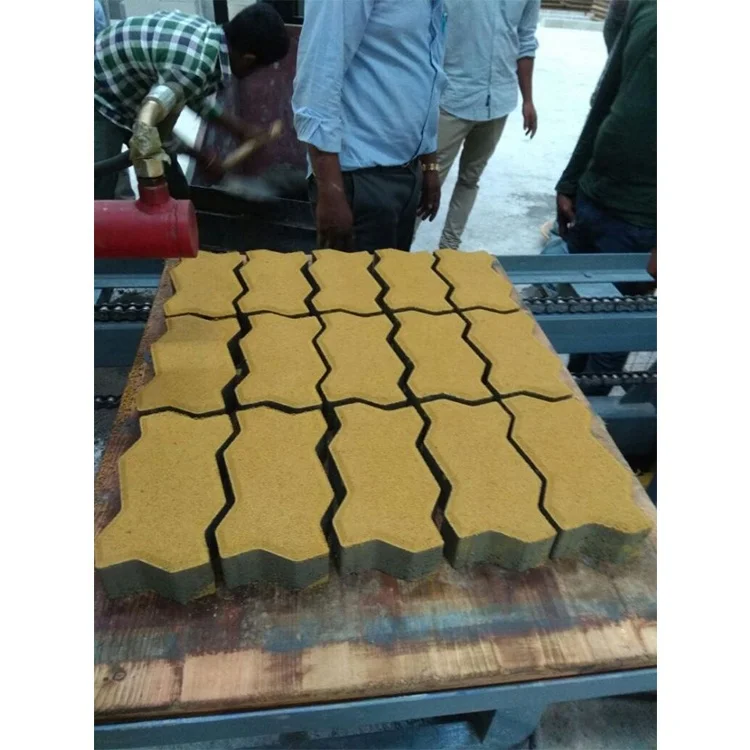
Hollow blocks, solid blocks, pavers, interlocking blocks, kerbstones, colored pavers |
| Raw Materials |
Crushed stone, sand, cement, fly ash, gravel, slag, dust |
| Warranty |
1 year (whole machine, excluding spare parts) |
Application Suitability
| Application |
Material or Output |
| Hollow block production for residential and commercial walls |
Crushed stone, sand, cement, fly ash blends |
| Solid block manufacturing for load-bearing structures |
Gravel, sand, cement with local aggregate |
| Paving block and colored paver runs for roads and landscapes |
Fine aggregate, cement, pigment additives |
| Interlocking brick production for retaining walls and slopes |
Sand, crushed stone, cement mixtures |
| Kerbstone forming for road and infrastructure projects |
Coarse aggregate, cement, sand |
What the QT8-15 Block Machine Manufacturer Range Actually Covers
Capacity only means something when the block format is named alongside it.
Buyers comparing a QT8-15 block machine manufacturer quote against a smaller workshop model often see cycle times listed without the block format that figure assumes. A 15-second cycle on a thin paver is a very different daily output than the same cycle on a 200 mm hollow block. I have watched contractors commit to a machine tier based on a headline number, only to discover during commissioning that their actual product mix cuts real throughput significantly [NEED_CITE: block format impact on cycle time and daily output]. The QT8-15 sits in the mid-to-high automatic tier of the complete block machine range, and understanding where it fits — relative to semi-automatic workshop presses and high-capacity fully automatic lines — is the first step before narrowing down.
Placing the QT8-15 Within the Output Tiers
The full block machine range spans from small mobile egg-laying units for on-site production through semi-automatic workshop presses to high-capacity automatic lines with full stacking and cubing. The QT8-15 occupies the middle-to-upper tier, designed for buyers who have outgrown manual pallet handling but may not yet need the footprint and investment of a top-tier automatic plant. Its 950 × 900 mm pallet size and 8-ton mass place it in a category that demands a dedicated curing area and proper foundation, distinguishing it from lighter models that can operate on a simple concrete slab.
Understanding the Plant Footprint This Tier Demands
With overall dimensions of 8300 × 1860 × 3000 mm and a 300 m² factory area requirement, the QT8-15 tier is not a machine you drop into an existing workshop corner. Buyers at this level need to plan raw material storage, mixing station placement, pallet circulation space, and a curing zone sized for the pallet dimensions [NEED_CITE: block plant layout and curing area planning]. The 55.5 kW overall power draw also means confirming that the site electrical supply can support continuous operation, including starting current for the vibration motors. This is the tier where the line around the press — feeder, mixer, pallet return, stacking — starts to matter as much as the press itself.
Reading the Specs That Define This Machine’s Tier
The 21 MPa rated hydraulic pressure and 45 kN vibration force together determine the density and strength of the blocks the QT8-15 can produce. In hydraulic block making, pressure alone does not guarantee strength; the vibration frequency range of 2800–4500 r/min must be matched to the buyer’s specific mix design and local aggregate gradation. A fine river sand with a low fineness modulus behaves very differently under vibration than a coarse crushed stone blend, and the platform vibration system must be tuned accordingly. The hydraulic demolding method ensures consistent block release without the mechanical shock that can damage green blocks at this pressure class. Pallet size at 950 × 900 mm dictates not only the number of blocks per cycle but also the racking, forklift, and curing infrastructure the buyer must have in place before the machine arrives.

The Cost of Choosing the Wrong Tier
When a buyer selects a machine tier without mapping it to their actual block format, local aggregate, and curing capacity, the consequences surface during the first production week. Blocks come off the line with inconsistent strength because the vibration parameters were set for a different material. Pallets pile up faster than the curing area can absorb them, forcing hand-stacking that defeats the automation the buyer paid for. Mould changes take longer than expected because the format was never confirmed against the machine’s change system [NEED_CITE: mould change time and format flexibility in block production]. These are not warranty issues — they are specification mismatches that no amount of on-site adjustment can fully correct.
Why Source the QT8-15 Through This Range
Block machinery is our single focus, which means the QT8-15 is never sold as a standalone press. Machine, mould, pallet, and handling equipment are specified as one matched system against your target block format and local raw material. Configuration starts with your actual mix design and aggregate sample, not a catalogue default, so the vibration and pressure settings are relevant from day one. Mould design covers the formats your market actually sells, including custom drawings when standard options do not match. The automation level is selectable, so a buyer can begin with semi-automatic pallet handling and add stacking or cubing as production scales.
Documentation & Verification
- Line layout showing the QT8-15 position with capacity calculated per named block format
- Machine specification sheet confirming voltage, frequency, and control language before production
- Mould drawing and format list matched to your local market product range
- Factory test record demonstrating cycle time on your specified block type before dispatch
- Hydraulic and electrical schematic for on-site maintenance reference
Installation, Commissioning & Support
- Foundation plan sized for the 8300 × 1860 × 3000 mm frame and 8-ton operating mass
- Electrical supply verification for 55.5 kW total load including vibration motor starting current
- Pallet circulation and curing rack layout matched to the 950 × 900 mm pallet dimension
- Vibration frequency and hydraulic pressure tuned to your local aggregate sample during commissioning
- Operator training covering mould change procedure and daily maintenance intervals
- Wear parts and mould list supplied with recommended replacement schedule
What We Need to Configure Your Line
To position the QT8-15 correctly within the range and match it to your production goals, share your target block formats with dimensions, the local aggregate type and gradation you plan to use, and the daily output you need per format. Confirm your site voltage and frequency standard, the control display language your operators require, and whether your existing curing area and forklift are sized for the 950 × 900 mm pallet. If you have upstream mixing or downstream stacking equipment already in place, let us know so the line layout accounts for it.
Frequently Asked Questions
Q: Where does the QT8-15 sit in the full block machine range?
A: The QT8-15 is positioned in the mid-to-high automatic tier, above semi-automatic workshop presses and below high-capacity fully automatic lines. It suits buyers who need consistent output across multiple block formats and are prepared to invest in a dedicated plant footprint with proper curing infrastructure and pallet circulation.
Q: How do I verify real daily output for my block format?
A: Daily output depends entirely on the block format, material mix, and thickness you plan to produce. Request a capacity calculation document that states the assumed block format for each output figure, and confirm the cycle time has been tested on a material sample matching your local aggregate gradation.
Q: What plant footprint does this tier require compared to smaller models?
A: The QT8-15 tier requires approximately 300 m² of factory area, significantly more than workshop-scale machines. You need space for raw material storage, the press itself at 8300 × 1860 × 3000 mm, pallet return circulation, and a curing zone designed around the 950 × 900 mm pallet size.
Q: Can the automation level be upgraded after initial installation?
A: The QT8-15 configuration allows buyers to start with semi-automatic pallet handling and add automatic stacking or cubing later. The upgrade path depends on the original line layout, so confirming future automation plans during the initial specification stage ensures the foundation and space are ready.
Q: How does the investment at this tier compare to the tier above?
A: The QT8-15 tier balances output capacity with a moderate plant footprint and equipment count. Higher tiers add fully automatic stacking, cubing, and larger pallet sizes, which increase both capital cost and site infrastructure requirements. The right choice depends on your confirmed daily output target and available site space.

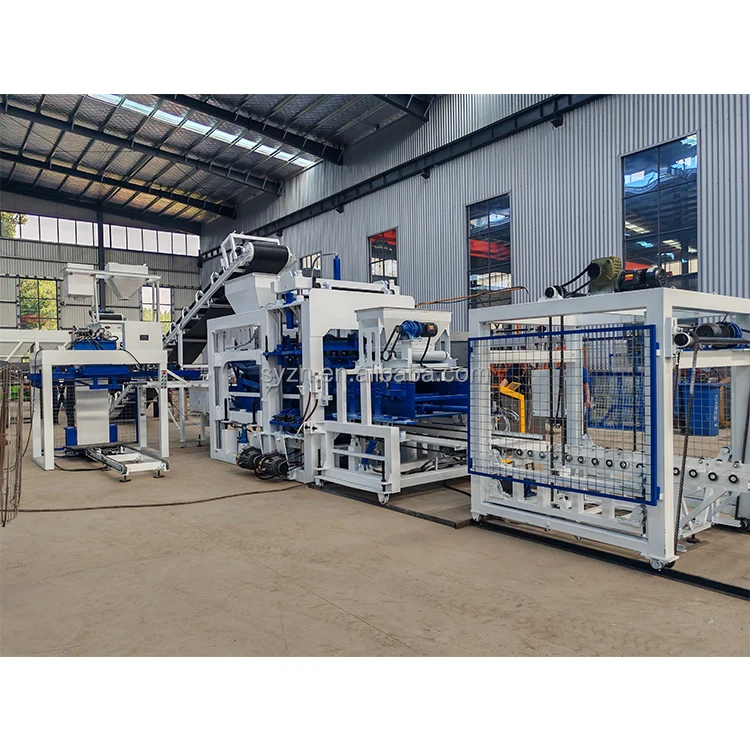
 High quality block machine