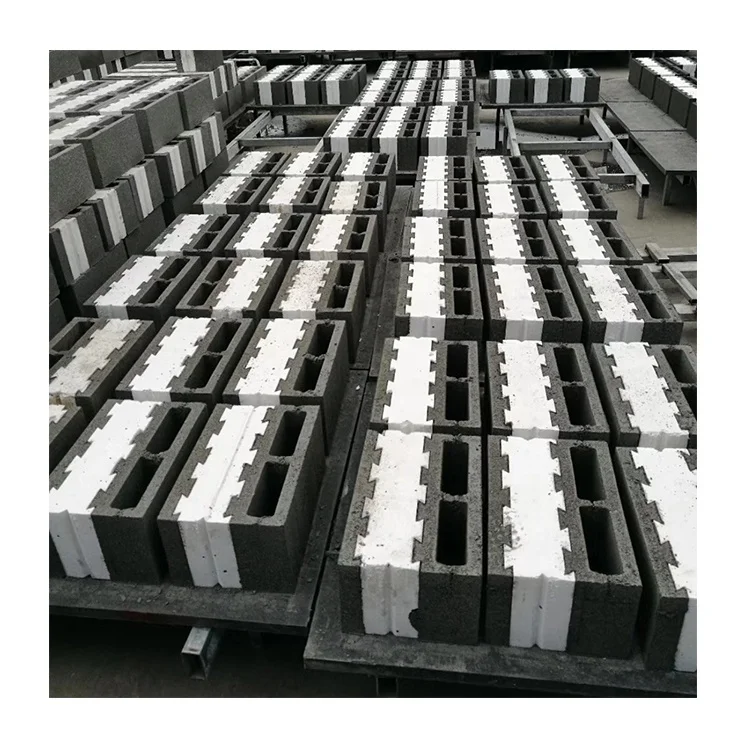
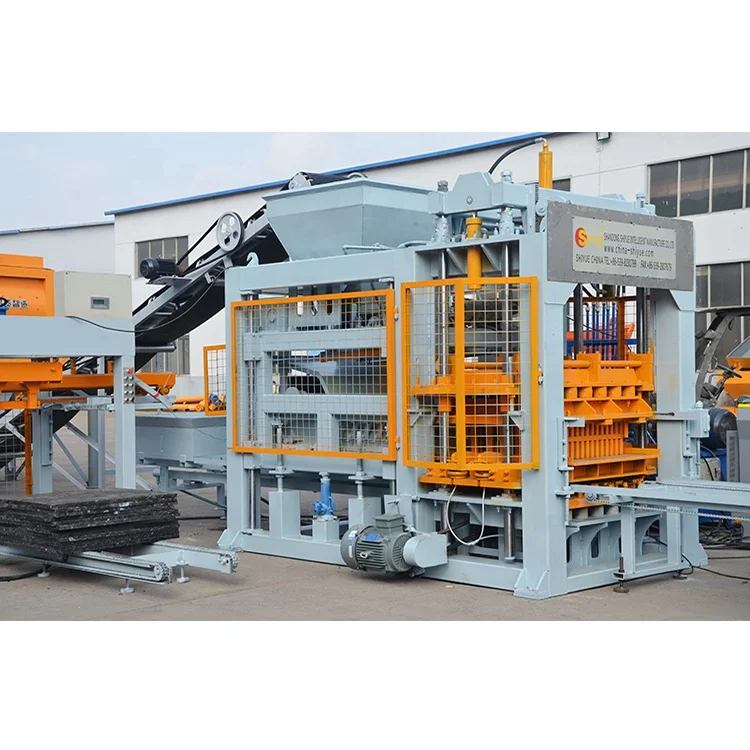
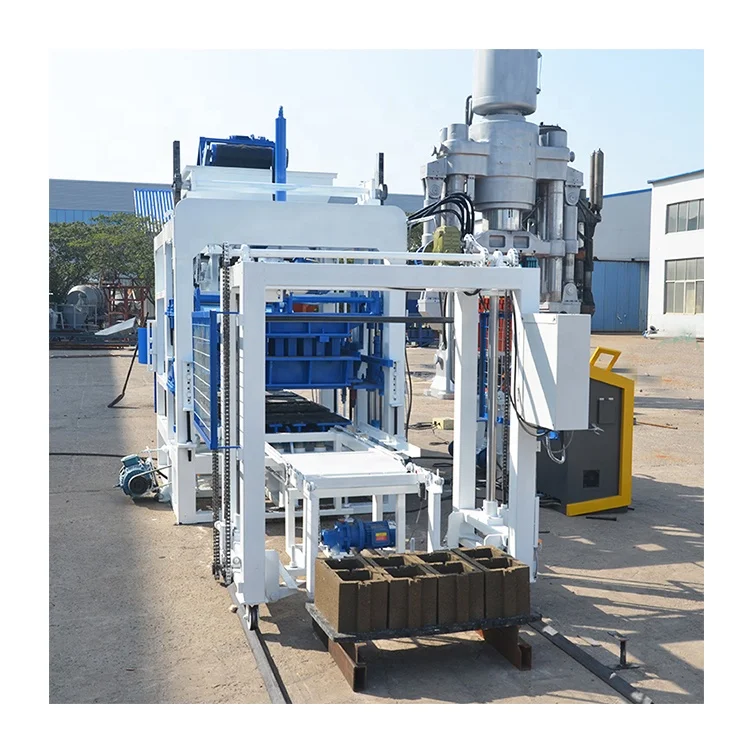
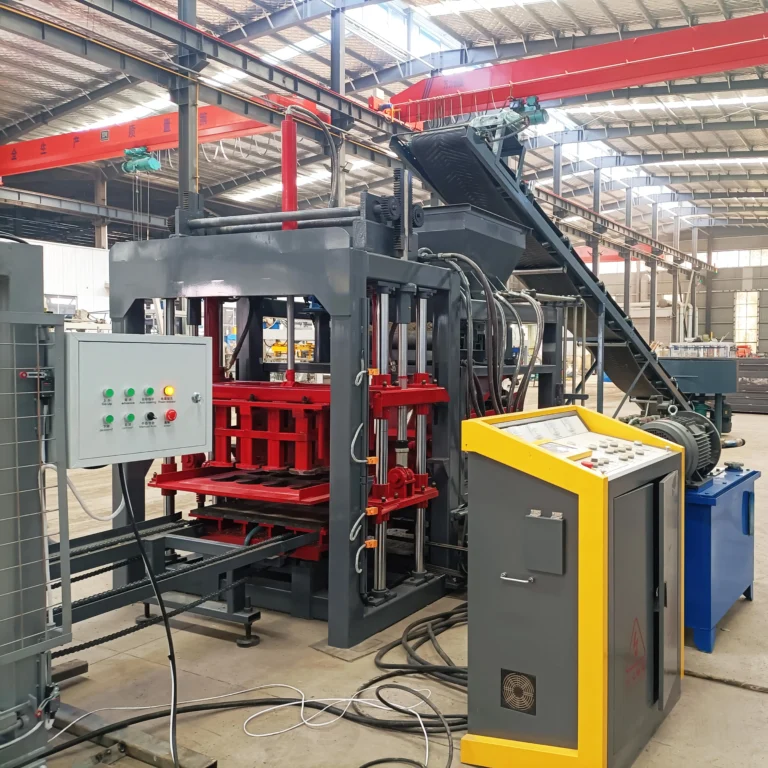
Matched System Entry Point — The QTJ4-40 anchors the semi-automatic tier with machine, mould, pallet and handling specified together, so buyers stepping into block production start with a line that balances output and upgrade room.
Technical Specifications
| Parameter |
Value |
| Model |
QTJ4-40 |
| Product Type |
Semi-Automatic Concrete Block Making Machine |
| Rated Power |
10.4 kW |
| Molding Cycle |
40s |
| Output Capacity |
2000–2500 pcs/8h (basis not stated in source — confirm block format / material / thickness) |
| Theoretical Productivity (400×200×200mm hollow block) |
4 pcs/mould, 360 pcs/h, 2800 pcs/day |
| Theoretical Productivity (400×150×200mm hollow block) |
5 pcs/mould, 450 pcs/h, 3600 pcs/day |
| Theoretical Productivity (225×112.5×60mm solid brick) |
9 pcs/mould, 800 pcs/h, 6400 pcs/day |
| Raw Material |
Concrete, sand, cement, fly ash, lime, gypsum |
| Machine Weight |
1 T |
| Overall Dimensions (L×W×H) |
1350×1460×1800 mm |
| Pallet Size |
850×450 mm |
| Voltage |
Configurable to buyer’s local voltage (exact V/Hz to be confirmed before production) |
| Automation Level |
Semi-automatic |
| Vibration System |
Bed mould vertical vibration + upper mould compression vibration |
| Mould Actuation |
Top die push and pull with automatic scraper |
| Standards |
CE declaration where applicable |
Application Suitability
| Application |
Material or Output |
| First-time block plant setup |
Hollow and solid blocks from concrete, sand and cement mixes |
| On-site production for housing or infrastructure contractors |
Standard bricks and hollow blocks using locally available aggregate |
| Secondary format line beside a larger automatic plant |
Fly ash or lime-based blocks in smaller batch volumes |
| Building material distributors adding product variety |
Paving formats and solid bricks from gypsum or blended mixes |
Why "2500 Pieces a Day" Means Nothing Without the Block Format
Every output number only matters when tied to a specific block size, mould cavity count and cycle time.
Too many quotations list a single daily capacity figure and leave out which block format it assumes. A buyer sees "2500 pieces per day" and plans a contract around it, only to find the number was based on a small solid brick while the market actually needs 400×200×200mm hollow blocks — cutting real output to less than half. I have watched this mismatch stall entire projects before the first block leaves the yard. The semi-automatic block machine manufacturer you choose should state capacity per format from the start [NEED_CITE: capacity calculation standards for concrete block forming equipment].

Where the QTJ4-40 Sits in the Range
The QTJ4-40 occupies the entry point of the semi-automatic tier, aimed at buyers who need mechanised forming without the capital outlay of a fully automatic line. It covers hollow blocks, solid bricks and standard formats with a 40-second moulding cycle, keeping the operator involved in pallet handling while the machine manages vibration, compression and top die actuation. For a first plant or a contractor producing on a job site, this tier removes the heaviest manual work while leaving room to add automatic stacking or cubing later.
Room to Grow Without Replacing the Press
A semi-automatic block machine manufacturer that treats the press as one component of a wider line gives the buyer a practical upgrade path. The QTJ4-40 can start with manual pallet transfer and later accept an automatic pallet feeder and stacker as volume grows. The 850×450mm pallet size stays constant through the upgrade, so the curing rack layout and forklift you invest in on day one remain usable. This approach avoids the common trap of outgrowing a machine within a year and facing a full replacement [NEED_CITE: block plant expansion and pallet compatibility planning].
Reading the Specs That Actually Shape Your Day
The dual vibration system — vertical vibration on the bed mould combined with upper mould compression vibration — determines how densely the concrete mix is packed into each cavity. Denser blocks cure stronger, which matters when local building codes require minimum compressive strength. The 10.4 kW rated power must be matched to a dedicated circuit with the correct voltage and frequency; running this machine on a shared supply risks voltage drops that shorten motor life. The 1350×1460×1800mm overall dimensions mean the QTJ4-40 fits inside a standard workshop bay, but the 1-tonne weight calls for a level concrete pad rather than compacted earth. Pallet size at 850×450mm should be checked against your existing curing rack spacing and forklift tine width before the order is confirmed.
The Cost of Skipping the Configuration Conversation
Ordering a block press on catalogue specs alone leads to problems that surface only after commissioning. If the mould is specified for a mix your local quarry cannot supply, you either ship in costly aggregate or accept weaker blocks that fail site inspections. A pallet size chosen without considering your curing area forces double-handling — blocks moved from pallet to rack by hand, adding labour the quotation never accounted for [NEED_CITE: common block plant commissioning delays due to configuration gaps].
Why Buyers Source This Tier from Shiyue
Block machinery is the single focus here, so the QTJ4-40 is never quoted as a standalone press. The mould, pallet, vibration settings and handling equipment are specified as one matched system against the buyer’s target block format and local raw materials. Configuration starts with the actual mix design — sand type, cement ratio, aggregate grading — not a catalogue default. Voltage, frequency and control language are confirmed in writing before production begins. Mould design covers the formats the buyer’s market actually sells, and custom drawings are available when a non-standard size is needed. Installation support includes operator training so the crew can run independent production from the first week.
Documentation & Verification
- Line layout showing block format assumed for each output tier
- Machine specification sheet with confirmed voltage and frequency
- Mould drawing and format list matching your target block sizes
- Pallet specification matched to your curing rack dimensions
- Factory test record run on buyer-confirmed mix before dispatch
- CE declaration documentation where applicable to destination market
Installation, Commissioning & Support
- Level concrete pad required to support the 1-tonne machine weight
- Dedicated 10.4 kW circuit with confirmed V/Hz before wiring begins
- Machine shipped in single-unit configuration for straightforward placement
- Vibration force calibrated on-site to match your local aggregate mix
- Operator training covers mould change procedure and cycle timing
- Wear parts list supplied with first-order hydraulic and scraper spares
What to Prepare Before You Enquire
To size the QTJ4-40 correctly, share the block formats your market demands, the daily volume you need per format, and the raw materials available locally including sand type and aggregate grading. Confirm your site voltage and frequency so the motor and control panel are built to match. If you already have curing racks or a forklift on site, provide the pallet dimensions and tine width so the 850×450mm pallet can be verified against your existing setup.
Frequently Asked Questions
Q: How is the daily output figure calculated, and which block format does it assume?
A: Each output figure is tied to a specific block size and mould cavity count. For example, 2800 pieces per day assumes 400×200×200mm hollow blocks at 4 pieces per mould with a 40-second cycle across an 8-hour shift. Different formats yield different volumes, so we provide a capacity table per format rather than a single blanket number.
Q: What voltage and frequency options are available, and when must they be confirmed?
A: The QTJ4-40 can be built to match your local supply, whether 220V, 380V, 415V or 440V at 50Hz or 60Hz. Exact voltage, frequency and phase must be confirmed in writing before production starts. Late changes after the motor and control panel are assembled cause avoidable delays.
Q: Can I start with the QTJ4-40 semi-automatic and upgrade to a higher automation tier later?
A: Yes. The machine accepts add-on pallet feeders and stackers as volume grows. The 850×450mm pallet size stays the same through the upgrade, so your curing racks and forklift remain compatible. You invest in automation when output demands it, not before.
Q: What mould formats are available, and how long does a mould change take on this model?
A: Moulds cover hollow blocks, solid bricks and standard formats. Custom moulds can be built to buyer drawings. The top die push-pull system with automatic scraper is designed so a trained operator can complete a mould change within a practical shift window, keeping format flexibility real rather than theoretical.
Q: What does the machine footprint look like, and what site preparation is needed before installation?
A: The QTJ4-40 measures 1350×1460×1800mm and weighs 1 tonne. It fits within a standard workshop bay but requires a level concrete pad capable of supporting the full weight under vibration. A dedicated power circuit matching the confirmed voltage must be in place before the machine arrives.

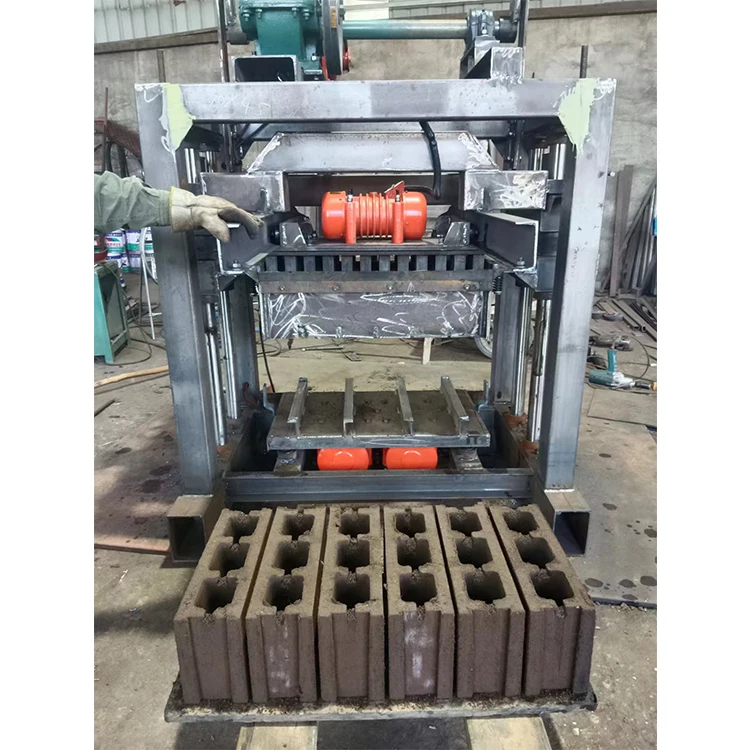
 High quality block machine