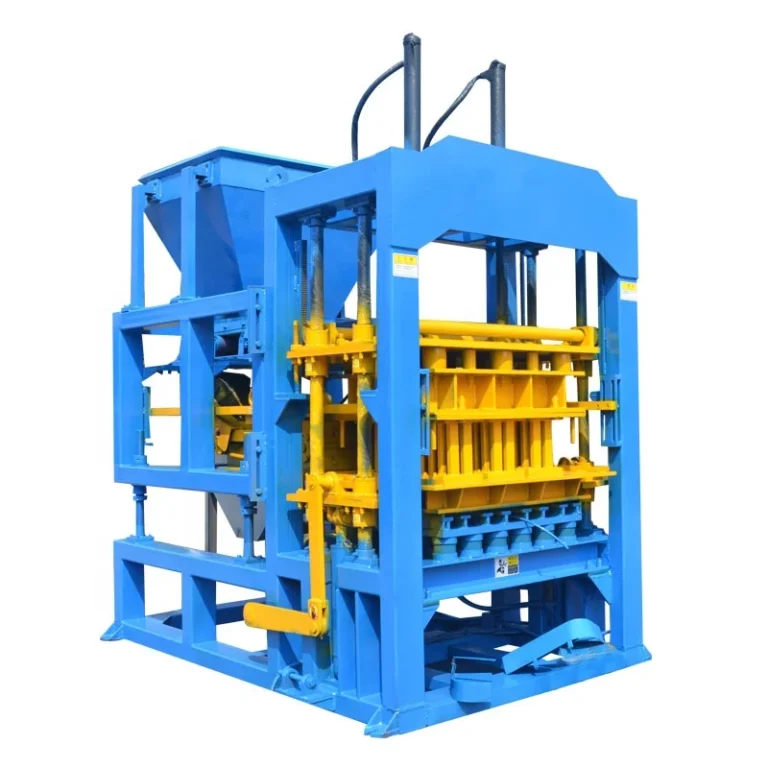
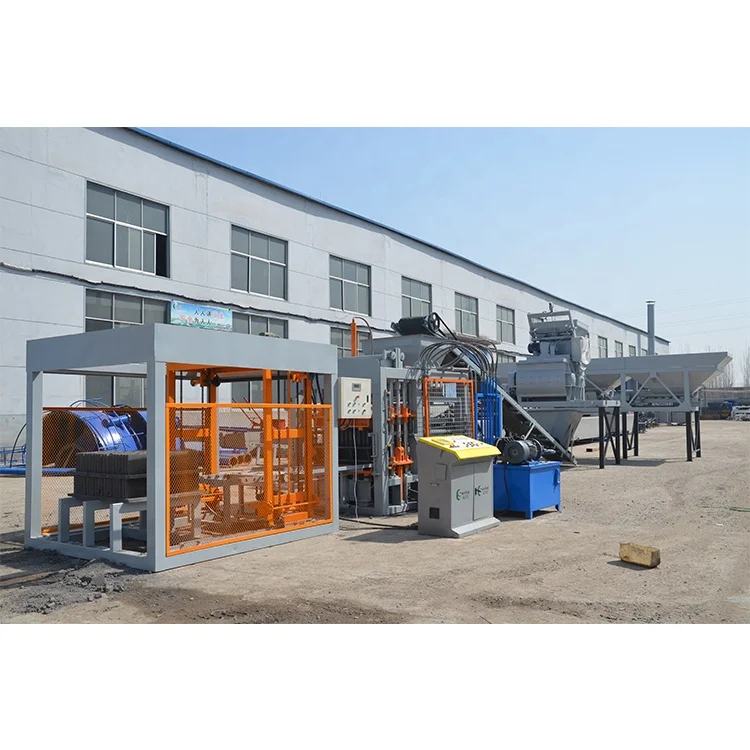
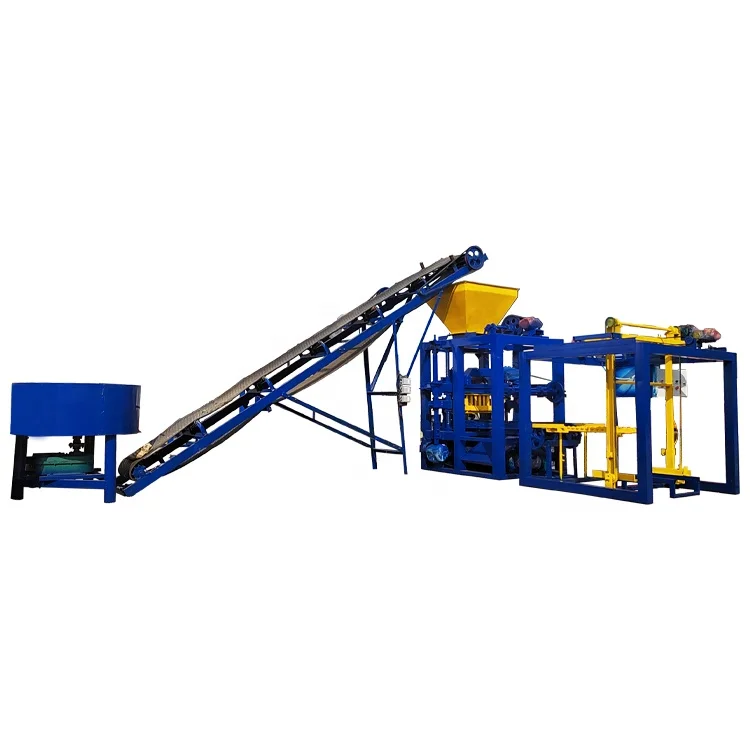
Matched System Configuration — The QT8-15 is specified as a complete block machine, mould, pallet and handling set rather than a standalone press, ensuring cycle times align across stations and daily output reflects your actual block format.
Technical Specifications
| Parameter |
Value |
| Model |
QT8-15 |
| Product Type |
Stationary Concrete Block Making Machine |
| Overall Dimensions (L×W×H) |
8300×1860×3000 mm |
| Rated Pressure |
21 MPa |
| Main Vibration Form |
Platform Vibration |
| Vibration Frequency |
2800~4500 r/min |
| Vibration Force |
60 kN |
| Pallet Size |
950×900 mm |
| Molding Cycle |
15–25 s |
| Overall Power |
55.5 kW |
| Total Mass |
9 T |
| Demolding Method |
Hydraulic |
| General Water Consumption |
12 T/Day |
| Factory Area |
600 m² |
| Control System |
PLC with human-machine interface dialogue system |
| Automation Level |
Fully automatic (automatic raw material feeding and block stacking) |
| Productivity |
20% higher than similar products (basis not stated in source — confirm block format / material / thickness) |
| Applied Products |
Concrete blocks, hollow/solid blocks, pavers, interlocking blocks, curbstone, colored pavers |
| Raw Materials |
Crushed stone, sand, cement, dust, fly ash, gravel, slag |
Application Suitability
| Application |
Material or Output |
| Hollow Block Production |
Crushed stone, sand, cement, fly ash |
| Solid Block Manufacturing |
Gravel, sand, cement, slag |
| Paving Slab & Colored Paver Production |
Fine aggregates, cement, pigment |
| Interlocking Brick & Kerbstone Forming |
Coarse and fine aggregates, cement |
Where Does the QT8-15 Sit in a First-Time Buyer’s Range?
Choosing the correct tier prevents both under-investment and over-specification for your site footprint.
When entrepreneurs survey options for a first or replacement block plant, capacity is often quoted in cycles per hour without stating which block format that figure assumes. The QT8-15 concrete block making machine for sale sits in the mid-to-high tier of a stationary range, bridging the gap between small workshop semi-automatic presses and high-capacity fully automatic lines. Understanding where this machine fits helps a buyer align investment level, plant footprint and expected daily output before narrowing down the final configuration. [NEED_CITE: typical block plant investment tiers and footprint requirements]
Positioning Within the Stationary Range
The QT8-15 concrete block making machine for sale is designed for buyers who need fully automatic operation but do not yet require the massive output of a high-tier line. Its 600 m² factory area requirement and 9 T total mass place it in a mid-tier footprint, suitable for a dedicated block production plant rather than a mixed-use construction yard. Compared to mobile or egg-laying machines, it demands a fixed curing area and a structured pallet handling flow.
Automation Level and Upgrade Path
Starting with a fully automatic configuration means raw material feeding and block stacking are handled by the line, reducing manual intervention. The PLC human-machine interface allows dialogue-based operation, which simplifies training for operators transitioning from manual or semi-automatic equipment. If a buyer initially selects a semi-automatic tier to lower investment, the platform architecture typically allows upgrading specific stations later without replacing the core press. [NEED_CITE: automation upgrade paths in stationary block plants]
Matching Machine Tier to Block Format
The 950×900 mm pallet size and platform vibration system support a wide array of formats, from standard hollow blocks to colored pavers and curbstones. A buyer producing primarily interlocking bricks may find this tier provides ample format flexibility, while a plant focused exclusively on high-volume hollow blocks might evaluate a higher-tier model. The molding cycle of 15–25 s varies depending on the specific block geometry and mix design used.

How Vibration and Pressure Define Block Density
The 60 kN vibration force and 21 MPa rated pressure work together to compact the concrete mix within the mould. Platform vibration at 2800–4500 r/min ensures that fine aggregates like fly ash and dust are distributed evenly, while the hydraulic demolding system releases the formed block without damaging green edges. If the vibration frequency is set too high for a coarse gravel mix, the aggregate may segregate; if set too low for a fine sand mix, compaction will be insufficient and block strength will suffer. Adjusting these parameters to the buyer’s local aggregate and moisture content is essential for consistent output.
Pallet Size and Curing Area Alignment
The 950×900 mm pallet must match the curing rack dimensions and the forklift capacity already present in the buyer’s plant. Selecting a pallet material — whether bamboo, PVC or steel — depends on the expected lifespan, the weight of the wet block load, and the local humidity during curing. A mismatch here forces the buyer to either replace existing racks or handle pallets manually, negating the advantage of the automatic stacking system.
Mould Change and Format Flexibility
The QT8-15 supports hollow blocks, solid blocks, pavers, interlocking bricks, curbstones and colored pavers on a single platform. Mould change time depends on the clamping system and operator familiarity; a well-designed quick-change mechanism can reduce downtime significantly compared to bolt-on moulds that require full recalibration. Buyers planning to produce multiple formats should verify the mould drawing and format list before confirming the order, ensuring cycle times per format are stated. [NEED_CITE: typical mould change procedures for stationary block machines]
The Cost of Overlooking Local Aggregate Compatibility
When a machine is configured for a mix design the buyer cannot source locally, the result is either a costly material substitution or a complete recalibration of vibration and pressure settings. I have seen block plants forced to import specific sand grades because the original specification assumed a different aggregate profile, delaying commissioning and inflating operating costs. Confirming the raw material feed configuration against locally available crushed stone, fly ash or slag before production prevents this mismatch.
Why Specify the Line as a Matched Set
- Single Focus on Block Machinery — The press, mould, pallet and handling equipment are specified together, ensuring the automatic stacking station keeps pace with the 15–25 s molding cycle rather than leaving the press idle.
- Configuration Against Actual Mix Design — Vibration frequency and hydraulic pressure are set based on the buyer’s local aggregate and target block strength, not a catalogue default that may not suit regional materials.
- Selectable Automation Level — The fully automatic setup includes raw material feeding and stacking, but the platform allows buyers to start semi-automatic and upgrade specific stations as production volume grows.
- Mould Design for Target Formats — Custom mould drawings are prepared for the specific hollow block, paver or interlocking brick formats the buyer’s market demands, including cycle time validation per format.
- Voltage and Control Language Confirmation — The PLC display language and electrical specifications are confirmed before production, avoiding commissioning delays caused by incompatible voltage or unreadable interfaces.
Documentation & Verification
- Line layout and capacity calculation stating the block format assumed for QT8-15 output
- Machine specification sheet confirming 950×900 mm pallet size and 55.5 kW overall power
- Mould drawing and format list covering hollow blocks, pavers, curbstones and interlocking bricks
- Voltage, frequency and PLC display language confirmation before production
- Factory test record showing platform vibration performance at specified frequency range
- Operation and maintenance manual including hydraulic demolding procedures
Installation, Commissioning & Support
- 600 m² factory area with level concrete floor for 8300×1860×3000 mm machine footprint
- 55.5 kW overall power requiring dedicated electrical circuit matching confirmed voltage and frequency
- Hydraulic station commissioning including pressure calibration to 21 MPa for demolding system
- PLC human-machine interface setup with dialogue system configured to operator language
- Pallet feeding and automatic stacking alignment with 950×900 mm pallet specification
- Operator training on platform vibration frequency adjustment between 2800 and 4500 r/min
What to Provide with Your Inquiry
To position the QT8-15 concrete block making machine for sale correctly within the range, we need your target block formats, expected daily output per format, and the local raw materials available including aggregate type and cement grade. Specify your existing curing area dimensions and forklift capacity so the 950×900 mm pallet can be validated, along with the voltage and frequency at your site. If you are replacing an existing machine, note the current pallet size and any upstream mixing equipment that must integrate with the automatic raw material feeding system.
Frequently Asked Questions
Q: What block formats does the QT8-15 cover and how is output calculated per format?
A: The QT8-15 produces hollow blocks, solid blocks, pavers, interlocking bricks, curbstones and colored pavers on a 950×900 mm pallet. Output is calculated based on the molding cycle of 15–25 s, but the actual daily production depends on the specific block geometry, mix design and curing time required. A capacity calculation stating the assumed block format is provided with each proposal.
Q: Where does the QT8-15 fit compared to semi-automatic and higher-capacity models?
A: This model sits in the mid-to-high tier of the stationary range, offering fully automatic operation with a 600 m² plant footprint. It is suited for buyers who have outgrown semi-automatic equipment but do not require the output volume of a high-capacity line. The platform allows upgrading specific stations later if production demands increase.
Q: What plant footprint and utility requirements does the QT8-15 need?
A: The machine requires a 600 m² factory area to accommodate the 8300×1860×3000 mm press, pallet circulation, curing racks and stacking area. Overall power is 55.5 kW with a general water consumption of 12 T/day. Voltage and frequency must be confirmed before production to match local electrical standards.
Q: How is the pallet size confirmed against existing curing racks and forklifts?
A: The 950×900 mm pallet must align with the buyer’s curing rack slots and forklift tine spacing. During the proposal stage, the buyer provides existing rack dimensions and forklift specifications so the pallet size and material can be validated. A mismatch here forces costly rack replacement or manual handling adjustments.
Q: What voltage, frequency and PLC language options are available?
A: The QT8-15 concrete block making machine for sale is configured to the buyer’s local voltage and frequency before production. The PLC human-machine interface dialogue system supports multiple languages, which are confirmed during the specification phase to ensure operators can read settings and alarms during commissioning.

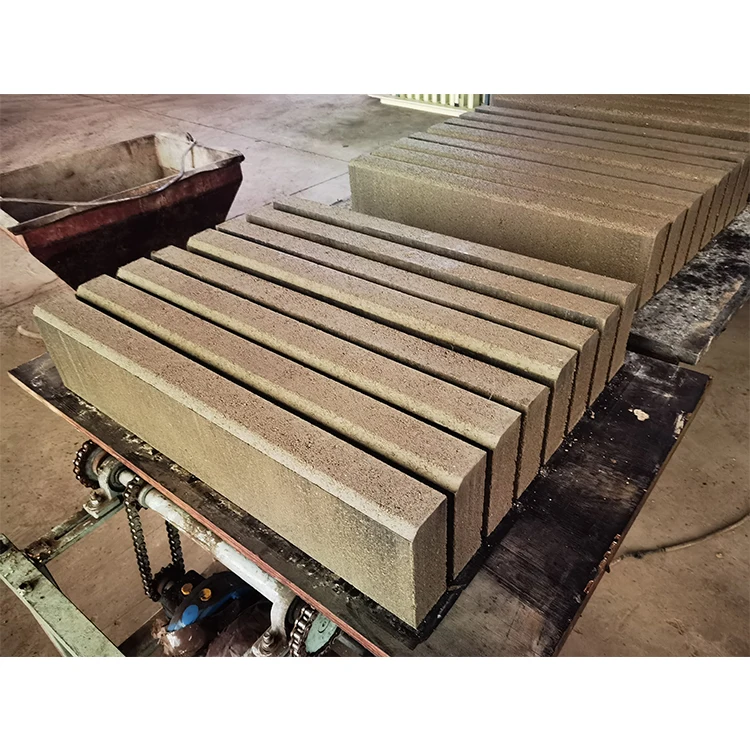
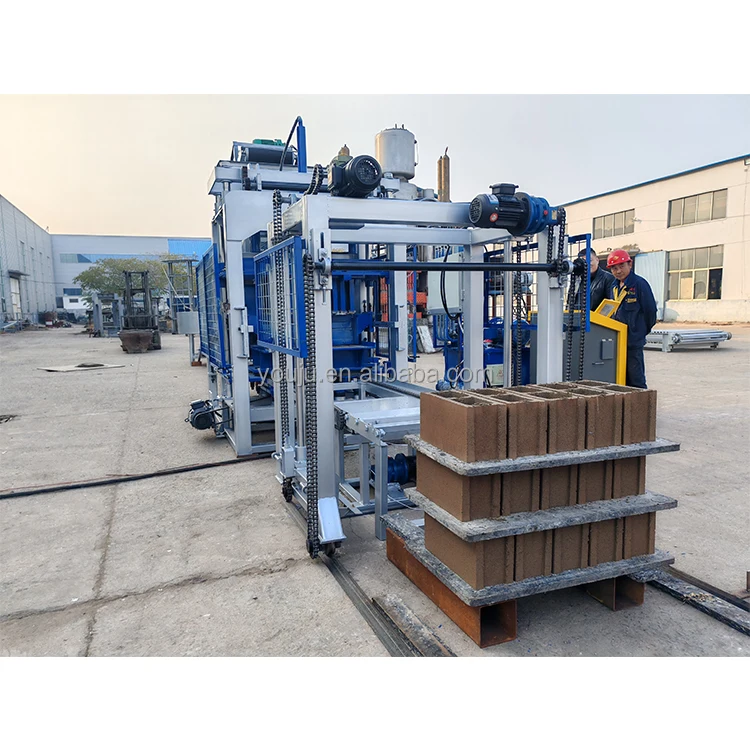 Stationary block machine