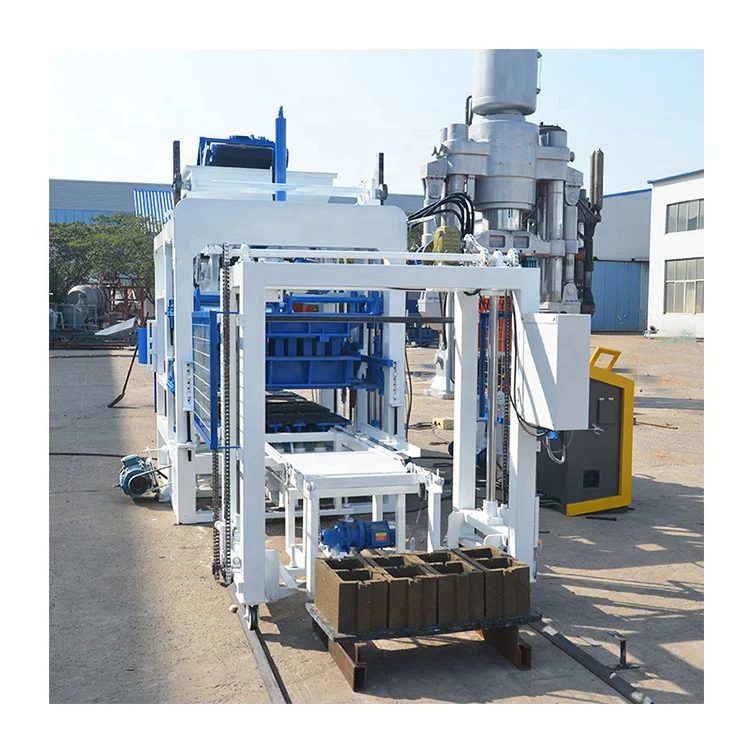
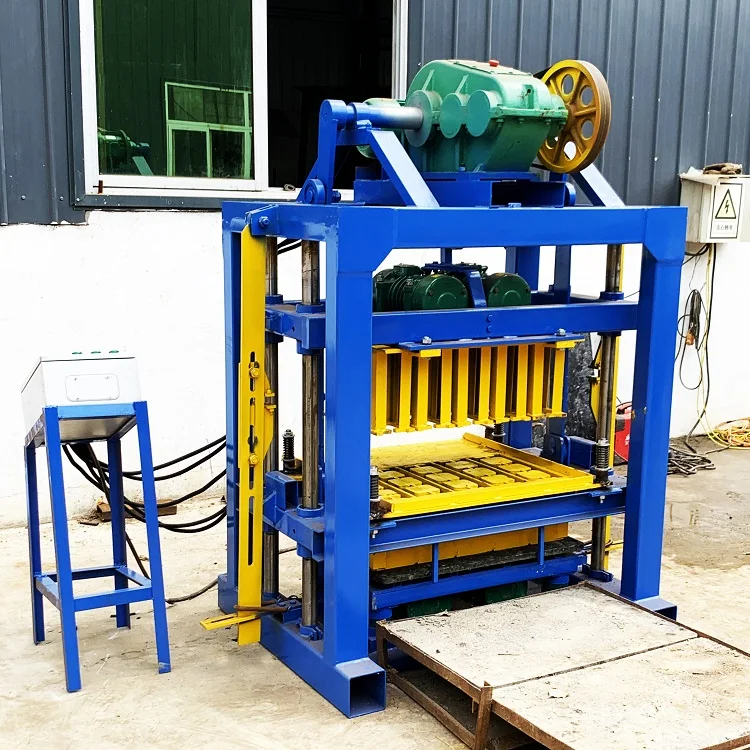
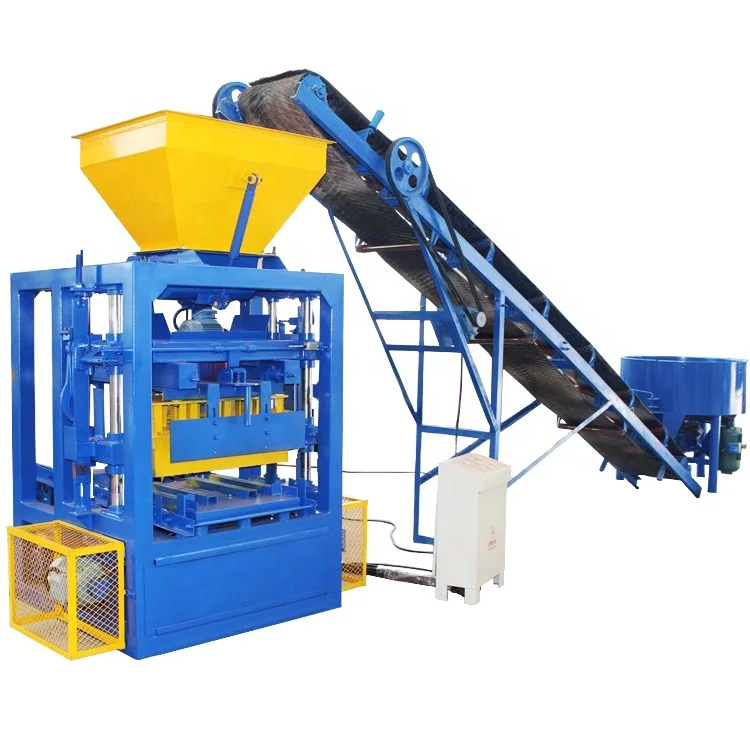
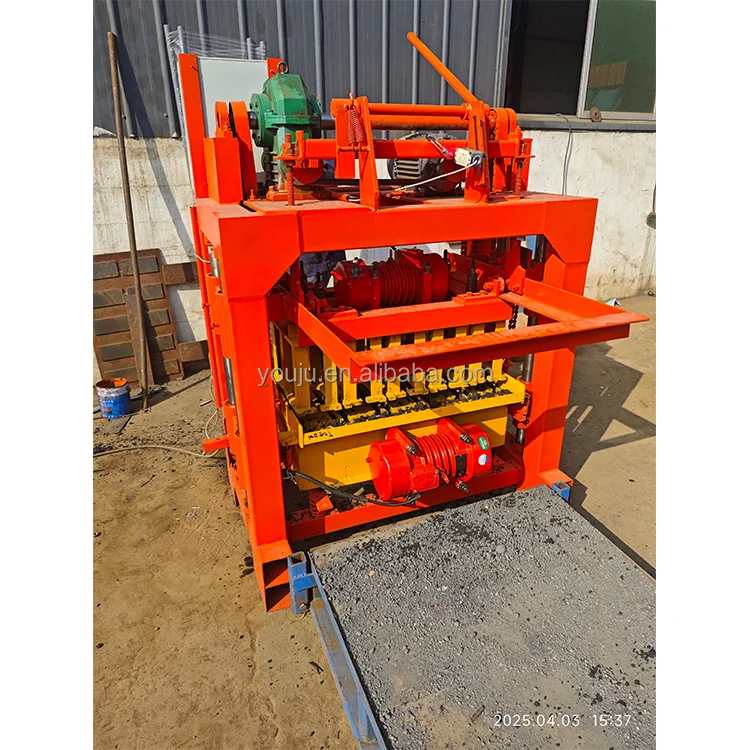
Block machinery as a single focus — the QT4-15 is specified as a matched system of press, mould, pallet and handling, not assembled from separate catalogue pages.
Technical Specifications
| Parameter |
Value |
| Model |
QT4-15 |
| Product Type |
Stationary Hydraulic Block Making Machine |
| Molding Cycle |
15–30 s (depends on block format and mix) |
| Pallet Size |
900 × 500 mm |
| Vibration Type |
Platform vibration |
| Vibration Frequency |
50–70 Hz |
| Product Height Range |
50–220 mm |
| Overall Power |
24.5 kW |
| Demolding Method |
Hydraulic |
| Control System |
PLC controlled |
| Automation Level |
Automatic (machinery, electric, hydraulic and vibrating system coordinated) |
| Block Compressive Strength |
More than 15 MPa (supplier-stated — basis not confirmed, depends on mix design and local aggregate) |
| Output Capacity — Hollow Block 400×200×200 mm |
900–1200 pcs/hour (4 pcs/mould, 15–20 s cycle) |
| Output Capacity — Hollow Block 400×150×200 mm |
1080–1440 pcs/hour (5 pcs/mould, 15–20 s cycle) |
| Output Capacity — Hollow Block 400×100×200 mm |
1440–1920 pcs/hour (8 pcs/mould, 15–20 s cycle) |
| Output Capacity — Paver 200×100×60 mm |
2880–3840 pcs/hour (16 pcs/mould, 15–20 s cycle) |
| Output Capacity — Solid Brick 240×115×53 mm |
5930–6720 pcs/hour (28 pcs/mould, 15–20 s cycle) |
| Mould Compatibility |
Hollow block, paver brick, solid brick (interchangeable moulds) |
| Raw Materials |
Fly ash, slag, gangue, sand, crushed stone, cement, water |
| Electrical & Hydraulic Components |
Original imported or China famous brand (specific brands to be confirmed with manufacturer) |
Application Suitability
| Application |
Material or Output |
| Medium-scale block plant startup |
Hollow blocks 400×200×200 mm and 400×150×200 mm from fly ash, sand and cement |
| On-site contractor production |
Pavers 200×100×60 mm from crushed stone and cement in a small yard |
| Format expansion for existing manufacturers |
Solid brick 240×115×53 mm and interlocking formats using slag or gangue |
| Masonry supply for housing projects |
Hollow blocks 400×100×200 mm from locally sourced sand and aggregate |
| Utilization of industrial residues |
Blocks blended from fly ash, slag or gangue with cement binder |
What "900 Blocks per Hour" Actually Means on the QT4-15
Output figures are only useful when the block format, mould count and cycle time are stated alongside them.
A QT4-15 block machine manufacturer can quote any number on a brochure. The difference between 900 and 1,440 hollow blocks per hour is not machine speed — it is simply whether the mould holds four units or five, and whether the cycle runs at 15 or 20 seconds. Buyers who skip this detail find their daily output falling far short of the number they remembered from the quotation. I have stood on sites where the first-week tally was half the expected figure, not because the stationary block making machine for sale was slow, but because the capacity was quoted on a format the buyer never intended to run [NEED_CITE: common misalignment between quoted capacity and buyer’s actual block format].

Where the QT4-15 Sits Across the Machine Range
The QT4-15 occupies the middle tier of a stationary hydraulic lineup. Below it are semi-automatic presses that rely on manual pallet handling and a smaller footprint, suited for first-time operators with limited capital. Above it sit high-capacity automatic lines with full stacking, curing rack handling and cubing systems that demand a larger plant envelope and higher investment. The QT4-15 block machine manufacturer positions this model for plants that have outgrown semi-automatic output but are not yet ready for a fully unmanned line.
Automation Level You Can Build On
This stationary block making machine for sale ships with a PLC that coordinates pallet feeding, material dosing, vibration and hydraulic demolding into a single automatic cycle. That removes the operator from timing each step manually, which is where most consistency loss happens on smaller presses. The automation is modular: a buyer can start with manual stacking and add an automatic stacker or curing rack system later without replacing the press itself [NEED_CITE: typical upgrade path from semi-automatic to fully automatic block lines]. This matters for entrepreneurs who want room to grow without buying a second machine two years in.
Reading the Numbers That Matter
The 50–70 Hz platform vibration frequency works together with hydraulic pressing to compact the mix before demolding. Vibration alone cannot produce a dense block; the hydraulic pressure forces aggregate particles into close contact while the vibration settles them. On the QT4-15, both systems are PLC-coordinated so the timing stays consistent across every cycle. The 900 × 500 mm pallet size determines how many blocks fit per mould — a 400×200×200 mm hollow block takes four cavities, while a 200×100×60 mm paver fits sixteen. Choosing pallet dimensions without checking your curing rack spacing and forklift capacity leads to pallets that cannot be stacked or moved efficiently. The 50–220 mm product height range covers most standard wall blocks and pavers without mechanical adjustment to the press frame, so a mould swap is the only change needed when switching formats. Overall power at 24.5 kW means the electrical supply must support sustained motor draw during vibration, not just peak startup current [NEED_CITE: electrical supply requirements for hydraulic block making machinery].
The Cost of Skipping Configuration Checks
A machine set up for standard sand arrives at a site that only has volcanic ash aggregate. The vibration force and hydraulic pressure that produced strong blocks in the factory cannot compact the lighter, more porous material to the same density. Blocks crack during curing, strength tests fail, and the buyer blames the press. The real failure happened before shipment: the mix design and local aggregate were never matched to the machine settings. Similar mismatches occur when pallet material is chosen without considering the curing environment — bamboo pallets warp in high humidity, while PVC pallets may crack under heavy blocks in cold climates [NEED_CITE: effect of local aggregate properties on block compressive strength]. These are not warranty issues; they are specification gaps.
Why Source the QT4-15 Here
Block machinery is the single focus of this manufacturer, which means the press, moulds, pallets and handling equipment are specified as one matched system rather than assembled from unrelated suppliers. Configuration is set against the buyer’s actual mix design and target block format, not a default catalogue page. Mould design covers the formats that sell in the buyer’s market, with custom drawings available for non-standard shapes. The automation level is selectable, so a buyer can start semi-automatic and add handling stations as output grows. Installation support includes operator training at the site, and mould and wear parts supply continues after commissioning [NEED_CITE: importance of matched mould and press specification for block consistency].
Documentation & Verification
- Line layout and capacity calculation stating which block format each output figure assumes
- Machine specification sheet with confirmed voltage, frequency and PLC display language
- Mould drawing and format list for every block type in your quotation
- Pallet specification matched to your curing area dimensions and forklift capacity
- Factory test record run on your specified mix design before dispatch
- Hydraulic and electrical schematic for your maintenance team on site
Installation, Commissioning & Support
- Foundation pad must support 24.5 kW sustained load plus vibration isolation for the QT4-15 platform
- Dedicated electrical circuit with voltage and frequency confirmed before production begins
- Machine ships partially dismantled; on-site reassembly aligns the hydraulic press frame and pallet feeder
- First-run commissioning sets vibration frequency and hydraulic pressure to match your local aggregate
- Operator training covers PLC cycle parameters, mould change procedure and daily maintenance checkpoints
- Wear parts list identifies hydraulic seals and vibration components with local sourcing guidance
Before You Request a Quote
To match the QT4-15 to your project, share your target block formats with dimensions, expected daily output per format, and the raw materials available locally including aggregate type and cement grade. Include your site voltage and frequency, preferred PLC display language, and the dimensions of your planned curing area so pallet size can be confirmed. If you already operate upstream mixers or downstream forklifts, list those so the line layout connects without gaps.
Frequently Asked Questions
Q: How is output capacity calculated — and which block format does each number assume?
A: Each capacity figure on the QT4-15 is tied to a specific block format, mould cavity count and cycle time range. For example, 900–1,200 hollow blocks per hour assumes a 400×200×200 mm block with four cavities and a 15–20 second cycle. Switching to a smaller format changes both the cavity count and the number, so always ask which format the quoted capacity refers to.
Q: Where does the QT4-15 sit compared to semi-automatic and high-capacity models?
A: The QT4-15 is a mid-tier automatic stationary press. Below it are semi-automatic machines requiring manual pallet handling and lower investment. Above it are high-capacity lines with full stacking and cubing that need a larger plant footprint. The QT4-15 suits plants that have outgrown manual operation but do not yet need a fully unmanned line.
Q: What voltage, frequency and PLC language options are available?
A: Voltage, frequency and PLC display language are confirmed during the quotation stage to match your site supply and operator preference. These must be agreed before production begins, not after the machine arrives, to avoid commissioning delays. Always state your local electrical standard and preferred language in the initial inquiry.
Q: Can I start with the QT4-15 and add automation later?
A: Yes. The QT4-15 automation is modular. You can begin with manual pallet stacking and add an automatic stacker, curing rack handler or cubing system later without replacing the press. The PLC architecture supports these additions, so the upgrade path does not require a new control system.
Q: How do I confirm the QT4-15 fits my planned plant layout?
A: Share your available floor area, ceiling height and curing yard dimensions during the inquiry. The line layout drawing will show the QT4-15 footprint alongside pallet feeding, mixing and stacking stations so you can verify clearances before ordering. Pallet size is matched to your existing forklift and curing rack spacing.

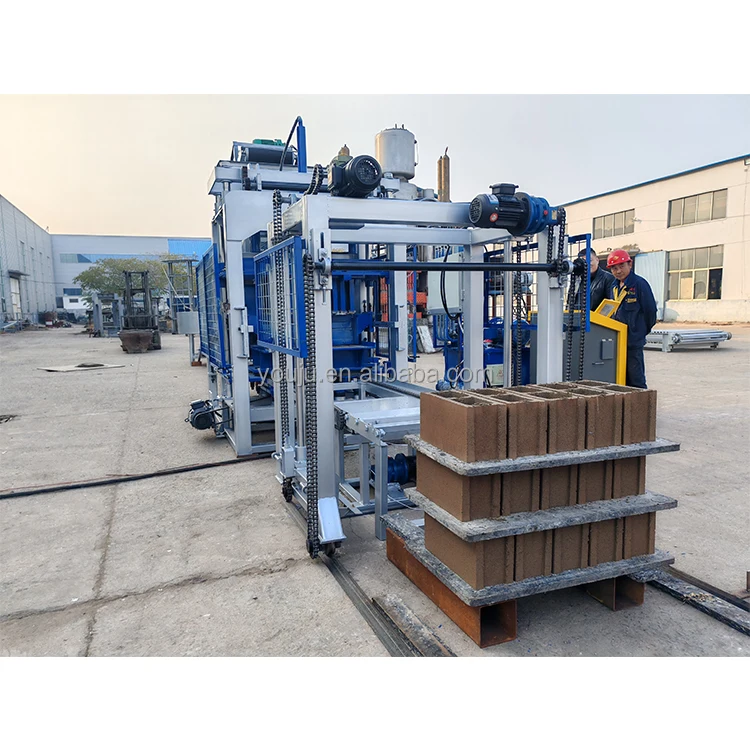
 Stationary block machine