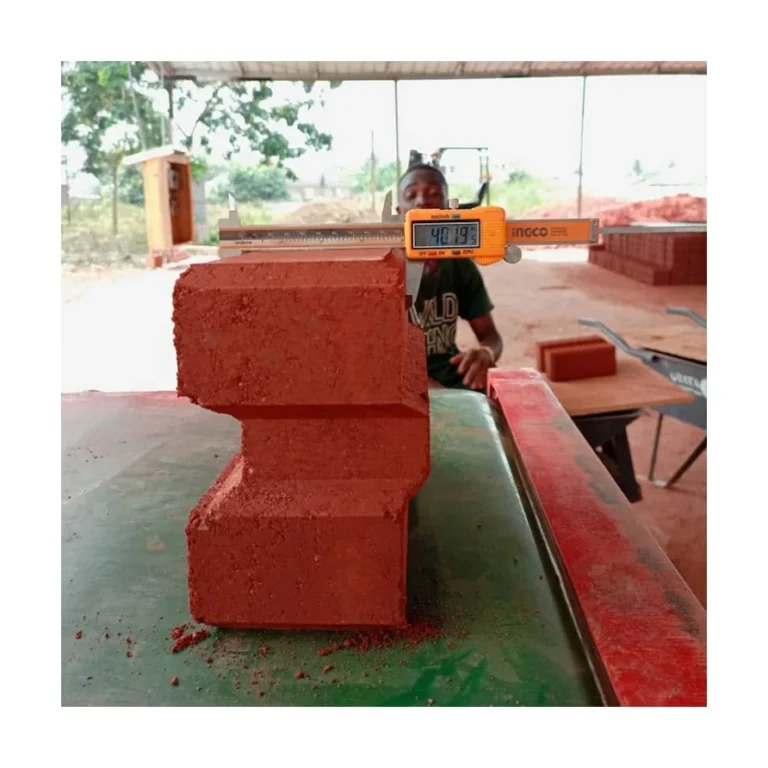
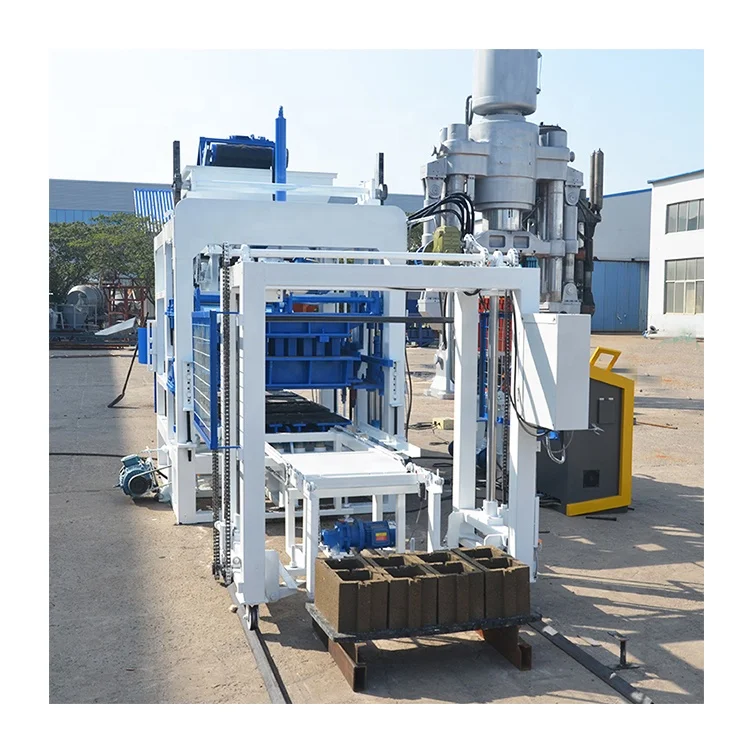
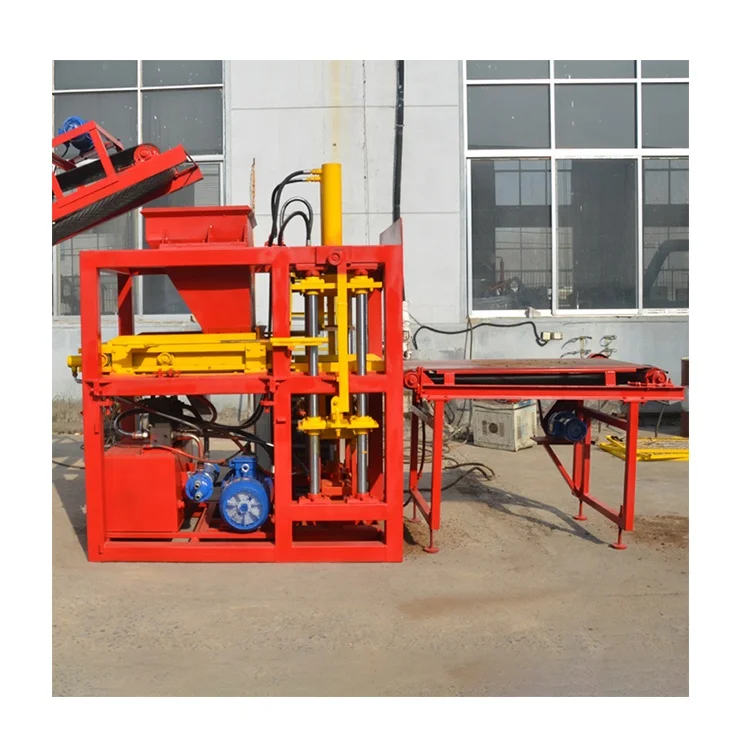
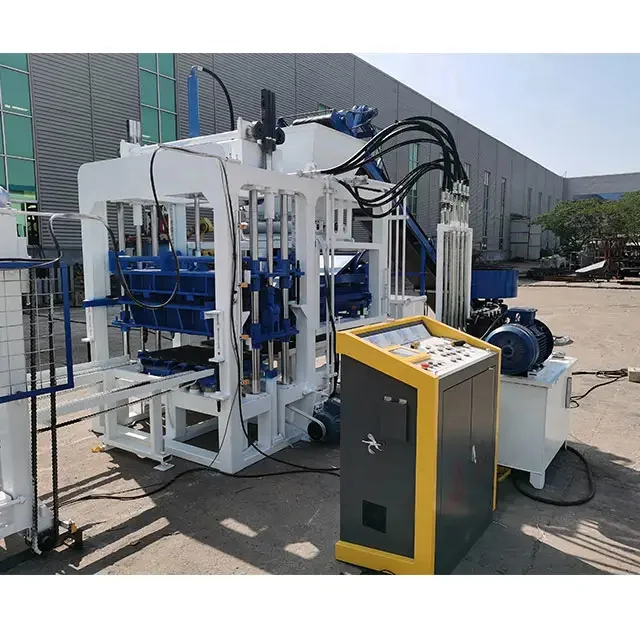
Matched System Configuration — the QT6-15 press, JS500 mixer, conveyor, and stacker are specified together so cycle times align across every station, preventing the press from waiting on upstream material or downstream handling.
Technical Specifications
| Parameter |
Value |
| Model |
QT6-15 |
| Product Type |
Semi-Automatic Concrete Block Making Machine |
| Molding Way |
Vibration and hydraulic pressing |
| Rated Pressure |
21 MPa |
| Molding Cycle |
15s–20s (basis not stated in source — confirm block format, material, and thickness) |
| Pallet Size |
900×700 mm |
| Main Machine Weight |
6000 kg |
| Output Capacity (Hollow Block 400×200×200 mm) |
6 pcs/pallet, 1440 pcs/h, 11520 pcs/8h |
| Output Capacity (Paving Brick 200×100×60 mm) |
21 pcs/pallet, 5040 pcs/h, 40320 pcs/8h |
| Output Capacity (Solid Brick 240×115×53 mm) |
32 pcs/pallet, 7680 pcs/h, 61440 pcs/8h |
| Automation Level |
Semi-automatic (simple line: mixer JS500 + 8M belt conveyor + automatic stacker) |
| Optional Line Equipment |
Cement silo, screw conveyor, cement scale, batching machine, pallet feeder (wheel type), pallet separator |
| Mould Change |
Interchangeable moulds for hollow blocks, paving bricks, solid bricks, kerbstones, color pavement bricks |
| Mobility |
Factory-designed wheels for on-site relocation |
| Voltage |
Customizable to local voltage and frequency (confirm before production) |
| Warranty |
1 year (excluding wear parts) |
Application Suitability
| Application |
Material or Output |
| Hollow block production for building walls |
Cement, sand, fly ash, stone powder, slag |
| Paving brick and color pavement brick production |
Crushed stone, cement, pigment for face mix |
| Solid brick manufacturing |
Fine aggregate, cement, stone powder |
| Kerbstone production |
Coarse aggregate, cement, high-density mix |
| Workshop-level block plant |
Daily output matched to 900×700 mm pallet curing area |
What "11,520 Blocks per Day" Leaves Out When the Format Is Not Stated
Every output figure on this page names the exact block size, pieces per pallet, and cycle assumption so you can plan real daily production.
Capacity numbers on block machinery quotations often assume a standard hollow block while the buyer intends to run smaller solid bricks or pavers with longer press cycles. When the format is not stated, the daily total on paper never matches what comes off the curing racks. A Semi-Automatic Block Making Machine manufacturer quoting without format context leaves the buyer discovering the gap only after commissioning. The QT6-15 output data here lists each format separately — hollow block, paving brick, and solid brick — so the investment decision rests on the product you actually sell. [NEED_CITE: block format and cycle time relationship in concrete block production]
Positioning the QT6-15 Within the Semi-Automatic Tier
The QT6-15 sits in the mid-volume band of our semi-automatic range, above single-mould mobile machines and below fully automatic lines with PLC-governed batching and cubing. Buyers stepping up from a workshop press find the 900×700 mm pallet size and matched JS500 mixer deliver a continuous workflow without the footprint of a high-capacity automatic plant. The semi-automatic configuration keeps operator involvement in pallet handling and mould changes, holding the investment level manageable for a first or replacement Semi-Automatic Block Making Machine purchase.
Plant Footprint and Line Layout Considerations
A semi-automatic line built around the QT6-15 requires space for the press, mixer station, eight-meter belt conveyor, raw material stockpile, and a curing area sized to hold multiple days of pallet inventory. The automatic stacker reduces manual lifting at the press exit, but pallets still move to curing racks by forklift or hand cart. Planning the layout before order confirmation prevents the situation where the press cycle is faster than the operator can clear finished pallets, creating a bottleneck that no machine setting can fix. [NEED_CITE: concrete block plant layout and curing area sizing]
Pressure, Vibration, and Pallet Size as a Matched Set
The 21 MPa rated hydraulic pressure works together with the vibration system to compact the mix into the mould cavity, and the balance between these two forces determines whether a hollow block holds its shape when demoulded or cracks at the web. The 900×700 mm pallet size sets the maximum mould footprint and must match the curing rack spacing and forklift fork width already on site. A moulding cycle listed as 15s–20s depends on the block format, wall thickness, and aggregate gradation — a coarse slag mix may need a longer vibration phase than fine sand, extending the cycle and reducing hourly output accordingly. Semi-Automatic Block Making Machine buyers who confirm their local aggregate and target block format before production avoid receiving a press tuned for a mix they cannot source.

The Cost of Skipping the Raw Material Conversation
When a block machine is configured against a catalogue default rather than the buyer’s actual fly ash, sand, or stone powder, the vibration force and cycle time may not compact the local mix adequately. The blocks leave the press looking intact but crumble under handling or fail compressive strength tests at the construction site. Correcting this after delivery means adjusting hydraulic pressure, sourcing different mould liners, or changing the aggregate blend — each adding weeks of lost production. We saw this pattern repeat with buyers who ordered on sample capacity alone, and it is the reason we now request a raw material profile and target block strength before confirming any Semi-Automatic Block Making Machine configuration. [NEED_CITE: effect of aggregate gradation on concrete block compressive strength]
Why Buyers Source the QT6-15 from This Range
Block machinery is our single focus, so the QT6-15 press, moulds, pallets, and handling equipment are specified as one matched system rather than assembled from separate suppliers. Machine configuration is set against the buyer’s actual mix design and target block format, not a catalogue default. Mould design covers the formats the buyer’s market sells, with custom drawings available for non-standard profiles. The automation level is selectable, allowing a buyer to start with the semi-automatic JS500 and conveyor package and add batching or pallet feeding equipment later. Installation support includes operator training on mould change procedures and daily maintenance routines specific to this press class.
Documentation & Verification
- Line layout and capacity calculation stating the block format assumed for each output tier
- Machine specification sheet with hydraulic pressure, vibration force, and pallet size confirmed
- Mould drawing and format list for every block type the buyer intends to produce
- Voltage and control language confirmation document signed before production begins
- Factory test record on buyer-specified block format before dispatch
- Packing photographs and customs documentation support for container loading
Installation, Commissioning & Support
- Foundation must support 6000 kg main machine weight plus dynamic vibration loads
- Voltage and frequency confirmed in writing before electrical panel wiring begins
- JS500 mixer and 8-meter belt conveyor aligned to press cycle during commissioning
- Mould change procedure trained on-site with buyer’s target block formats
- Hydraulic wear parts list provided with first-order spare recommendations
- Pallet feeder and separator added as optional upgrades without press modification
What to Prepare Before Requesting a Quotation
Provide the block formats your market sells, including dimensions and daily volume targets for each type. Share your local aggregate type, cement grade, and whether fly ash or stone powder is available, so the vibration and pressure settings can be matched before the machine enters production. Confirm the voltage, frequency, and preferred control language at your site, along with the curing area dimensions and forklift capacity you already operate.
Frequently Asked Questions
Q: How is output capacity verified, and which block format does each figure assume?
A: Each output figure on the QT6-15 specification lists the exact block dimensions, pieces per pallet, and pallet cycle. Hollow block capacity is stated for 400×200×200 mm at 6 pieces per pallet, paving brick for 200×100×60 mm at 21 pieces, and solid brick for 240×115×53 mm at 32 pieces. Molding cycle ranges from 15s to 20s depending on format and material, so we confirm the exact cycle against your mix before quoting daily totals.
Q: Where does the QT6-15 sit compared to smaller semi-automatic and larger automatic models?
A: The QT6-15 occupies the mid-volume tier of our Semi-Automatic Block Making Machine range, suited to buyers who need consistent output beyond a mobile egg-laying machine but are not ready for a fully automatic line with PLC batching and cubing. Its 900×700 mm pallet and matched JS500 mixer provide a continuous workflow for workshop and mid-size plant operations, with an upgrade path to higher automation available.
Q: What plant footprint and investment level should a buyer plan for this tier?
A: A QT6-15 semi-automatic line requires floor space for the press, mixer, eight-meter conveyor, raw material storage, and a curing area holding several days of 900×700 mm pallets. Investment covers the press, stacker, and basic material handling, sitting below fully automatic lines in both equipment cost and foundation requirements. Exact layout depends on your site dimensions and target daily volume across all block formats.
Q: Can the automation level be upgraded later from semi-automatic?
A: Yes. The QT6-15 line accepts optional equipment including a wheel-type pallet feeder, pallet separator, cement silo with screw conveyor, and batching machine. These additions reduce manual handling at the press infeed and improve batch consistency without replacing the core press or mould set. We specify the upgrade path at initial order so mechanical and electrical interfaces are prepared during first production.
Q: What voltage and frequency options are available for different export markets?
A: Voltage and frequency on the QT6-15 are configurable to the buyer’s local supply standard, confirmed in writing before the electrical panel is wired. This prevents commissioning delays caused by a mismatch between the machine motor rating and the site transformer. Control display language is confirmed at the same stage so operators can read menus and alarms from the first production day.

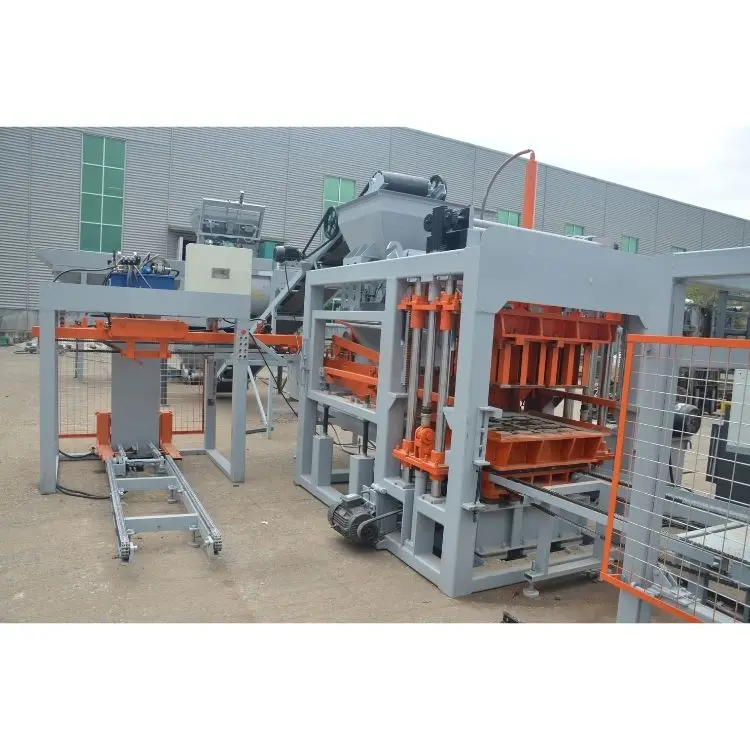
 Semi automatic block