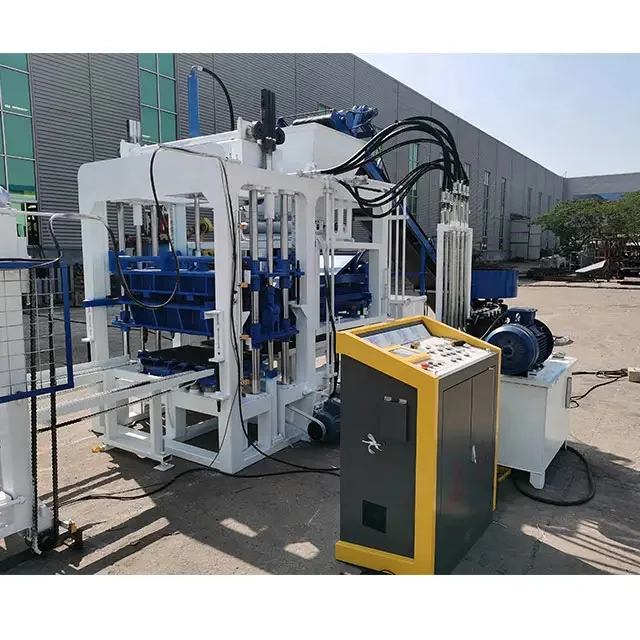
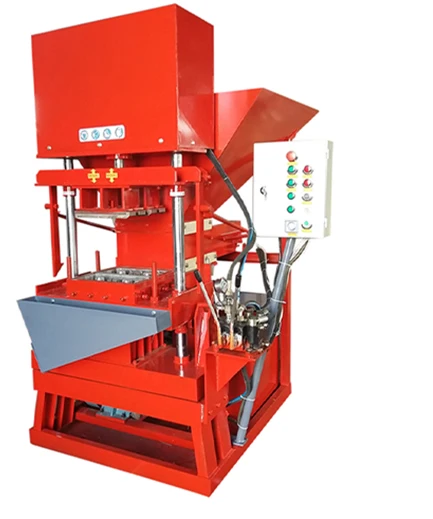
Matched System Sizing — QT6-15 capacity is stated per block format with pallet count and cycle time, so buyers see what the press actually delivers before committing.
Technical Specifications
| Parameter |
Value |
| Model |
QT6-15 |
| Product Type |
Semi-Automatic Concrete Block Making Machine |
| Molding Way |
Vibration and hydraulic pressing |
| Rated Pressure |
21 MPa |
| Molding Cycle |
15 s – 20 s |
| Pallet Size |
900 × 700 mm |
| Main Machine Weight |
6000 kg |
| Mixer (Simple Line) |
JS500 |
| Belt Conveyor (Simple Line) |
8 m |
| Hollow Block Output |
1440 pcs/h, 11520 pcs/8h (basis: 400×200×200 mm, 6 pcs per pallet) |
| Paving Brick Output |
5040 pcs/h, 40320 pcs/8h (basis: 200×100×60 mm, 21 pcs per pallet) |
| Solid Brick Output |
7680 pcs/h, 61440 pcs/8h (basis: 240×115×53 mm, 32 pcs per pallet) |
| Mould Formats |
Hollow block, paving brick, solid brick; custom moulds available |
| Automation Level |
Semi-automatic (simple line); upgradable to full pallet and batching automation |
| Voltage |
Customizable to local standard (basis to be confirmed) |
| Control Language |
To be confirmed before production |
| Included in Simple Line |
One hollow block mould, two hydraulic trolleys |
| Warranty |
1 year (excluding wear parts) |
Application Suitability
| Application |
Material or Output |
| Hollow block production for residential and commercial walls |
Cement, sand, fly ash, crushed stone |
| Paving brick manufacturing for walkways and yards |
Cement, stone powder, slag blends |
| Solid brick runs for load-bearing and infill masonry |
Standard and lightweight aggregate mixes |
| On-site block production by construction contractors |
Local aggregate with cement binder |
| First plant setups by block entrepreneurs |
Variable aggregate with simple batching |
Why the Format Assumption Matters More Than the Hourly Number
A cycle-time figure means very little unless the block format behind it is the one you actually sell.
Many quotations for a semi-automatic block machine manufacturer list a single hourly output that assumes an ideal format, leaving buyers surprised when their daily production on hollow blocks or pavers falls well short. I once worked on a line where the quoted capacity assumed solid bricks, but the buyer’s market was 80 % hollow blocks — the real throughput was less than half of what the proposal implied. Always ask which block size, pallet load, and cycle time sit behind every output claim [NEED_CITE: capacity calculation transparency in block machinery quotations].

Where the QT6-15 Sits in the Range
This press occupies the middle tier of the semi-automatic block machine manufacturer lineup, balancing press force and pallet size against investment level. Buyers starting a first block plant typically begin with the simple line — JS500 mixer, 8 m belt conveyor, manual pallet handling — then add automatic stacking or pallet feeding later without changing the main press.
Full Range Positioning From Simple to Upgradable Line
The emphasis here is on range placement: a small workshop may run only hollow blocks with manual stacking, while a growing plant adds cement silo, batching machine, pallet loader, and separator as demand expands. Every tier shares the same 900 × 700 mm pallet footprint, so curing racks and forklifts purchased at the start remain compatible after an automation upgrade [NEED_CITE: pallet standardization across block line automation tiers].
Pressure, Vibration and Pallet Geometry
The 21 MPa rated pressure works together with the vibration system to compact the mix into the mould cavity; vibration distributes material while hydraulic force locks density. If the local aggregate contains a high proportion of fly ash or fine stone powder, the vibration amplitude and pressure dwell may need adjustment to avoid weak edges. The 900 × 700 mm pallet is sized so that standard curing racks and common warehouse forklifts handle loaded pallets without custom adapters, which is often overlooked until the first batch reaches the yard. Molding cycles between 15 s and 20 s depend on block height and mix stiffness — taller hollow blocks naturally require longer fill and press phases.
What Happens When the Mix Does Not Match the Machine
Specifying a semi-automatic block machine without confirming the buyer’s actual mix design leads to inconsistent block strength and surface cracking. I recall a project where the press was set for standard sand, but the buyer sourced fly ash from a nearby power plant; the vibration force was too aggressive for that finer material, and the blocks crumbled at the corners. A mismatched mix also accelerates wear on mould liners and hydraulic seals because the abrasive profile changes [NEED_CITE: effect of aggregate gradation on block mould wear rate].
Why Procurement Focuses on the Whole Line
Block machinery as a single focus means the press, mould, pallet and handling equipment are specified as one matched system, not assembled from separate suppliers. Configuration is set against the buyer’s actual mix design and target format rather than a catalogue default. Moulds for the formats the local market sells — including custom drawings — are supplied alongside the press. Automation level is selectable, so a buyer can start with the simple JS500 line and add pallet automation later. Installation includes operator training so the first production run is not left to trial and error.
Documentation & Verification
- Line layout stating assumed block format for each output figure
- Machine specification sheet with confirmed pallet size and pressure rating
- Mould drawing and format list reviewed before production
- Voltage, frequency and control language confirmation in writing
- Factory test record on buyer’s chosen block format
- Wear parts and mould availability list shipped with documentation
Installation, Commissioning & Support
- Foundation plan matched to the 6000 kg press weight and vibration load
- Power circuit sized for confirmed voltage and JS500 mixer draw
- Machine arrives dismantled for container loading; reassembly supervised on site
- First-run parameter tuning to match local aggregate and block format
- Operator training on mould change and daily hydraulic checks
- Wear parts list with reorder intervals for mould liners and seals
What to Include in Your Inquiry
Share the block formats your market sells most, the daily volume you expect per format, and the aggregate materials you can source locally. Confirm your site voltage, frequency, and the language you need on the PLC display so the semi-automatic block machine manufacturer can prepare the electrical cabinet before assembly.
Frequently Asked Questions
Q: How is output capacity calculated and which block format does each figure assume?
A: Every output figure is tied to a specific block size, pallet load, and cycle time. For example, hollow block capacity is stated for 400×200×200 mm blocks at six pieces per pallet. If your main product is a different format, the daily output will differ, and a revised calculation is provided with the proposal.
Q: What is included in the simple line versus the more automated configuration?
A: The simple line ships with a JS500 mixer, 8 m belt conveyor, one hollow block mould and two hydraulic trolleys. A fuller configuration adds a cement silo, batching machine, pallet loader and separator. The press itself stays the same across both setups.
Q: Can I start semi-automatic and upgrade pallet handling later?
A: Yes. The 900 × 700 mm pallet size remains constant, so automatic pallet loaders, separators and stackers can be added once production volume justifies the investment. Curing racks bought at the start stay compatible after the upgrade.
Q: How are voltage, frequency and control language confirmed before shipment?
A: These details are confirmed in writing during the proposal stage and rechecked before the electrical cabinet is wired. Providing your local supply standard and preferred PLC display language early avoids commissioning delays once the machine arrives on site.
Q: What moulds and wear parts are available for the first replacement?
A: The simple line includes one hollow block mould. Additional moulds for paving brick, solid brick or custom formats can be ordered with the machine or later. A wear parts list with mould liners and hydraulic seals is provided so the first reorder is planned before production starts.

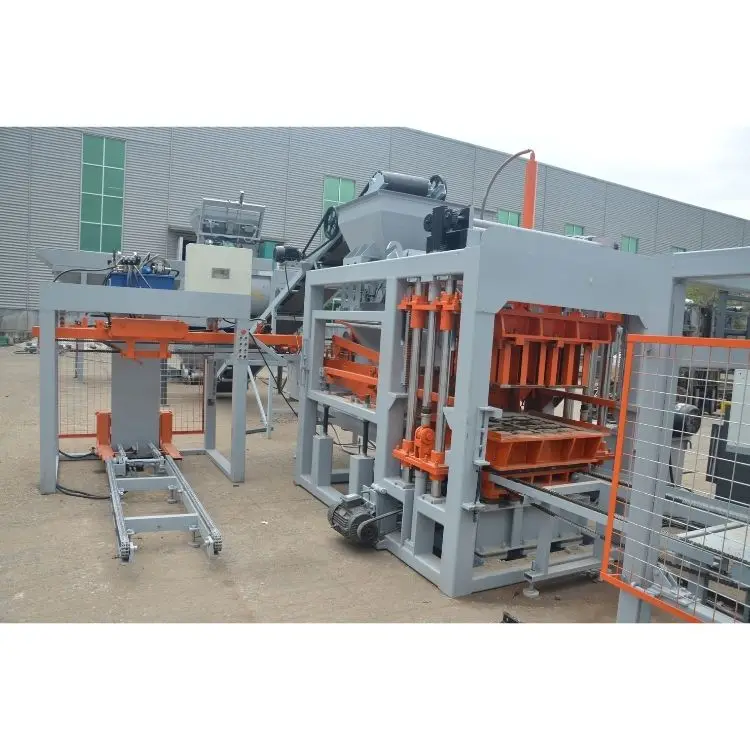
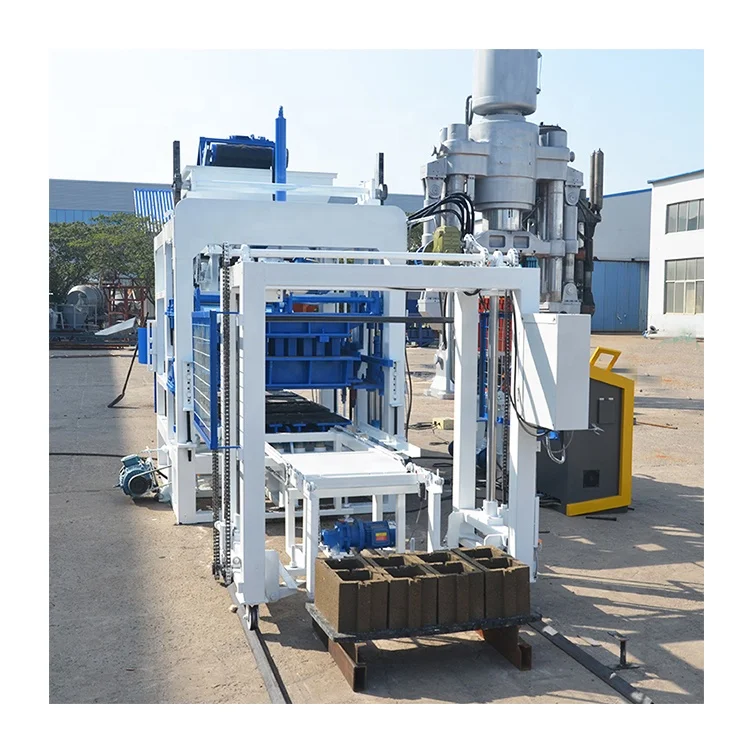 Semi automatic block