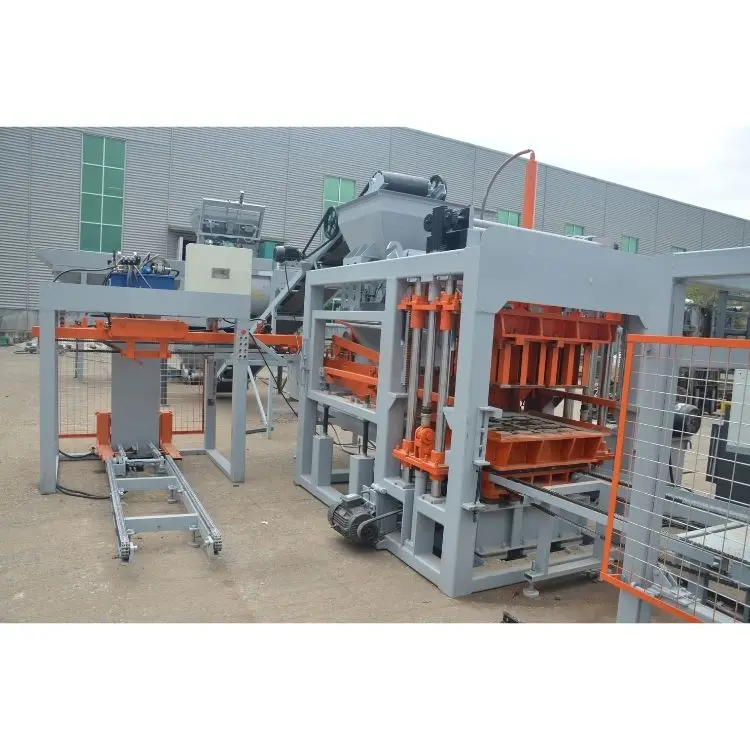
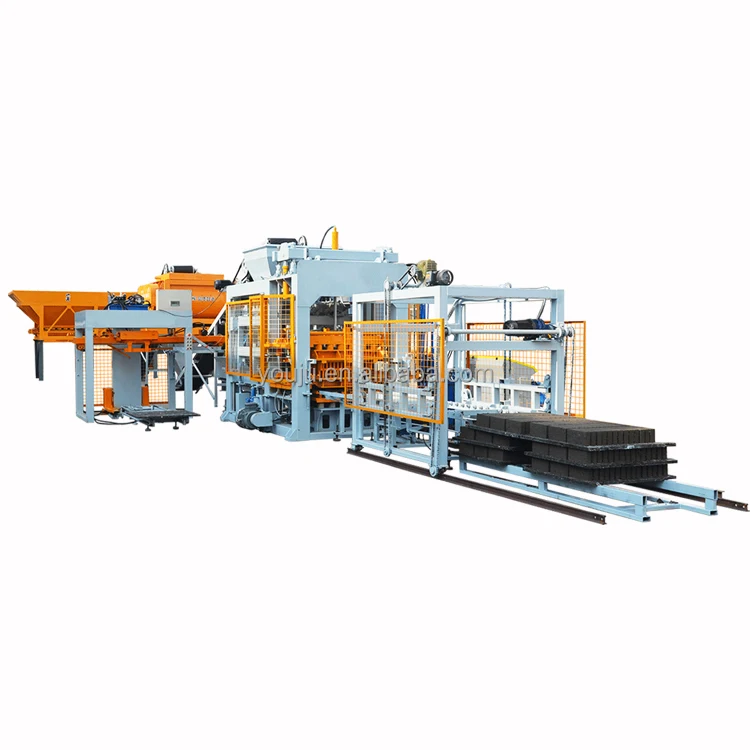
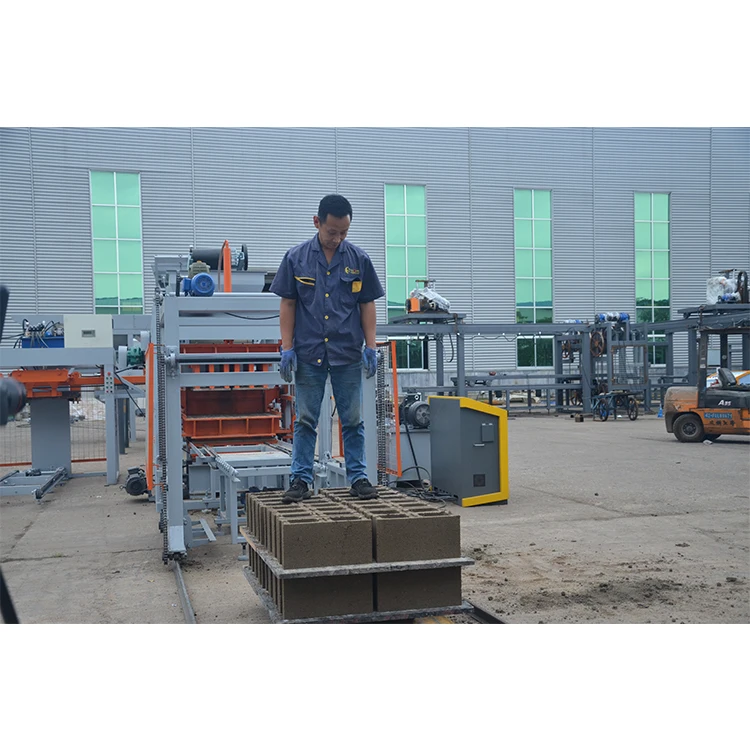
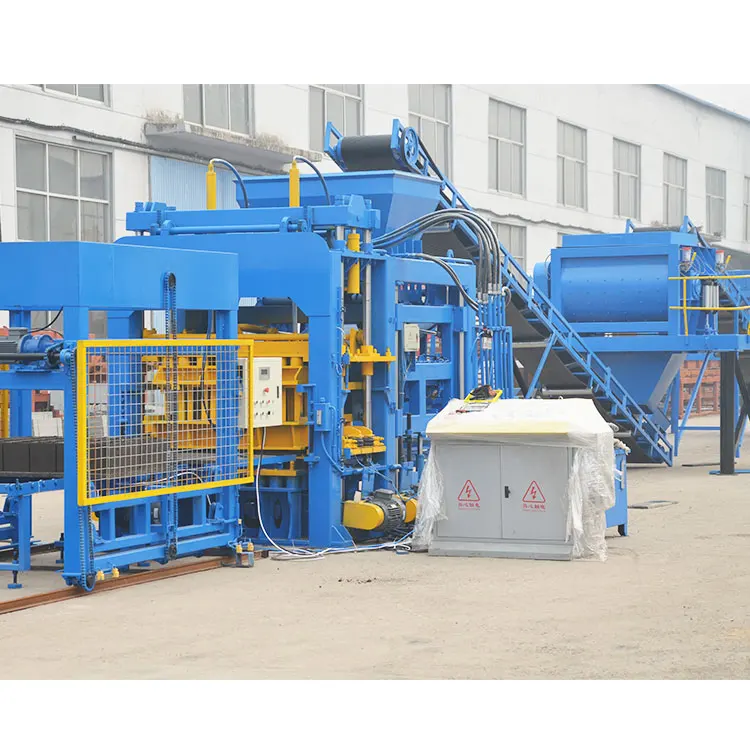
Matched System Design — the QT4-18 semi-automatic block machine is specified alongside its moulds, pallets, and supporting equipment as one coordinated line rather than a collection of unrelated components.
Technical Specifications
| Parameter |
Value |
| Model |
QT4-18 |
| Product Type |
Semi-Automatic Concrete Block Making Machine |
| Overall Dimensions (L×W×H) |
2500×1750×2200 mm |
| Rated Pressure |
16 MPa |
| Vibration Form |
Platform Vibration |
| Pallet Size |
950×550 mm |
| Molding Cycle |
18–25 s (basis not stated in source — confirm block format, material, and thickness) |
| Overall Power |
27.5 kW |
| Control System |
PLC with frequency converter and human-machine interface |
| Electrical Components |
Schneider (international brand) |
| Mould Lifting Mechanism |
Double-sided synchronous gears |
| Material Feeder |
Distribution belt hopper |
| Automation Level |
Semi-automatic; hydraulic cylinder pallet feeding, manual or mechanical block transfer |
| Assembly State |
Requires on-site cement-poured foundation per foundation drawing |
Application Suitability
| Application |
Material or Output |
| Hollow block production for residential and commercial wall construction |
Crushed stone, sand, cement, and water mixed to local aggregate gradation |
| Solid brick manufacturing for load-bearing and partition walls |
River sand or manufactured sand with cement binder |
| On-site block production for housing and infrastructure contractors |
Locally sourced aggregate matched to available cement grade |
| First block plant for entrepreneurs entering the building materials market |
Standard concrete mix designs adjusted to regional raw material availability |
Why the Moulding Cycle Figure Alone Cannot Tell You Daily Output
The cycle time only becomes meaningful once the block format, mix design, and pallet handling rhythm are all defined together.
Many buyers receive a quotation that quotes a molding cycle in seconds and then multiplies it into a daily capacity figure — without disclosing which block format that calculation assumes. A hollow block and a solid paver on the same 950×550 mm pallet have completely different compaction requirements, which shifts the cycle within the 18–25 second range. When the pallet return loop, manual block transfer, and curing yard distance are not factored in, the real daily output can fall noticeably short of the quoted number. A QT4-18 semi-automatic block machine manufacturer should always state the assumed format alongside the cycle [NEED_CITE: block machine capacity calculation standards for concrete masonry units].

Where the QT4-18 Sits in the Semi-Automatic Tier
The QT4-18 occupies the mid-range semi-automatic tier, positioned between small mobile egg-laying machines and fully automatic lines with robotic stacking and cubing. Its 27.5 kW overall power and 16 MPa rated pressure place it in a bracket where the press itself is capable, but the surrounding material flow still relies on operator involvement for pallet handling and block transfer to the curing yard. For buyers surveying the full range, this tier offers a balance: the press delivers consistent compaction through platform vibration and PLC-controlled frequency conversion, while the investment in automation infrastructure remains moderate. The semi-automatic designation means the hydraulic cylinder feeds pallets into position, but blocks are moved to the curing area manually or with a mechanical stacker purchased as supporting equipment.
How the Supporting Line Completes the Semi-Automatic Setup
A semi-automatic press does not operate in isolation — the mixer, belt conveyor, and pallet circulation determine whether the QT4-18 runs continuously or waits between cycles. The JQ500 concrete pan mixer and the 6 m or 8 m belt conveyor are sized to keep the distribution belt hopper supplied without overloading the platform. When the mixer batch size and conveyor speed are mismatched to the press cycle, operators end up feeding material in surges, which affects compaction uniformity across the pallet. Pallet choice also matters at this tier: the 950×550 mm pallet must match both the curing rack spacing the buyer plans to build and the forklift already on site [NEED_CITE: pallet sizing for concrete block curing and handling systems].
Pressure, Vibration, and What They Mean for Block Density
The 16 MPa rated hydraulic pressure works together with platform vibration to compact the concrete mix into the mould cavity. Pressure alone pushes the material into shape, while vibration settles fine particles into voids left between coarse aggregate — both forces must be matched to the buyer’s specific mix design. If the local sand has a high clay content, as seen in some Middle Eastern and West African sources, the mix retains more water and responds differently to vibration, sometimes causing mould sticking or lower green strength at demoulding. The double-sided synchronous gear mould lifting mechanism addresses part of this problem by raising the upper mould evenly, reducing the chance of cracking freshly pressed blocks during extraction. The distribution belt hopper pre-mixes material before it enters the mould box, which helps when aggregate gradation varies from batch to batch. The PLC with frequency converter controls vibration intensity and duration per cycle, allowing adjustment when switching between hollow block and solid brick formats on the same machine.
What Happens When Voltage and PLC Language Are Overlooked
Skipping voltage and control language confirmation before production leads to commissioning delays that no amount of factory testing can fix on arrival. A QT4-18 shipped with a 380V/50Hz motor to a market running 440V/60Hz will draw incorrect current, overheating the Schneider contactors and tripping protective relays within the first shift. Similarly, a PLC display in a language the local operator cannot read turns troubleshooting into guesswork — the frequency converter parameters, error codes, and cycle adjustments all become inaccessible without a translator on site. These issues are entirely preventable but surface repeatedly when the electrical confirmation step is rushed or omitted during the ordering process [NEED_CITE: voltage and frequency standards by export market].
Why a Single-Source Machinery Supplier Changes the Equation
Block machinery as a single focus means the QT4-18 is never quoted as a standalone press with the expectation that the buyer will source compatible pallets, mixers, and conveyors elsewhere. The mould design is developed around the formats the buyer’s local market actually sells, including custom drawings when standard hollow block or solid brick profiles do not match regional demand. Configuration is set against the buyer’s confirmed mix design and local aggregate properties, not pulled from a default catalogue table. The automation level is selectable — a buyer can begin with the semi-automatic pallet feeding and manual transfer setup, then add a mechanical stacker or block clamper later as production volume justifies the investment. Installation support includes foundation drawing review, on-site commissioning, and operator training that covers mould change procedure and daily maintenance intervals specific to the QT4-18.
Documentation & Verification
- Line layout showing QT4-18 placement with capacity calculation per confirmed block format
- Mould drawing and format list matching the 950×550 mm pallet dimensions
- Hydraulic and electrical schematic confirming voltage, frequency, and PLC language
- Factory test record on buyer’s specified mix design before dispatch
- Packing photographs and customs documentation support for shipment
Installation, Commissioning & Support
- Cement-poured foundation required per supplied drawing before the 2500×1750×2200 mm machine arrives
- Dedicated electrical circuit sized for 27.5 kW overall power with confirmed voltage and frequency
- M24 bolt-release mould change system demonstrated during on-site commissioning
- PLC human-machine interface configured to operator’s language before first production run
- Wear parts list covering hydraulic seals, vibration motor brushes, and mould liner plates
What to Prepare Before Requesting a Quotation
To move from a general inquiry to a specific QT4-18 configuration, share the block formats your market demands — hollow block dimensions, solid brick sizes, or paver profiles — along with your target daily output per format. Provide a sample or description of your locally available sand and aggregate, including any known clay or silt content, plus the cement grade you plan to use. Confirm your site’s voltage, frequency, and preferred PLC display language, and note the curing yard area and forklift capacity you already have on site.
Frequently Asked Questions
Q: How is the QT4-18 molding cycle calculated, and which block format does it assume?
A: The 18–25 second cycle range depends on the specific block format, mix design, and compaction requirement. A hollow block with thin walls fills and compacts faster than a dense solid brick on the same pallet. The confirmed cycle time is stated per format in the capacity calculation document, not as a single blanket figure.
Q: Where does the QT4-18 sit compared to fully automatic and mobile tiers?
A: The QT4-18 is a semi-automatic press with hydraulic pallet feeding but manual or mechanical block transfer. It sits above mobile egg-laying machines in output and consistency, and below fully automatic lines that include robotic stacking and cubing. It suits buyers who want reliable press performance without committing to full automation infrastructure.
Q: What foundation and plant footprint does the QT4-18 require?
A: The machine needs a cement-poured foundation built to the supplied drawing, with space for the 2500×1750×2200 mm press, mixer, belt conveyor, and pallet circulation area. Total line footprint depends on supporting equipment selection and curing yard layout, which is confirmed during the proposal stage.
Q: Can I start semi-automatic and add automation later?
A: Yes. The QT4-18 supports upgrades such as adding a mechanical stacker, block clamper, or automatic pallet return system as production volume grows. The PLC control and hydraulic platform remain the same, so the upgrade integrates with existing equipment rather than requiring a full line replacement.

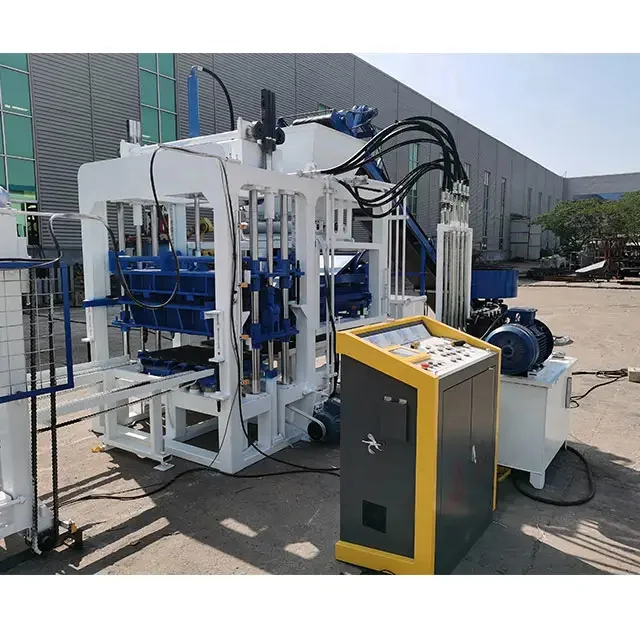
 Semi automatic block