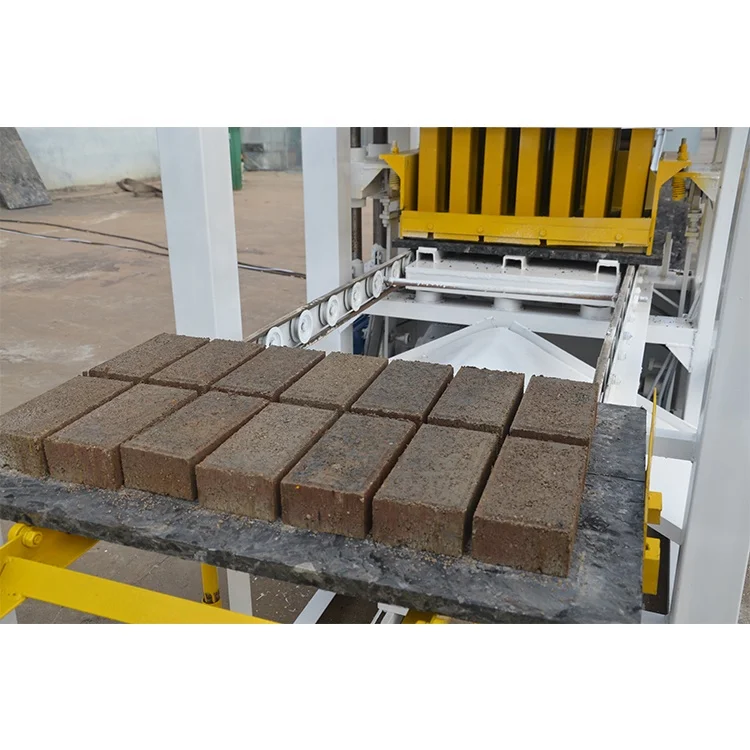
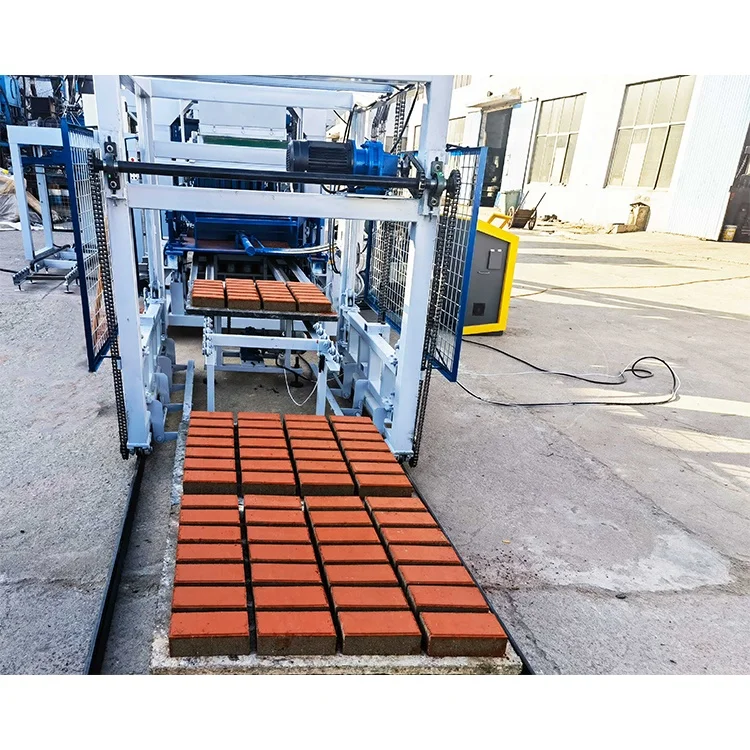
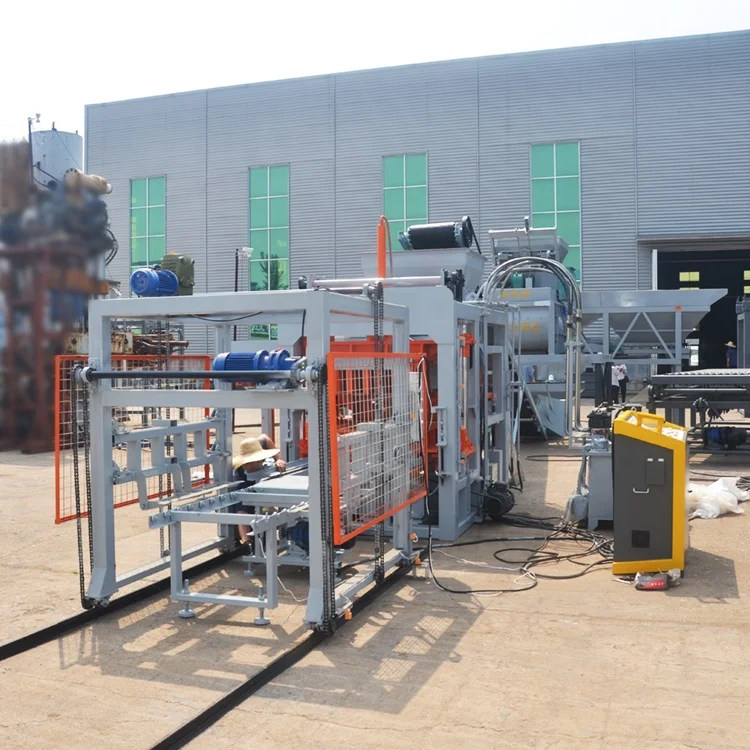
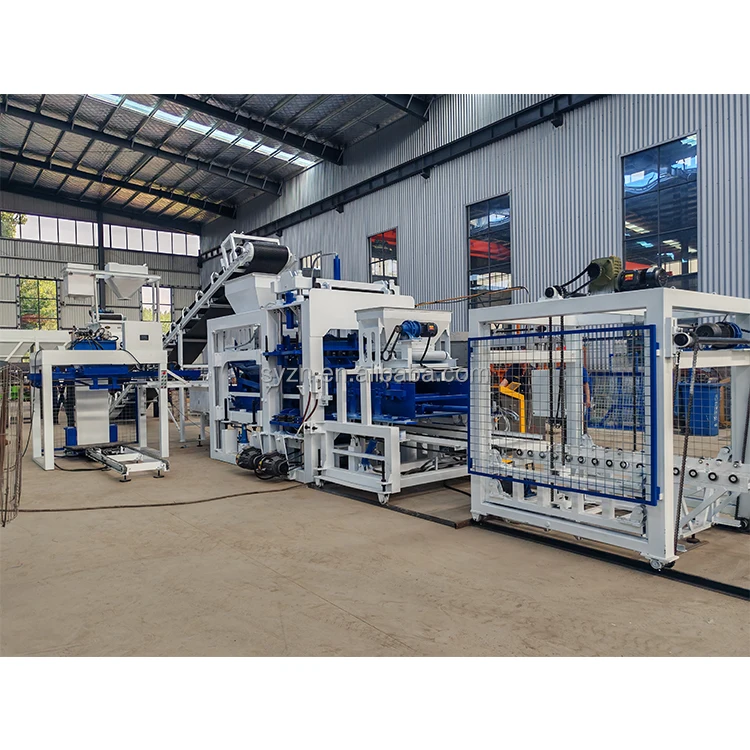
Mid-Tier Automation — the QT6-15 is specified as a matched system of press, mould, pallet, and handling rather than assembled from disconnected suppliers, so capacity figures align with your actual block format.
Technical Specifications
| Parameter |
Value |
| Model |
QT6-15 |
| Product Type |
Hydraulic Block Making Machine |
| Overall Dimensions (L×W×H) |
8200 × 1700 × 2950 mm |
| Total Mass |
7 T |
| Overall Power |
37 kW |
| Vibration Frequency |
0–60 Hz (adjustable) |
| Vibration Form |
Platform Vibration |
| Vibration Force |
45 kN |
| Moulding Mode |
Automatic load, vibration moulding |
| Pallet Size |
880 × 850 mm |
| Molding Cycle |
15–20 s |
| Demolding Method |
Hydraulic |
| Control System |
PLC with touch screen |
| Hydraulic System |
Independent integrated hydraulic station |
| Compressive Strength of Blocks |
>15 MPa |
| Output — Hollow Block 400×200×200 mm |
1080–1440 pcs/hour; 8640–11520 pcs/8 hr |
| Output — Hollow Block 400×150×200 mm |
1440–1920 pcs/hour; 11520–15360 pcs/8 hr |
| Output — Solid Brick 240×115×53 mm |
5760–7680 pcs/hour; 46080–61440 pcs/8 hr |
| Output — Rectangular Paver 200×100×60 mm |
2160–2880 pcs/hour (cycle 20–25 s); 17280–23040 pcs/8 hr |
| Output — Zigzag Paver 225×112.5×60 mm |
2160–2880 pcs/hour (cycle 20–25 s); 17280–23040 pcs/8 hr |
| Factory Area |
1200 m² |
| Warranty |
1 year (excluding spare parts) |
Application Suitability
| Application |
Material or Output |
| Hollow block production for wall construction |
Crushed stone, sand, cement, and fly ash blends |
| Solid brick manufacturing for load-bearing structures |
Local aggregate with cement binder |
| Rectangular paving brick for driveways and walkways |
Fine aggregate and pigment mixes |
| Zigzag interlocking paver for heavy-traffic areas |
High-strength aggregate with graded cement content |
| Porous and permeable brick for drainage applications |
Open-graded aggregate with controlled cement ratio |
What the Capacity Figure Hides When Format Is Not Stated
Every output number on this page is tied to a specific block dimension — no single catalogue figure is used to represent the whole range.
Buyers often receive a quote that says "1500 pieces per hour" without stating which block format that assumes. I have seen projects stall because the daily output on hollow blocks was half of what was expected, simply because the capacity was calculated on a smaller solid brick. The QT6-15 Hydraulic Block Making Machine for sale lists each format separately above, so your real shift output matches the plan before the container is booked. [NEED_CITE: block format impact on cycle time and daily output]

Where the QT6-15 Sits in the Full Machine Range
The Shiyue range spans mobile egg-laying units at one end and high-capacity fully automatic lines at the other. The QT6-15 occupies the mid-tier automatic position, meaning it delivers PLC-controlled batching and vibration with hydraulic demolding, yet keeps the plant footprint within a 1200 m² site. For a buyer comparing a first automatic line against semi-automatic alternatives, this model bridges the gap between manual pallet handling and a fully cubed stacking system.
Pallet Size Decisions That Affect the Whole Curing Yard
The 880 × 850 mm pallet is confirmed at inquiry stage so that the curing rack spacing, forklift tine width, and yard layout are planned before the QT6-15 arrives on site. Choosing a pallet size without checking the existing forklift or curing area has caused delays where buyers had to source new handling equipment after the machine was already crated. Locking this dimension early avoids a cascade of rework across the block line. [NEED_CITE: pallet and curing area compatibility in block production]
Reading the Core Specs for Production Impact
The 45 kN vibration force paired with platform vibration and a 0–60 Hz adjustable range allows the QT6-15 to be tuned to the buyer’s specific mix design. Higher frequency with lower amplitude suits fine-aggregate pavers, while lower frequency with higher amplitude compacts coarser hollow block mixes more effectively. The independent integrated hydraulic station is mounted away from the main vibration zone, which keeps hydraulic seals and valves isolated from dust and shock loads, supporting consistent demolding pressure throughout a full shift. Pallet size at 880 × 850 mm determines how many blocks are formed per cycle — a larger pallet would increase per-cycle output but require a proportionally larger curing area and heavier-duty forklift. The PLC touch screen interface includes fault diagnosis and a safe logic circuit with action interlock, preventing the mould from descending if the pallet is not correctly positioned.
When the Wrong Configuration Costs More Than the Machine
A block machine configured for a mix design the buyer cannot source locally forces a material change that adds ongoing cost to every production run. I recall a case where a buyer’s local aggregate had high clay content, and the machine was set up for clean river sand — block strength dropped well below the 15 MPa target, and output slowed as the operator ran extra cycles to compensate. [NEED_CITE: local aggregate variability and block compressive strength] Voltage and frequency confirmed too late in the process have delayed commissioning by weeks while transformers were sourced on site.
Why Source This Model Through the Shiyue Range
Block machinery is the single focus here, so the QT6-15 is quoted as a press, mould, pallet, and handling package rather than a standalone press with separately sourced peripherals. Configuration is set against the buyer’s actual mix design and target block format, not pulled from a catalogue default. Mould design covers the formats the buyer’s market sells, including custom drawings when a standard mould does not match. Automation level is selectable — a buyer can start with semi-automatic pallet handling and add automatic stacking later within the same system architecture. Installation includes operator training so the team running the QT6-15 on day one understands the PLC fault codes and mould change procedure.
Documentation & Verification
- Line layout with capacity calculation stating the block format assumed for each output tier
- Machine specification sheet confirming vibration force, hydraulic pressure, and pallet size
- Mould drawing and format list matched to the buyer’s market before shipment
- Voltage, frequency, and PLC display language confirmation recorded before production
- Factory test record on the buyer’s selected block format prior to dispatch
- CE declaration and operation manual with wear parts list included
Installation, Commissioning & Support
- Foundation must support the 7 T total mass and 8200 mm machine length with level tolerance
- Dedicated 37 kW power circuit required with voltage and frequency confirmed before wiring
- Machine shipped in dismantled state with reassembly guided by hydraulic and electrical schematics
- First-run commissioning includes PLC parameter setting for the buyer’s specific mould and cycle time
- Operator training covers touch screen navigation, fault diagnosis, and safe logic interlocks
- Wear parts list and mould maintenance schedule provided for the first replacement cycle
Before You Send an Inquiry
To size the QT6-15 Hydraulic Block Making Machine for sale accurately against your project, share the block formats you plan to produce, the daily output target per format, and the raw materials available locally including aggregate type and cement source. Confirming your site voltage, frequency, and preferred PLC language at this stage prevents delays once the machine enters production. If you already have curing racks and forklifts on site, send the dimensions so pallet compatibility is verified upfront.
Frequently Asked Questions
Q: How is the QT6-15 capacity verified and what format does each figure assume?
A: Each output number is listed against a specific block dimension — for example, 1080–1440 pieces per hour applies to 400×200×200 mm hollow blocks, while rectangular pavers at 200×100×60 mm run at 2160–2880 pieces per hour on a 20–25 second cycle. No single catalogue figure represents all formats.
Q: Where does this model sit compared to semi-automatic and higher-tier options?
A: The QT6-15 is a mid-tier automatic machine with PLC control and hydraulic demolding. It offers more output and consistency than semi-automatic models while keeping the plant footprint moderate. Buyers can start here and add automatic stacking or cubing as demand grows.
Q: What electrical details are confirmed before the machine is built?
A: Voltage, frequency, and PLC display language are confirmed and recorded before production starts. This avoids the situation where a machine arrives on site and cannot be powered or operated in the local language, which has delayed other projects by weeks.
Q: How does pallet size affect my curing area and forklift planning?
A: The 880 × 850 mm pallet determines rack spacing, forklift tine width, and yard capacity. Confirming these dimensions early ensures the curing area and handling equipment are ready when the QT6-15 Hydraulic Block Making Machine for sale is commissioned, avoiding last-minute equipment purchases.
Q: What factory area does this machine need compared to a mobile unit?
A: The QT6-15 requires approximately 1200 m² including mixing, pallet return, and curing space. Mobile egg-laying machines need less fixed infrastructure but produce lower output and lack the format flexibility of a stationary press with interchangeable moulds.

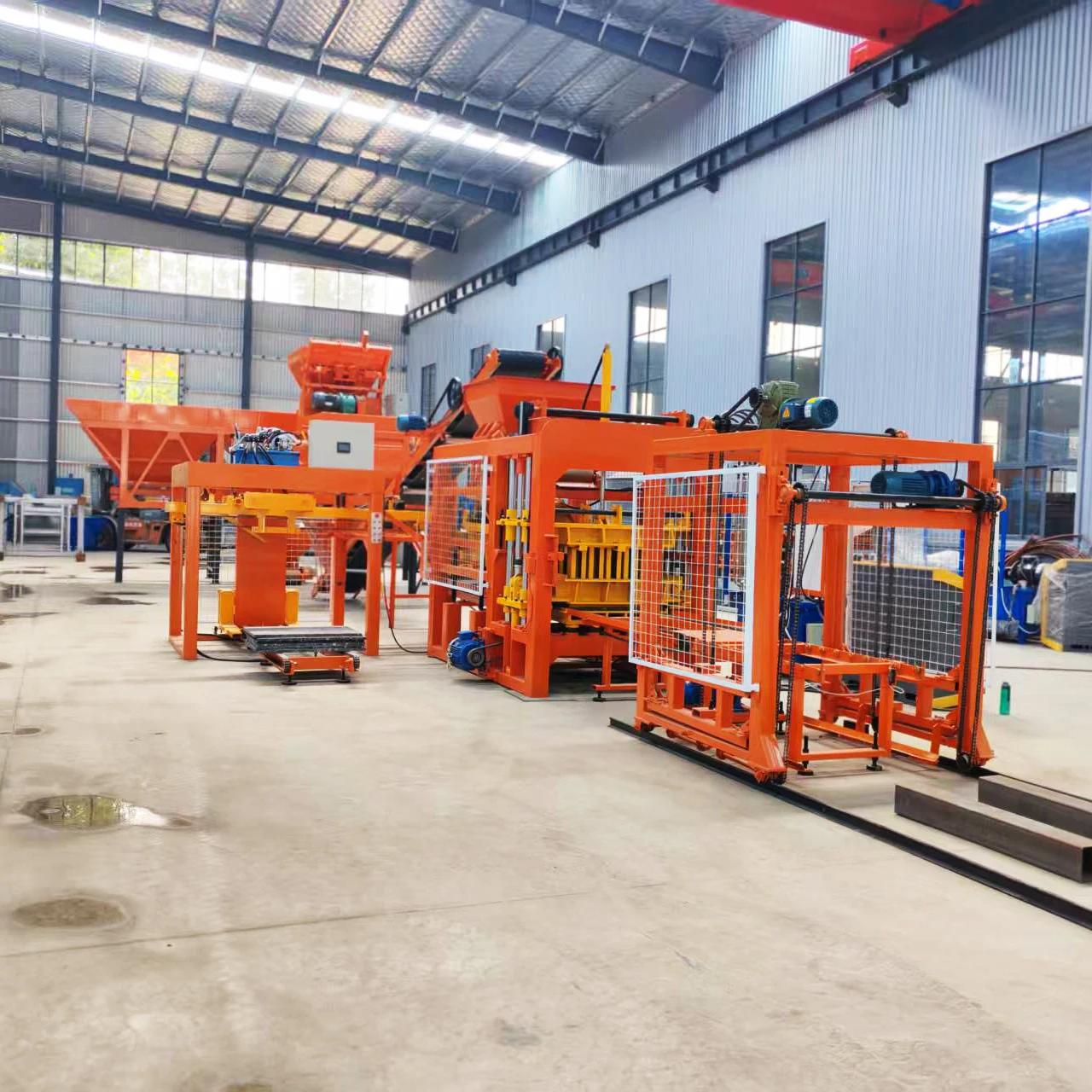
 High quality block machine