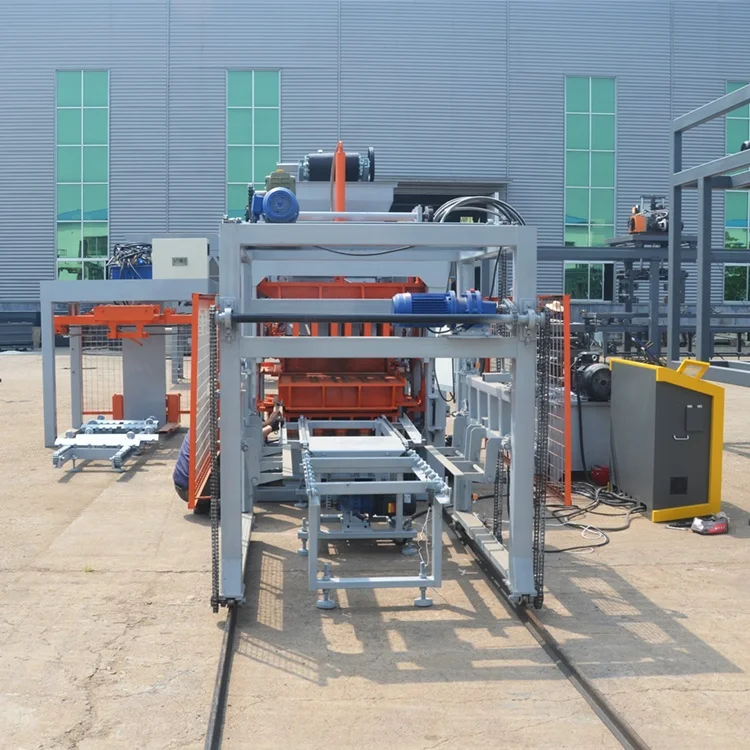
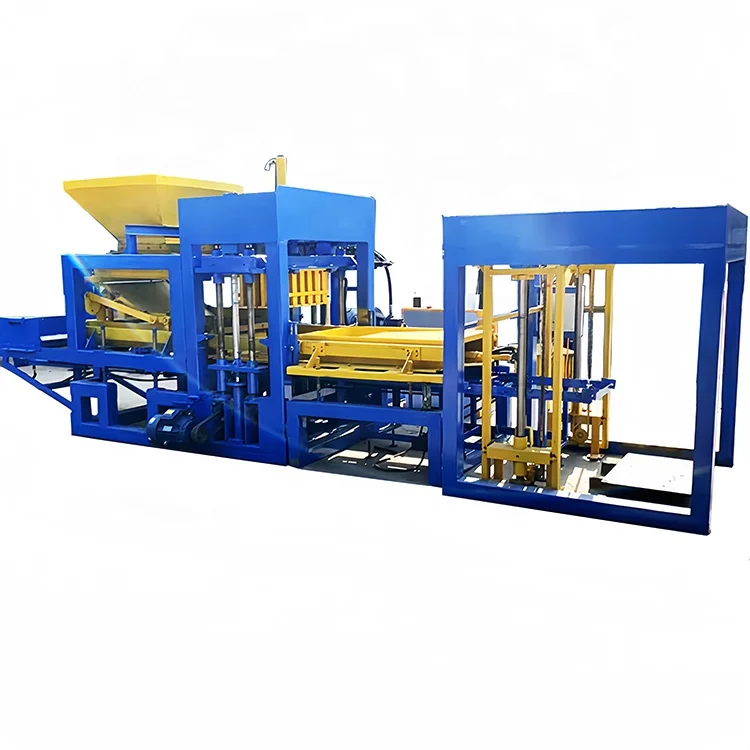
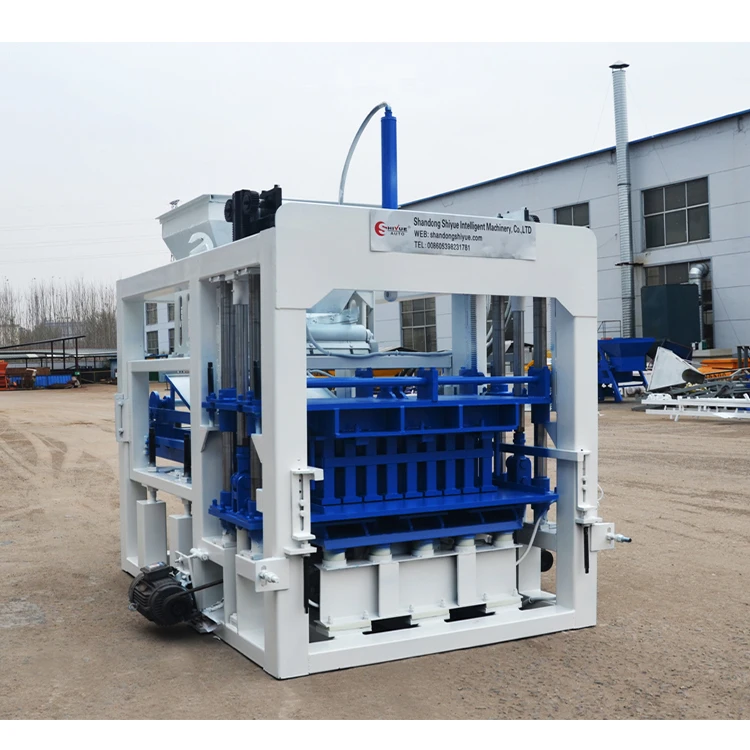
Matched System Design — The QTJ4-24 block machine is specified alongside its 900×450 mm pallet, J350 mixer, and belt conveyor as one coordinated set, so capacity, curing footprint, and power supply align before dispatch.
Technical Specifications
| Parameter |
Value |
| Model |
QTJ4-24 |
| Product Type |
Manual / Semi-Automatic Concrete Block Making Machine |
| Machine Category |
Stationary table vibration concrete block machine (mechanical + manual operation) |
| Main Machine Power |
11.95 kW |
| Overall Dimensions (L×W×H) |
3600 mm × 1700 mm × 2560 mm |
| Total Mass |
3.5 T |
| Pallet Size |
900 mm × 450 mm |
| Molding Cycle |
24–26 s |
| Vibration Type |
Table vibration feeding + fluctuation vibration molding |
| Feeding Method |
Manual feeding (two feed ways available) |
| Control System |
Electrical control cabinet with mechanical interworking |
| Automation Level |
Manual / Semi-automatic |
| Matching Line Equipment |
J350 or JQ350 / JQ500 vertical mixer, 6 m or 8 m belt conveyor |
| Wiring — General Power |
3×16 mm² |
| Wiring — Main Machine |
3×6 mm² |
| Wiring — Mixer |
3×4 mm² |
| Wiring — Conveyor |
3×2.5 mm² |
| Warranty |
1 year (excluding spare parts) |
| Mould Format |
Pieces per Mould |
| 400 × 200 × 200 mm |
4 pcs |
| 390 × 240 × 190 mm |
3 pcs |
| 390 × 120 × 190 mm |
6 pcs |
| 240 × 115 × 53 mm |
21 pcs |
Application Suitability
| Application |
Material or Output |
| Hollow block production (CHB) |
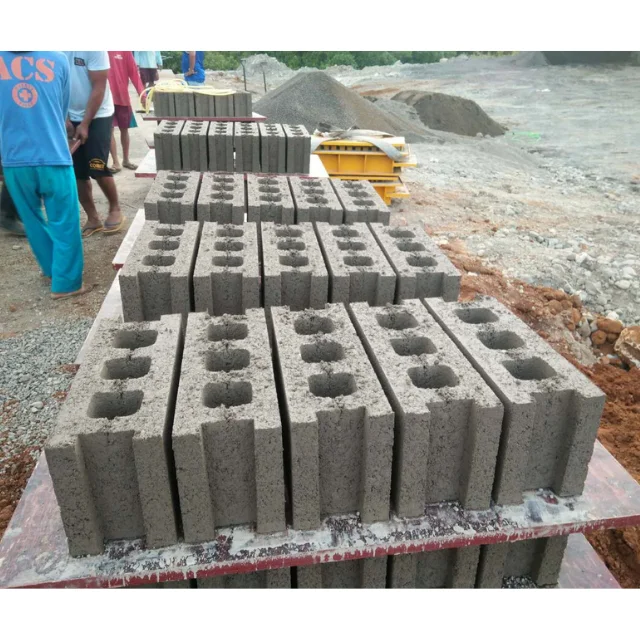
Cement, crushed stone, sand, and water mix on a 900×450 mm pallet |
| Solid standard brick production |
Fine aggregate and cement blend for load-bearing or partition walls |
| Multi-cellular brick production |
Lightweight aggregate or aerated concrete mix for insulation blocks |
| Paving brick production |
Dense aggregate mix with higher cement ratio for surface durability |
| Small-scale block plants |
Starter workshop producing multiple formats on a single press |
| On-site contractor production |
Job-site block making using locally available aggregate and cement |
Why a Single "Pieces per Hour" Figure Misleads Every Buyer
The QTJ4-24 block machine manufacturer you work with should state output per block format, not just per cycle.
Capacity sheets that quote a single cycles-per-hour number leave out the format that figure assumes. A hollow block taking four pieces per mould at a 24–26 second cycle yields a very different daily total than a standard brick producing twenty-one pieces in the same cycle. When buyers multiply cycles by an optimistic pieces-per-mould count, real output falls far short of the projection [NEED_CITE: honest capacity calculation methods in block production]. That gap is where project deadlines slip and return-on-investment forecasts break down. Asking for a per-format daily capacity table before confirming an order removes this ambiguity entirely.

Where the QTJ4-24 Sits in the Full Machine Range
The QTJ4-24 occupies the entry tier of the Shiyue block machine range, positioned for first-time plant owners and small workshops that need to produce multiple block formats without a large capital commitment. Its stationary table vibration design and manual feeding system keep the initial investment contained, while the 3600 × 1700 × 2560 mm footprint allows installation in workshops with limited floor space. For buyers surveying options, this model serves as a baseline — the point from which you evaluate whether a semi-automatic or fully automatic tier better matches your target daily output.
Understanding the Upgrade Path Across Output Tiers
Moving up from the QTJ4-24 to a semi-automatic configuration typically adds automatic pallet feeding and a PLC-controlled batching sequence, reducing the operator count and improving cycle consistency. Further up, a fully automatic line introduces stacking and cubing systems that remove manual pallet handling from the curing stage entirely [NEED_CITE: automation tier comparisons in concrete block production]. The QTJ4-24 block machine manufacturer approach here is to let buyers start at the manual tier and upgrade individual stations — mixer capacity, conveyor length, or pallet handling — as production volume grows, rather than replacing the entire press.
Reading the Specs Against Your Actual Production Conditions
The 11.95 kW main machine power drives a table vibration feeding system combined with fluctuation vibration molding, which compacts the mix through mechanical vibration rather than hydraulic pressure. This means block density depends heavily on your mix design and local aggregate gradation — a factor that must be verified before confirming capacity. The fixed 900 × 450 mm pallet size must match the curing racks and forklift tines you already operate, since pallet dimensions dictate how many blocks can be stacked per rack layer. The 24–26 second molding cycle is consistent across all four listed formats, but the pieces-per-mould count varies significantly — from four pieces for a 400 × 200 × 200 mm hollow block to twenty-one pieces for a 240 × 115 × 53 mm standard brick — so daily output calculations must be format-specific. Wiring specifications call for 3×16 mm² general power and 3×6 mm² for the main machine, which your electrician must confirm against your supply panel capacity before installation.
The Hidden Cost of Skipping Configuration Checks
Ordering a block press without confirming the pallet size against your existing curing area means the pallets you receive may not fit your rack system, forcing a costly pallet replacement or a curing area redesign [NEED_CITE: pallet and curing area mismatch in block plants]. Similarly, if voltage and frequency are not confirmed before production, the machine may arrive with a motor wound for a supply standard your site does not provide, delaying commissioning by weeks while a replacement motor is sourced. The mechanical interworking system on this model reduces faulty-operation damage during crew training, but only if the control cabinet is wired to the correct voltage from day one.
Why Buyers Source the Full Range Here
Shiyue focuses exclusively on block machinery, which means the press, mould, pallet, and handling equipment are specified as one matched system rather than assembled from separate suppliers. Configuration is set against your actual mix design and local aggregate, not a catalogue default. Mould design covers the formats your market sells, including custom drawings for non-standard dimensions. The automation level is selectable, so you can begin with the manual QTJ4-24 and add automatic pallet feeding or stacking later. Installation support includes operator training on the mechanical interworking system and format changeover procedures.
Documentation & Verification
- Capacity calculation sheet stating daily output per block format for the QTJ4-24
- Machine specification sheet with wiring gauges and power ratings confirmed
- Mould drawing and format list covering all four listed block dimensions
- Pallet specification matched to your curing rack and forklift dimensions
- Electrical schematic showing control cabinet wiring and mechanical interworking layout
- Factory test record on your target block format before dispatch
Installation, Commissioning & Support
- Foundation pad must accommodate the 3600 × 1700 mm footprint plus mixer and conveyor clearance
- Electrical supply must support 11.95 kW main machine draw with dedicated 3×6 mm² circuit
- Machine ships as a single unit requiring on-site leveling and anchor bolt installation
- First production run verifies vibration force and cycle timing against your local aggregate mix
- Operator training covers two manual feeding methods and mechanical interworking safety sequences
- Wear parts list provided for mould liners and vibration components at first replacement cycle
What to Include in Your Inquiry
To receive a configuration proposal that reflects your actual production conditions, share the block formats you intend to sell, the daily output target per format, and the local aggregate type available in your area. Include your site voltage and frequency, the curing rack dimensions you currently use or plan to build, and whether you already operate a mixer or conveyor that should be integrated into the line. This information allows the QTJ4-24 block machine manufacturer to return a capacity calculation per format rather than a generic estimate.
Frequently Asked Questions
Q: How is real daily output calculated per block format on the QTJ4-24?
A: Output is calculated by multiplying the molding cycle rate per hour by the pieces-per-mould count for each specific format. The 24–26 second cycle yields the same cycle rate regardless of format, but a 400×200×200 mm hollow block produces four pieces per mould while a standard brick produces twenty-one. Request a per-format capacity table rather than accepting a single aggregate figure.
Q: Where does the QTJ4-24 sit in the full Shiyue range and when should a buyer step up?
A: The QTJ4-24 is the entry-tier manual and semi-automatic press, suited for first block plants and small workshops. Step up when your daily output requirement exceeds what manual feeding and pallet handling can sustain, or when block strength consistency demands PLC-controlled batching and automatic vibration sequencing.
Q: What voltage and frequency options are available, and how are they confirmed?
A: Voltage and frequency are configured to your site supply before production begins. These parameters are not set to a single default, so you must confirm your local standard during the inquiry stage. The control cabinet and motor winding are then matched accordingly, and the electrical schematic is provided for your electrician to verify before shipment.
Q: What plant footprint does the QTJ4-24 line require?
A: The main press measures 3600 × 1700 × 2560 mm, and the matching line includes a J350 or JQ500 vertical mixer plus a 6 m or 8 m belt conveyor. Total floor space must also account for pallet staging, curing rack area sized for the 900 × 450 mm pallet, and operator walkways around the manual feeding stations.

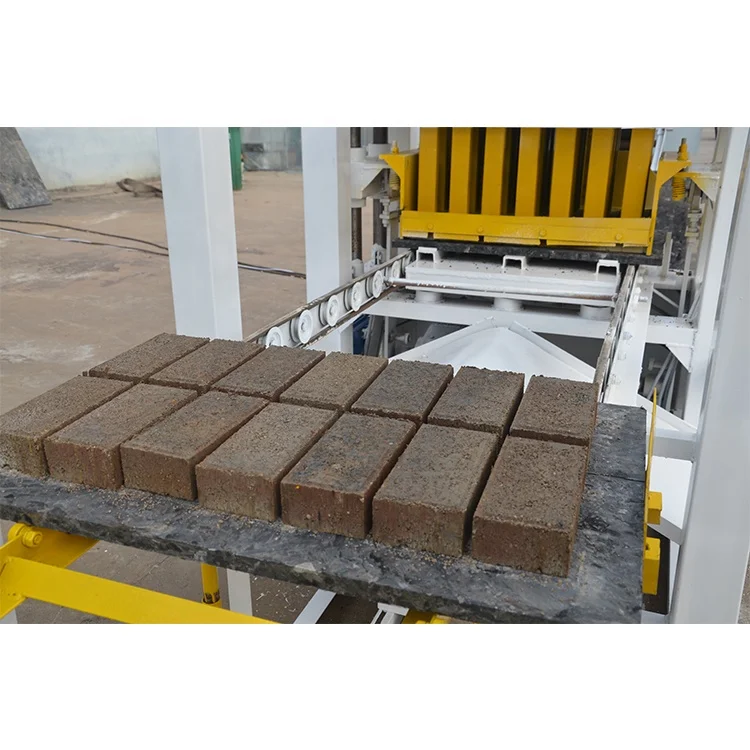
 High quality block machine