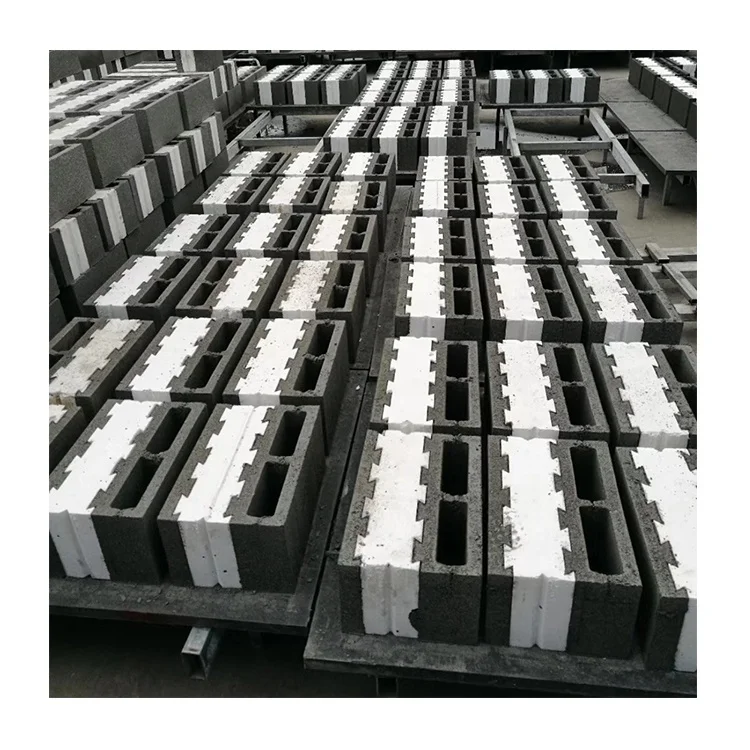
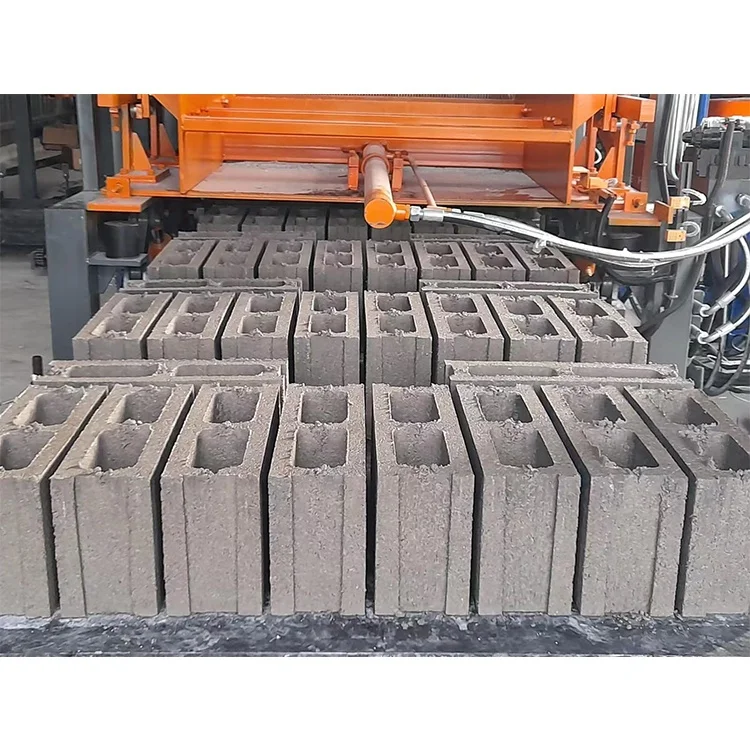
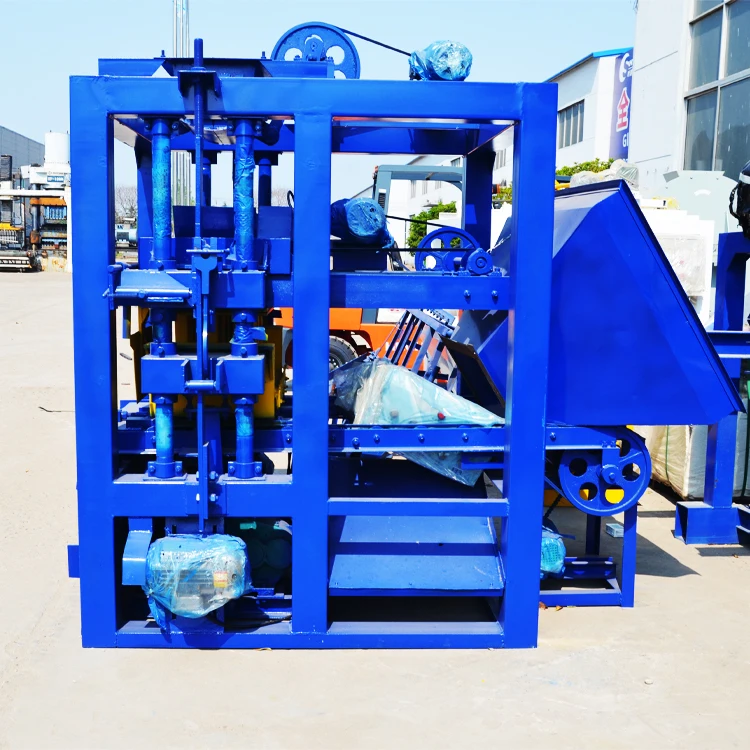
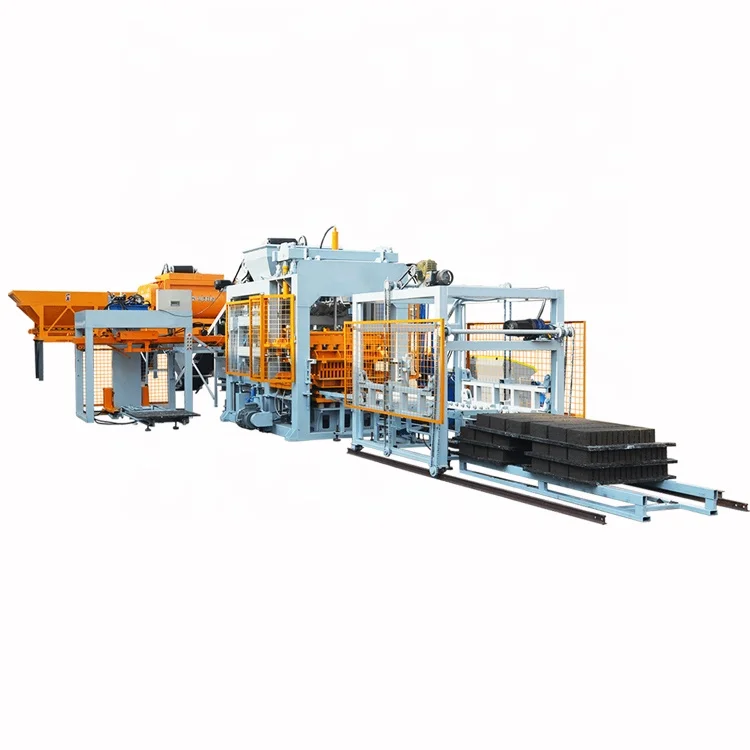
Matched system configuration — the QT8-15 is positioned within our full automatic range so you can compare its output tier, footprint, and automation level before committing to a plant layout.
Technical Specifications
| Parameter |
Value |
| Product Type |
Hydraulic Full Automatic Concrete Block Making Machine with Stacker |
| Model |
QT8-15 |
| Overall Dimensions (L×W×H) |
8300×1860×3000 mm |
| Rated Pressure |
21 MPa |
| Main Vibration Form |
Platform Vibration |
| Vibration Frequency |
2800–4500 r/min |
| Vibration Force |
45 kN |
| Pallet Size |
950×900 mm |
| Molding Cycle |
15–20 s |
| Overall Power |
55.5 kW |
| Total Mass |
8 T |
| Demolding Method |
Hydraulic |
| Factory Area Required |
300 m² |
| Automation Level |
Full Automatic |
| Stacking Method |
Automatic Stacker included |
| Output Capacity |
basis to be confirmed |
Application Suitability
| Application |
Material or Output |
| Hollow block production for residential and commercial walls |
Crushed stone, sand, cement, fly ash |
| Solid block production for load-bearing structures |
Gravel, sand, cement, slag |
| Paving block and colored paver production for roads and plazas |
Crushed stone, sand, cement with pigment |
| Interlocking block production for retaining walls and slopes |
Crushed stone, sand, cement, dust |
| Curbstone production for road edging and drainage channels |
Gravel, sand, cement |
Why the "Blocks per Hour" Number Is Not Enough for the QT8-15 automatic block machine manufacturer
A cycle time of 15–20 seconds means different daily outputs depending on which block format you run.
Many quotations list a peak cycle figure without stating the block size, wall thickness, or mix design behind it. A machine that cycles quickly on a thin paver may run considerably slower on a deep hollow block with a different aggregate blend. The QT8-15 automatic block machine manufacturer supplies a capacity calculation that names the exact block format assumed, so you can judge whether the line meets your real daily target rather than a catalogue number. [NEED_CITE: block format effect on cycle time in hydraulic press operations]

Where the QT8-15 Sits in the Full Machine Range
The QT8-15 occupies the mid-to-upper tier of our fully automatic lineup, sitting above semi-automatic and mobile units in both output class and capital investment. Buyers planning a medium-capacity block or paver plant typically find this model covers their volume without stepping into the high-capacity tier, which demands a larger factory footprint and higher power supply. The inclusion of an automatic stacker at this tier means pallet handling moves off the operator’s workload.
Comparing Automatic, Semi-Automatic, and Mobile Tiers
Semi-automatic machines reduce initial investment but require manual pallet transfer and stacking, limiting practical daily output. Mobile and egg-laying machines serve on-site production without a fixed plant, trading format flexibility for portability. The QT8-15 sits between these extremes: a fixed-plant machine with full hydraulic demolding, platform vibration, and automatic stacking, designed for buyers who need consistent format variety at medium-to-high volume. Choosing the right tier depends on your production volume, available land, and whether you plan to expand later. [NEED_CITE: block plant tier selection based on output and investment level]
Reading the QT8-15 Specs Against Your Block Format
The 21 MPa rated pressure combined with 45 kN vibration force determines how densely the mix is compacted, directly affecting block strength and surface finish. Platform vibration at 2800–4500 r/min is adjustable to suit different aggregate particle sizes; volcanic ash or lightweight aggregates need different frequency settings than standard crushed stone. The 950×900 mm pallet size defines the maximum molding area and must align with your curing rack spacing and forklift capacity. At 55.5 kW overall power, confirm your site transformer and dedicated circuit can support the machine alongside the mixer and conveyor. The 8 T total mass requires a level, reinforced concrete foundation to maintain vibration accuracy over years of service.
The Cost of Skipping the Site Survey
When a machine arrives configured for a standard sand-cement mix but the local aggregate is lightweight or highly absorbent, vibration parameters need on-site re-tuning and daily output can drop well below the quoted figure. Voltage mismatches discovered after installation delay commissioning while transformers or motor rewinds are arranged. If the pallet size does not match the buyer’s existing curing racks and forklift, additional handling equipment must be sourced locally, adding cost and lost production time before the first saleable block is made. [NEED_CITE: commissioning delays caused by unconfirmed voltage and frequency]
Why Source This Tier from Shiyue
Block machinery is our single focus, so the QT8-15 is specified as a matched system — press, mould, pallet, stacker, and handling equipment are selected together rather than assembled from separate suppliers. Configuration is set against your actual mix design, local aggregate, and target block format instead of a catalogue default. Mould design covers the formats your market sells, with custom drawings available when you need a shape outside the standard range. Automation level is selectable, allowing you to start with the QT8-15 and expand handling stations later. Installation support includes operator training at your site so the crew knows mould change procedure, vibration tuning, and daily maintenance from the first week. [NEED_CITE: matched block line specification versus component-by-component sourcing]
Documentation & Verification
- Line layout with capacity calculation naming the exact block format assumed for the QT8-15
- Machine specification sheet including hydraulic schematic and electrical wiring diagram
- Mould drawing package with format list and dimensional tolerances
- Pallet specification confirming size, material, and load rating
- Factory test record documenting cycle time and block dimensions before dispatch
- Voltage, frequency, and PLC display language confirmation signed before shipment
Installation, Commissioning & Support
- Reinforced concrete foundation leveled to within tolerance for the 8300 mm machine length
- Dedicated power circuit rated for 55.5 kW at the confirmed voltage and frequency
- Machine dismantled for container loading and reassembled on your foundation at arrival
- Hydraulic pressure and vibration frequency tuned to your local aggregate during commissioning
- Operator training covering mould change, pallet feed sequence, and stacker operation
- Wear parts and mould list supplied with reorder intervals for hydraulic seals and vibration components
What We Need to Quote Accurately
To position the QT8-15 correctly within our range and prepare a reliable capacity calculation, share your target block formats with dimensions, expected daily output per format, and the raw materials available locally. We also need your site voltage and frequency, preferred PLC display language, and the curing area dimensions so pallet and stacker configuration matches your layout. If you already operate handling equipment or curing racks, provide those details so the line integrates without modification.
Frequently Asked Questions
Q: How do I verify the QT8-15 output capacity for my specific block format?
A: We provide a written capacity calculation that names the exact block dimensions, mix design, and cycle time assumed. This document is part of the proposal, not an after-sales addition, so you can judge real daily output against your production target before placing the order.
Q: Where does the QT8-15 fit compared to semi-automatic or mobile block machines?
A: The QT8-15 is a full automatic fixed-plant machine with integrated stacker, positioned above semi-automatic and mobile tiers in output and investment. Semi-automatic models suit lower budgets with manual pallet handling, while mobile machines serve on-site production without a fixed factory building.
Q: Can the QT8-15 voltage and control language be configured for my market?
A: Yes. Voltage, frequency, and PLC display language are confirmed during the quotation stage and documented in writing before production begins. This prevents commissioning delays caused by electrical mismatches or operators unable to read the control interface.
Q: What factory footprint and installation conditions does the QT8-15 require?
A: The machine requires approximately 300 m² including press, pallet return, and stacker area. A level reinforced concrete foundation, dedicated power circuit for 55.5 kW, and adequate ceiling height for the 3000 mm machine plus maintenance clearance are necessary.
Q: What mould formats are available and can I add more later?
A: Standard moulds cover hollow, solid, paving, interlocking, and curbstone formats. Custom moulds can be designed to your drawings. The hydraulic mould change system allows new formats to be added as your market demand evolves without replacing the press.

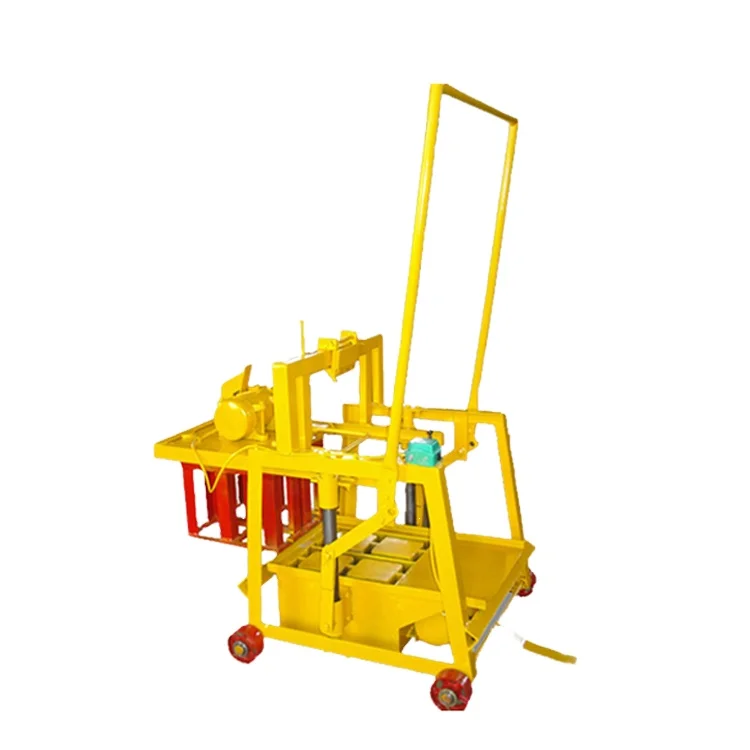 High quality block machine