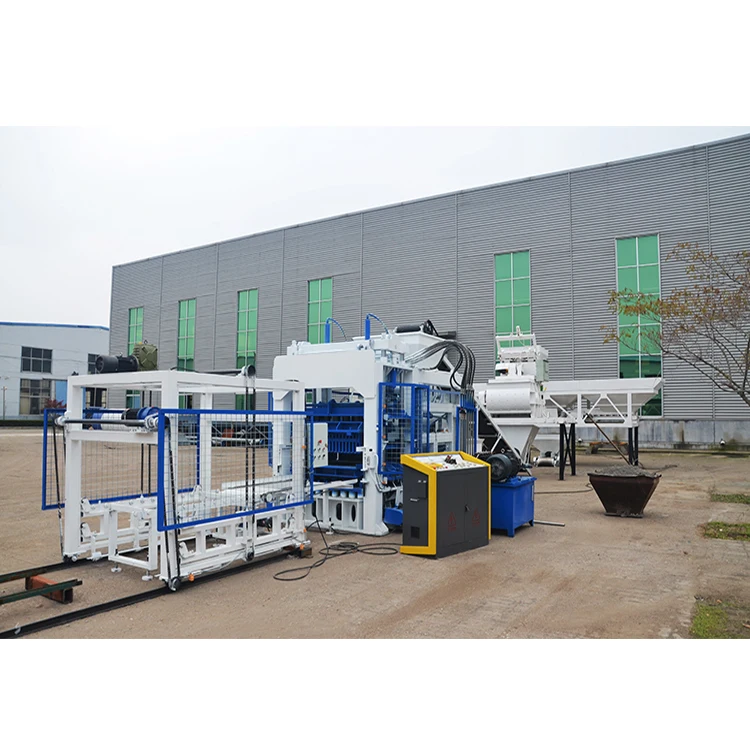
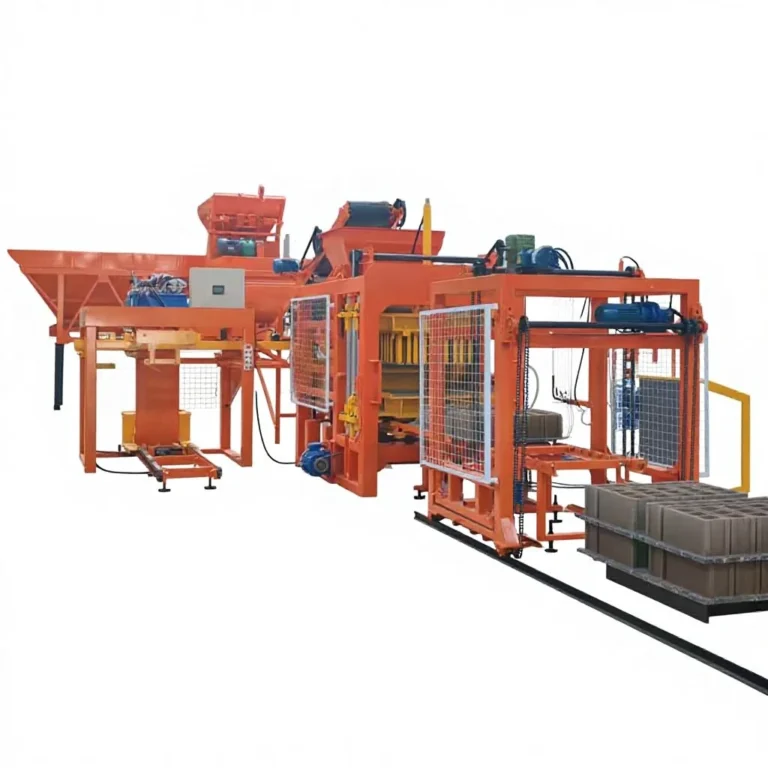
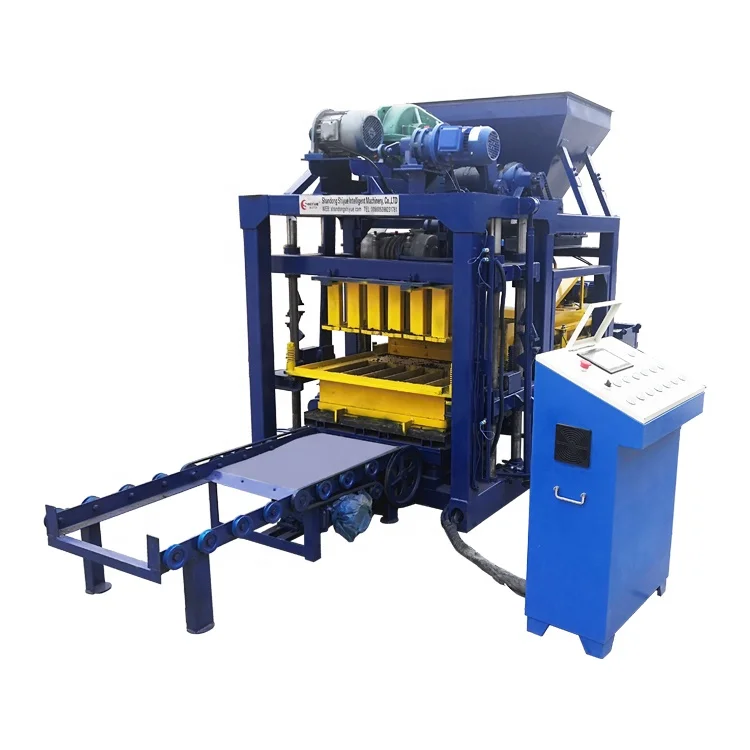
Matched system, not assembled parts — the QT4-18 is specified alongside its mould, pallet, mixer, and handling equipment as one verified line, removing the guesswork when you compare this tier against the rest of the range.
Technical Specifications
| Parameter |
Value |
| Model |
QT4-18 |
| Product Type |
Automatic Hydraulic Concrete Block Making Machine |
| Overall Dimensions (L×W×H) |
3900×1600×2300 mm |
| Molding Cycle |
15–25 s |
| Vibration Force |
40–50 kN |
| Total Power |
24 kW |
| Mixer Model |
JQ350 |
| Pallet Size |
850×550×25 mm |
| Total Weight |
3 T |
| Control System |
PLC control system |
| Hydraulic Station |
Included |
| Applied Products |
Paver, solid block, hollow block, curbstone |
| Raw Materials |
Crushed stones, sand, cement, dust, fly ash |
| Included Equipment |
Block making machine, hydraulic station, PLC control system, pallet feeder, brick conveyor, block sweeper |
| Free Accessories |
Manual hydraulic trolley, spare parts and tools |
| Output Capacity (Hollow Block 400×200×200 mm) |
1200–1680 pcs/hr (basis: 15–20 s cycle) |
| Output Capacity (Hollow Block 400×150×200 mm) |
1800–2400 pcs/hr (basis: 15–20 s cycle) |
| Output Capacity (Solid Brick 240×115×53 mm) |
3240 pcs/hr (basis: 15–20 s cycle) |
| Daily Output 8 hr (400×200×200 mm) |
9600–13440 pcs |
| Daily Output 8 hr (400×150×200 mm) |
14400–19200 pcs |
| Daily Output 8 hr (240×115×53 mm) |
16200–19440 pcs |
| Voltage & Frequency |
Configurable to site standard (basis to be confirmed) |
| PLC Display Language |
Configurable before commissioning (basis to be confirmed) |
| Automation Level |
Semi-automatic with pallet feeder |
| Standards |
CE where applicable |
Application Suitability
| Application |
Material or Output |
| Hollow block production plants |
Crushed stone, sand, cement, fly ash blends for 400×200×200 mm and 400×150×200 mm formats |
| Solid brick manufacturing |
Fine sand and cement mixes for 240×115×53 mm standard bricks |
| Paver and kerbstone lines |
Dense aggregate mixes for interlocking and curb formats via mould swap |
| On-site contractor production |
Local aggregate and cement for project-specific hollow and solid blocks |
| First-time block plant startups |
Mid-tier entry combining hollow block, solid brick, and paver capability in one press |
What "1200 Pieces per Hour" Leaves Out for the QT4-18
Output only means something when the block format is named beside it.
Many quotations state a peak hourly figure without revealing that it assumes a small solid brick rather than the large hollow block your market actually buys. I have watched buyers celebrate a high capacity number, then realise during commissioning that their primary product runs at a fraction of that rate. The QT4-18 block making machine manufacturer documentation separates each format: 1200–1680 pieces per hour for a 400×200×200 mm hollow block, but 3240 pieces per hour only when pressing a 240×115×53 mm solid brick. Knowing this up front prevents a line that is technically fast but commercially wrong for your region [NEED_CITE: block format demand variance by regional construction code].

Where the QT4-18 Sits on the Range Ladder
The QT4-18 occupies the mid-tier of the Shiyue full machine range. Below it, smaller semi-automatic units serve workshop volumes with lower investment; above it, high-capacity automatic lines add robotic stacking and cubing for continuous shifts. This model bridges the gap: it includes a pallet feeder and PLC control, yet still relies on a manual hydraulic trolley for green-block handling, keeping the footprint manageable.
Choosing the Right Tier Before You Commit Floor Space
Placing your project on this ladder matters because plant footprint and utility demand jump at each step. A first-time entrepreneur may find the 3900×1600×2300 mm envelope and 24 kW total draw fit inside a rented warehouse with standard three-phase supply. Moving up to a fully automatic tier later means adding curing racks, automatic stackers, and a larger mixer — all of which require the floor area and power headroom you might not have today. Starting on the QT4-18 lets you validate local demand before scaling [NEED_CITE: typical power and footprint requirements for automatic block lines].
Vibration Force, Pallet Size, and Cycle Time — What They Mean on the Shop Floor
The 40–50 kN vibration force works with the hydraulic station to compact the mix into the mould cavity; insufficient force leaves hollow blocks friable, while excessive force can fracture the pallet. The 850×550×25 mm pallet is a mid-range format — large enough to hold four 400×200×200 mm blocks per stroke but small enough to stack manually in a compact curing yard. The 15–25 second molding cycle range reflects mix variability: a dry, well-graded aggregate fills and compacts faster, whereas a sticky fly-ash blend may need the longer end of the window to achieve target density.
The Cost of Skipping the Material Trial
I once saw a buyer in West Africa take delivery of a machine configured for standard river sand, only to discover local laterite soil had a clay content that clung to the mould and dampened vibration transfer. The entire parameter set had to be re-tuned on site, burning two weeks of production. When a supplier quotes the QT4-18 without requesting your raw material sample, the vibration force and cycle figures they provide are guesses. Always run a trial with your actual crushed stone, sand, and cement blend before the machine leaves the factory [NEED_CITE: impact of local aggregate properties on block compaction].
Why Buyers Source This Tier from Shiyue
Block machinery is the sole focus here, so the QT4-18 arrives with its mould, pallet, JQ350 mixer, and handling gear specified as one matched set rather than sourced from separate vendors. Configuration is validated against your mix design and target block format, not a default catalogue page. Moulds are designed for the formats your local market sells, and custom drawings are available when standard formats do not match. The automation level is selectable — you can begin with the semi-automatic pallet feeder and manual trolley, then add automatic stacking later as output grows.
Documentation & Verification
- Line layout and capacity calculation naming each block format and its assumed cycle time
- Machine specification sheet confirming vibration force, hydraulic pressure, and total power
- Mould drawing and format list showing cavity count for every block type you will produce
- Pallet specification detailing 850×550×25 mm dimensions and material grade
- Voltage and PLC display language confirmation signed off before production begins
- Factory test record using your raw material blend, with video and block sample
Installation, Commissioning & Support
- Foundation pad sized for the 3900×1600 mm footprint with anchor bolt template supplied
- Dedicated 24 kW circuit at your confirmed voltage and frequency feeding the main panel
- Machine ships partially assembled; press frame, hydraulic station, and pallet feeder bolt on site
- PLC language loaded and cycle parameters fine-tuned during first run with your material
- Operator training covers mould change procedure, daily greasing points, and pallet inspection
- Wear parts list and hydraulic seal kit included in the free accessory package
What We Need to Move Forward
Share the primary block format your market demands, the daily volume you need to hit, and a sample or lab report of your local aggregate. Confirm the three-phase voltage and frequency at your site, and let us know which PLC display language your operators read. If you already have curing racks or a forklift, send the dimensions so we can verify pallet compatibility.
Frequently Asked Questions
Q: How do I verify the real daily output for the block format I plan to sell?
A: Request the capacity calculation sheet that names your exact block format and its molding cycle. The QT4-18 produces 9600–13440 hollow blocks of 400×200×200 mm per eight-hour shift, but a different format changes that figure. A factory test with your material provides the definitive number.
Q: Where does this machine sit compared to semi-automatic and fully automatic tiers?
A: The QT4-18 is mid-tier: it includes a PLC and pallet feeder but uses a manual hydraulic trolley for green-block transfer. Smaller semi-automatic units sit below it; fully automatic lines with robotic stacking sit above. It suits buyers who want controlled output without the footprint of a high-capacity line.
Q: What plant footprint and utility requirements should I plan for?
A: The press itself measures 3900×1600×2300 mm and draws 24 kW total. Add space for the JQ350 mixer, pallet storage, and curing racks. You need a three-phase supply at your local voltage and frequency, confirmed before the machine enters production.
Q: Can I start with this machine and upgrade automation later?
A: Yes. The QT4-18 can be configured with manual pallet handling at first, then retrofitted with automatic stacking and cubing as your volume justifies the investment. The PLC architecture supports these additions without replacing the core press.
Q: Which mould formats are standard and how do I request a custom drawing?
A: Standard moulds cover 400×200×200 mm and 400×150×200 mm hollow blocks plus 240×115×53 mm solid bricks. Paver and kerbstone moulds are also available. If your market requires a non-standard format, send the drawing or dimensions and a custom mould will be engineered to fit the QT4-18 platen.

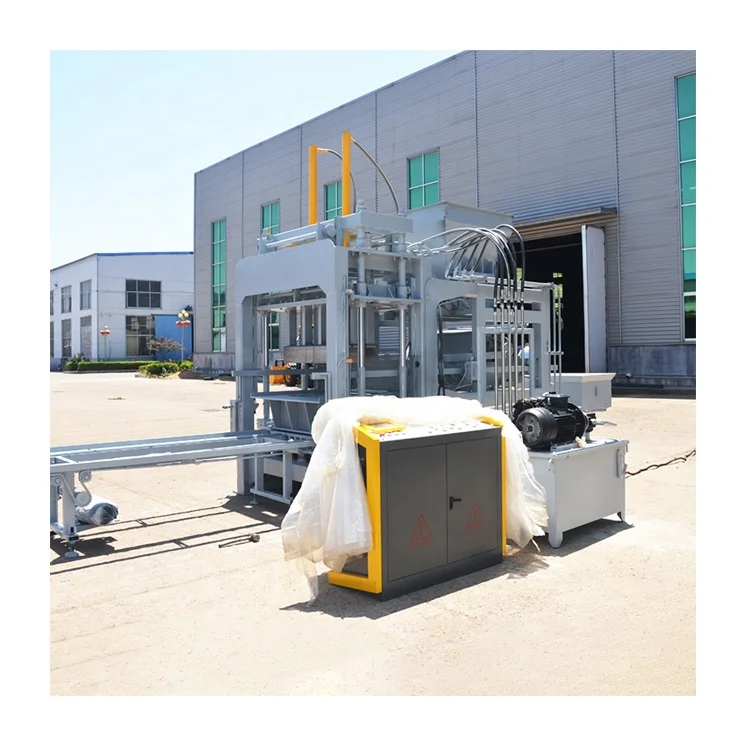 High quality block machine